- PRICING
- LIVE QUOTES
- LEARN
- HELP


EN
China Merchants Securities: Prospects for US bond interest rate trends and their impact
The Zhitong Finance App learned that China Merchants Securities released a research report saying that interest rates on US bonds have continued to rise above 4.7% recently, and the expansion of term premiums dominates the current trend, reflecting the double pressure of the imbalance between supply and demand for US long-term bonds and rising fiscal risk premiums. The Ministry of Finance's expansion of long-term bond repurchases sends a signal of stability, which is conducive to improving the partial liquidity of long-term bonds, but the real impact on the scale is relatively limited, and it is difficult to resolve medium- to long-term conflicts with US debt. Focus on this week's annual meetings of global central banks in the short term. Whether Walsh's speech can restore the market's confidence in the Fed's policies is the key. At the current stage where interest rate risk on US bonds has not been lifted, gold or high fluctuations are an important type of hedging portfolio risk; the stock market can balance the allocation through a dividend+small cap growth combination.
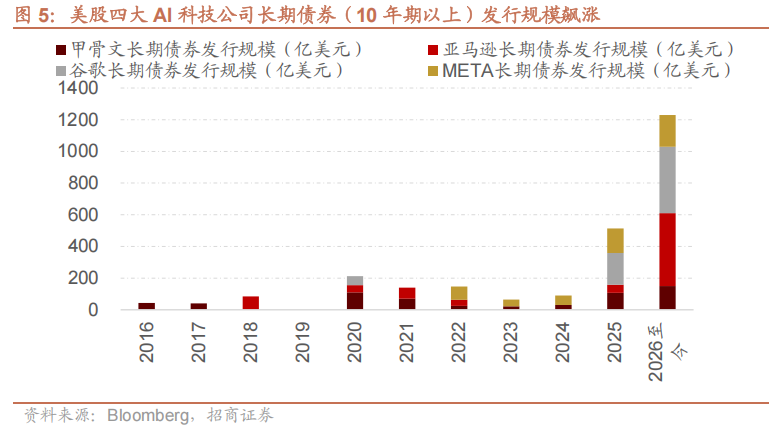
The reason for the rise in interest rates on US bonds: The recent rapid rise in interest rates on US bonds is mainly due to maturity premiums, which reflect changes in liquidity in the supply and demand of US long-term bonds and the double disturbance of fiscal risk premiums. On the supply side, the US Treasury's quarterly auction scale for medium- and long-term treasury bonds has remained stable, with relatively limited marginal growth; however, demand-side investors' net purchases of US long-term treasury bonds have continued to decline. On the one hand, they lack confidence in US fiscal and monetary policy, and on the other hand, the crowding out effect of large-scale debt issuance and financing by leading AI companies on long-term capital. Since 2026, the total issuance of long-term bonds by leading CSP companies has been several times that of previous years.
US Treasury policy and impact on US bond interest rates: The US Treasury announced an expansion of the scale of long-term treasury bond repurchase operations. The effect of this move is similar to previous distorted operations. It does not bring incremental liquidity; it only supports long-term demand by shortening the weighted period of treasury bonds in circulation. Considering that the scale of repurchases is still low compared to the monthly issuance scale, the significance of policy signals is greater than the real impact, and it is difficult to resolve medium- to long-term conflicts such as high inflation, AI bond crowding out, and debt sustainability. Currently, US interest expenses have risen to 22.74% of fiscal revenue. High deficits and high interest rates are mutually reinforcing, and fiscal risk premiums continue to exist.
Gold: Short-term gold pricing will drag back and forth between actual US bond interest rates (liquidity) and medium- to long-term narratives (loss of US dollar credit). Combined with a considerable rebound in the previous period, gold is expected to fluctuate at a high level in the future. Currently, US bond interest rate risks have not been resolved, and it is an important type to hedge against portfolio risk.
A-shares: Short-term market fluctuations increase, phased pressure, and focus more on structural opportunities in the main performance line. The style level will rotate more evenly, and a balanced allocation can be achieved through a combination of dividend+small market growth. The industry suggests rebalancing the three-tier balanced layout along scientific and technological innovation+enterprise going overseas + traditional undervaluation. Among them, the race between hard data on the molecular side of the AI sector and financing restrictions on the denominator side is the core contradiction of AI transactions in the future stage.
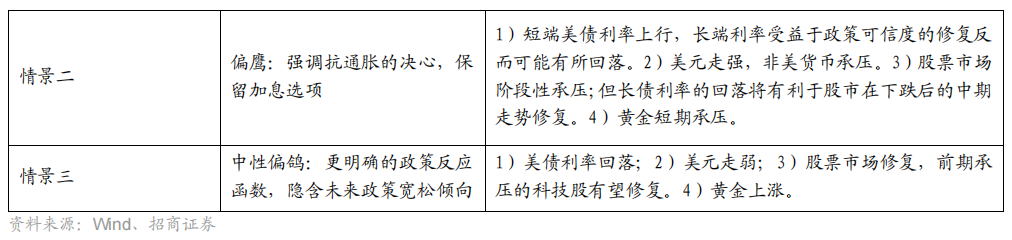
Looking at this week's annual meeting of global central banks in the short term, whether Walsh's speech can restore market confidence is the key. Scenario 1: Continuing the vague statement, only talking about the reform framework, and avoiding policy triggers: interest rates on short-term US bonds are stable, long-term interest rates continue to rise; the US dollar is weak: the defensive sector of the stock market dominates; and gold is strong. Scenario 2: An eagle, emphasizes determination to fight inflation, and reserves the option to raise interest rates. Interest rates on short-term US bonds are rising, and long-term interest rates may fall somewhat; the US dollar strengthens; the stock market is under pressure in stages; however, falling interest rates on long-term bonds will help the stock market to recover in the medium term after the decline; gold is under pressure. Scenario 3: A neutral pigeon: a more clear policy response function, implying a trend towards future policy easing. Interest rates on US bonds have declined; the US dollar has weakened; the stock market has recovered; technology stocks that were under pressure in the previous period are expected to recover; and gold has risen.
It should be noted that if interest rates on US long-term bonds rise further, it may force the US Treasury to adopt a stronger policy to maintain stability. The government has sufficient policy toolbox to resolve the liquidity problem. At that time, although medium- to long-term conflicts still exist, interest rates on US bonds may still fall to a high level, which may be a better allocation opportunity for the market.
Risk warning: Economic data fell short of expectations, policy understanding was incomplete, and overseas policies were tightened beyond expectations.
01 US Treasury Interest Rate Trend Outlook and Its Impact
1. Reasons for the recent rise in US bond interest rates
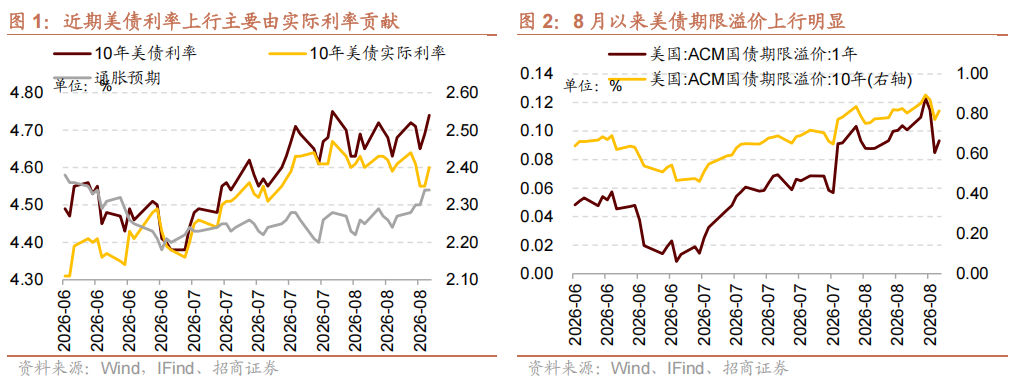
The recent rise in interest rates on US bonds is mainly contributed by maturity premiums, which reflect changes in liquidity in the supply and demand of US long-term bonds and fiscal risk premiums.
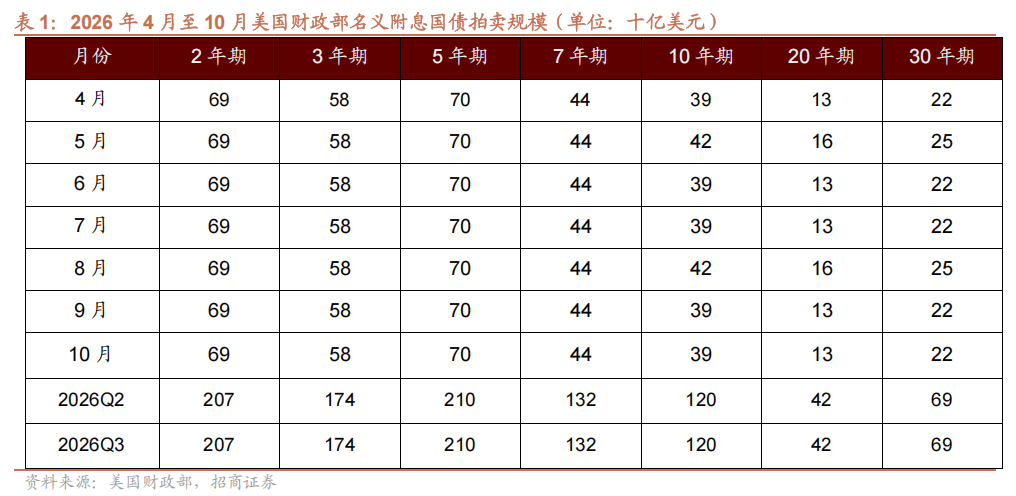
Looking at the supply side of US Treasury bonds, the quarterly auction scale of medium- to long-term treasury bonds is stable, and the increase in supply in August was relatively limited compared to the previous month. Of the issuance scale in August, the issuance scale of 10-year, 20-year, and 30-year long-term bonds all increased by 3 billion US dollars compared to July, for a total of 9 billion US dollars more. However, judging from the quarterly issuance scale, the issuance scale of bonds for each term in the last two quarters is fixed, and the Ministry of Finance clearly stated that the current auction scale for nominal interest-bearing bonds and variable interest rate notes will remain unchanged for at least a few quarters in the future.
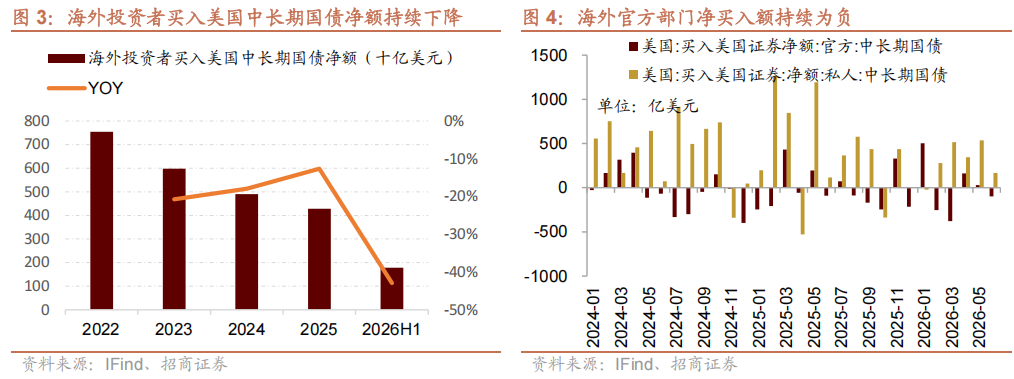
Looking at the demand side of treasury bonds, institutional allocations have weakened somewhat. According to data from the US Treasury, net purchases of US medium- and long-term treasury bonds by overseas investors have continued to decline in the past five years, from a peak of about 754 billion US dollars in 2022 to 428.4 billion US dollars in 2025. Among them, the overseas official sector continued to sell net, and the net purchase amount of the overseas private sector decreased year by year. In the first half of 2026, net purchases of US medium- and long-term treasury bonds by overseas investors were US$178.2 billion, down 42.92% year on year. Among them, net sales from overseas official departments were US$3.6 billion, down 223.34% year on year, while net purchases from overseas private sector were US$181.8 billion, down 41.2% year on year.
On the one hand, the market lacks confidence in US monetary and fiscal policies, compounded by concerns about inflation, leading to a decline in the willingness of institutions to allocate long-term US bonds.
Another reason for the weakening institutional demand for US long-term bond allocations is the crowding out effect of AI companies' large-scale bond issuance and financing on demand for long-term treasury bonds. The scale of debt issuance by leading AI companies continues to expand. In 2025, Oracle, Amazon, Google, and Meta issued a total of about US$51.3 billion in long-term (10 years or more) bonds, and since 2026, it has further risen to about US$123 billion, including US$45.96 billion, Google US$42.03 billion, Meta US$20 billion, and Oracle US$15 billion. The annual issuance scale has been several times that of previous years. These corporate bonds have a long term, some of them 30 to 40 years, and compete directly with long-term US bonds for long-term capital. Dallas Federal Reserve researchers estimate that the issuance of AI-related investment-grade bonds in 2026 is about 300 billion US dollars, according to Wall Street's forecasting center for AI-related investment-grade bonds in 2026, and the related issuance may form a 10-year equivalent long-term supply of up to 360 billion US dollars, which is about one-eighth of the long-term supply of US Treasury bonds during the same period.
2. The policy of the US Treasury Department and its impact on US bond interest rates
In mid-August 2026, the selling pressure on long-term US bonds continued to increase. The yield on 10-year US bonds once exceeded 4.7%, and market concerns about the liquidity risk of US bonds rose significantly. Facing soaring long-term interest rates, on the 19th local time, the US Treasury Department announced that it will at least double the size of a single long-term treasury bond liquidity support repurchase operation starting September 9, from the previous 2 billion US dollars to at least 4 billion US dollars, mainly involving 10 to 20 years and 20 to 30 year treasury bonds. The measures will last until November 4.
When Bezent first spoke, he made the market see the policy attitude, which effectively allayed concerns and promptly stopped the further spread of liquidity risk. After the news was announced, long-term yields fell rapidly. The 10-year US Treasury yield fell to around 4.65%. Spot gold rose by more than 113 US dollars to 4,446 US dollars/ounce in the short term. US stock futures rose at the same time, and the US dollar index fell.
However, with the passage of time, the effects of the policy clearly weakened, and interest rates on US bonds rebounded again. On the 20th, Bezent further stated that the Treasury's single long-term bond repurchase scale may exceed 4 billion US dollars, and emphasized that the US Treasury has a strong toolbox, showing that policy strength can be further strengthened if necessary, but it seems that the market is not buying. Interest rates on US bonds rose further on Thursday and Friday. By the close of Friday, interest rates on ten-year US bonds had returned above 4.7% to close at 4.732%.
How do you understand the US Treasury Department's policy to expand the scale of long-term debt repurchases?
First, the US Treasury expands the scale of long-term bond repurchases. The effect is somewhat similar to the Federal Reserve's previous distorted operation. It does not bring incremental liquidity, but it will bring about partial improvements in long-term debt liquidity. There is an essential difference between the Federal Reserve's QE and the Bank of Japan's YCC.
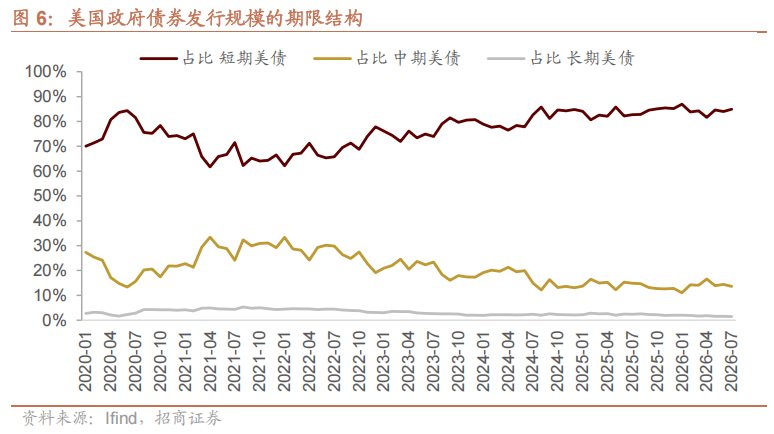
The US Treasury's funding source for repurchasing long-term bonds is mainly through short-term debt issuance. As can also be seen from the US bond issuance structure, the share of short-term US bonds issued continues to rise. This means that the marginal supply of new financing is concentrated on the short end. The effect of this policy is similar to the Federal Reserve's distorted operation. It does not bring additional liquidity supply; it only supports long-term demand by shortening the weighted period of treasury bonds in circulation, thereby mitigating the upward pace of interest rates on long-term US bonds.
However, judging from the scale, the monthly repurchase scale of 4 billion US dollars (20 years+30 years) is lower than the current average monthly issuance scale of 37 billion US dollars (14 billion for 20 years+23 billion for 30 years). The actual scale impact is relatively limited. It is more about sending policy signals to prevent further spread of panic.
Second, the Treasury Department's policy to expand the scale of bond repurchases can ease local liquidity, but it does not resolve medium- to long-term conflicts such as high inflation, the crowding out effect of AI bonds, and concerns about the sustainability of US debt. This explains why interest rates on US bonds fell only 1 day after the policy was announced and then returned to an upward trend.
The situation in the Middle East has led to repeated oil prices, and concerns about high inflation continue to disturb
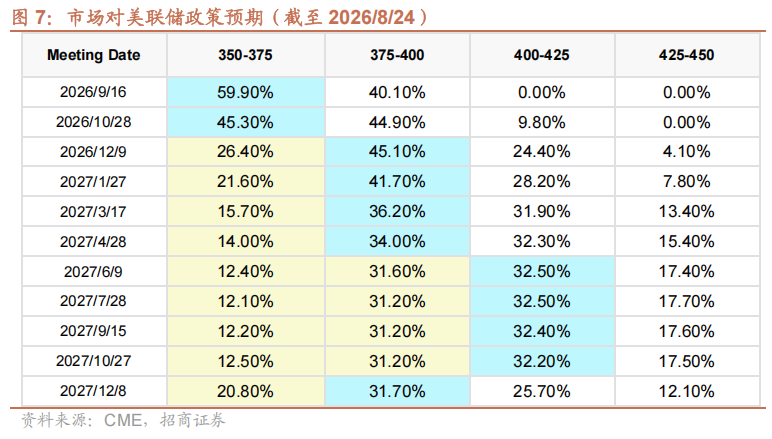
The geographical conflict in the Middle East continues to disrupt the global energy supply system, driving the center of international oil prices upward; the impact of rising oil prices on inflation is repeated, slowing the pace of decline in US inflation. Currently, negotiations between the US and Iran are progressing slowly, and they are still at an impasse over the agreement. Both sides continue to threaten. Under such circumstances, it is difficult for the Federal Reserve to quickly shift to easing, and long-term US debt also needs to be included in higher inflation compensation. In the future, it is still necessary to observe whether navigation through the Strait of Hormuz remains stable, and whether energy supply and inventory conditions can gradually improve. If the situation makes substantial progress and the geopolitical premium subsides, the market will have higher expectations that US inflation will improve and the Federal Reserve's policy easing will be higher. Currently, the market still retains a probability of 70% or more for the Fed's interest rate hike during the year. Among them, the September rate hike is expected to reach more than 40%.
The crowding out effect of demand for debt issuance brought about by AI capital expansion on long-term US bonds
The large-scale capital expenditure of major US AI companies has maintained a high increase, which translates into large-scale long-term financing needs, and the crowding out effect on long-term US debt will continue to exist. Under the current AI production expansion cycle, America's leading AI technology giants continue to increase capital expenses and issue additional bonds. Technology giants that used to be suppliers of capital to the market have now transformed into capital requirements. Against the backdrop of a stable total amount of funds allocated over the long term, such as insurance and pensions, it diverts market capital, squeezes out the need for US debt allocation, and raises interest rates and term premiums on long-term US bonds. Whether this pressure can be relieved in the future depends largely on the speed at which AI investments are converted to stable income and free cash flow. If related companies' profits continue to grow and the internal cash flow's ability to cover capital expenses increases, their demand for debt financing and the resulting long-term supply are expected to gradually decline; however, at a stage where profit fulfillment is insufficient, AI construction may still be a structural disruptor to long-term interest rates.
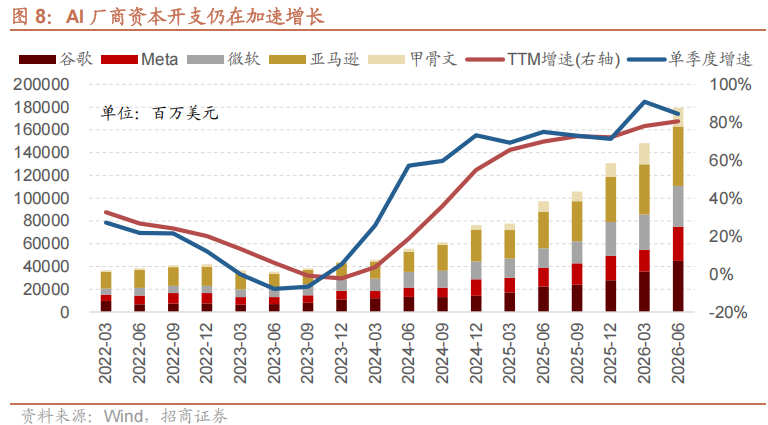
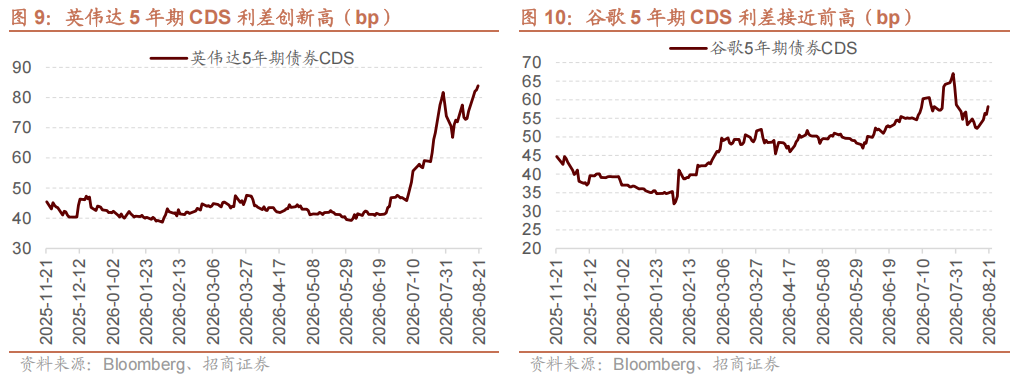
At the same time, the continued expansion of the financing scale has led to a sharp rise in the sensitivity of AI technology stocks to long-term interest rates. The recent rise in CDS interest spreads implied market concerns about major AI companies' bond issuance financing. Leading US cloud vendors continue to increase AI infrastructure construction, and capital expenditure is rapidly expanding. The latest financial reports show that free cash flow from cloud companies such as Google and Amazon has turned negative, driving the transfer of financing requirements from endogenous capital to debt financing. The recent rise in CDS interest spreads for technology companies and cloud vendors reflects heightened market concerns about the AI return cycle, balance sheet pressure, and debt sustainability. Specifically, Nvidia's 5-year bond CDS spread reached a record high, while Google's 5-year CDS, which is known for its stability, is also close to the previous high. Credit risk repricing will drive up the cost of issuing bonds and tighten financing conditions, which in turn will affect the ability of cloud vendors to spend capital, and have a ripple effect on the AI industry.
Concerns about America's high deficit and debt sustainability constitute medium- to long-term constraints on US debt
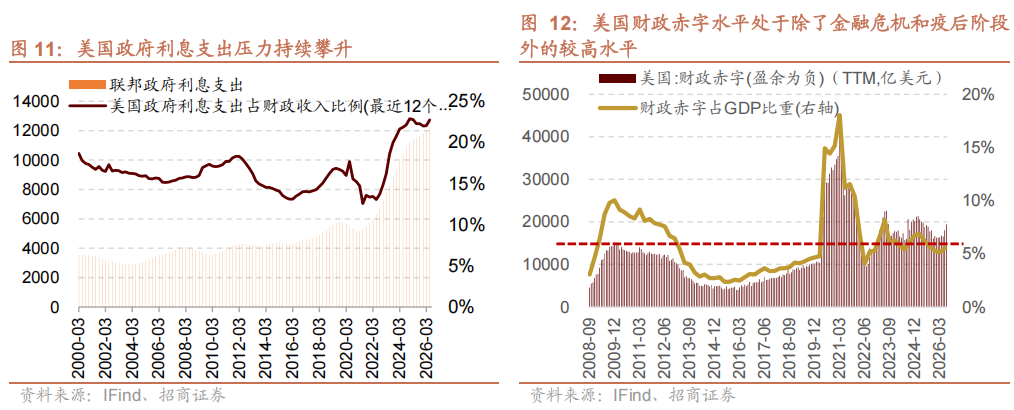
The risk of debt sustainability does not mean that the US will default in the short term. The more realistic problem is that high interest rates and high deficits are mutually reinforcing. This concern may repeatedly become a disturbing factor when the market is pessimistic about US debt. Higher interest rates push up government interest expenses, and the fiscal deficit widens, and the Ministry of Finance needs to issue more treasury bond financing; after the supply of treasury bonds increases, investors will also demand higher term compensation, further increasing the interest burden. As of June 2026, the US government's rolling 12M interest expenses accounted for 22.74% of fiscal revenue. Currently, the Treasury Department's adjustment of the issuance period or expansion of old securities repurchases can only improve partial liquidity, making it difficult to reduce overall financing requirements. The US Treasury recently raised net market-based financing requirements for the third quarter of 2026 to 739 billion US dollars.
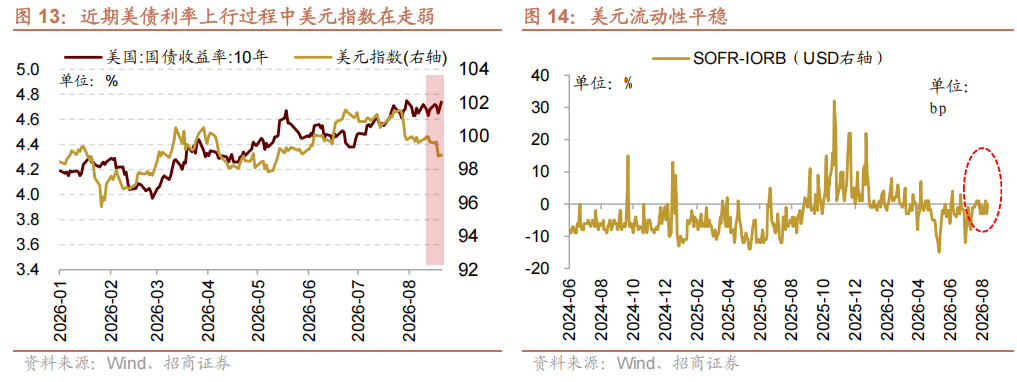
This is the reason why the US dollar index fell during the recent rise in interest rates on US bonds. Judging from the US dollar SOFR-IORB spread, partial lack of liquidity and risk aversion in US bonds did not cause liquidity tension in the US dollar. What is reflected in the background is that after Bezent announced an increase in the scale of repurchases, the market's concerns about the US fiscal deficit and the expansion of the financing scale have not abated, strengthening the US dollar's credit damage logic, and the US dollar weakened.
3. What is the impact of rising US bond interest rates on the market?
(1) gold
Continued damage to US dollar credit and the resulting restructuring of global reserve assets are the core driving force and underlying logic for the long-term rise in gold prices. In the short term, changes in liquidity (fluctuations in actual US bond interest rates) have a more direct impact on the pace.
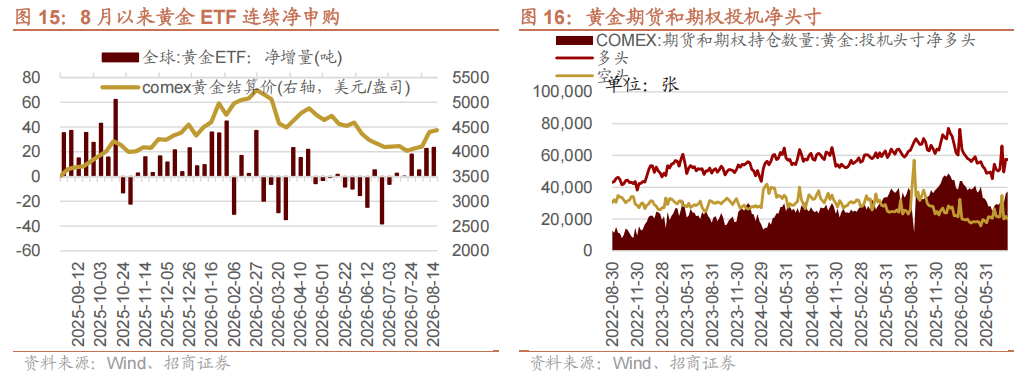
The rebound in gold since August has mainly benefited from the cooling of expectations of the Federal Reserve's interest rate hike and the recovery of funds. Recently, gold has continued to rise. On the one hand, interest rates on US bonds fell after Bezent proposed expanding the scale of repurchases, leading to a sharp rise in gold on August 19. On the other hand, as interest rates on US bonds returned to the upward trend on Friday, gold bucked the trend, and the reason behind this was damage to the credit in pricing the US dollar.
As a result, short-term gold pricing will drag back and forth between actual US bond interest rates (liquidity) and medium- to long-term narratives (loss of US dollar credit). Combined with the significant rebound of gold in the previous period, it is expected that it may fluctuate at a high level in the future. At the current stage where US bond interest rate risk has not been lifted, it is an important type to hedge against portfolio risk.
(2) A shares
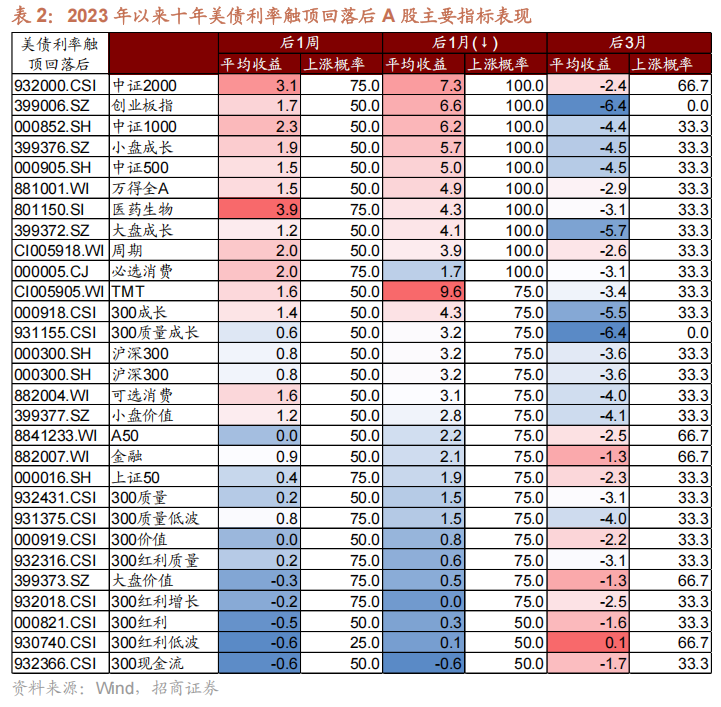
Since August, the stock market recovery, which has been driven by macro-micro liquidity improvements and resonance, has come to an end. The upward yield is intertwined with geographical risk. Combined, the centralized disclosure window for interim results is approaching, and short-term market fluctuations have increased, and phased pressure is under pressure. Investors will focus more on structural opportunities in the main line of performance, and the style level will rotate more evenly, and balanced allocation can be achieved through a dividend+small market growth combination. The industry suggests rebalancing the three-tier balanced layout along scientific and technological innovation+ enterprise going+traditional undervaluation, focusing on electronics, chemicals, pharmaceuticals, non-ferrous metals, coal, etc.
Judging from historical experience, once interest rates on US bonds rise and fall in the future, the direction of growth over the next month shows a higher probability of increase and a greater increase. Specifically, since 2023, interest rates on US bonds have peaked and fallen back behind the last four times. The average increase in the China Securities 2000, GEM Index, China Securities 1000, etc. is clearly leading, and the probability of increase is 100%; in addition, the average increase in TMT is the highest.
4. Subsequent US bond interest rate trends and short-term concerns
Based on the above analysis, the recent rise in US bond interest rates is mainly contributed by term premiums, which reflect changes in liquidity and fiscal risk premiums in the supply and demand of US long-term bonds. The US Treasury Department's expansion of the scale of long-term bond repurchases has sent a positive policy signal, which is conducive to partially easing the liquidity pressure on long-term bonds and mitigating the impact of the sharp rise in long-term bonds. However, large-scale issuance of AI bonds still has a crowding out effect on US long-term bonds, and in the medium to long term, only by reducing fiscal deficits, controlling debt growth, and stabilizing inflation expectations can we truly change the supply-demand relationship and risk pricing of long-term treasury bonds.
The short-term market is likely to wait for more signals from the Jackson Hole Global Central Bank Annual Meeting this week. Whether the market can restore confidence in the Fed's policy is the key. This will depend on whether Walsh's speech can send a clearer policy signal (credible policy response function) to the market. We can observe how the four markets of 2-year US bonds, 30-year US bonds, US dollars, and gold went after the speech. The 2-year period mainly reflects the market's judgment on the Fed's short-term policy. The 30-year period more reflects long-term real interest rates, inflation, and fiscal credit risk. The combination of the US dollar and gold can help determine whether the market is trading normal interest rate changes or whether it is trading US currency credit.
Until then, interest rates on long-term US bonds are expected to continue to fluctuate at a high level. If interest rates on long-term bonds rise further in the future, it may force the US Treasury to adopt stronger policies to maintain stability, and the government has sufficient policy toolbox to resolve the liquidity problem. At that time, although medium- to long-term conflicts still exist, interest rates on US bonds may still fall to a high level, which may be a better allocation opportunity for the market.