
- PRICING
- LIVE QUOTES
- LEARN
- HELP


EN
The weak yen forced the Bank of Japan to take action! Former member: September is likely to raise interest rates in January next year or more
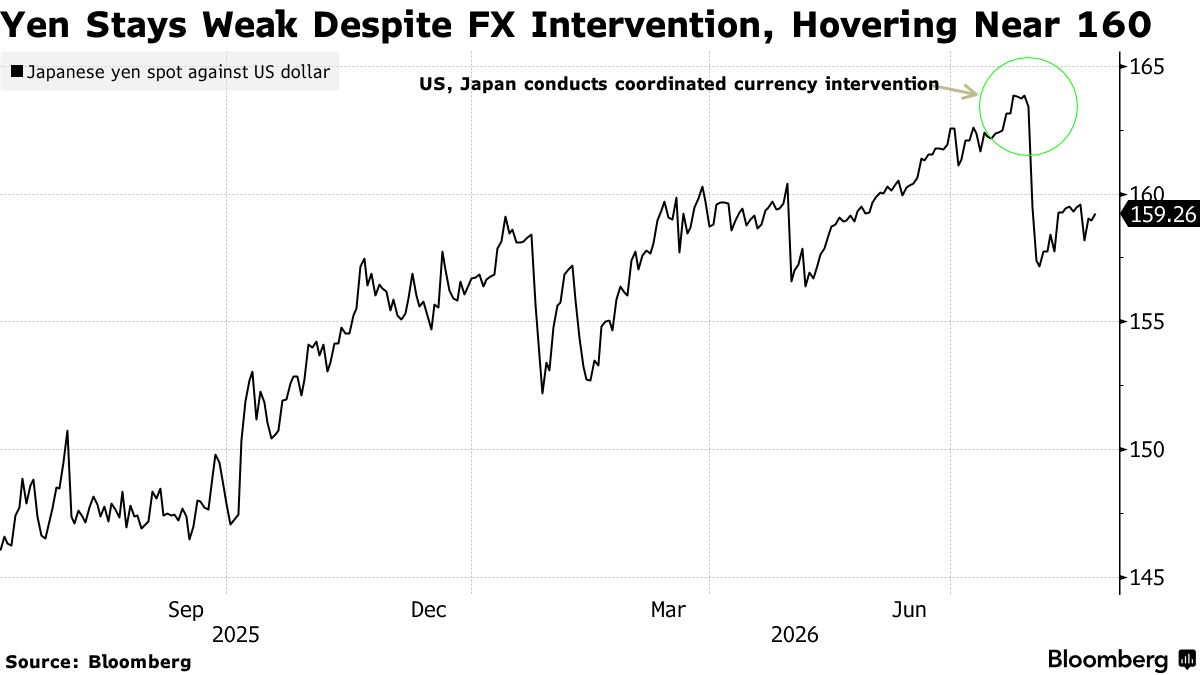
The Zhitong Finance App learned that former Bank of Japan review committee member Seiji Adachi said that the Bank of Japan is likely to raise interest rates next month, thereby verifying general market expectations, and may raise interest rates again as early as January next year. In an interview, Seiji Adachi said that despite the joint intervention of the US and Japan, the yen is still weak. If the Bank of Japan decides to keep the current policy unchanged, it may once again trigger a sell-off in yen, thereby increasing the risk that inflation will accelerate due to rising import costs. He said, “The Bank of Japan has basically been forced into a dead end. The market has almost completely absorbed expectations of interest rate hikes. If the Bank of Japan does not raise interest rates, the yen may weaken sharply again.”
As of press release, the exchange rate of the yen against the US dollar was 159.10 yen per US dollar, which is not far from the psychologically significant mark of 160 yen per US dollar. Meanwhile, traders expect that the probability that the Bank of Japan will raise interest rates when announcing its next policy decision on September 18 is about 80%.
US Treasury Secretary Bessent once pointed out that monetary policy action is needed after foreign exchange intervention, and expressed hope that Bank of Japan Governor Kazuo Ueda will raise interest rates. Bezent's statement provided Kazuo Ueda with a “great opportunity” to raise interest rates, because it made it harder for Japanese Prime Minister Takaichi Sanae's government, which tends to stimulate the economy, to oppose interest rate hikes.
Seiji Adachi said, “Bezent has stated many times that the Bank of Japan will be the next central bank to take action. Under these circumstances, the Japanese government cannot say 'stop' to the Bank of Japan.” According to previous reports, people familiar with the matter revealed that the government led by Prime Minister Sanae Takaichi supports the Bank of Japan's recent interest rate hike, and the next move is likely to take place in September or October. People familiar with the matter added that the central bank's concern about the weakening yen pushes up prices coincides with the government's desire to enhance the effects of recent US and Japanese exchange rate intervention, and the two sides have reached an agreement on the need to raise interest rates recently.
Furthermore, Seiji Adachi said that Japan's inflation is still strong, and the Bank of Japan is likely to continue to raise interest rates after the expected September rate hike. “My feeling is that the Bank of Japan will try to act again in January next year,” he said. “The possibility that the rate hike cycle will continue for some time is becoming extremely high, and interest rates may rise further to 1.25% or even more than 1.5% — these two levels were once considered the terminal interest rate for this cycle.”
The pricing of the overnight index swap market is basically in line with Seiji Adachi's opinion, showing that the market expects the Bank of Japan to raise interest rates to 1.25% in September and then raise interest rates by another 25 basis points in January next year.
Adachi Seiji said that this kind of market expectation has reduced the pressure on the Bank of Japan in terms of communication because the market has already begun to absorb upcoming policy changes ahead of time. He said, “The easiest approach is to let the market discuss interest rate hikes ahead of time, and then, in a sense, the Bank of Japan itself gradually paves the way for this action.” “In this way, the Bank of Japan can avoid attracting too much criticism. If inflation is clearly low, they will be criticized for this, but this is not the case at all.”
According to data released by the Japanese government last week, Japan's core inflation rate accelerated to 1.8% in July. Core inflation has rebounded for the second month in a row, leading many private sector economists to believe that the Middle East conflict has begun to drive up inflation in Japan. Japan is highly dependent on imports for energy and food. Adachi Seiji predicts that Japan's inflation rate may accelerate to over 2.5%.
Adachi Seiji also said that the next rate hike may also take place in December, but this seems like it might be “too fast.” Assuming that the Bank of Japan raises interest rates in September, then another rate hike at the end of the year would mean a fourth rate hike in 12 months.
By simply applying Taylor's rules to the calculation, Seiji Adachi believes that the Bank of Japan's interest rate may need to rise to about 2.75%. He said that under these circumstances, the Bank of Japan's policy interest rate may reach 2% or slightly higher than 2% by the end of next year, which is higher than the economists' median forecast of 1.5%.
Seiji Adachi said that one of the key concerns is weak consumer spending. According to data released earlier this month, personal consumption in Japan fell 0.1% year-on-year in the April-June quarter despite a one-time boost from a number of factors, including the early release of demand for air conditioning due to regulatory changes. He pointed out, “Consumer spending lacks momentum. A key issue to pay attention to is whether the Bank of Japan can continue to take aggressive steps to raise interest rates if consumer spending continues to weaken due to the impact of higher inflation and rising interest rates.”