
- PRICING
- LIVE QUOTES
- LEARN
- HELP


EN
Accenture Stock And 2 More Reliable Dividend Stocks Yielding Above 5%
With government bond yields in markets such as the UK holding above 5%, income from traditional safe assets has become more visible again. That puts a brighter spotlight on what investors actually get paid to hold riskier assets. Reliable dividends suddenly matter a lot more. This article looks at the Dividend Powerhouses screener and highlights three stocks with yields above 5% that aim to offer steady, covered income.
The three stocks covered next are only a starting sample, as the full Dividend Powerhouses screen surfaced 94 more companies with similarly strong income stories that are not discussed here. If you want to identify and analyze higher conviction ideas straight away, head into the Dividend Powerhouses (3%+ Yield) screener.
Accenture (ACN)
Overview: Accenture is a global consultancy and technology services company that helps large businesses and governments move their operations into the digital, cloud, AI and managed services era, often through long-term, contract-based work. These high-margin recurring services, rather than shorter consulting projects alone, give Accenture the steady cash flows that support its role in a dividend-focused screen.
Operations: Accenture generates most of its revenue from Products at about $22.3b, followed by Health & Public Service at about $14.9b, Financial Services at about $13.8b, Communications, Media & Technology at about $12.4b, and Resources at about $9.8b.
Market Cap: $113.4b
Accenture gives dividend investors a mix of contract-backed cash flows and exposure to AI and cloud adoption, with recurring digital and managed services sitting behind a long record of paying out a growing income stream. The dividend is supported by a business that spans mission critical clients in sectors like financial services and public service, but investors still need to weigh AI related disruption, an $865 million restructuring and slower growth guidance against that stability. With the stock reset over the past few years and a P/E that sits below both the US market and IT sector averages, the key issue for investors is whether the current dividend yield and cash generation fairly reflect Accenture’s evolving role as an AI implementation partner or still leave some upside potential for the stock.
Accenture’s pivot into AI and managed services could mean the current P/E and dividend yield only tell half the story. See how the DCF valuation analysis for Accenture might reframe the risk and opportunity.
Kaspi.kz (KSPI)
Overview: Kaspi.kz is a super-app business that connects consumers and merchants across Kazakhstan and nearby markets through a mix of payments, shopping and fintech services. Its Payments platform handles everyday transactions, bills and peer to peer transfers that generate recurring, high-margin cash flows suited to supporting dividends. Around this payments backbone, Kaspi.kz layers a mobile and online marketplace for retail and travel, plus credit and savings products, so users can shop, pay and finance within a single ecosystem.
Operations: Kaspi.kz generates most of its revenue from Marketplace at about KZT 2,151,072 million and Fintech at about KZT 1,713,874 million, with Payments adding about KZT 677,213 million. Revenue is largely across Kazakhstan and other nearby markets at about KZT 3,313,867 million and Turkey at about KZT 1,186,615 million.
Market Cap: $20.1b
Kaspi.kz gives income focused investors exposure to a high engagement payments and marketplace ecosystem where regular bill payments, merchant acquiring and P2P transfers support a yield-focused story. The Payments cash flows, high ROE near 39% and profit margins around 24.2% indicate a business that can continue funding dividends, while Turkey expansion, higher funding costs and an unstable dividend track record keep risk firmly on the table. Recent Q2 results and the board’s proposed 18% dividend increase signal confidence in the cash engine, but international growth, regulation and external funding reliance mean the trade off between payout appeal and reliability may warrant closer inspection.
Kaspi.kz’s high ROE and payments engine suggest a story that many investors may still be pricing like a domestic fintech. Get the fuller picture in the analysis report for Kaspi.kz

VICI Properties (VICI)
Overview: VICI Properties is an experiential REIT that owns and leases out casino resorts and other leisure properties, including Caesars Palace, MGM Grand and The Venetian on the Las Vegas Strip, using long term triple net leases that pass most operating costs to tenants. Those contracts generate predictable rental cash flows that help support VICI Properties’ role in a dividend focused screen for stable, covered payouts.
Operations: VICI Properties generates about US$4.1b from real estate investment activities, almost entirely from properties in the United States.
Market Cap: US$29.2b
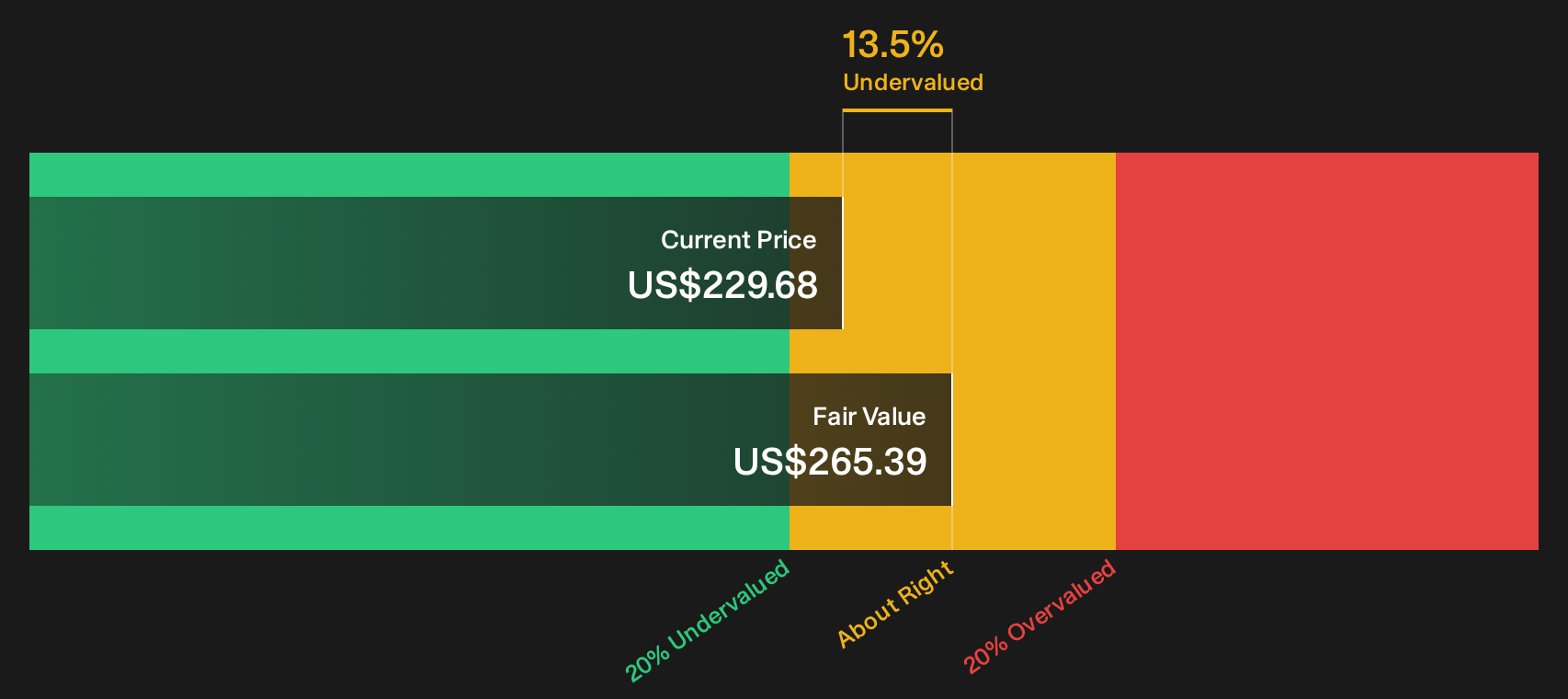
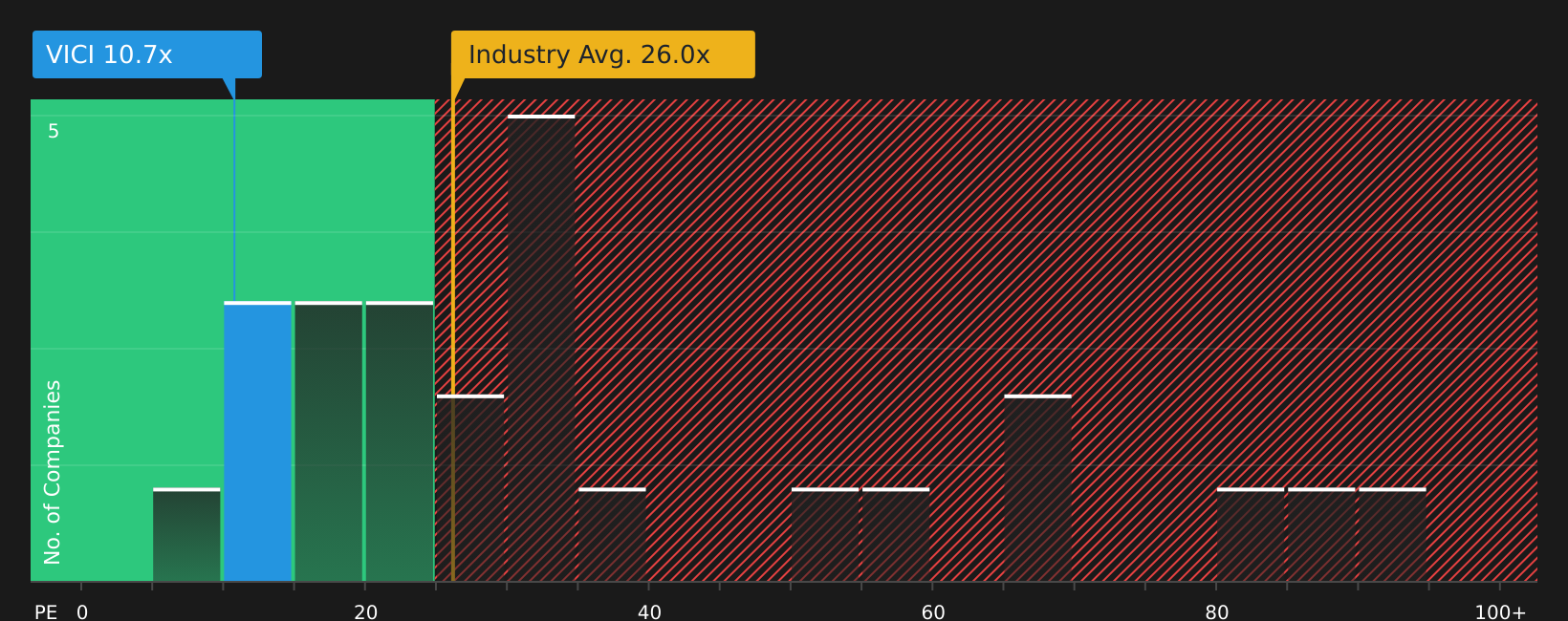
Income focused investors may be drawn to VICI Properties because its long term, inflation linked leases on marquee gaming and leisure real estate are designed to support a 3%+ dividend that is backed by recurring rent rather than more volatile trading profits. At the same time, the stock trades on a P/E that is well below many specialized REIT peers. The catch is that tenant concentration in Caesars and MGM, rising use of lending and development projects, and debt that is not fully covered by operating cash flow could test dividend resilience if conditions turn, which is why this REIT rewards a closer look.
VICI Properties combines marquee Las Vegas assets with long term inflation linked leases, which many investors may still be pricing cautiously. See how the analysis report for VICI Properties reveals what that means if tenant risks play out differently than expected.
Seeking Alternatives Beyond Dividend Powerhouses
Fresh ideas do not stay under the radar for long. Stocks can move from quiet to breakout before most investors react. Scan new opportunities before the crowd, act now.
- Target steadier portfolio momentum by reviewing a curated list of solid balance sheet and fundamentals (50 results) that keeps financial strength and fundamentals front and center while it still flies beneath most investors' screens.
- Position for potential sector breakouts by tracking 55 AI infrastructure stocks supporting the build out behind AI demand, while many investors are still focused only on front end software stories.
- Lean into long term demand trends with a hand picked 9 top copper producer stocks that could benefit if supply tightens and prices move before most portfolios catch up.
This article by Simply Wall St is general in nature. We provide commentary based on historical data and analyst forecasts only using an unbiased methodology and our articles are not intended to be financial advice. It does not constitute a recommendation to buy or sell any stock, and does not take account of your objectives, or your financial situation. We aim to bring you long-term focused analysis driven by fundamental data. Note that our analysis may not factor in the latest price-sensitive company announcements or qualitative material. Simply Wall St has no position in any stocks mentioned.
Have feedback on this article? Concerned about the content? Get in touch with us directly. Alternatively, email editorial-team@simplywallst.com