
- PRICING
- LIVE QUOTES
- LEARN
- HELP


EN
UK Automation Stocks For Investors Tracking The Shift Away From Graduate Hiring
The sharp 45% year-on-year drop in UK graduate vacancies is a clear sign that companies are rethinking how work gets done. Many are turning more seriously to automation and AI, which can reshape cost structures and productivity across the market. That shift creates fresh winners and potential laggards. This article walks through three UK Automation and AI-enablement stocks exposed to this trend and explains how the news backdrop could matter for each one.
The three stocks in this article are just a sample, and the full screen surfaced 12 more UK Automation and AI-enablement companies with equally compelling narratives that are not covered here. To identify and analyze the highest conviction ideas for your watchlist, head straight to the Automation and AI-enablement stocks in the UK screener.
Renishaw (LSE:RSW)
Renishaw is an engineering and scientific technology company that supplies precision measurement, sensing and process control equipment that helps automate tasks in robotics, CNC machining and factory production, which fits directly with the Automation and AI-enablement screener theme. Its products also reach into healthcare and scientific applications through neurosurgical robots, drug delivery systems and Raman spectrometers. Renishaw has a market cap of about £3.7b, and while detailed business segment revenue is not disclosed here, the company sells globally across the USA, China, Japan, Europe and the UK.
For investors watching how higher labour costs and weaker entry level hiring are pushing manufacturers toward automation, Renishaw is an important stock to understand. Its precision sensors and metrology tools help customers substitute manual inspection with automated, repeatable processes, and recent guidance for 2026 points to higher expected revenue as these solutions gain traction. At the same time, the company is open about labour costs being a major expense and is using severance schemes and productivity programs to reshape its own workforce. With a premium valuation and margin pressure in some regions, the key issue is whether Renishaw can turn this push toward automation into enough profitable growth to justify that pricing and its global expansion plans.
Renishaw’s push to automate both its customers’ factories and its own workforce hints at a bigger story. Get the full picture with the analyst forecasts for Renishaw and see what could tip the balance next.

TT Electronics (LSE:TTG)
TT Electronics supplies design led electronic components and power solutions that sit inside automation, electrification and mission critical systems in healthcare, aerospace and defense, which aligns naturally with the Automation and AI enablement theme as companies lean harder on smart hardware to cut labour costs. The group generates roughly £173 million of revenue in North America, £164 million in Asia and £144 million in Europe, showing a broad industrial and regional spread rather than reliance on a single market. With a market cap of about £242 million, TT Electronics sits in the smaller end of the UK quoted electronics space, which can make execution on its automation focused strategy especially important.
For investors interested in how automation demand filters back to component suppliers, TT Electronics is worth a closer look. Its electronics underpin power conversion, sensing and connectivity in performance critical systems, so any acceleration in factory automation and electrification can feed directly into its order book, even as the company works through issues such as destocking and headcount reductions in North America. The current P/S of 0.5x suggests the market is still cautious about its profitability outlook. The tension between that low sales multiple, governance changes on the board and the potential for higher margin automation products is where the real story starts, not where it ends.
TT Electronics appears to sit between a low 0.5x P/S multiple and its push into higher margin automation products. Use the analysis report for TT Electronics to see whether that discount hides the real turning point in this story.

Diploma (LSE:DPLM)
Diploma is a specialist distributor of technical products and services, supplying controls, seals and life sciences equipment that often underpin industrial and process automation as companies look to reduce routine labour. The Controls division is the biggest contributor, generating about £940 million of revenue, followed by Seals at about £454 million and Life Sciences at about £253 million, giving Diploma a broad spread across industrial and healthcare customers. With a market cap of roughly £9.7b, Diploma is a large UK listed automation enabler rather than a small niche supplier.
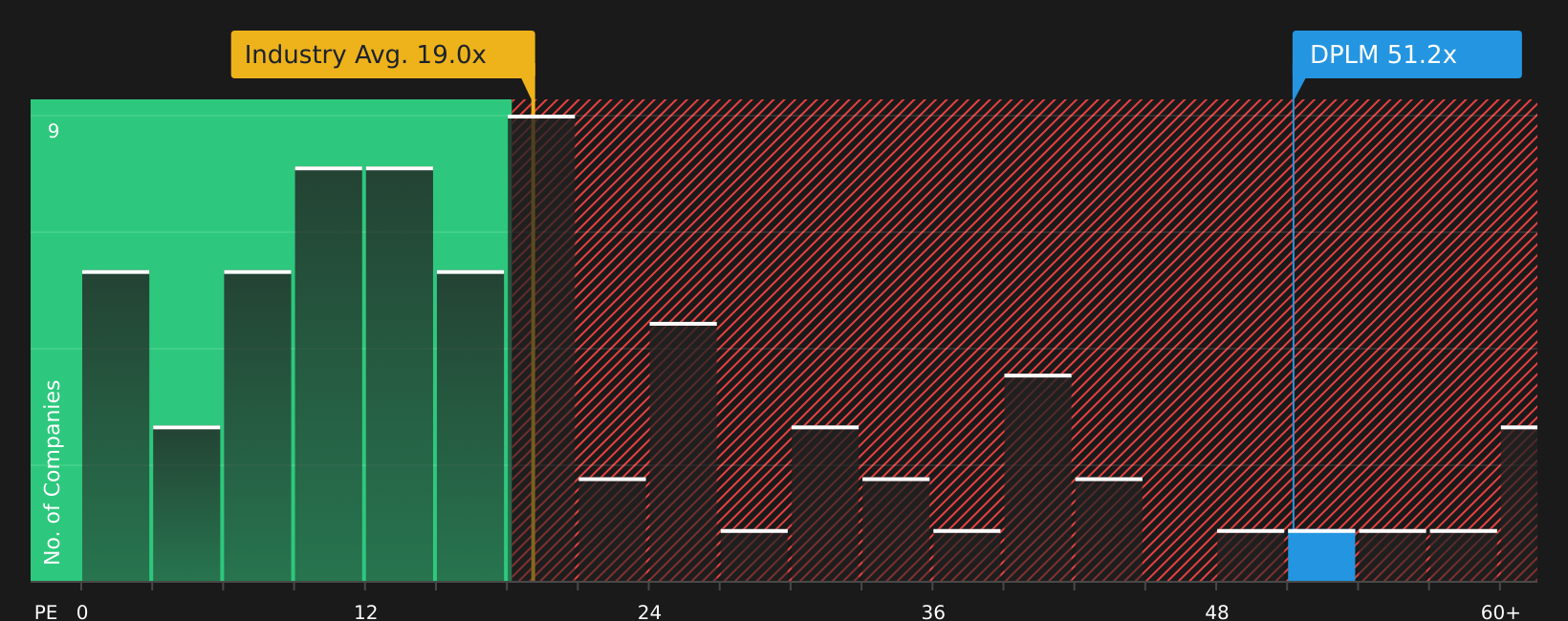
Diploma gives you exposure to the quieter side of automation, where higher spec cabling, interconnects and MRO services keep factories, data centres and medical equipment running as employers react to rising labour costs and tighter graduate hiring. Earnings and revenue growth have been strong in recent years, supported by exposure to areas like defence, data centres and diagnostics, and a capital light model that has converted a high proportion of profit into cash. At the same time, the stock trades on a rich valuation multiple, and the growth playbook leans heavily on acquisitions and relatively new senior leadership, which raises execution risk. For investors who want to understand whether that premium is justified by automation driven demand and disciplined deal making, Diploma is a story that deserves closer attention.
Diploma’s rapid acquisitions and rich valuation hint at a growth story that many investors may not have fully joined yet. See how the analyst forecasts for Diploma could reshape expectations, and why the real twist might still be ahead.
Seeking Alternatives Before The Crowd
Fresh ideas move first. By the time every investor sees a breakout, the most attractive entry point can be gone. Use these curated stock lists while the momentum still matters to help you act early.
- Look for resilient companies that may hold up when others are dropping by scanning the 7 resilient stocks with low risk scores, which filters for stronger balance sheets and steadier risk profiles.
- Explore potential momentum in metal producers before they are widely followed by reviewing the curated 32 elite gold producer stocks focused on established operators.
- Prepare for possible AI-related shifts with the hand picked 76 profitable AI stocks that aren't just burning cash, which highlights companies already generating profits rather than primarily burning cash.
This article by Simply Wall St is general in nature. We provide commentary based on historical data and analyst forecasts only using an unbiased methodology and our articles are not intended to be financial advice. It does not constitute a recommendation to buy or sell any stock, and does not take account of your objectives, or your financial situation. We aim to bring you long-term focused analysis driven by fundamental data. Note that our analysis may not factor in the latest price-sensitive company announcements or qualitative material. Simply Wall St has no position in any stocks mentioned.
Have feedback on this article? Concerned about the content? Get in touch with us directly. Alternatively, email editorial-team@simplywallst.com