
- PRICING
- LIVE QUOTES
- LEARN
- HELP


EN
Smart Decision Reference | The Hong Kong Stock Market Has Formed Two Lines
[Editor-in-chief Guan Shi]
Global trends were not ideal last week, but Hong Kong stocks went against the wind, stimulated by financial and real estate policies.
The US debt issue has become the latest focus of attention in the market. On August 21, local time, Trump said he did not instruct Treasury Secretary Bezent to interfere in the bond market, but said that in the face of a recovery in long-term bond yields, “the ultimate intervention is the US military. If we have to use it, we will use it.” If the US doesn't have a good solution, there will be problems with the dollar's credit. Gold, Bitcoin, Ethereum stablecoins, and digital asset stocks strengthened simultaneously last week, which is already reflecting this trend.
This week's Jackson Hole annual meeting was a macroscopic window for market observation. Federal Reserve Chairman Walsh made his debut at the annual meeting on August 28. This speech had a great impact on the global economy.
The market has formed two routes. One is a safe-haven direction for gold, shipping, and medicine, and the other is a technological route represented by AI. There is a lot of news about the technology direction this week. Trump predicted that the week of August 24 will meet with “AI industry figures”; AI leader Nvidia will be on the list in the early morning of August 27. Some of Nvidia's largest customers have been told that due to the soaring cost of memory chips, the price of servers equipped with Nvidia's AI chips will increase by more than 15% in most cases; domestically, Alibaba plans to sell HK$80 billion in new shares to raise all of them for AI. Which scientific and technological direction can take effect depends on the intensity of the news stimulus.
Nvidia is in talks to invest in data center power developer Cloverleaf Infrastructure. Good for power grid equipment, gas turbines, etc.
Consumer electronics are very popular. In September 2026, Apple's first folding screen iPhone will be released on the same stage as the iPhone 18 Pro series. The starting price of the Bank of China is expected to be 14,999 yuan, the top package will exceed 20,000 yuan, and the first year's stocking target will be raised to 10 million units. Varieties benefiting from related fruit chains are expected to be hyped up.
Tesla officially announced that it will hold a Cybercab press conference on September 3, which is expected to be the first public test ride. Autonomous driving may usher in catalysis.
In the direction of robotics, the 2nd World Humanoid Robot Games opened in Beijing. The Tianzhuo robot broke Bolt's 100 meter record at 9:39; Galaxy GM achieved the world's first robotic autonomous tennis tournament, focusing on B-side scenarios that can be implemented, such as logistics handling and industrial manufacturing.
The quarterly review of the Hang Seng Index series closed last Friday. The latest varieties included in the index mainly depend on the direction of pharmaceuticals, AI, and robotics.
[This week's gold stocks]
shell-w (02423)
On the evening of August 21, Shell released its financial report for the second quarter of 2026. Net revenue for the quarter was 24.5 billion yuan, adjusted operating profit was 3.59 billion yuan, and the adjusted operating profit margin was 14.6%, an increase of 8.5 percentage points over the previous year. The overall GTV (total transaction volume) reached 933.8 billion yuan, an increase of 6.3% over the previous year, the first increase in a year. Net profit was $2,624 million.
Huatai Real Estate's weekly tracking of key second-hand housing data (Week33) shows that in terms of marginal listing prices for second-hand housing, the iceberg index for 84 cities was -0.52% month-on-month (-0.48% last week), while first-tier, second-tier, and third-tier cities were -0.45%, -0.49%, and -0.55% month-on-month respectively; there were 17 cities where housing prices rose month-on-month (12 last week). In terms of real-time transactions, from August 1 to 14, the number of units sold in second-hand housing stores in 26 cities was +11% (July +10%), and the cumulative year-on-year ratio was +15%.
An empirical analysis of Japan and the US shows that the establishment of a bottom housing price in core cities will give the real estate chain full flexibility. 1. Housing prices in core cities are clearly ahead of the rest of the country. Among them, housing prices in Tokyo in Japan are about 5 years ahead of the country, and San Francisco in the US is about 3 years ahead of the country in housing prices; second, leading companies' stock prices track core city housing prices rather than national housing prices, showing the transmission path of leading stock prices bottom 1 core city and bottom of national housing prices; 3. After the housing price base in core cities is established, real estate and industrial chains are stronger on the left side of the country's housing price base. Real estate is revaluing balance sheets more, while industrial chains are revaluing profit sheets more.
[Industry Watch]
Optimus is moving forward in a low-key manner, and YuShu's listing is driving the acceleration of competition for physical intelligence. Although the V3 has not yet been officially unveiled, it was able to walk in March and entered the final polishing stage before the exhibition. Since April, Tesla has simultaneously promoted the AI5, Fremont production line, and Optimus Academy training system. In July, it dismantled the Model S/X production line and began installing the first Optimus production line. The project is moving from a single entity development to parallel verification of product customization, manufacturing, and training systems.
Meanwhile, Yushu Technology landed on the Science and Technology Innovation Board on August 19. In 2025, humanoid robots earned 868 million yuan, accounting for 51.78% of the main business revenue, further extending A-share humanoid robot investment from component mapping to in-house management and valuation comparison.
Guojin Securities believes that although the pace of V3 display and mass production is behind previous expectations, domestic and foreign companies have entered the engineering and commercial race, and the subsequent focus of competition will shift from demo display and shipment volume to mass production yield, average product price, gross profit margin, customer structure, repurchase rate, and scenario replication capability.
The vertical intelligent model is expected to reach real production scenarios more quickly.
The general route is represented by Google DeepMind, NVIDIA, etc., and hopes to form a mobile robot brain through basic models, human video, simulation, and cross-ontology data. Its value is to reduce the cold start cost of new entities and new tasks. However, there are differences in the morphology and control methods of different components, and it is difficult to fully cover force control, tactile, and long-tail abnormalities in the real environment, so generalization is extremely difficult, and there is still no clear timeline between model benchmark progress and stable commercial use.
The vertical route first limits the main body, task, and environment, and divides labor such as tightening, handling, sorting, loading and unloading, and inspection into trainable and inspectable types. Through a small number of human demonstrations and extensive real machine exercises, successful, failed, and abnormal samples can continue to flow back to training. When data is accumulated from scattered presentations to cover major operating conditions and long-tail problems, task completion rate, rhythm, and abnormal recovery capabilities are expected to change qualitatively.
Hong Kong stocks focus on Xiangong Intelligence (06106), Sanhua Intelligent Control (02050), Jinli Permanent Magnet (06680), Junsheng Electronics (00699), Hesai (02525), and Suteng Juchuang (02498).
[Data View]
According to data released by the Hong Kong Stock Exchange, the total number of outstanding contracts in the Hang Seng Futures Index (August) was 113,147, and the net number of outstanding positions was 3,3013. Hang Seng Futures refers to the settlement date of August 28, 2026. This period refers to settlement.
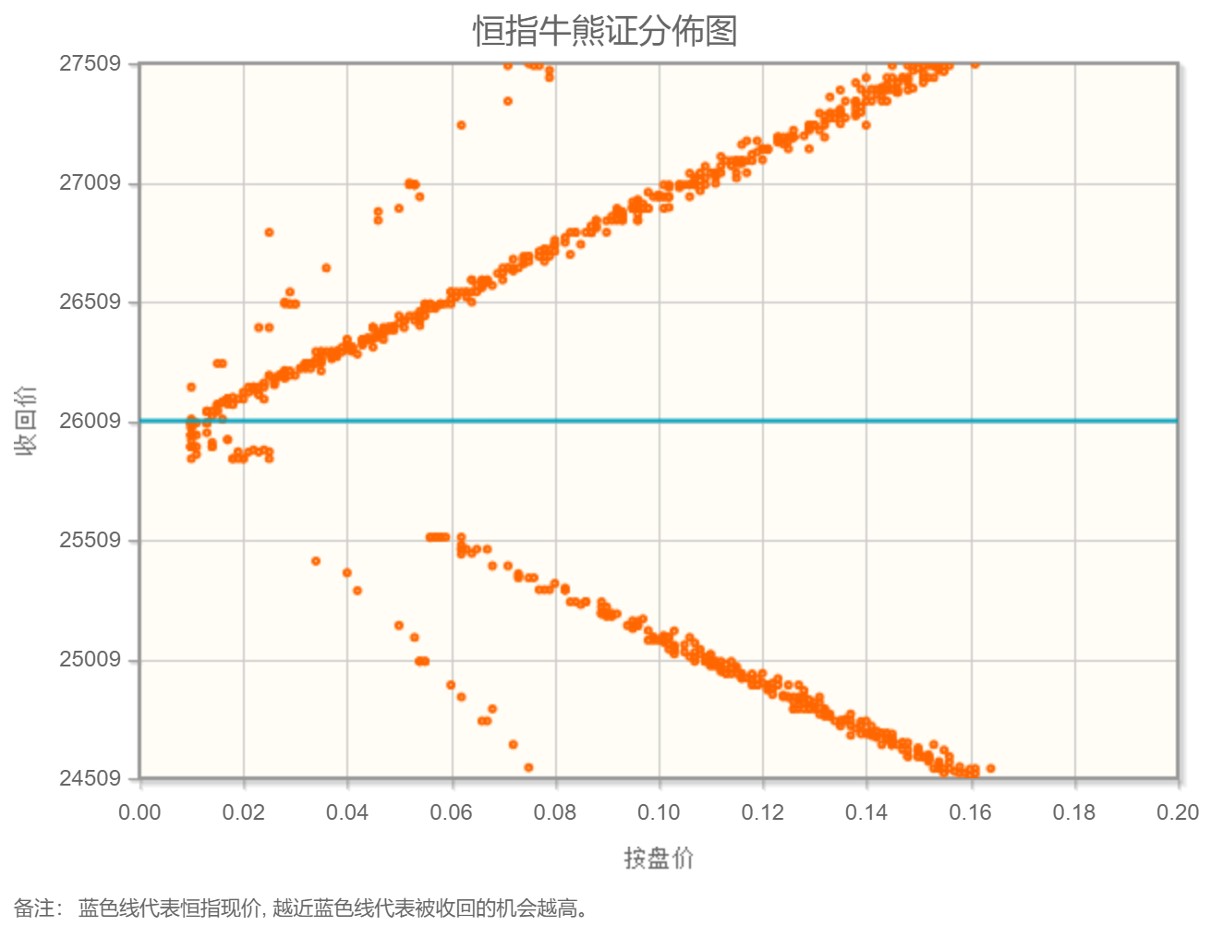
The Hang Seng Index is at 26009 points. The area where the upper bears are concentrated is close to the central axis, and the lower bullish market deviates, and Hong Kong stocks are motivated to go long. The number of constituent stocks in the Hang Seng Index will increase from 93 to 95. The Fed is not motivated enough to raise interest rates. The Hang Seng Index is bullish this week.
[Editor's Testimonial]
Looking at the medium to long term, the undertone of the market's operation is quietly being rewritten.
The core variable comes from the continuous evolution of exponential rules. The Hang Seng series of quarterly position adjustments were implemented. Huahong Hongli and Weichai Power were included in the Hang Seng Index. The new Hang Seng Technology Index combined with the sharp expansion of 46 targets in the Hang Seng Composite Index directly led to a further increase in the IT industry's share in the Hang Seng Index and a decline in financial share. This is just a prelude — by the end of the year, the Hang Seng Tech Index will expand from 30 to 50, restructure the six major technology themes, and introduce a revenue growth stock selection mechanism, which is a more iconic system change. The index actively favors hard technology tracks such as AI, advanced hardware, and robotics. Essentially, it uses compilation rules to keep up with industry trends, which will not only bring dividends in the reallocation of passive capital, but also optimize the growth and representation of the Hong Kong stock technology sector over the long term.
Large financing from leading companies has cast a “real money” vote for the AI market. Alibaba invested HK$80 billion in the largest allotment of shares in Hong Kong stock history, and 100% of the capital was invested in full-stack AI capabilities and infrastructure. In the short term, the nearly 8.4% discount and around 3.5% share capital dilution will inevitably disrupt stock prices and market sentiment; however, from an industrial perspective, this is a landmark event where leading Internet companies are shifting from “AI narratives” to “actual capital expenditure,” confirming that AI is moving from conceptual hype to the stage of capacity implementation and commercial attack, which strongly supports the industrial logic of the entire Hong Kong stock technology circuit. The 10 billion placement has progressed smoothly, which also shows that institutional capital is still willing to undertake the core technology assets of Hong Kong stocks.
IPOs are also injecting fresh water into the market. Xiyin and Mecamand offered shares at the same time. One is a leading global cross-border e-commerce company, and the other is a leading company on the industrial 3D vision robot circuit. The intensive landing of high-quality products in Hong Kong stocks is not only optimizing the structure of listed companies, but also increasing the market's appeal to growth capital.
Overall, the overall pattern of Hong Kong stocks outperforming the global technology market this year has yet to be reversed, but the combination of optimization of the index system, the increase in leading AI, and the supply of high-quality IPOs is silently consolidating the underlying ecology of Hong Kong stock technology growth. The short-term market is likely to continue to fluctuate and diverge under the influence of index adjustments and financing expansion. Passive capital entry and exit, and individual stock valuation differentiation will intensify; however, in the medium to long term, those in the hard technology and AI industry chain that actually have technical barriers and the ability to commercialize will continue to enjoy institutional dividends and industrial resonance, and structural opportunities are still the main focus of Hong Kong stocks.