
- PRICING
- LIVE QUOTES
- LEARN
- HELP


EN
ECB S.A. (WSE:ECB) Looks Like A Good Stock, And It's Going Ex-Dividend Soon
Readers hoping to buy ECB S.A. (WSE:ECB) for its dividend will need to make their move shortly, as the stock is about to trade ex-dividend. The ex-dividend date is two business days before a company's record date in most cases, which is the date on which the company determines which shareholders are entitled to receive a dividend. The ex-dividend date is important because any transaction on a stock needs to have been settled before the record date in order to be eligible for a dividend. In other words, investors can purchase ECB's shares before the 25th of August in order to be eligible for the dividend, which will be paid on the 25th of November.
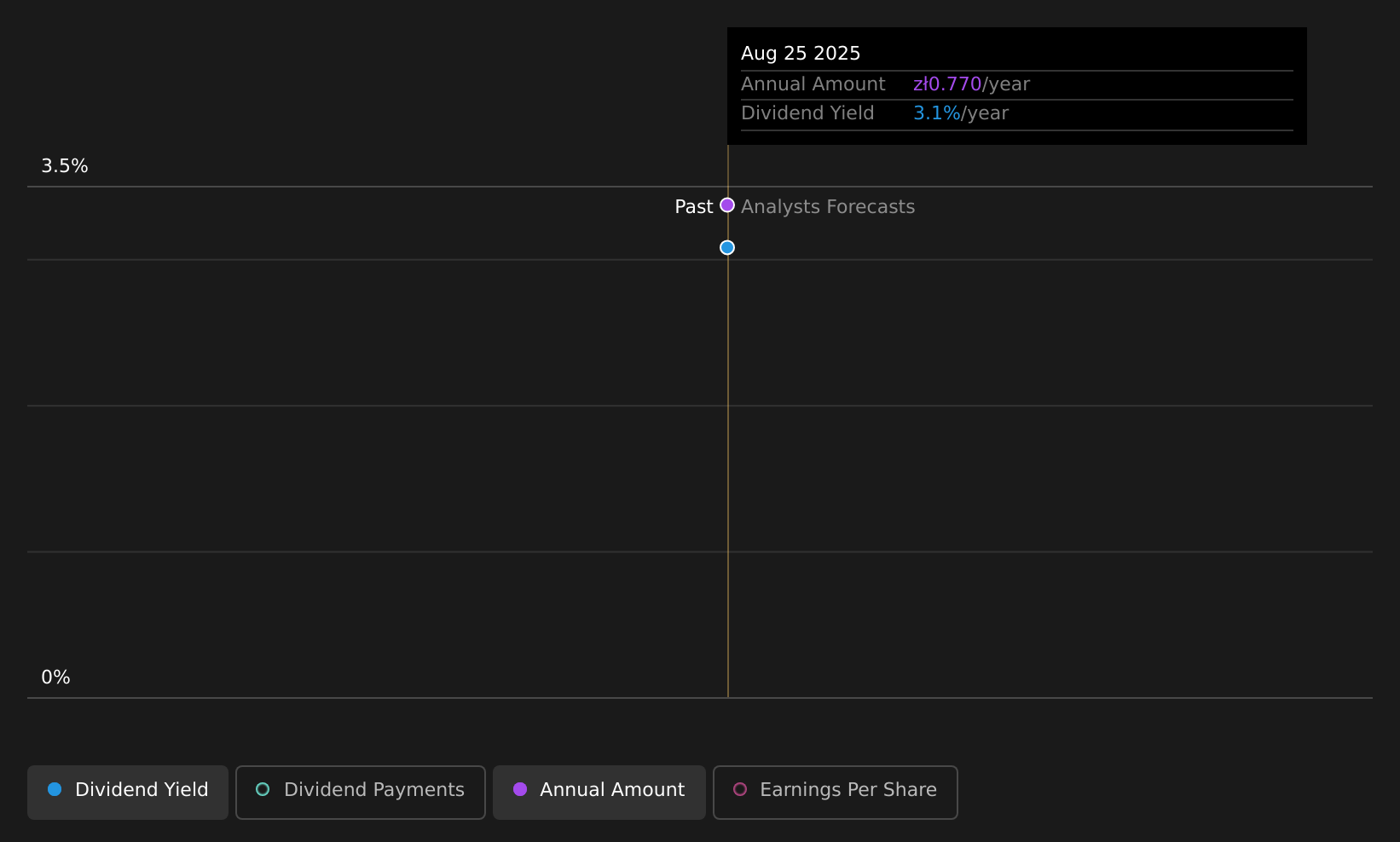
The company's upcoming dividend is zł0.80 a share, following on from the last 12 months, when the company distributed a total of zł0.77 per share to shareholders. Looking at the last 12 months of distributions, ECB has a trailing yield of approximately 3.7% on its current stock price of zł20.65. Dividends are a major contributor to investment returns for long term holders, but only if the dividend continues to be paid. So we need to investigate whether ECB can afford its dividend, and if the dividend could grow.
If a company pays out more in dividends than it earned, then the dividend might become unsustainable - hardly an ideal situation. ECB is paying out an acceptable 69% of its profit, a common payout level among most companies. Yet cash flow is typically more important than profit for assessing dividend sustainability, so we should always check if the company generated enough cash to afford its dividend. The good news is it paid out just 22% of its free cash flow in the last year.
It's encouraging to see that the dividend is covered by both profit and cash flow. This generally suggests the dividend is sustainable, as long as earnings don't drop precipitously.
See our latest analysis for ECB
Click here to see how much of its profit ECB paid out over the last 12 months.
Have Earnings And Dividends Been Growing?
Businesses with strong growth prospects usually make the best dividend payers, because it's easier to grow dividends when earnings per share are improving. If earnings fall far enough, the company could be forced to cut its dividend. It's encouraging to see ECB has grown its earnings rapidly, up 41% a year for the past five years. Management appears to be striking a nice balance between reinvesting for growth and paying dividends to shareholders. With a reasonable payout ratio, profits being reinvested, and some earnings growth, ECB could have strong prospects for future increases to the dividend.
Unfortunately ECB has only been paying a dividend for a year or so, so there's not much of a history to draw insight from.
To Sum It Up
Has ECB got what it takes to maintain its dividend payments? We like ECB's growing earnings per share and the fact that - while its payout ratio is around average - it paid out a lower percentage of its cash flow. There's a lot to like about ECB, and we would prioritise taking a closer look at it.
So while ECB looks good from a dividend perspective, it's always worthwhile being up to date with the risks involved in this stock. Every company has risks, and we've spotted 2 warning signs for ECB you should know about.
A common investing mistake is buying the first interesting stock you see. Here you can find a full list of high-yield dividend stocks.
Have feedback on this article? Concerned about the content? Get in touch with us directly. Alternatively, email editorial-team (at) simplywallst.com.
This article by Simply Wall St is general in nature. We provide commentary based on historical data and analyst forecasts only using an unbiased methodology and our articles are not intended to be financial advice. It does not constitute a recommendation to buy or sell any stock, and does not take account of your objectives, or your financial situation. We aim to bring you long-term focused analysis driven by fundamental data. Note that our analysis may not factor in the latest price-sensitive company announcements or qualitative material. Simply Wall St has no position in any stocks mentioned.