- PRICING
- LIVE QUOTES
- LEARN
- HELP


EN
Omdia: Fold-screen smartphone shipments are expected to double to 36 million units by 2028
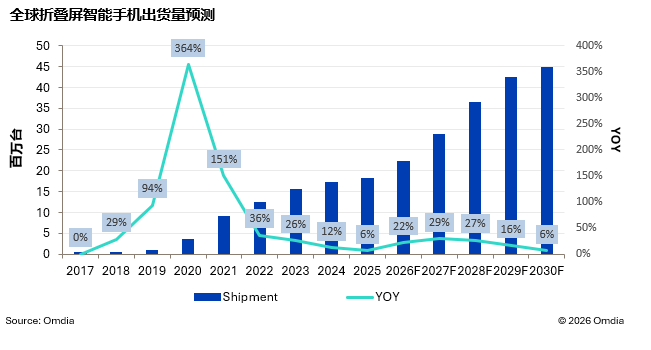
The Zhitong Finance App learned that according to Omdia's “Smartphone Function Forecast”, as major manufacturers continue to launch innovative folding screen products, the folding screen smartphone market is expected to maintain an annual growth rate of more than 20% by 2028, and the shipment volume will reach 36 million units.
Annual shipments are expected to more than double compared to 2025, mainly due to the advent of a new widescreen folding design, which will gradually be adopted by major smartphone manufacturers.
Omdia Principal Analyst (Zaker Li) said, “In a year of limited supply chains and increased market uncertainty, folding screen smartphones have become one of the industry's most attractive growth areas. Huawei first launched the Pura X Max with this new widescreen design in May 2026, followed by Samsung's launch of the Galaxy Z Fold 8 in August. As other major manufacturers launch similar products in the coming months, this new category is driving a new round of growth in the folding screen smartphone market.”
Widescreen folding screen smartphones are a new driver of growth
This new widescreen folding design uses a shorter, wider screen ratio, and when unfolded, it looks more like a tablet. Compared with current traditional book-style large folding screen phones, this design can provide a larger horizontal display area, meet productivity applications and content consumption requirements, while further improving portability by reducing the size and weight of the whole machine. The wider outer screen can present more horizontal content in daily use, while the expanded inner screen can provide a full-screen, tablet-style user experience to meet the needs of multitasking, media content consumption, and mobile office. This product form is expected to become an important development trend in the next generation of folding screen smartphones.
According to Omdia smartphone shipment data, global folding screen smartphone shipments reached 18.2 million units in 2025, slowing year-on-year growth to 6%, the lowest growth rate in recent years. In the first half of 2026, global folding screen smartphone shipments reached 5.1 million units, a year-on-year decrease of 21.6%. Among them, shipments of up-and-down flip (flip) folding screen smartphones decreased by 47% compared to the first half of 2025, while shipments of book-type (book-type) folding screen smartphones remained stable.
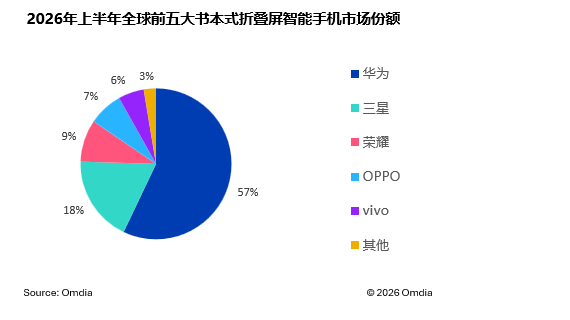
In the first half of 2026, book-based folding screen smartphones accounted for 69% of total global folding screen smartphone shipments, of which Huawei and Samsung together accounted for 75% of this market segment. The emerging widescreen book-style folding design is expected to be an important driving force for future market growth, and demand for up-and-down folding products may continue to weaken in the future.
Leading manufacturers have raised production targets for widescreen folding smartphones in 2026, and it is expected that more Android brands will adopt similar designs in 2027. As major manufacturers gradually expand the scale of production of related products, such products are expected to drive stronger growth in global folding screen smartphone shipments.
Folding screen smartphones have been growing for a long time, but they are still in the high-end niche
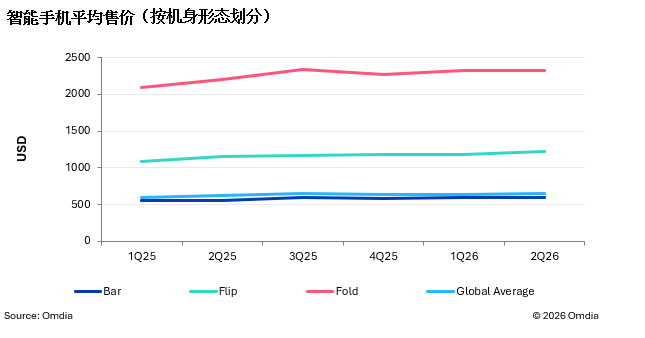
Omdia expects global folding screen smartphone shipments to exceed 22 million units in 2026, and the year-on-year growth rate will return to more than 22%. In the long run, folding screen smartphones will still be the high-end segment of the global smartphone market. Shipments are expected to reach 45 million units by 2030, but they only account for less than 3% of total global smartphone shipments.
Folding screen smartphones still face structural cost barriers, including large displays, hinges, and complex components including special glass, which keep their bill of materials (BOM) costs at a high level. As a result, manufacturers are prioritizing high-end positioning rather than pursuing increased shipments, while consumers need to balance higher product prices with product trade-offs, including imaging performance and maintenance costs.
In order to further expand the popularity of folding screen smartphones from early users, manufacturers need to develop differentiated and value-added services, give full play to the advantages of the folding screen product form, explore strategic cooperation that can reduce user ownership costs, and further highlight their value in more clear usage scenarios compared to traditional smartphones.