
- PRICING
- LIVE QUOTES
- LEARN
- HELP


EN
A $4.5 Billion Reason Why Nebius Stock Is Down Today
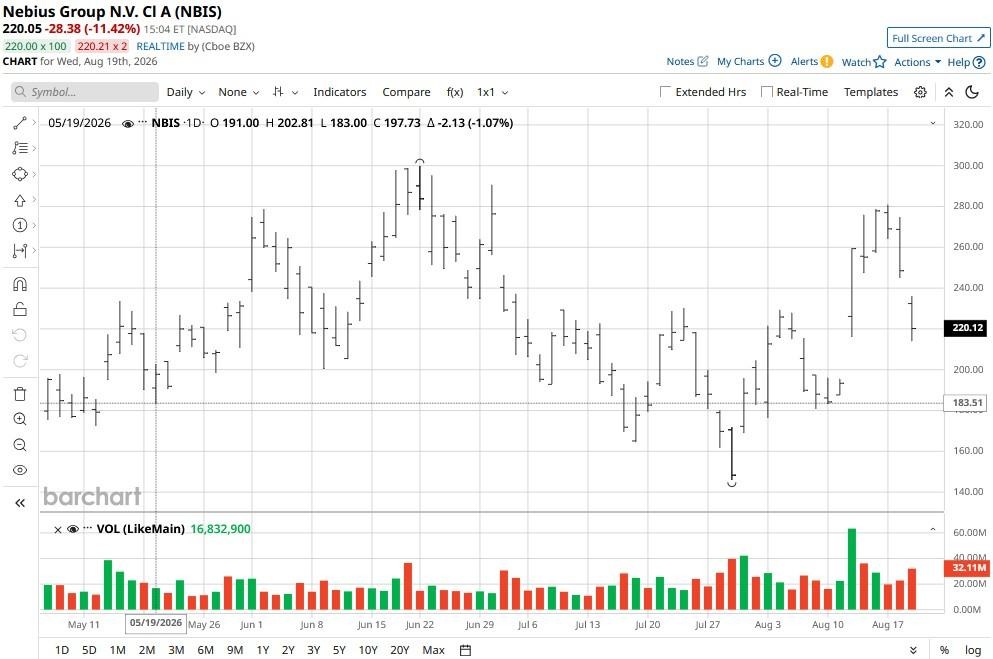
Nebius Group (NBIS) stock slipped on Aug. 19 after the artificial intelligence (AI) infrastructure firm disclosed plans for a $4.5 billion convertible senior notes offering.
In its press release, management also revealed that private negotiations are ongoing to exchange a portion of the company’s existing debt for its Class A common shares.
Despite today’s decline, Nebius shares are up more than 45% versus their July low.
Dilution Concerns Trigger a Selloff in Nebius Stock
Investors are bailing on NBIS stock primarily because of the looming threat of equity dilution and increased debt burden.
A potential debt-to-equity restructuring will further dilute existing shareholders and cap the upside by increasing the number of outstanding shares.
While the capital is earmarked for expanding data centers, building AI cloud, and procuring high-demand GPUs, the market is responding negatively as the raise will weigh on the firm’s balance sheet.
Note that the options market is also dovish on Nebius for the near term, with the lower price on contracts expiring mid-September set at about $183 currently, indicating potential for a little under 18% decline over the next four weeks.
Should You Buy the Dip in NBIS Shares?
For long-term investors, the selloff on Wednesday may be an opportunity to buy into a high-growth artificial intelligence infrastructure firm.
In its latest reported quarter, Nebius saw a more than 5x year-on-year increase in revenue to $582 million, while its adjusted EBITDA margin stood at an impressive 41%.
Management raised its full-year outlook to at least $3 billion in revenue, indicating strong confidence in sustained demand for the company’s AI infrastructure and cloud computing services.
That said, Nebius shares are currently trading at a price-to-sales (P/S) ratio of nearly 130x, which makes it an expensive name to own by any stretch of the imagination.
How Wall Street Recommends Playing Nebius
Investors should note, however, that Wall Street experts recommend looking beyond the near-term valuation concerns surrounding NBIS shares.
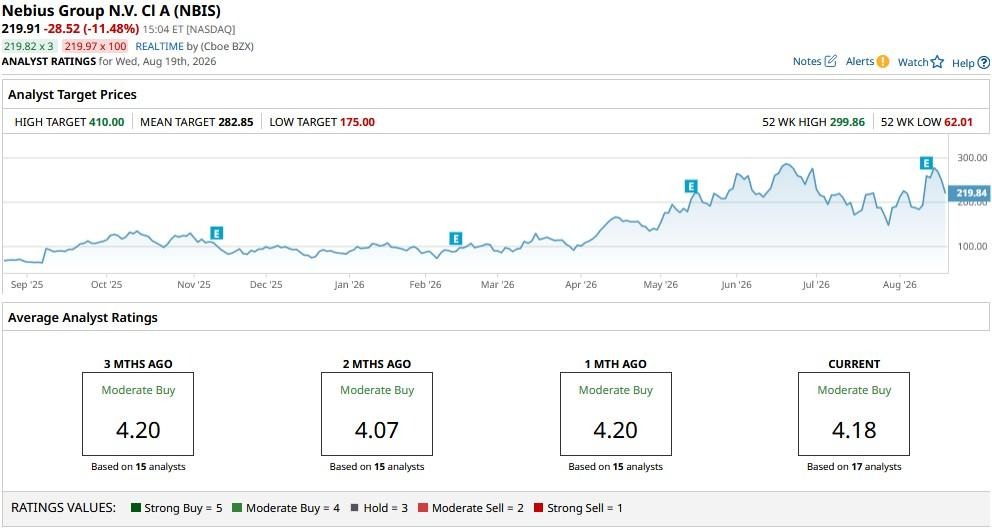
According to Barchart, the consensus rating on Nebius remains at “Strong Buy,” with the mean price target of nearly $283 indicating potential upside of roughly 30% over the next 12 months.
On the date of publication, Wajeeh Khan did not have (either directly or indirectly) positions in any of the securities mentioned in this article. All information and data in this article is solely for informational purposes. For more information please view the Barchart Disclosure Policy here.