
- PRICING
- LIVE QUOTES
- LEARN
- HELP


EN
GE Aerospace Stock Leads 3 Defense Picks Backed By Long Term Contract Demand
Energy prices are back in focus as Middle East risks feed into higher fuel costs and keep inflation pressures on central banks. In that backdrop, investors are watching sectors linked to government spending and long cycle contracts, including aerospace and defense. This article explains why the Aerospace And Defense screener is timely right now and highlights 3 stocks from the list that could deserve a closer look.
The three aerospace and defense stocks below are just a starting sample, and the full screen surfaced 72 more companies with equally compelling stories that are not covered here. To identify and analyze the highest conviction ideas across the sector, head straight to the Aerospace And Defense screener.
Redwire (RDW)
Redwire is a space infrastructure specialist that supplies sensors, avionics, payloads, antennas, spacecraft platforms and in-space manufacturing facilities to government and commercial programs, which is its clearest link to the Aerospace And Defense theme. The business is relatively balanced across its Space segment, which generated about US$208 million, and its Defense Tech segment on roughly US$217 million in revenue, showing that aerospace linked activity is a major but not exclusive driver. Redwire has a market cap of about US$3.4b, which puts it in the smaller end of listed space and defense contractors but large enough to compete for sizeable contracts.
Investors looking at pure space exposure within aerospace may pay attention to Redwire because its space systems and mission services are already embedded in government contracts like U.S. and NATO defense programs and NASA linked missions, and the company has been reporting record backlog and growing facility footprints to support that demand. At the same time, Redwire is still loss making, has relied heavily on external borrowing and fresh equity, and is digesting a large acquisition, so the path to consistent profits is not yet clear. For investors who want a company that is tightly tied to space infrastructure, with real programs on the books but meaningful execution and funding risk, Redwire is a business that may warrant further research.
Redwire’s growing contract backlog and recent acquisition could be reshaping its story; yet the real twist may sit in the balance between growth ambitions and funding strain, which shows up clearly in the Redwire financial health report

Build your own aerospace and defense shortlist
Redwire and the two other aerospace and defense stocks in this article all surfaced from a single custom screen, and you can set up your own filters just as easily. Use our flexible Screener to combine metrics like valuation, future growth, financial health and risks, or jump straight into our curated Investing Ideas.
General Electric (GE)
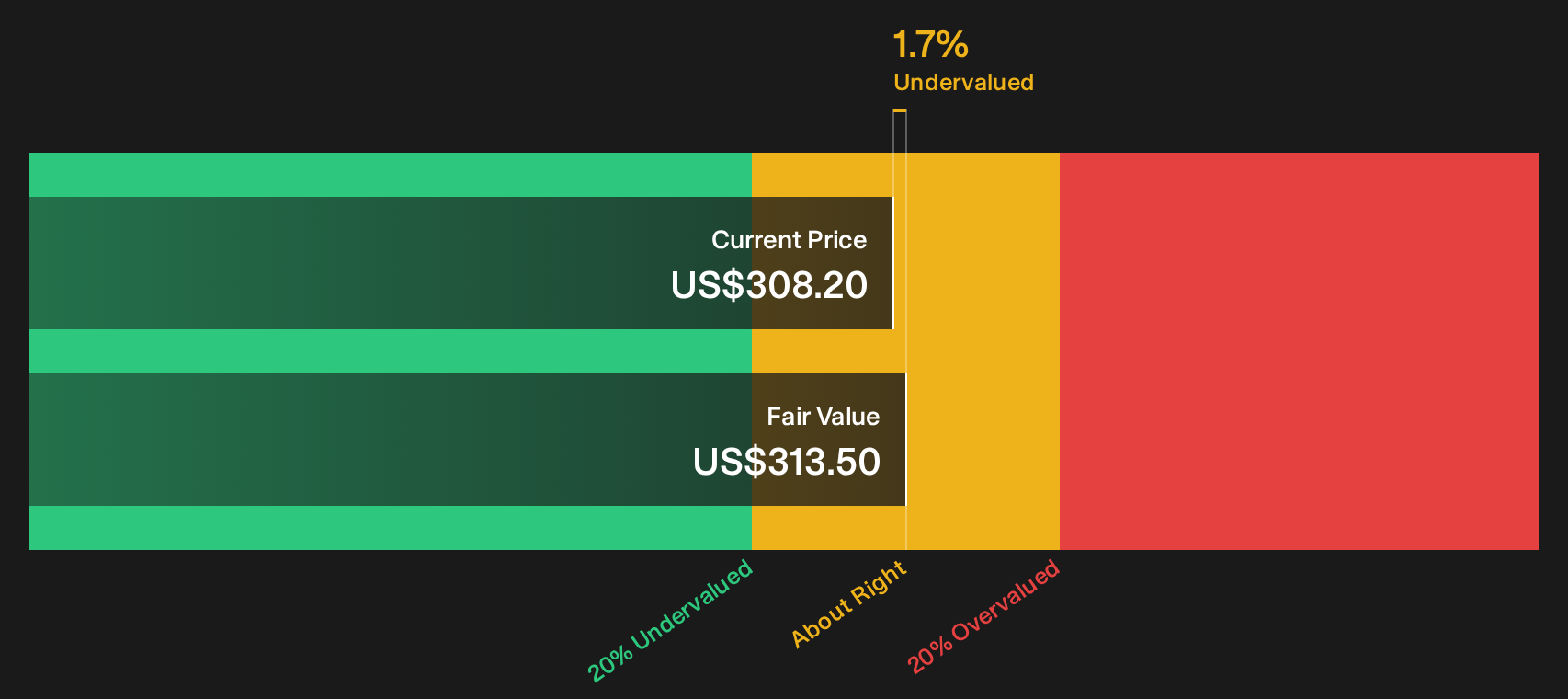
General Electric, now focused as GE Aerospace, designs and services commercial and military aircraft engines, which is the clearest tie to the Aerospace And Defense theme through its large installed base and long term maintenance and overhaul work. Most of its revenue comes from Commercial Engines & Services at about US$37.7b, with Defense & Propulsion Technologies adding roughly US$11.5b and Corporate & Other contributing around US$1.4b, so commercial aviation still drives the majority of the business. The company has a market cap of about US$382.2b, which places it among the largest listed aerospace engine suppliers globally.
GE Aerospace is worth a closer look if you want exposure to core jet engine programs where recurring services, MRO contracts and a US$210b plus backlog are key parts of the story. The same engine footprint that feeds spare parts and shop visits also ties GE to rising defense propulsion demand, with recent U.S. Air Force contracts and new missile and unmanned systems work adding another leg to that theme. On the other hand, the company has a heavy reliance on commercial aviation cycles, sizeable debt and a share price that already reflects strong expectations, so execution on next generation engines and supply chain fixes is particularly important. Investors who want to understand how that trade off between cash rich aftermarket potential and financial and execution risk balances out will need to look more closely at the numbers and contract pipeline.
GE Aerospace’s huge installed engine base is only half the story. The real question is how that US$210b plus backlog and heavy debt load fit together in the General Electric financial health report
Kratos Defense & Security Solutions (KTOS)
Kratos Defense & Security Solutions is a defense technology company best known in this theme for its unmanned aerial systems and propulsion hardware that serve U.S. and allied military programs. It generates about US$317 million from its Unmanned Systems segment and roughly US$1.2b from Kratos Government Solutions, so aerospace linked drones, missile propulsion and satellite ground systems are important within a broader government services mix. The company has a market cap of about US$12.1b, which places Kratos among the larger pure play defense technology specialists.
Kratos may be worth attention for investors seeking direct exposure to defense technologies that governments are actively buying today, including jet powered drones, hypersonic payloads, missile seekers and counter UAS systems. The company reports a growing pipeline across unmanned systems, propulsion and space related electronics, with contract wins such as the GEK800 engine program and new hypersonic and counter UAS facilities contributing to that opportunity. The flipside is meaningful risk related to heavy investment, reliance on government budgets and supplier concentration, which can pressure cash flow and make earnings less predictable. For investors evaluating whether the trade off between potential growth and execution risk is reflected appropriately in the current valuation, Kratos is a company that may merit closer inspection.
Kratos appears to be an accelerating defense story, with unmanned systems and propulsion projects gaining attention while the full picture is still emerging. Get the analyst forecasts for Kratos Defense & Security Solutions and see what the market might be missing.

Seeking Fresh Alternatives Beyond Aerospace?
Fresh stock ideas can move from quiet to breakout before most investors even notice. Use that window while it matters, catch momentum early and act now.
- Spot companies quietly building momentum in digital assets before they are widely talked about by checking the 19 cryptocurrency and blockchain stocks while these stories stay under the radar for now.
- Track established payers where yields could be at risk of dropping as prices move. Scan the 10 dividend fortresses while these higher payouts are still available.
- Rotate into businesses with stronger balance sheets before the crowd chases safety and valuation. Use the curated list of solid balance sheet and fundamentals (50 results) while it still feels early.
This article by Simply Wall St is general in nature. We provide commentary based on historical data and analyst forecasts only using an unbiased methodology and our articles are not intended to be financial advice. It does not constitute a recommendation to buy or sell any stock, and does not take account of your objectives, or your financial situation. We aim to bring you long-term focused analysis driven by fundamental data. Note that our analysis may not factor in the latest price-sensitive company announcements or qualitative material. Simply Wall St has no position in any stocks mentioned.
Have feedback on this article? Concerned about the content? Get in touch with us directly. Alternatively, email editorial-team@simplywallst.com