
- PRICING
- LIVE QUOTES
- LEARN
- HELP


EN
Saudi Aramco Stock And 2 Global Oil Producers Facing Mixed Energy Markets
Oil markets are sending mixed signals, with easing crude prices, tighter gas storage and fresh geopolitical risks all pulling in different directions. That uncertainty is drawing attention to large integrated producers, where scale, diversification and balance sheet strength can matter when expectations change quickly. This article looks at 3 global integrated oil and gas stocks exposed to these cross currents and explains why each could be worth a closer look right now.
The three stocks below are just a sample from this group, and the full screen surfaced 39 more large integrated producers with equally compelling narratives that are not covered here. To see the wider opportunity set, head straight into the Global Integrated Oil & Gas Producers screener to identify, compare and analyze the integrated energy stocks that best fit your own conviction.
DCC Energy (LSE:DCC)
Overview: DCC Energy is a Dublin based distributor and service provider that supplies transport and heating fuels, LPG, biofuels, electricity and gas to households, fleets and businesses, while also running service stations and offering energy efficiency, solar and digital fleet services. Through its DCC Technology arm, it distributes and supports professional, information and lifestyle tech products that sit behind audio visual systems, IT networks and consumer devices.
Operations: DCC Energy generates the bulk of its revenue from the DCC Energy segment at about £13.0b, with a smaller contribution of about £2.5b from DCC Technology.
Market Cap: £5.45b
DCC Energy provides exposure to a wide mix of downstream fuels and cleaner energy services at a time when oil price signals, OPEC policy and European gas storage trends are pulling in different directions. The company is pivoting toward biofuels, liquid gas and solar solutions. This focus increases its ties to dynamics in gas markets and decarbonisation policies, and also maintains sensitivity to energy price swings, regulation and the group’s use of external borrowing. Recent earnings have been soft and the stock trades on a higher P/E than many peers. The 3.4% dividend yield and a move to rename and refocus the group on energy indicate a clearer strategic direction for investors monitoring this sector.
DCC Energy’s pivot toward biofuels, liquid gas and solar is easy to miss behind recent soft earnings and a higher P/E. The real question is whether the balance sheet and cash flows support that shift, which is exactly what the DCC Energy financial health report

Build your own energy transition shortlist
DCC Energy and the two other stocks in this article all surfaced from a single screener, but the real advantage comes when you set the rules yourself. Use our flexible Screener to combine filters such as valuation, balance sheet strength, risks and dividends to suit your style, or tap into any of our ready made Investing Ideas.
Koninklijke Vopak (ENXTAM:VPK)
Overview: Koninklijke Vopak is a Rotterdam based tank storage company that stores and handles liquid chemicals, gases, oil products, vegoils and biofuels at terminals around major ports, acting as critical midstream infrastructure for energy producers, traders, manufacturers and governments worldwide.
Operations: Vopak generates its revenue across a global terminal network, with about €355.2 million from the Netherlands, €285.9 million from Singapore, €232.3 million from the United States and €330.8 million from all other business regions, supported by smaller contributions from Asia, the Middle East and corporate activities.
Market Cap: €5.36b
Koninklijke Vopak sits in a position that may appeal to investors who want exposure to energy price swings without taking direct upstream commodity risk. It earns storage fees from oil products, chemicals and gases. It is also investing heavily in LNG, ammonia, hydrogen, biofuels and battery energy storage, which is tied to tighter gas markets and new energy trade routes highlighted by recent IEA and OPEC signals. At the same time, the company carries high debt, has had uneven earnings with sizeable one off items, and faces pressure from weaker chemicals demand and underused legacy assets. For investors who believe that volatile flows and energy transition infrastructure can support future cash flows despite those risks, Vopak may be a candidate to keep on the watchlist.
Koninklijke Vopak sits at the crossroads of old fuels and new molecules, yet the real story is how its LNG and hydrogen push stacks up against high debt and uneven earnings in the 3 key rewards and 2 important warning signs

Saudi Arabian Oil (SASE:2222)
Overview: Saudi Arabian Oil Company, commonly known as Saudi Aramco, is an integrated energy and chemicals company that produces crude oil, natural gas and refined products, and turns them into fuels, petrochemicals and other industrial materials sold across global markets. Alongside upstream production it runs refineries, petrochemical complexes, power assets and extensive trading, storage, logistics and services operations.
Operations: Saudi Arabian Oil generates about SAR 1.09t in revenue from its Upstream segment and about SAR 1.11t from Downstream, partly offset by SAR 381.0b of eliminations and supported by smaller corporate activities of SAR 3.1b.
Market Cap: SAR 6,420.2b
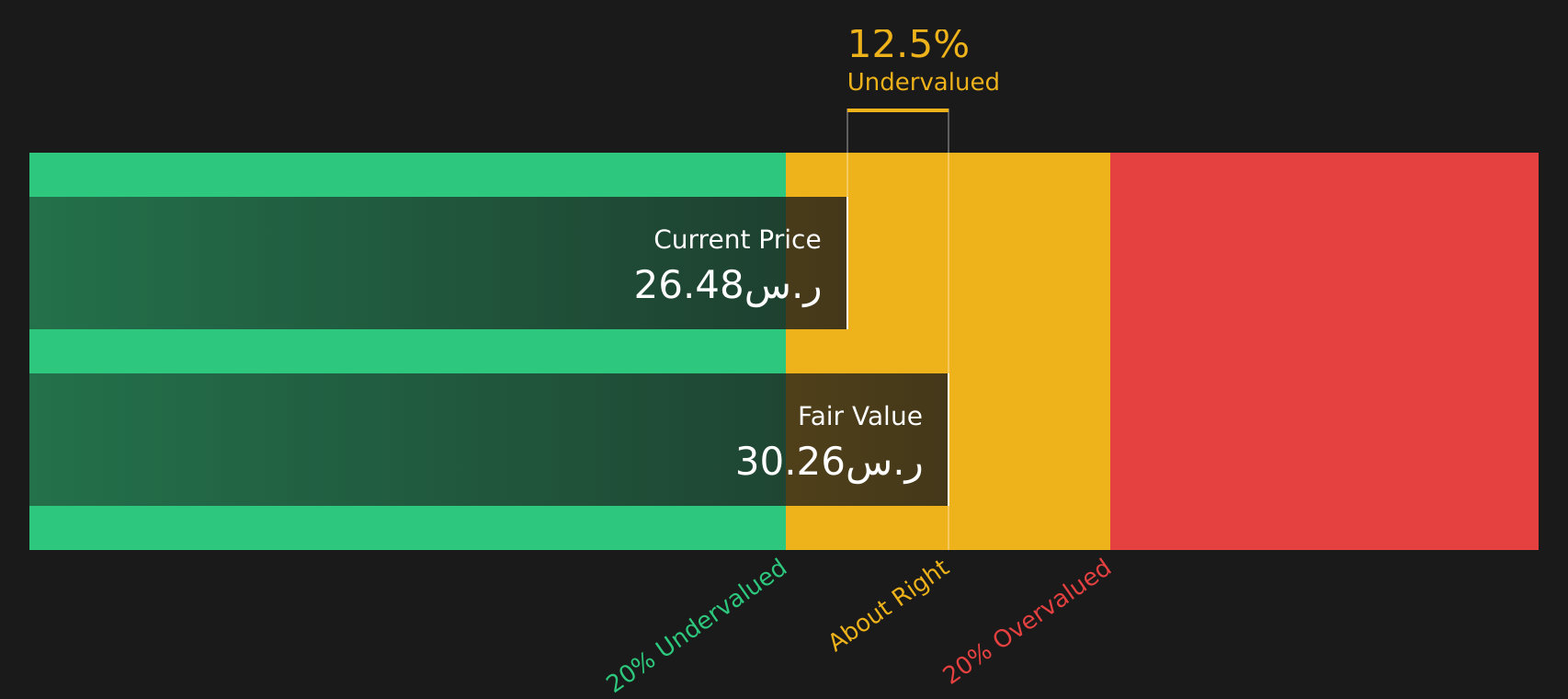
Saudi Arabian Oil sits at the center of today’s oil and gas story, with integrated upstream and downstream operations and spare capacity that can respond when inventories, tankers and trade routes are disrupted. Recent results show high earnings, strong profit margins and a large dividend, while the stock trades below some estimates of its future cash flow value. The flip side is clear: revenue is forecast to decline, the dividend is not well covered by free cash flow and the company relies heavily on external funding at a time when demand forecasts and energy transition risks are becoming more important. For investors who want to understand whether that trade off is worth it, there is more to unpack in the detailed analysis.
High earnings and a large dividend at Saudi Arabian Oil can make the trade off look simple. Yet the real story sits in how those cash flows stack up in the analysis report for Saudi Arabian Oil
Seeking Alternatives Beyond Integrated Energy
Fresh stock ideas move fast. Some are building breakout momentum while others are still under the radar for now. Do not get caught dropping in late, act now.
- Target resilient cash generators before the crowd spots them by scanning the curated list of solid balance sheet and fundamentals (20 results) that keep financial risk in tighter check.
- Ride early momentum in income focused opportunities by zeroing in on the hand picked 5 dividend fortresses that aim to keep yields flying while it matters.
- Position ahead of the next commodity story by reviewing the focused 29 elite gold producer stocks that could benefit if interest in hard assets returns at speed.
This article by Simply Wall St is general in nature. We provide commentary based on historical data and analyst forecasts only using an unbiased methodology and our articles are not intended to be financial advice. It does not constitute a recommendation to buy or sell any stock, and does not take account of your objectives, or your financial situation. We aim to bring you long-term focused analysis driven by fundamental data. Note that our analysis may not factor in the latest price-sensitive company announcements or qualitative material. Simply Wall St has no position in any stocks mentioned.
Have feedback on this article? Concerned about the content? Get in touch with us directly. Alternatively, email editorial-team@simplywallst.com