
- PRICING
- LIVE QUOTES
- LEARN
- HELP


EN
Corning (GLW) Stock Looks Rich Relative To Fair Value
Corning stock has delivered a very large 3 year gain while the valuation checks are split, with the Discounted Cash Flow (DCF) estimate pointing to upside relative to the current share price and the market multiples suggesting the stock now trades at a premium.
- Corning is up about 4.4x over the past 3 years, which puts extra focus on whether recent buyers are paying above the company’s underlying value.
- Fresh attention on U.S. semiconductor and data infrastructure, including recent policy moves on polysilicon pricing and reports of potential restrictions on Chinese data center components, can support sentiment around Corning, while any reversal of these expectations or weaker demand for related products may weigh on the valuation.
- Corning scores 4 out of 6 on the broader valuation checks, which points to a mixed picture rather than a clear bargain or an obviously expensive stock.
The stock's next move may depend on whether the intrinsic value suggested by the DCF or the richer market multiples prove to be the better guide for Corning at this price.
Is Corning a Bargain on Cash Flow?
The Discounted Cash Flow (DCF) method estimates what Corning is worth today based on its projected future cash generation. For the latest twelve months, Corning produced about $2.5b in free cash flow, and the model assumes these cash flows continue to grow rather than shrink over time.
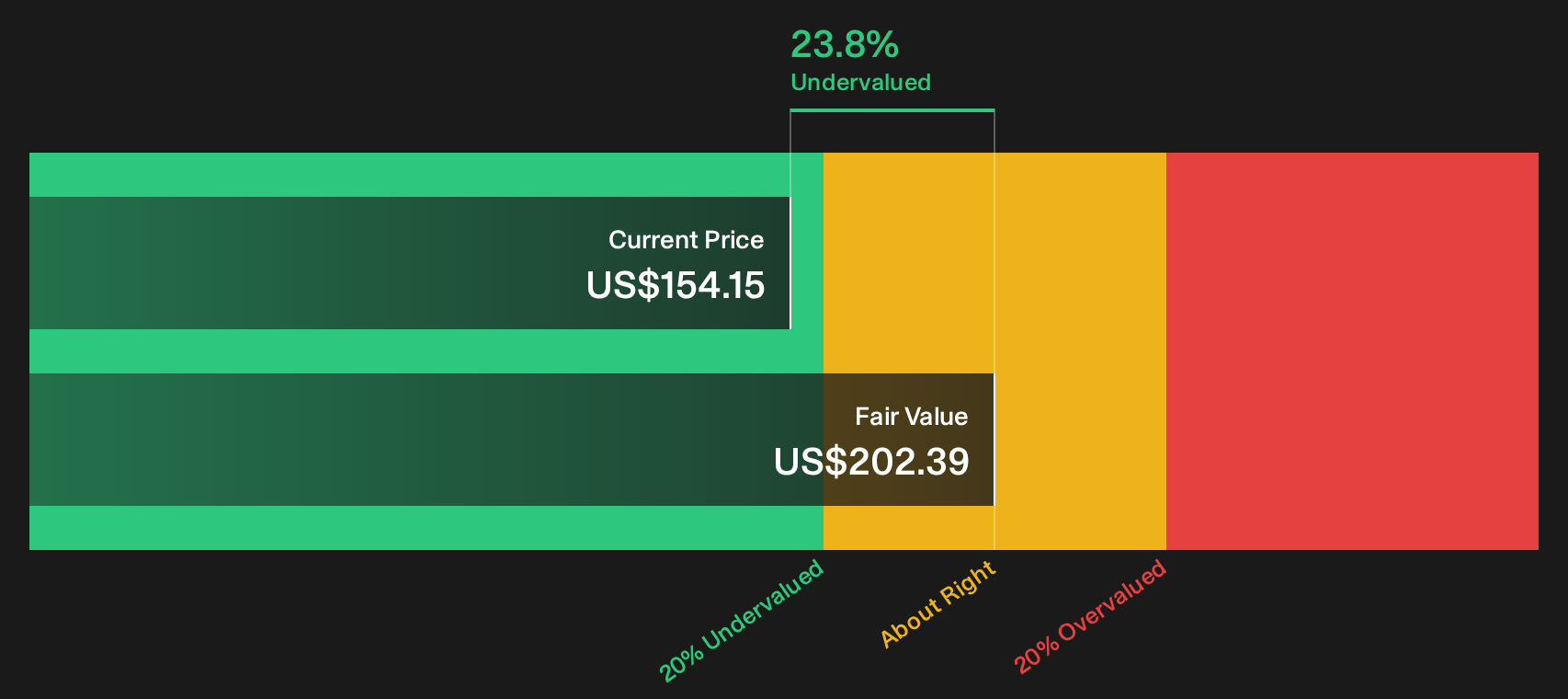
Based on these cash flow projections, the DCF model points to an estimated intrinsic value of about $201 per share. This figure sits above the current share price and indicates the stock is 20.7% undervalued. The recent move to restrict Chinese data center components, which has lifted interest in Corning, helps explain some of the share price strength but still leaves the DCF estimate ahead of where the market is currently pricing the stock.
On this cash flow view, Corning appears undervalued, with the DCF indicating more value than the current share price reflects.
Our Discounted Cash Flow (DCF) analysis suggests Corning is undervalued by 20.7%. Track this in your watchlist or portfolio, or discover 49 more high quality undervalued stocks.
Is Corning Getting Expensive on Earnings?
P/E is a useful lens for Corning because earnings are a key focus for many investors in established hardware and components companies. Corning currently trades on a P/E of about 72.2x, which is more than double the Electronic industry average of roughly 31.9x and sits below the peer group average of about 100.5x.
The fair P/E for Corning, based on factors such as its size, industry and risk profile, is estimated at around 53.0x. That is well under the current 72.2x multiple, which indicates investors are paying a premium relative to what this framework would expect. Even allowing for stronger sentiment after the recent policy and data center headlines, the current earnings multiple values Corning at a richer level than these benchmarks indicate.
On this earnings-based view, Corning stock appears overvalued, with the current P/E sitting well above the model’s fair multiple.

See what the numbers say about this price — find out in our valuation breakdown.
The Corning Narrative: What Would Justify Today's Price?
Simply Wall St Narratives for Corning pick up where this valuation split leaves off and explain what would need to happen with Corning's growth, margins and earnings for the stock to be worth materially more or materially less than today's price, based on different views from the community. Rather than relying on a single multiple or model output, each narrative presents its own fair value assumptions so you can revisit them against future results.
One of the top community narratives on Corning: 26% undervalued
"The company sees substantial growth in Optical Communications, particularly in innovations for Gen AI data centers, which are expected to drive incremental revenue and accelerate operating margin improvements toward 20% by the end of 2026…"
Read one of the top narratives on Corning
Do you think there's more to the story for Corning? Head over to our Community to see what others are saying!
The Bottom Line
Corning sits in a genuine valuation tug of war. The Discounted Cash Flow (DCF) intrinsic value estimate points to the stock as undervalued, while the P/E based view screens as overvalued compared with its tailored fair multiple and industry benchmark. The gap largely comes down to how you weigh Corning's future cash flow delivery and capital needs against the high expectations now embedded in the earnings multiple after a very strong 3 year move. The crux for investors is whether margins and demand in areas such as data infrastructure evolve in line with the optimistic cash flow path that would justify both the DCF upside and the elevated multiple.
This article by Simply Wall St is general in nature. We provide commentary based on historical data and analyst forecasts only using an unbiased methodology and our articles are not intended to be financial advice. It does not constitute a recommendation to buy or sell any stock, and does not take account of your objectives, or your financial situation. We aim to bring you long-term focused analysis driven by fundamental data. Note that our analysis may not factor in the latest price-sensitive company announcements or qualitative material. Simply Wall St has no position in any stocks mentioned.
Have feedback on this article? Concerned about the content? Get in touch with us directly. Alternatively, email editorial-team@simplywallst.com