
- PRICING
- LIVE QUOTES
- LEARN
- HELP


EN
The war was difficult to break, and more than 10 oil tankers relaying the “secret crossing” of the Middle East oil route to the Strait of Hormuz
The Zhitong Finance App learned that despite recent frequent attacks, key oil transportation routes in the Middle East region via the Strait of Hormuz are still in operation. This “marine lifeline” undertakes the task of transferring and leaving large quantities of crude oil.
Satellite images show that several ships are transferring crude oil ship-to-ship on the outer side of the Strait of Hormuz, indicating that some tankers are still “undercover” through this water area. According to data collected by the EU's “Sentinel 2” satellite on Monday, a total of 12 such transfers were detected in the sea area stretching more than 100 kilometers (about 62 miles) off the coast of Oman and the United Arab Emirates.
According to compiled ship tracking data and statistics from Kpler and Vortexa agencies, since last Saturday, at least 4 outbound supertankers have reappeared after passing through the Strait of Hormuz. These tankers carried a total of about 8 million barrels of crude oil. Some of these ships have carried out transit missions on this route many times before, while others may sail to refineries in other regions of the world.
In the current context of the continuing tense situation in the region, such transit and transit operations have provided key support to the global energy market and helped to curb the sharp rise in oil prices to a certain extent. According to statistics, millions of barrels of crude oil are transported through this waterway every day, effectively mitigating the supply gap caused by the conflict in the global market.
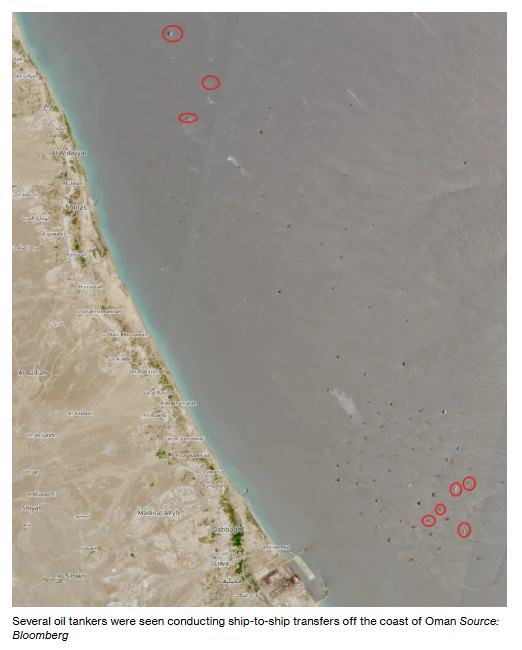
However, this path is not risk-free. The UAE's main state-owned oil company — Abu Dhabi National Petroleum Company (ADNOC) — was one of the most active exporters of crude oil through the Strait of Hormuz during the war. The company revealed late last week that 15 of its ships had already been attacked during the clashes. And just over the weekend after the announcement was made, another ship was attacked.
ADNOC's shipping division said on Tuesday that its profits increased significantly in the most recent quarter due to “providing additional services to deliver UAE energy globally.” At the same time, high shipping costs have also boosted profits.
Currently, most tankers leaving the Strait of Hormuz choose to sail along the Oman coastline. Such ships usually receive navigation assistance and protection from the US military during the transit period.
The issue of the right of way through the Strait of Hormuz has always been a key point of disagreement in negotiations to end Iran's war. Iran insists that it has the right to approve passing ships and plans to levy tolls; the US side is imposing a blockade on Iranian ships to cut off the flow of their oil exports.
Due to ongoing attacks on shipping, the number of shipowners still willing to enter the Persian Gulf is relatively limited. This situation has directly boosted tanker freight rates — the daily rent on the benchmark route is once again approaching the high of 500,000 US dollars per day.