
- PRICING
- LIVE QUOTES
- LEARN
- HELP


EN
IPO News | ReLink Group Announces Second Listing on the Hong Kong Stock Exchange as China's Fourth Largest Steel Industry Service Provider and Trader
The Zhitong Finance App learned that according to the Hong Kong Stock Exchange's disclosure on August 11, Hangzhou Relink Group Co., Ltd. (abbreviation: Relink Group) submitted a listing application to the main board of the Hong Kong Stock Exchange, and CICC is its sole sponsor. The company submitted its listing to the Hong Kong Stock Exchange on February 9, 2026.
Company profile
According to the prospectus, Renlian Group is a commodity industry service provider and trader located in China. It purchases and sells more than 294 types of physical products, including ferrous metals and raw materials, chemicals, non-ferrous metals and other categories.
The company mainly purchases and distributes the following commodities, ferrous metals and raw materials: a complete range, covering almost the entire industrial chain from upstream raw materials to downstream ferrous metal products, including iron ore, coal, hot-rolled coils, steel bars, special steel and stainless steel products. Chemical categories: Multiple chemical categories, including olefins, aromatic hydrocarbons, polyester, rubber, pulp, and liquefied petroleum gas. Specifically, in view of the opportunities brought about by the global energy transition, the company has expanded its commodity portfolio to include commodities of new energy materials such as lithium carbonate and industrial silicon. Non-ferrous metals: Various types of non-ferrous metals, mainly including copper, aluminum, zinc and nickel.
The company designs flexible pricing arrangements according to customer requirements for delivery times, quality standards and specifications. The company's transactions are usually provided in collaboration with end-to-end supply chain services, and can be accompanied by customized consulting services to help customers improve operational efficiency and management levels. In addition to serving customers, the company also continues to expand the value chain layout through strategic investment and cooperation, deepening upstream supply access, strengthening downstream coverage, seizing transaction opportunities and unleashing growth potential in different industrial cycles.
The company has established a global business layout. As of the last practical date (August 2, 2026), the company had subsidiaries and offices in 17 countries and regions, and carried out trade activities in more than 80 countries and regions during the track record period, thereby contributing to large-scale, sustainable and efficient trade flows. With this broad layout, the company has been able to seize diverse opportunities in different regions, product categories and economic cycles to enhance supply guarantee capabilities.
According to Frost & Sullivan, the company is China's fifth largest commodity industry service provider and trader (based on 2025 trade volume and sales revenue); it is also the fourth largest steel industry service provider and trader in China (based on 2025 trade volume and sales revenue), and the second largest steel export industry service provider and trader in China (based on 2025 trade volume); in addition, the company is also China's second-largest iron ore industry service provider and trader (based on 2025 trade volume and sales revenue).
Financial data
Earnings
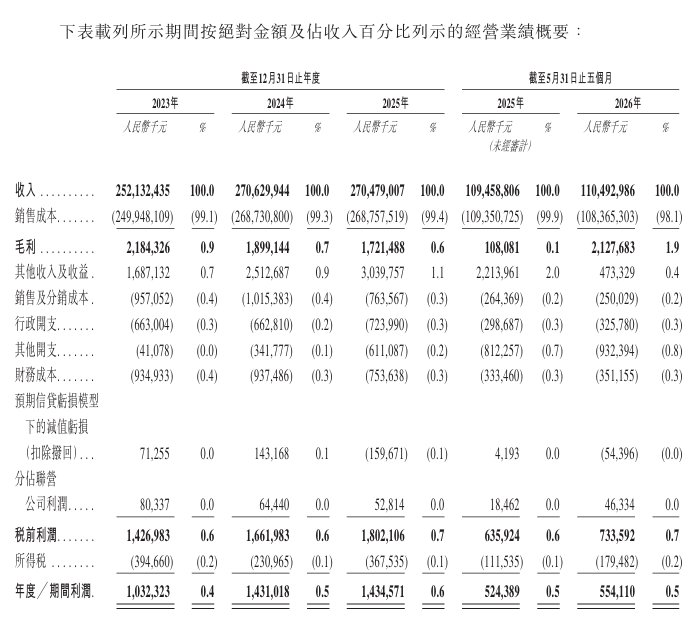
In 2023, 2024, 2025 and the five months ended May 31, 2026, the company achieved revenue of approximately $252.13 billion, $270.63 billion, $270.48 billion and $110.49 billion, respectively.
Mōri
In 2023, 2024, 2025 and the five months ended May 31, 2026, the company recorded gross profit of approximately $2.18 billion, $1.90 billion, $1.72 billion and $2.13 billion respectively.
Annual/period profit
In 2023, 2024, 2025, and the five months ended May 31, 2026, the company recorded annual/period profit of approximately $1.03 billion, $1.43 billion and $550 million respectively.
Industry Overview
Commodities refer to material commodities that can enter the distribution sector but are not retail, have commercial properties and are traded in large quantities for industrial and agricultural production and consumption. They mainly include ferrous metals and raw materials, chemicals, non-ferrous metals, and other categories. Commodity prices and supply conditions are a “barometer” for observing the temperature and temperature of the global economy, and are also core variables affecting the economic costs and security of various countries.
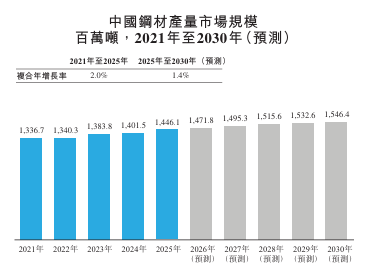
Steel is one of the main categories of commodities. With the high-end upgrading of the manufacturing industry, the upgrading of traditional industrial equipment, and the increase in demand in emerging fields such as new energy vehicles, wind power and photovoltaics, China's steel production will continue to grow in the future.
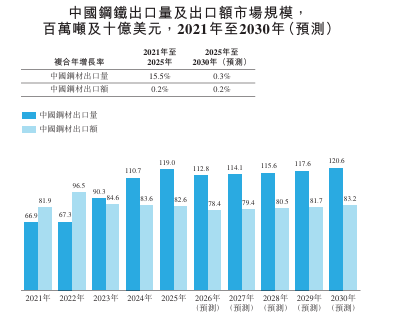
From 2021 to 2025, driven by a rebound in demand driven by global economic recovery, and affected by fluctuations in steel prices, China's steel exports showed a trend of increasing first and then stabilizing, while exports rose and then fell in sync with steel prices. Looking ahead, due to slowing global demand, trade policy adjustments, and industrial restructuring, export volume is expected to decline in the short term and then maintain a slow growth rate. As prices stabilize and demand recovers, exports are expected to grow moderately.
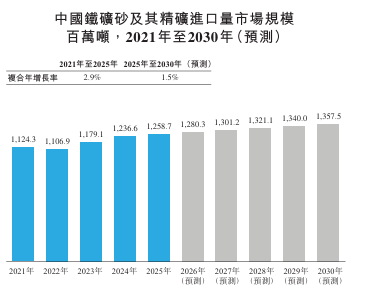
Iron ore and its concentrates are one of the main raw materials for steel production. China's imports of iron ore and concentrate declined from 2021 to 2022 due to macroeconomic fluctuations affecting downstream industries such as real estate and construction. The transformation and upgrading of the manufacturing industry has led to a continuous increase in China's imports of iron ore and its concentrates.
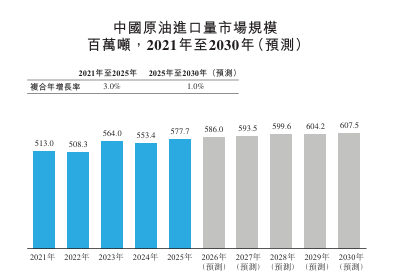
Crude oil is one of the main products in the commodities market. Due to geopolitical conflicts and external economic instability, China's crude oil imports declined from 2021 to 2022. Crude oil supports important domestic industries such as engineering plastics, chemical fibers, and chemical fertilizers through deep processing. The continuous development of these downstream industries is a key factor driving the increase in China's crude oil imports.
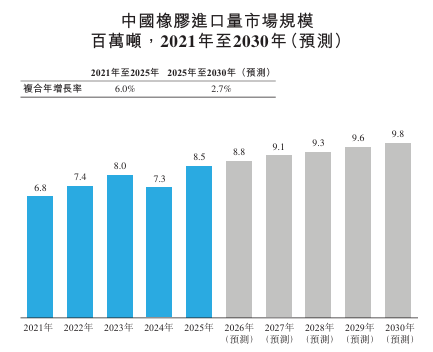
China's rubber imports fluctuated slightly from 2021 to 2025 due to cooling demand in downstream industries such as construction and the impact of shrinking overseas supply. Looking ahead, the development of the NEV industry is expected to drive demand for high-performance tires, and China's rubber imports are expected to continue to rise.
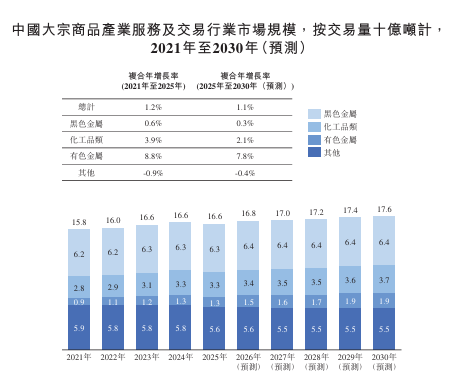
Due to high commodity price fluctuations, combined with other reasons such as geopolitics, digital intelligence transformation, and service model iteration, opportunities and challenges coexist in the Asian and Chinese commodity industry service and trading industries, and the market size has shown relatively steady growth. In the Asian market, trading volume increased from 26.3 billion tons in 2021 to 27.7 billion tons in 2025, with a compound annual growth rate of 1.3% during this period.
Board Information
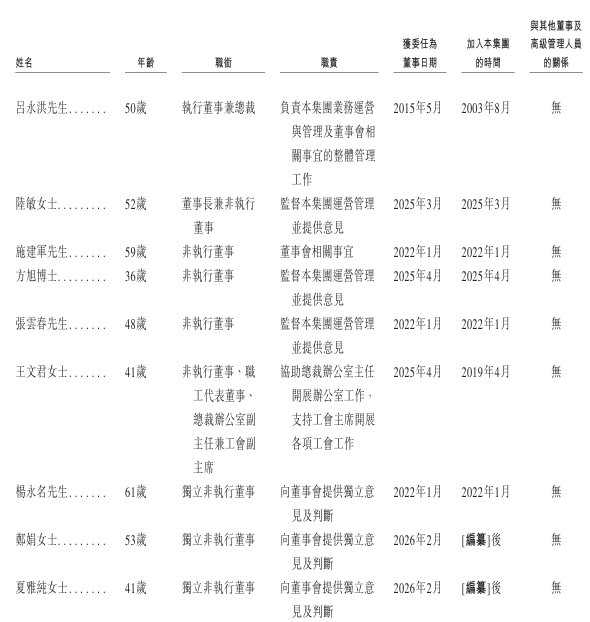
The board of directors of the company consists of nine directors, including one executive director, five non-executive directors and three independent non-executive directors.
Shareholding structure
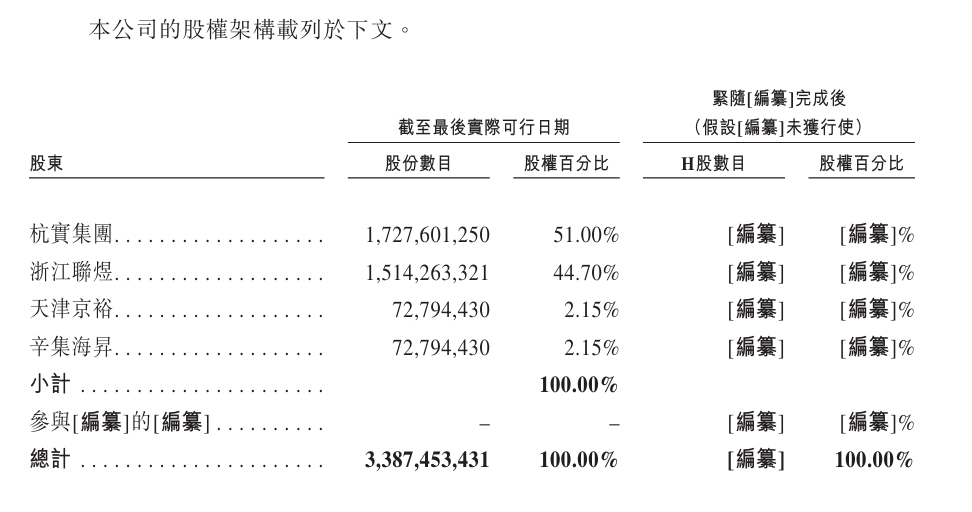
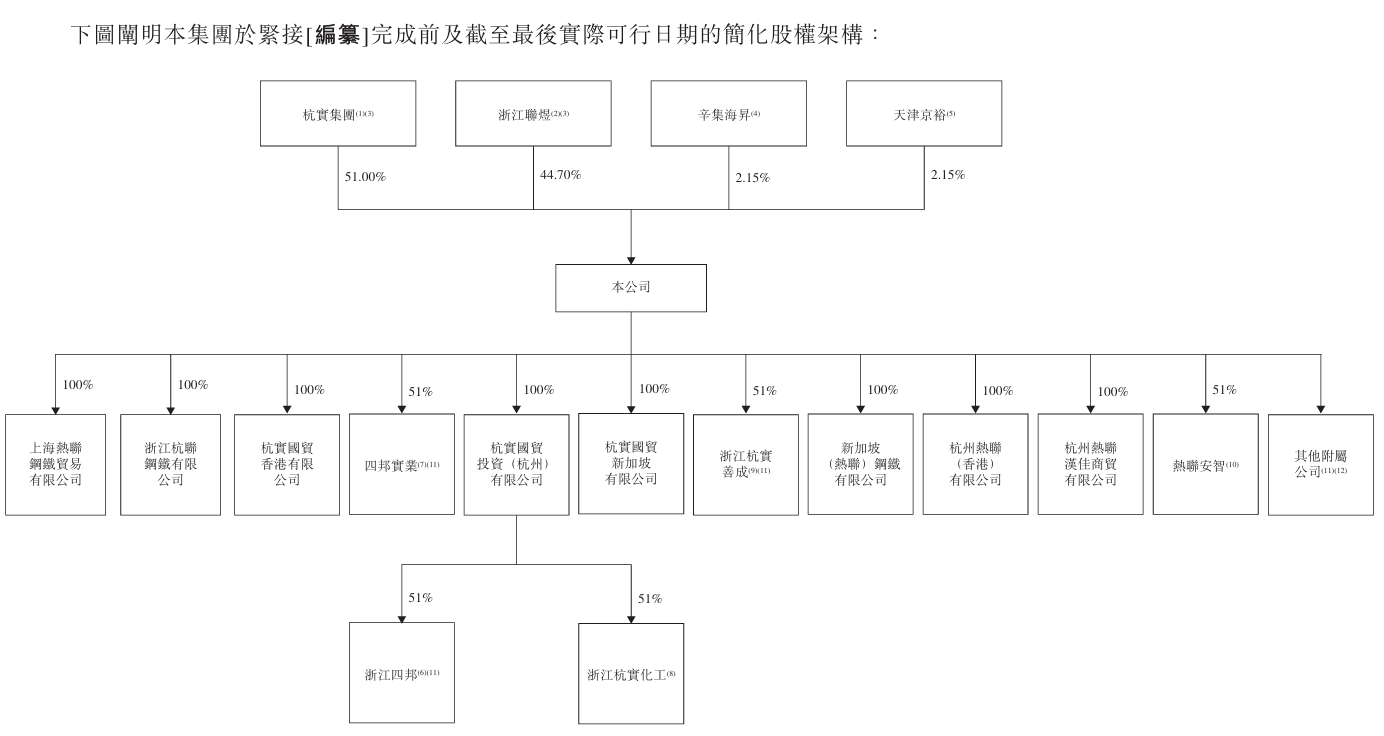
Hangshi Group, the controlling shareholder of the company, and Zhejiang Lianyu (and its co-actors) hold total shares in the company. Among them, Hangshi Group directly holds 51% of the shares and is controlled by the Hangzhou State-owned Assets Administration Commission. Zhejiang Lianyu directly holds 44.7% of the shares. In addition, Tianjin Jingyu and Xinji Haisheng each hold about 2.15% of the shares.
Intermediary team
Sole sponsor: China International Finance Hong Kong Securities Limited;
The company's legal advisors: Hong Kong and US law: Pratt & Whitney (Hong Kong) limited liability partnership; relevant Chinese law: Commerce law firm; relevant international sanctions law and US Foreign Investment Rules: Hogan Lovells Cadwalader International LLP; relevant Singaporean law: Drew & Napier LLC; Hong Kong law: law relating to Hong Kong: Chen and Lee Law;
Sole sponsor legal adviser: relevant Hong Kong law and US law: Haiwen Law Firm Limited Liability Partnership; related to Chinese law: Kone Law Firm;
Auditors and reporting accountants: Ernst & Young;
Industry consultant: Frost & Sullivan (Beijing) Consulting Co., Ltd. Shanghai Branch;
Compliance Advisor: Red Sun Capital Co., Ltd.