
- PRICING
- LIVE QUOTES
- LEARN
- HELP


EN
United Community Banks (UCB) Stock May Be A Bargain Despite Its Georgia Merger
United Community Banks stock has returned 35.0% over the past three years, while the current checks suggest a mixed picture on value and an intrinsic value estimate that sits materially above the recent market price. With the shares last closing at US$35.51, the Excess Returns model indicates the stock trades at a meaningful discount to its assessed intrinsic value, even as earnings-based multiples look broadly in line with peers.
- Over the past three years United Community Banks has delivered a 35.0% total return, which puts recent short-term share price moves into context for anyone focusing on valuation today.
- The completed merger with Peach State Bancshares may support future earnings and cash flow if integration goes smoothly, while any setback in combining operations or realizing expected benefits could weigh on what investors are willing to pay for the stock.
- United Community Banks scores 4 out of 6 on the broader valuation checks, which points to a mixed picture rather than a clear bargain or clear overvaluation and you can see the detail behind that score at 4 out of 6.
The stock's next move may depend on whether the current discount to the Excess Returns intrinsic value estimate offers enough margin of safety given the recent share price gains and integration risks around the Peach State merger.
Find out why United Community Banks' 23.7% return over the last year is lagging behind its peers.
Does United Community Banks Look Undervalued on Excess Returns?
The Excess Returns model evaluates how much profit United Community Banks can earn on its equity above the required return that shareholders expect. For United Community Banks, the model uses a Book Value of $31.27 per share and a Stable EPS of $3.34 per share, based on estimates from 6 analysts. With an Average Return on Equity of 9.95% and a Cost of Equity of $2.43 per share, this points to an ongoing Excess Return of $0.91 per share and a Stable Book Value of $33.59 per share.
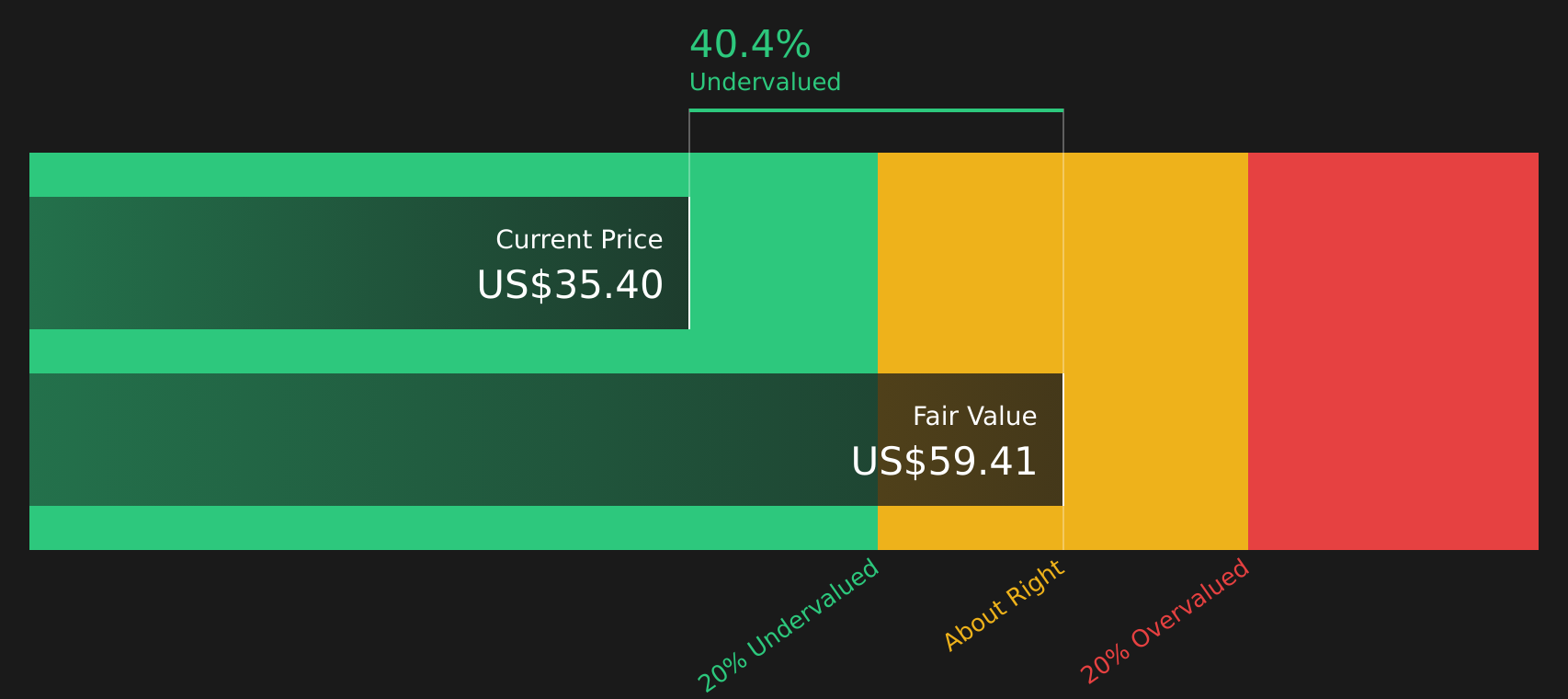
Using these inputs, the Excess Returns model indicates an intrinsic value of about $59.41 per share. Compared with the recent share price around $35.51, that outcome suggests the stock screens as roughly 40.2% undervalued. The completed merger with Peach State Bancshares helps explain why some investors may be cautious on execution, even though the model produces a materially higher intrinsic value than the current price.
Overall, the Excess Returns analysis indicates that United Community Banks stock appears undervalued relative to its estimated intrinsic value.
Our Excess Returns analysis suggests United Community Banks is undervalued by 40.2%. Track this in your watchlist or portfolio, or discover 52 more high quality undervalued stocks.
Is United Community Banks Fairly Priced on Earnings?
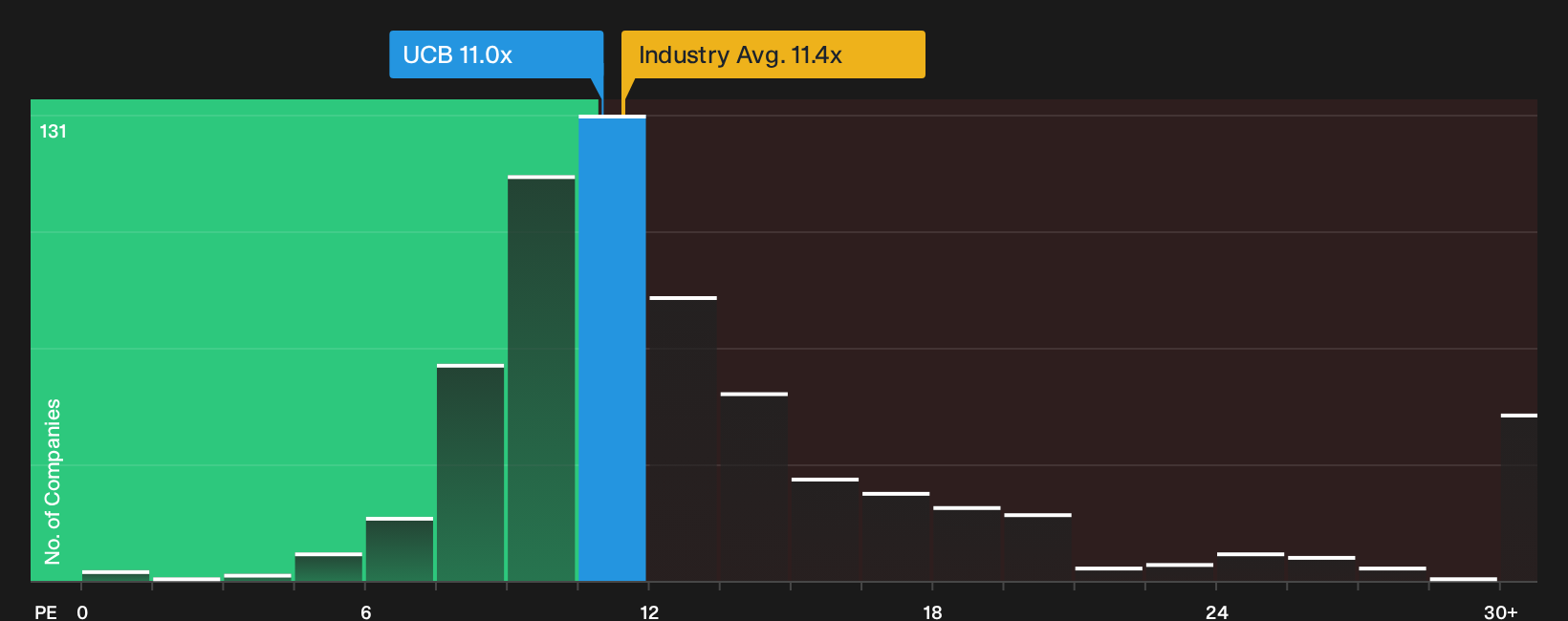
P/E is usually a straightforward way to compare bank stocks, so it fits United Community Banks quite well. The current P/E for United Community Banks sits at about 11.6x. That is slightly below the broader banks industry average of 12.0x and also under the peer group average of 14.5x.
The fair P/E multiple for United Community Banks, based on its size, sector and risk profile, is estimated at 11.2x, which is very close to where the stock trades today. The gap between the current P/E and this fair ratio is small, so the market is not applying a clear discount or premium to the company on earnings.
On balance, United Community Banks appears roughly fairly valued on its P/E multiple.
See what the numbers say about this price — find out in our valuation breakdown.
The United Community Banks Narrative: What Would Justify Today's Price?
Simply Wall St Narratives take the valuation puzzle around United Community Banks and turn it into clear “what if” stories about the future. Each narrative spells out the growth, margin and earnings assumptions that would need to hold for United Community Banks' stock to be worth materially more or less than today. Rather than relying on a single multiple or model result, they set out the assumptions behind each fair value so you can compare them with future reported numbers. These are available on Simply Wall St's Community page for you to explore in more detail.
You can be one of the first voices in the Simply Wall St community to set out a clear, number driven Narrative on United Community Banks' stock, including a view on whether the Peach State Bancshares merger delivers on its potential. Share the assumptions you think matter most and track how your thesis holds up as new results and integration updates come through.
Do you think there's more to the story for United Community Banks? Head over to our Community to see what others are saying!
The Bottom Line
United Community Banks screens as undervalued on the Excess Returns intrinsic value estimate, while the P/E view suggests the stock is priced close to where similar banks trade. The mixed broader valuation checks sit between those two signals and keep the overall picture balanced rather than clearly cheap or expensive. What matters most from here is whether the Peach State Bancshares integration supports the earnings and returns that the intrinsic value model anticipates. The key question for investors is whether the current discount reflects a genuine opportunity or an appropriate cushion for execution risk around that merger.
This article by Simply Wall St is general in nature. We provide commentary based on historical data and analyst forecasts only using an unbiased methodology and our articles are not intended to be financial advice. It does not constitute a recommendation to buy or sell any stock, and does not take account of your objectives, or your financial situation. We aim to bring you long-term focused analysis driven by fundamental data. Note that our analysis may not factor in the latest price-sensitive company announcements or qualitative material. Simply Wall St has no position in any stocks mentioned.
Have feedback on this article? Concerned about the content? Get in touch with us directly. Alternatively, email editorial-team@simplywallst.com