
- PRICING
- LIVE QUOTES
- LEARN
- HELP


EN
Japan Post Insurance (TSE:7181) Looks Fully Valued After Fresh Earnings Guidance
Fresh guidance puts Japan Post Insurance stock in focus
Japan Post Insurance (TSE:7181) has landed back on investor radars after issuing full year earnings guidance for the period to March 31, 2027, alongside first quarter 2026 results.
The company now expects full year net income attributable to Japan Post Insurance of ¥141,000 million and net income per share of ¥130.35. First quarter net income was ¥34,126 million, with basic earnings per share from continuing operations of ¥31.72.
See our latest analysis for Japan Post Insurance.
At a share price of ¥1,788, Japan Post Insurance has seen a 10.88% 1-month share price return and an 11.10% year-to-date share price return, alongside a 1-year total shareholder return of 35.69% and a 5-year total shareholder return of 238.12%. This indicates momentum that has been building rather than fading as investors react to the new guidance and recent quarterly update.
If this earnings update has you looking beyond a single insurance stock, it can be useful to see what else the market is rewarding right now through 10 top founder-led companies
Japan Post Insurance now trades close to the average analyst target yet carries a large implied gap to some intrinsic value estimates. Is the recent jump still leaving meaningful upside on the table, or already stretching fair value?
Most Popular Narrative: 3% Overvalued
Japan Post Insurance last closed at ¥1,788 compared with a widely followed fair value estimate of ¥1,733 that uses a 5.0% discount rate. The small gap leaves the focus firmly on what is driving that fair value rather than on a big valuation mismatch.
Ongoing diversification of revenue sources, with earnings contributions from overseas insurance markets and asset management (including alternative assets and lower hedging costs as interest rates rise), is expected to enhance return on equity and drive sustainable earnings growth.
The popular narrative leans on higher yen revenue, slightly firmer margins and a steady earnings multiple to justify that fair value. It also incorporates a clear view on how capital returns and share count move from here, which is not obvious from headline earnings alone. If you want to see which specific growth and profitability assumptions sit underneath the ¥1,733 figure, the full narrative lays those out in detail.
Result: Fair Value of ¥1,733 (OVERVALUED)
Have a read of the narrative in full and understand what's behind the forecasts.
However, Japan Post Insurance still faces pressure from Japan's shrinking population and ongoing regulatory and reputational issues that could challenge growth assumptions in the prevailing narrative.
Find out about the key risks to this Japan Post Insurance narrative.
Another view on Japan Post Insurance valuation
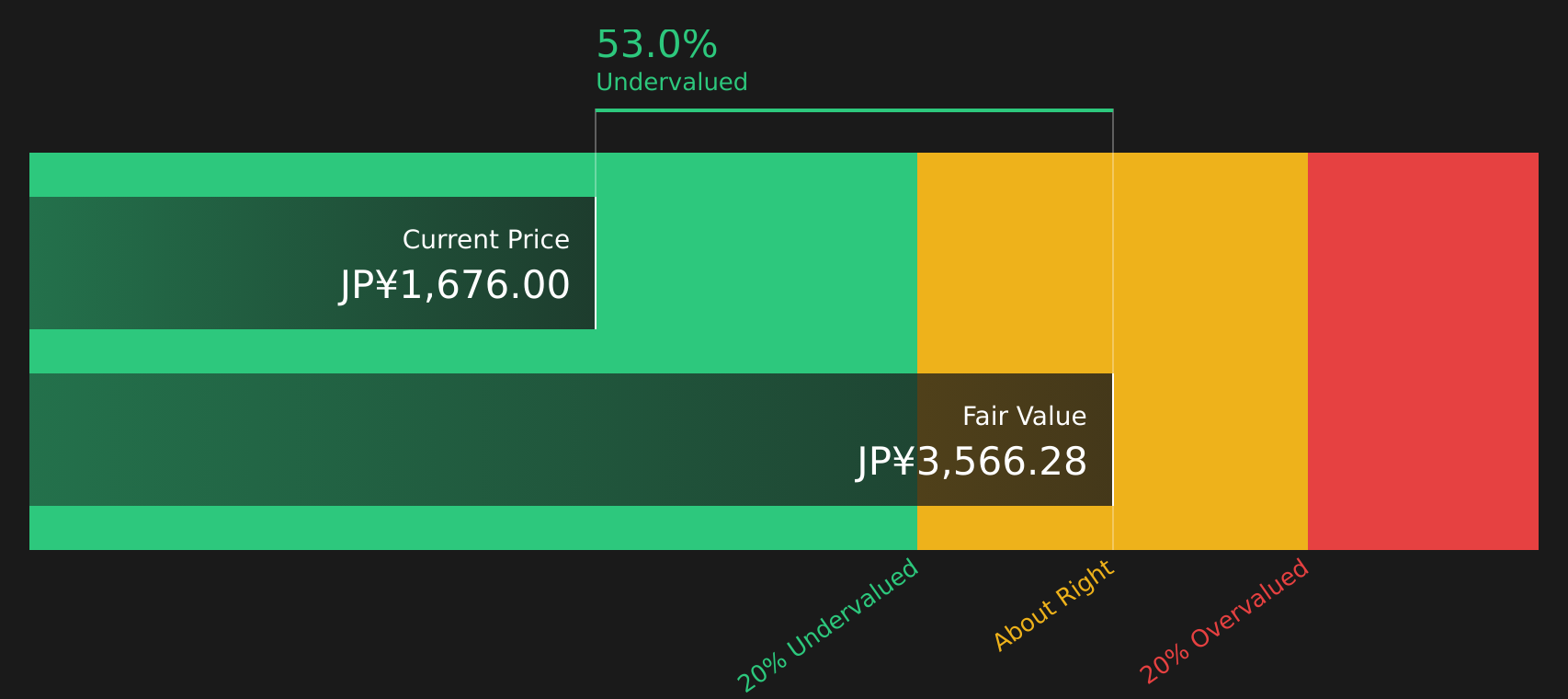
While the popular narrative has Japan Post Insurance at around 3% overvalued relative to a ¥1,733 fair value, our DCF model points in a different direction. On that measure, the current price of ¥1,788 sits well below an estimated future cash flow value of ¥3,566, which screens as materially undervalued. Which lens do you think better matches how cash generation could play out?
Look into how the SWS DCF model arrives at its fair value.
Next Steps
This mix of optimism and caution around Japan Post Insurance leaves the story finely balanced. It may be useful to review the key data yourself now and decide where you stand based on the 4 key rewards and 3 important warning signs.
Looking for more investment ideas beyond Japan Post Insurance?
If Japan Post Insurance has sharpened your focus, now is a good time to scan for other stocks that fit clear criteria and broaden your opportunity set.
- Spot potential undervalued opportunities early by reviewing the 18 high quality undervalued stocks that currently stand out on quality and pricing metrics.
- Prioritise resilience and sleep better at night by checking the 56 resilient stocks with low risk scores that screen well on risk scores.
- Hunt for lesser known opportunities with solid fundamentals using the screener containing 63 high quality undiscovered gems before they gain wider attention.
This article by Simply Wall St is general in nature. We provide commentary based on historical data and analyst forecasts only using an unbiased methodology and our articles are not intended to be financial advice. It does not constitute a recommendation to buy or sell any stock, and does not take account of your objectives, or your financial situation. We aim to bring you long-term focused analysis driven by fundamental data. Note that our analysis may not factor in the latest price-sensitive company announcements or qualitative material. Simply Wall St has no position in any stocks mentioned.
Have feedback on this article? Concerned about the content? Get in touch with us directly. Alternatively, email editorial-team@simplywallst.com