
- PRICING
- LIVE QUOTES
- LEARN
- HELP


EN
China's FAP targeted solid tumor diagnostic nuclear drug was approved by the FDA for the first time. Yuanda Pharmaceutical (00512)'s self-developed products directly hit pan-solid tumors 100 billion US dollars and did not meet market demand
As radiopharmaceuticals become a popular race for innovative cancer drugs around the world, FAP target assets with both diagnostic and therapeutic potential have become the focus of competition among global pharmaceutical companies. As a leading nuclear drug company, Yuanda Pharmaceutical (00512) recently achieved another major breakthrough in this field. The company's FAP target innovative nuclear drug GPN01530-2 has been granted Fast Track Designation (FTD) by the US FDA, making it the first FAP target diagnostic nuclear drug for solid tumors in the world to receive FDA Fast Track certification. FTD qualifications are mainly granted to drugs under development to treat serious diseases and have the potential to address unmet medical needs, with the aim of speeding up the review process for high-value pipelines.
According to reports, GPN01530-2 has previously been approved by the FDA to carry out phase I/II clinical studies to diagnose solid tumors. This time, it has obtained fast-track qualification, which indicates that US regulators recognize the important potential of this product in diagnosing solid tumors. It is expected to accelerate the future development and marketing process of GPN01530-2 and benefit patients around the world as soon as possible. In particular, it is worth mentioning that GPN01530-2 has obtained the US FDA's Fast Track qualification and is highly iconic in the industry. In the context of global nuclear drug giants deploying FAP target nuclear drugs, innovative nuclear drugs independently developed by Chinese companies have taken the lead in winning this important regulatory qualification, fully demonstrating that Yuanda Pharmaceutical's R&D strength in FAP target innovative nuclear drugs ranks first in the world. It also reflects GPN01530-2's global best-in-class (BIC) development potential. At the same time, as an RDC product independently developed by Yuanda Pharmaceutical and approved by the FDA to carry out clinical research, this milestone also fully confirms the company's comprehensive strength in cutting-edge nuclear drug technology platform construction, international clinical development and registration.
Optimize the FAP ligand structure to unlock the huge market potential of pan-solid tumors
According to the announcement, GPN01530-2 is a small-molecule RDC drug targeting fibroblast-activating protein (FAP). FAP is not expressed or underexpressed in normal tissues, but is highly expressed in 90% of epithelial tumor tissues and tumor-related fibroblasts (CAFs) in various tumor microenvironments, and is a novel specific target for cancer diagnosis and treatment.
The specific expression characteristics of FAP make it an ideal target for the diagnosis and treatment of pan-cancer. It can cover a wide range of solid tumors, including lung cancer, colorectal cancer, pancreatic cancer, etc., and is naturally suitable for RDC drug development that integrates “diagnosis+treatment”. It is regarded by the industry as a billion-dollar target with a lot of room for imagination following PSMA, and has attracted large multinational pharmaceutical companies, including Novartis, to compete for layout.
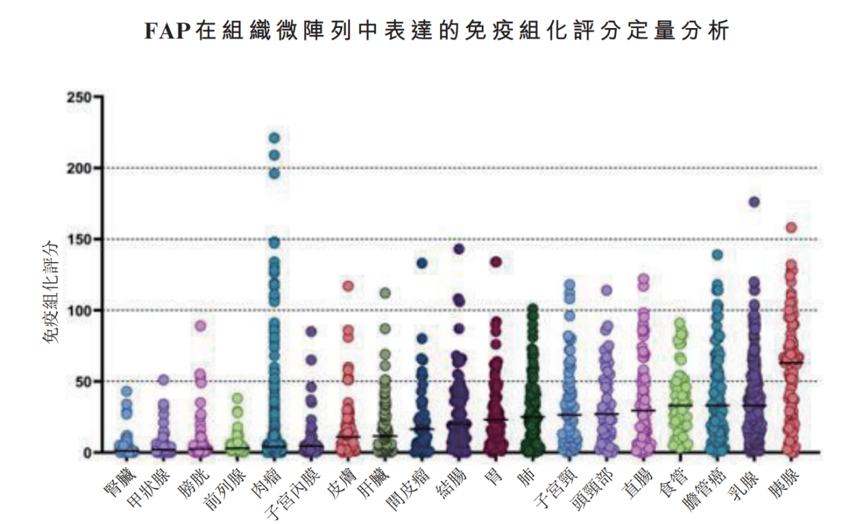
It is worth noting that by optimizing the structure of FAP ligands, Yuanda Pharmaceutical GPN01530-2 increases its uptake in tumor tissue while reducing its uptake in normal tissues. Whether compared to similar FAP target products or fluorine [18F] -fluoride deoxyglucose (18F-FDG), which is currently the mainstream PET/CT imaging agent in the market, GPN01530-2 has shown significant advantages and has great best-in-class potential. Based on existing research results, GPN01530-2 shows rapid tumor targeting, higher tumor uptake, and better pharmacokinetic properties compared to other FAP ligands; in addition, completed IIT human studies have shown that GPN01530-2 has rapid background clearance and strong and long-lasting lesion uptake, showing better clinical image contrast and accurate detection rate of positive lesions compared to 18F-FDG. As can be seen, GPN01530-2 has significantly improved the diagnostic efficacy of FAP target RDC drugs, and is expected to provide a new tumor diagnosis scheme for a large number of patients with solid tumors.
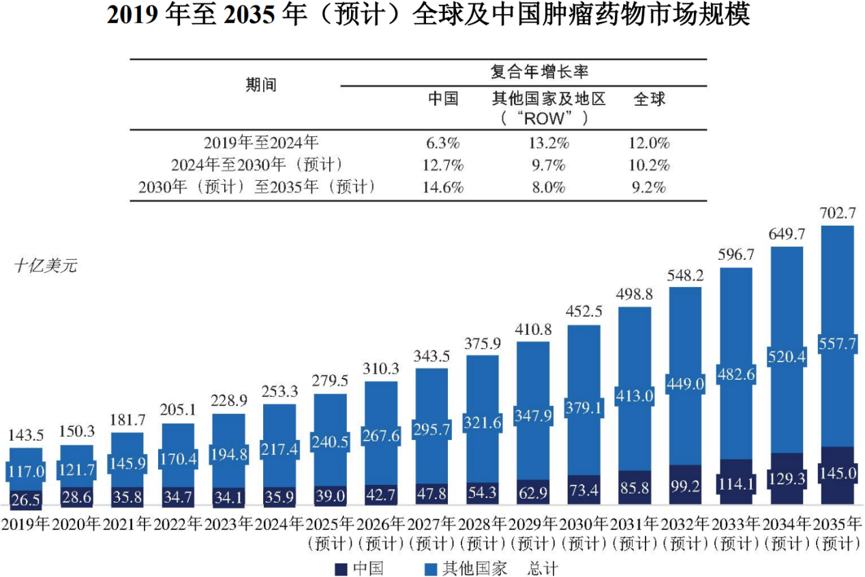
In terms of market space, GPN01530-2 is a product with plenty of potential for commercialization. By simply measuring the 18F-FDG replacement market, there is a potential market space of over 5 billion US dollars, and the number of patients with solid tumors it targets is still growing. According to GLOBOCAN data, there are about 20 million new cancer cases and 9.7 million deaths worldwide in 2022. It is estimated that by 2030, the number of new cancer cases will be close to 24 million, and the number of deaths will be close to 12 million. Along with the increase in the number of patients, the global oncology drug market is also soaring. Frost & Sullivan data predicts that the global oncology drug market will reach 702.7 billion US dollars by 2035. In the huge and continuously expanding cancer diagnosis and treatment market, an accurate, efficient, and safe integrated diagnosis and treatment solution has become the core requirement of the industry, which also creates an excellent competitive opportunity for GPN01530-2.
Currently, GPN01530-2 has been approved to conduct clinical research in the US. If subsequent development goes well, or becomes an important breakthrough in solving the problem of solid tumor diagnosis, and relies on FTD's exclusive policy dividends, the product is expected to reduce the R&D and marketing cycle, reshape the solid tumor diagnosis pattern with significant product advantages, take the lead in seizing the global solid tumor diagnosis market, and bring new hope to patients around the world. At the same time, as the world's first and currently the only FAP target solid tumor diagnostic nuclear drug certified by FTD, GPN01530-2's significant clinical value and BIC development potential have been recognized by authoritative regulators. This further marks that China's innovative nuclear drugs have achieved a breakthrough in global leadership, standard synchronization, and priority benefits in the field of cutting-edge FAP target nuclear drugs. Yuanda Pharmaceutical will also rely on the international registration path of the “China and US Double Report” to continue to promote global R&D and registration of GPN01530-2, and use this as a basis to further deepen the global development strategy for the anti-cancer sector of nuclear drugs, actively promote international clinical research and registration of more self-developed innovative nuclear drug products, and continuously enhance the company's core competitiveness and international influence in the field of nuclear drug anti-tumor diagnosis and treatment.
Build a full-chain nuclear drug industry ecosystem and target the global export of products developed by China
The overseas clinical breakthrough of GPN01530-2 is a microcosm of the implementation of Yuanda Pharmaceutical's global strategy in the anti-tumor sector of nuclear drugs. As one of the first innovative pharmaceutical companies in China to lay out the entire nuclear drug industry chain, Yuanda Pharmaceutical has achieved a comprehensive layout of R&D, production, distribution, and sales in this sector. The company has now built a global nuclear medicine industry chain, built R&D bases with Boston and Chengdu as the core, and laid out production bases in Boston, Frankfurt, Singapore and Chengdu. The sales network covers more than 50 countries and regions around the world, and the global R&D and industrial workforce exceeds 1,000 people.
In terms of product pipeline, Yuanda Pharmaceutical has prepared 16 innovative nuclear drug products in the R&D and registration stage, covering 5 radionuclides including 68 Ga, 177Lu, 131I, 90Y, and 89Zr, covering 7 types of cancer including liver cancer, prostate cancer, brain cancer, etc.; the early development stage is mainly RDC drugs, and the product reserves more than 10 products, taking into account the two categories of diagnosis and treatment, and can provide patients with a world-leading anti-tumor program with multiple treatment options, multiple methods, and integrated diagnosis and treatment.
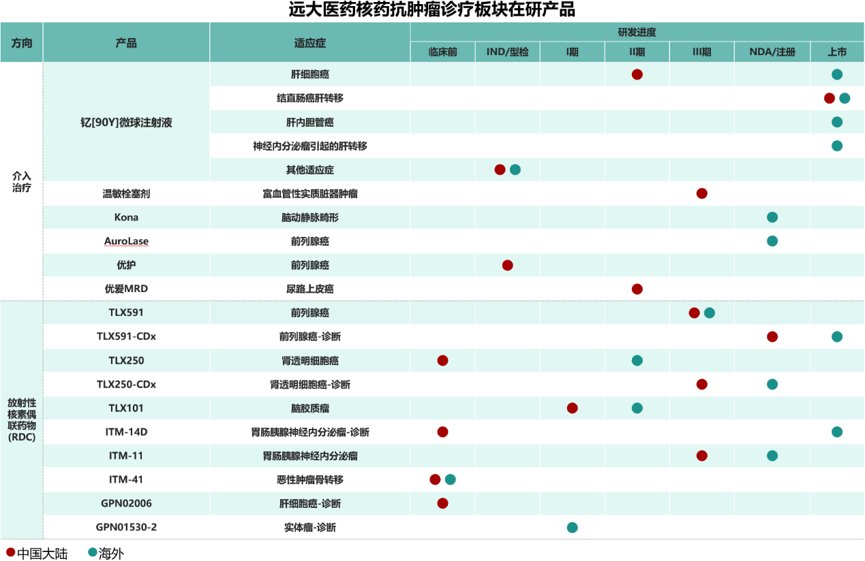
Aiming at the global market, Yuanda Pharmaceutical is promoting clinical research and commercialization of nuclear drug products in an orderly manner. In China, while E-Gantai® yttrium [90Y] microsphere injections continue to be released, the company's product TLx591-cdx for diagnosing prostate cancer has entered the NDA phase. Overseas, Yuanda Pharmaceutical's sir-spheres® yttrium [90Y] microsphere injection was officially approved in advance in the US for the treatment of unresectable HCC in July 2025. It became the world's first and only selective internal radiation therapy product approved by the FDA for dual indications of unresectable HCC and colorectal cancer liver metastasis; it also obtained European CE certification in August of the same year to add a variety of liver cancer indications, further promoting comprehensive coverage of the product in the field of unresectable liver cancer treatment and achieving strategic expansion of the market space. At the same time, the company is cooperating with Chinese and foreign experts to develop other indications for yttrium [90Y] microsphere injections, and will use the “China and US Double News” international registration path to accelerate the global market expansion of this product. Furthermore, the international conference further verified the level of global research and development of Yuanda Pharmaceutical products. The research results of Yuanda Pharmaceutical's innovative diagnostic radiopharmaceutical GPN02006 targeting phosphatidylinositol proteoglycan 3 (GPC-3) received an oral report at the 2025 North American Society of Nuclear Medicine and Molecular Imaging (SNMMI) annual meeting. This product is expected to become the world's first hepatocellular carcinoma (HCC) diagnostic RDC product targeting GPC-3.
In terms of production, Yuanda Pharmaceutical's Chengdu Wenjiang radiopharmaceutical R&D and production base was fully put into operation in 2025. As the world's first closed-loop platform for the entire nuclear drug industry chain, the base is currently one of the smart factories with the most complete range of nuclides and the highest degree of automation in the world, and can cover the entire “isotope preparation - nuclear drug development - production clinical - commercialization” chain. The base's 14 high-standard GMP production lines achieved multi-variety and large-scale preparation requirements, solved the “stuck neck” problem of nuclear drugs, solved the “stuck neck” problem of nuclear drugs, and further consolidated the foundation of the vast pharmaceutical nuclear drug industry, accelerated the implementation of the global innovative R&D pipeline, promoted the company to achieve high-quality development of the nuclear drug industry, cultivate high-value major varieties, and lay a solid foundation for the localization of the company's radiopharmaceuticals.
Looking at the global nuclear drug industry, competition on the nuclear drug circuit is no longer limited to the product itself, but is a comprehensive competition of nuclide resources, process manufacturing, and international clinical operation capabilities. While continuously enriching the nuclear drug pipeline, Yuanda Pharmaceutical is superimposing independent platform construction to simultaneously complete core capabilities such as overseas clinical reporting, independent R&D platform construction, and large-scale production. It can not only quickly introduce mature global high-quality assets to complete domestic transformation, but also support innovative projects from local sources such as GPN01530-2 directly to carry out overseas clinical trials with the FDA. Facing the future, Yuanda Pharmaceutical may rely on a global industrial system to export more innovative nuclear drugs originating in China and serving cancer patients around the world, and participate deeply in the transformation of the global nuclear drug industry.