
- PRICING
- LIVE QUOTES
- LEARN
- HELP


EN
Evercore: Long-term use of the Federal Reserve's “unpopular” liquidity tools or easing pressure on Japan to sell US bonds may test the determination of the US and Japan to intervene
The Zhitong Finance App learned that Evercore ISI's latest report indicates that the Federal Reserve's rarely used liquidity tool, the FIMA Repo Facility (FIMA Repo Facility), may help Japan avoid large-scale sell-off of US Treasury bonds when interfering with the foreign exchange market and supporting the yen. However, the agency warned that if it relies on this tool for a long time, it may trigger the market to test the determination of the US and Japan to stabilize exchange rates.
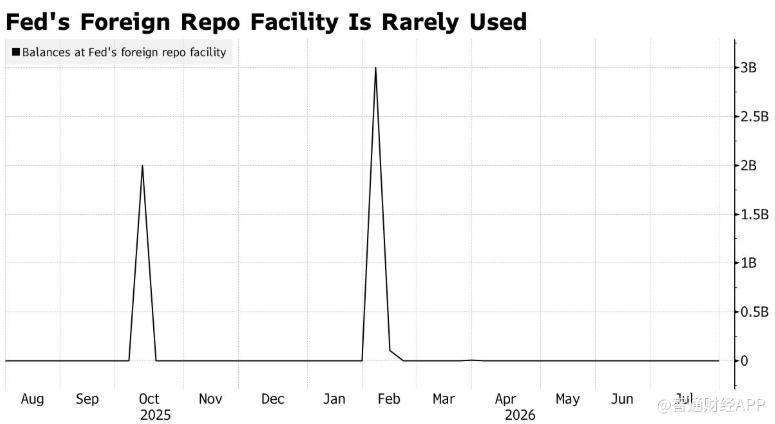
The FIMA repurchase facilitation tool allows overseas central banks and official institutions to use their US Treasury bonds as collateral to obtain US dollar liquidity from the Federal Reserve without directly selling US bonds on the open market to raise funds. The tool was launched during the 2020 pandemic to help overseas official institutions obtain US dollar financing while reducing the impact on the US Treasury bond market, and officially became a long-term mechanism in July 2021.
However, Evercore ISI strategists Marco Casiraghi and Gang Lyu pointed out that the scale of use of this tool is clearly limited. According to regulations, each counterparty can receive up to 60 billion US dollars in daily financing, and this amount is only slightly higher than the amount of capital used by the Japanese government to intervene in the foreign exchange market in a single day last Thursday. Therefore, FIMA instruments are more suitable for providing short-term liquidity support, and it is difficult to meet the financial requirements of continuous, large-scale exchange rate intervention.
Two strategists said, “We believe that the market may focus its attention on this Federal Reserve buyback tool, which has a quota limit. This may backfire, prompting the market to test whether the US and Japan are willing to support the yen through large-scale sales of US Treasury bonds.”
The data shows that the tool is almost idle during normal times. As of the week ending July 29, its average usage balance was only about US$6 million; the most recent large-scale use was at the beginning of February this year, when the financing scale was about US$3 billion.
Japan's Finance Minister Katayama previously confirmed in May that Japan intervened to buy yen last Friday and indicated that it will use the FIMA repurchase facility to provide financial support in the future. US Treasury Secretary Bessent also expressed support for Japan's use of the tool on social media and suggested an appropriate increase in its usage amount.
According to Federal Reserve rules, if the size of the FIMA instrument needs to be adjusted, it can be approved by the Foreign Exchange Subcommittee under the Federal Open Market Committee (FOMC), and the relevant arrangements must be notified to the entire FOMC.
Evercore ISI further stated that the FIMA instrument is essentially a short-term liquidity support mechanism rather than a long-term financing channel, so loans must be continuously extended after maturity to maintain the funding source. Furthermore, the financing cost of this instrument is also relatively high. Currently, the interest rate is 3.75%, while the 7-day financing cost for the same period is about a week's overnight index swap (OIS) interest rate plus 25 basis points.
The strategist said that the Federal Reserve intends to set the financing cost of FIMA instruments higher than the financing costs of the private repurchase market, which also reflects its position as a liquidity support tool for dealing with periods of market pressure, rather than for daily financing or long-term, large-scale exchange rate intervention.