
- PRICING
- LIVE QUOTES
- LEARN
- HELP


EN
A new low in nearly 40 years is the strongest since May: the US and Japan confirm joint intervention, how far can the “violent rebound” of the yen go?
The Zhitong Finance App learned that after the exchange rate of the yen fell to a low level of nearly 40 years, the US and Japan joined forces to intervene in the foreign exchange market by “coordinating the purchase of yen” last Friday. This rare joint action, combined with the two countries' finance ministers unabashedly strong statement that they “will continue to be involved,” is reshaping the game pattern in the foreign exchange market. The yen has rebounded violently from decades-long lows, and huge speculative bears face the risk of large-scale cancellation, yet strategists are still deeply divided about the long-term effects of the intervention.
Japan's Ministry of Finance confirmed on Monday that it carried out a coordinated yen purchase operation with the US Treasury last Friday. This is an unusual step taken by the two major allies to contain sharp fluctuations in the yen. Previously, the exchange rate of the yen against the US dollar hit 163.73 last Thursday, the weakest level in about 40 years. The news of intervention was compounded by official shouting. The yen rapidly strengthened to 157.57 last Friday, and further hit 155.23 this Monday, rebounding back to its strongest level since the beginning of May, breaking through the 200-day moving average (about 158), which is a key technical hurdle.
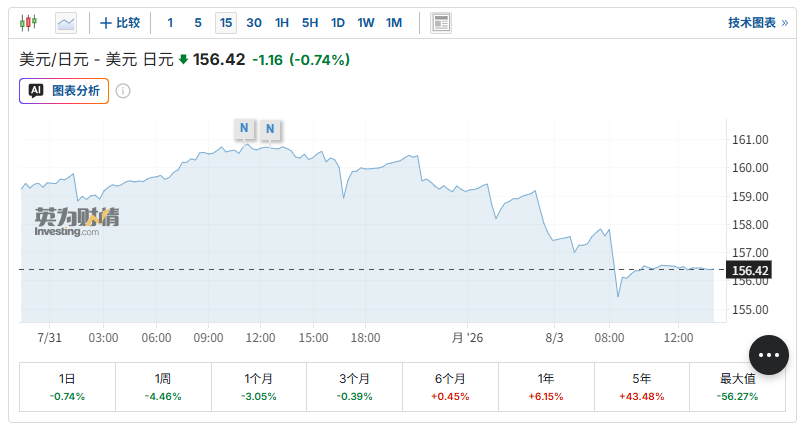
The Japanese side has made it clear that it “will not hesitate to carry out further coordinated interventions in the future” and is maintaining close communication with the US Treasury. Japan's Ministry of Finance emphasized that the intervention was based on the “Japan-US Joint Statement of Finance Ministers” issued in September 2025 to deal with the “recent excessive fluctuation and disorderly trend” of the yen. In addition, the Ministry of Finance also announced plans to use the Federal Reserve's “foreign and international monetary authorities' buy-back facility” to obtain short-term dollars through a temporary exchange of US Treasury bonds, thereby enriching the intervention ammunition depot.
Behind the “friendship signal”: Euro buying yen sparks controversy
The high-profile endorsement from the US side made this intervention far more important than Japan's unilateral action. US Treasury Secretary Scott Bessent confirmed in a statement that the US side has participated in coordinated actions to counter disorderly fluctuations in the yen, and stated “will not hesitate to participate in further joint intervention.” Bessent also strongly supports Japan's macroeconomic policy direction, saying that the US “strongly supports decisive market and monetary measures taken by Japan to correct the serious undervaluation of the yen.”
US President Trump, on the other hand, described this as a political gesture. He told reporters on “Air Force One” that America's participation in the intervention was in support of Japan and was also due to considerations of global economic stability. “This is more of a sign of friendship.”
However, doubts soon surfaced in the market. There are reports that the US sold euros instead of dollars to buy yen during this operation. This is completely different from the traditional practice of using dollar assets to coordinate intervention and financing, which surprised the market.
Robin Brooks, a senior researcher at the Peterson Institute for International Economics, pointed out sharply that if the US were to buy yen by selling the euro, investors would infer that US officials were trying to avoid financing by selling US Treasury bonds; this is actually a distortion. Brooks believes, “This method of operation weakens the actual effect of America's participation in the intervention, because it will inevitably cause the market to speculate about why the US does not directly use dollars to buy yen.” In his view, this arrangement may ultimately weaken rather than strengthen the market's confidence in the yen.
Record short positions: risk of shorting increased dramatically
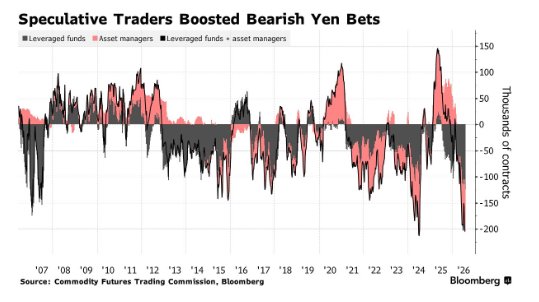
Just before the intervention occurred, the yen short positions accumulated in the market had reached an unusually extreme level. According to data from the US Commodity Futures Trading Commission as of July 28, net short positions in yen of asset management companies and leveraged funds climbed to their largest size since 2024, while the level of bearishness among hedge funds is still close to the highest level since 2007. This means that a large amount of speculative capital placed a heavy bet on the direction of the yen's decline.
The US and Japan joined forces to fight, instantly detonating the risk of cancelling these positions. Masayuki Nakajima, a senior monetary strategist at Mizuho Bank in London, pointed out that if the latest information from the US and Japanese authorities triggers the closure of these short positions, there may be room for the dollar to fall further to the 155 region; and if speculative positions eventually turn to net longs, the yen does not even rule out the possibility of moving towards 150.
Is it an “institutional change” or a “fleeting flash”?
However, market strategists are seriously divided on the strategic significance of this joint intervention.
According to many fans, this is a change in the “rules of the game.” Junpei Tanaka, deputy manager of Mizuho Bank's foreign exchange spot trading team, said that the joint intervention showed a will to stop the depreciation of the yen at any cost. This marks that the foreign exchange market has entered a new pattern, and the upward space for the US dollar against the yen will be limited as a result.
Yamaguchi Masahiro, head of investment research at Sumitomo Mitsui Trust Bank, stressed that the dollar's fall below the 200-day EMA means that most investors' gains have been erased and losses have occurred. As the US personally falls, this is a huge change for speculative traders — betting that the yen weakens has become a difficult operation, as traders will be more suspicious that as soon as the exchange rate recovers, it will lead to more intervention.
Yugo Tsuboi, chief strategist at Daiwa Securities, pointed out the core changes: when Japan acts unilaterally, it is bound by the size of special foreign exchange accounts and licenses to sell US treasury bonds; however, after the US intervened, the scale and ease of operation that can be used to intervene qualitatively changed, and the market had almost no idea about the upper limit of deployable ammunition. This uncertainty itself is suppressing bears.
IG Australian market analyst Tony Secamore said that joint intervention was historically usually reserved for crisis periods, so the joint intervention between the US and Japan was completely unexpected under current conditions, reflecting a stronger commitment to curb the excessive weakening of the yen than expected; Saxo Markets chief investment strategist Chanu Chanana pointed out that history shows that the authorities often adopt “serial intervention” rather than single action. Especially when the market quickly spits back at the beginning, the US supports turning the intervention from Japan's unilateral efforts into a coordinated policy signal. The market is much more difficult to counter this joint will trend.
Skeptics, on the other hand, believe that the short-term effects of intervention are difficult to translate into trend reversals. Macquarie Group strategist Gareth Berry poured cold water on the bulls: “Japan's Ministry of Finance currently has a limited window of opportunity to cause some damage on the chart and break through support levels. They don't have unlimited ammunition, and neither does the US Treasury. They must quickly change the market's mentality about the upward trend that has been established for four years; otherwise, the market will use this decline as a better entry point to re-establish long positions. The trend will be established again, and the opportunity will be lost.” He believes that for this round of intervention to work, it is necessary to leave a clear “mark of damage” on the chart — even though the 200-day moving average has fallen, several key support levels must be destroyed continuously. If 155 cannot be reached, it indicates that the authorities have not spared any determination, and the market will seize this hesitation to fight back.
Reed Capital's chief investment officer Gerald Gan said bluntly that the joint intervention would not have a meaningful impact on the strength of the yen. “Monetary intervention is only useful in the short term; the effectiveness of continued intervention will only diminish. Whether the yen can achieve a meaningful and sustainable appreciation remains the Bank of Japan's actions.”
Wu Rongren, manager of fixed income portfolio at Hanya Investments, added that the weak yen fundamentally reflects market concerns about Japan's monetary and fiscal policy settings. “Unless these fundamental issues are addressed, intervention alone is unlikely to bring about a lasting reversal.”
The founder of the Pelham Smithers firm warned that we should be wary of repeating the mistakes of “Black Wednesday” in the UK in 1992. At the time, the British government failed to defend the pound in the foreign exchange market, which instead triggered one-way bets by macro funds and the collapse of the British pound. He believes that if this government intervention is seen as a failure, it may induce a real squeeze of yen, thereby worsening Japan's inflation prospects.
The way forward: Two-way fluctuations increase, fundamentals still dominate
Although the joint intervention depressed the exchange rate of the dollar against the yen in the short term, most analysts agree that to reverse the weak yen for a long time, fundamental support is still needed — either from the Bank of Japan's further tightening of monetary policy, falling US yields, or an improvement in market confidence in Japan's finances.
Tsutomu Nakamura, a foreign exchange analyst at Gaitame.com Research Institute, said that after the effects of the intervention subsided, the exchange rate of the US dollar against the yen may rise again to around 159, but it is unlikely to return to the previous extreme level; the yen is still likely to rise to the 150 level before the end of the year.
“This does not mean we have entered a long-term bull market of yen,” Saxo Markets' Chanana said. “The joint intervention has indeed changed the risk-reward ratio faced by shorting the yen in the short term. However, if the yen is to actually strengthen, it will ultimately still need fundamental support. This may depend on the Bank of Japan's further tightening of monetary policy, a decline in long-term US interest rates, or an improvement in market confidence in Japan's fiscal prospects.”