
- PRICING
- LIVE QUOTES
- LEARN
- HELP


EN
Tesla Delivered 480,126 Vehicles in a Quarter and Still Missed on Profit. Here's Where the Money Went.
Key Points
Tesla beat delivery and revenue estimates in the most recent quarter but missed on profit and margins.
Rising costs and an unfavorable sales mix hurt profitability.
Tesla bulls will see a good buying opportunity developing.
With Tesla (NASDAQ: TSLA) having already released its estimate-busting delivery numbers for the quarter, investors were optimistic that the company would deliver other second-quarter numbers that were ahead of the Wall Street consensus estimates published on its investor relations page. Unfortunately, it did not, and the consternation around the miss is one reason the stock declined post-earnings.
Tesla misses earnings estimates
Automotive deliveries of 480,126 in the quarter, compared to the consensus estimate for 406,024, contributed to revenue beating expectations. However, on every other headline metric, Tesla missed expectations, even with revenue coming in $652 million higher than modeled.
Where to invest $1,000 right now? Our analyst team just revealed what they believe are the 10 best stocks to buy right now, when you join Stock Advisor. See the stocks »
Both cost of goods sold (COGS) and operating expenses came in higher than expected, negatively affecting gross margin and operating margin, respectively.
Metric |
Wall Street Consensus |
Actual |
Difference |
|---|---|---|---|
Revenue |
$27,584 million |
$28,236 million |
Better by $652 million |
Gross profit |
$5,378 million |
$4,751 million |
Worse by $627 million |
Gross profit margin |
19.5% |
16.8% |
Worse by 270 basis points |
Operating profit |
$1,503 million |
$398 million |
Worse by $1,105 million |
Operating profit margin |
5.4% |
1.4% |
Worse by 400 basis points |
Data source: Tesla.
Why Tesla missed estimates
The first point to note is that if Tesla had met analyst expectations for automotive revenue per delivery, then its revenue would have been higher. Based on the consensus automotive revenue estimate of $20.05 billion, and the delivery consensus, Tesla's automotive revenue per delivery would have been $49,376. Multiplying that by its delivery number produces $23.7 billion. Adding that to energy ($3.1 billion) and services ($4.6 billion) comes to $31.4 billion, compared with the actual number of $27.6 billion in the table.
Ultimately, the automotive revenue per delivery of $42,730 came in lower than expected because of a combination of discounting, incentives, relatively more sales to lower-priced markets, and a shift in models away from the higher-priced, and no longer produced, Model S and Model X, and toward lower-priced standard versions of the Model 3 and Model Y.
Costs are rising
Second, on the cost of goods sold, CFO Vaibhav Taneja cited rising commodity costs and interest rate changes: "... as interest rates have risen this year, the cost of subvention has risen along with them." In plain English, rising rates have made it more expensive for Tesla to offer promotional financing rates to customers.
Third, turning to rising operating expenses, Taneja cited increasing "research and development-related activities, including preproduction [ramp-up] costs for new products like the Semi truck, Optimus, Cybercab, and other AI initiatives, as well as the appreciation for an additional compute that we brought online." He also said operating expenses would "continue to grow in 2026 and beyond."
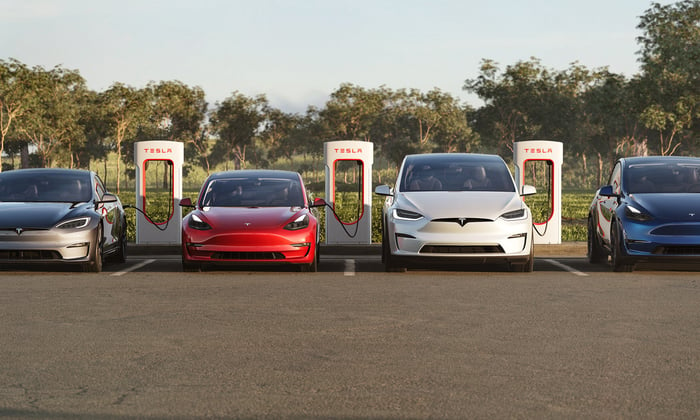
Image source: Tesla.
What it means to Tesla investors
Having decided to go all in on production and capital spending for growth in 2026, the incentives that increased COGS make sense, as do the increased research and development costs to drive growth. The reality is Tesla wins when it delivers more vehicles and builds scale.
While the incentives and cost increases were more than many expected, they could have been forgiven if Tesla's robotaxi rollout had kept pace with the expectations CEO Elon Musk had previously outlined. If Tesla demonstrates better progress on that front, investors will be more accepting of increased costs and a less favorable sales mix.
Lee Samaha has no position in any of the stocks mentioned. The Motley Fool has positions in and recommends Tesla. The Motley Fool has a disclosure policy.