
- PRICING
- LIVE QUOTES
- LEARN
- HELP


EN
GE HealthCare’s (NASDAQ:GEHC) Q2 CY2026: Beats On Revenue, Stock Soars
Healthcare technology company GE HealthCare Technologies (NASDAQ:GEHC) reported revenue ahead of Wall Street’s expectations in Q2 CY2026, with sales up 5.8% year on year to $5.30 billion. Its non-GAAP profit of $1.13 per share was 9.1% above analysts’ consensus estimates.
Is now the time to buy GE HealthCare? Find out by accessing our full research report, it’s free.
GE HealthCare (GEHC) Q2 CY2026 Highlights:
- Revenue: $5.30 billion vs analyst estimates of $5.27 billion (5.8% year-on-year growth, 0.5% beat)
- Adjusted EPS: $1.13 vs analyst estimates of $1.04 (9.1% beat)
- Management reiterated its full-year Adjusted EPS guidance of $4.90 at the midpoint
- Operating Margin: 14%, in line with the same quarter last year
- Free Cash Flow Margin: 1.3%, up from 0.2% in the same quarter last year
- Organic Revenue rose 3.5% year on year (beat)
- Market Capitalization: $29.16 billion
GE HealthCare President and CEO Peter Arduini said, “We delivered record orders and backlog in the second quarter, with orders growth across every segment, demonstrating strong commercial execution, including the adoption of new products. In Patient Care Solutions, while we are focused on returning the business to growth and profitability, we are reviewing strategic options to maximize its long-term value. Our continued investment in precision innovation is expanding our addressable markets, strengthening our competitive position and supporting durable short- and long-term growth.”
Company Overview
Spun off from industrial giant General Electric in 2023 after over a century as its healthcare division, GE HealthCare (NASDAQ:GEHC) provides medical imaging equipment, patient monitoring systems, diagnostic pharmaceuticals, and AI-enabled healthcare solutions to hospitals and clinics worldwide.
Revenue Growth
A company’s long-term performance is an indicator of its overall quality. Any business can put up a good quarter or two, but the best consistently grow over the long haul. Over the last five years, GE HealthCare grew its sales at a tepid 3.7% compounded annual growth rate. This was below our standard for the healthcare sector and is a rough starting point for our analysis.
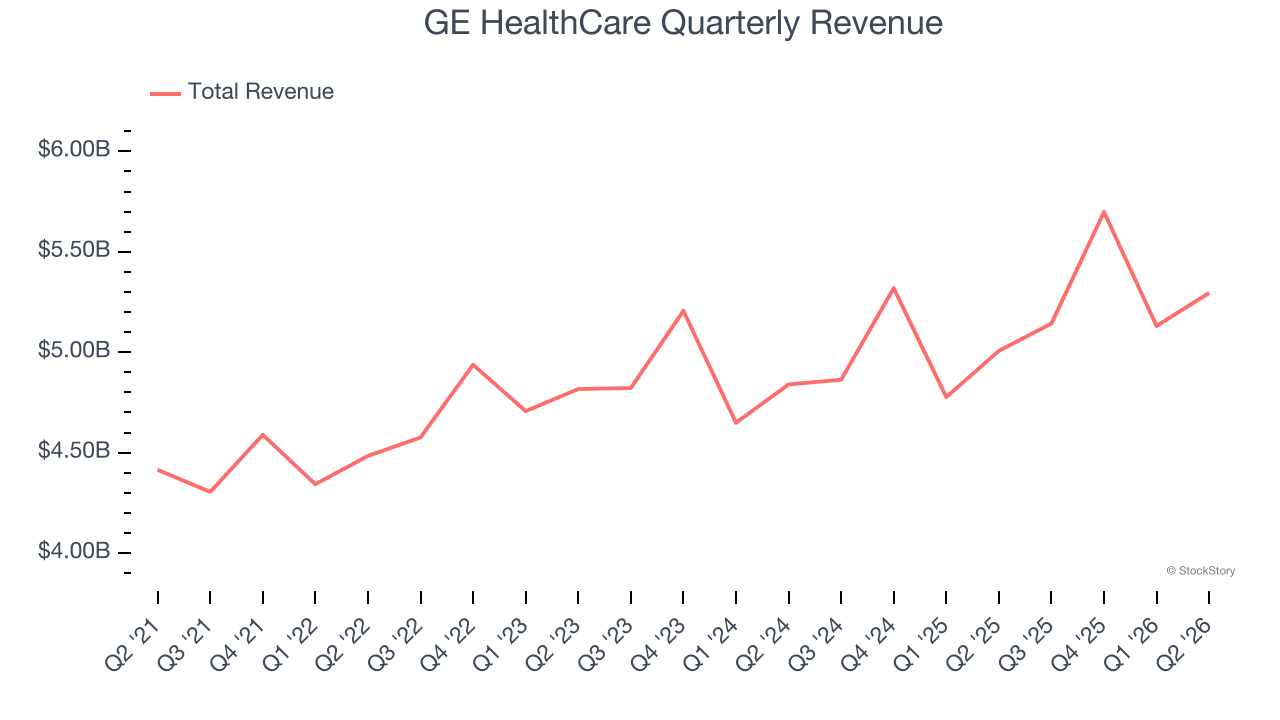
We at StockStory place the most emphasis on long-term growth, but within healthcare, a half-decade historical view may miss recent innovations or disruptive industry trends. GE HealthCare’s annualized revenue growth of 4.4% over the last two years aligns with its five-year trend, suggesting its demand was consistently weak. 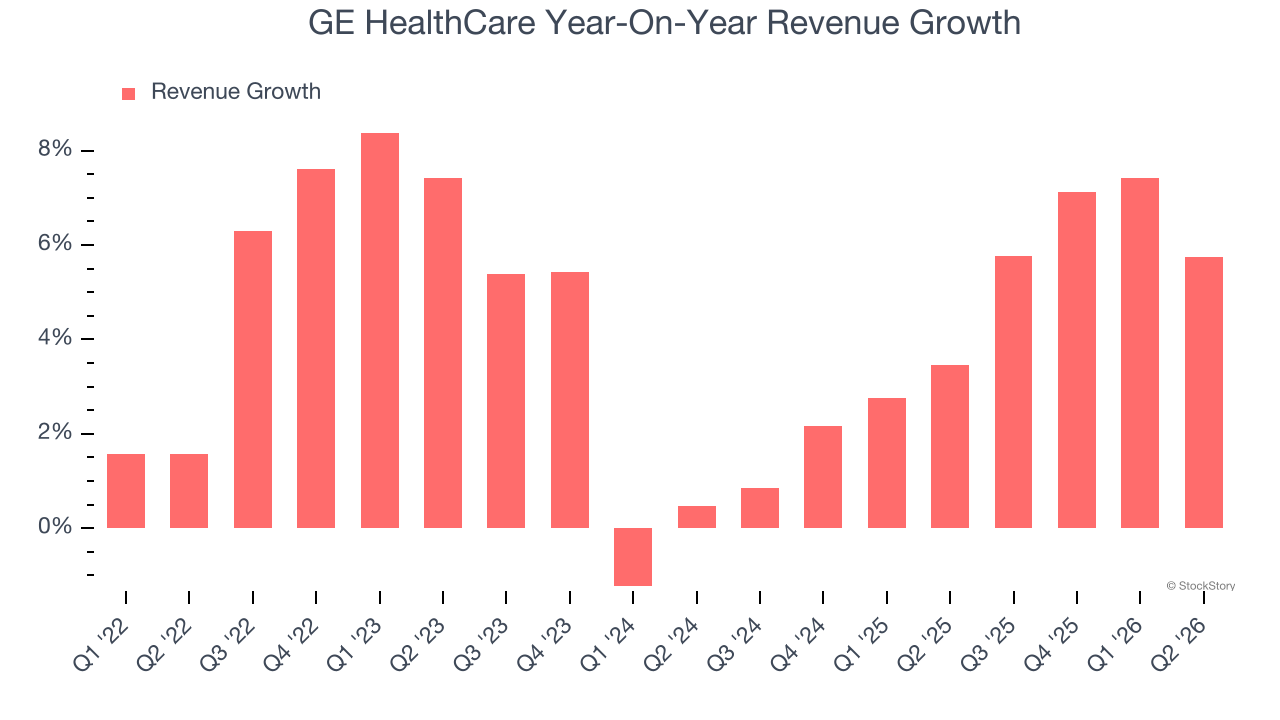
We can dig further into the company’s sales dynamics by analyzing its organic revenue, which strips out one-time events like acquisitions and currency fluctuations that don’t accurately reflect its fundamentals. Over the last two years, GE HealthCare’s organic revenue averaged 3% year-on-year growth. Because this number aligns with its two-year revenue growth, we can see the company’s core operations (not acquisitions and divestitures) drove most of its results. 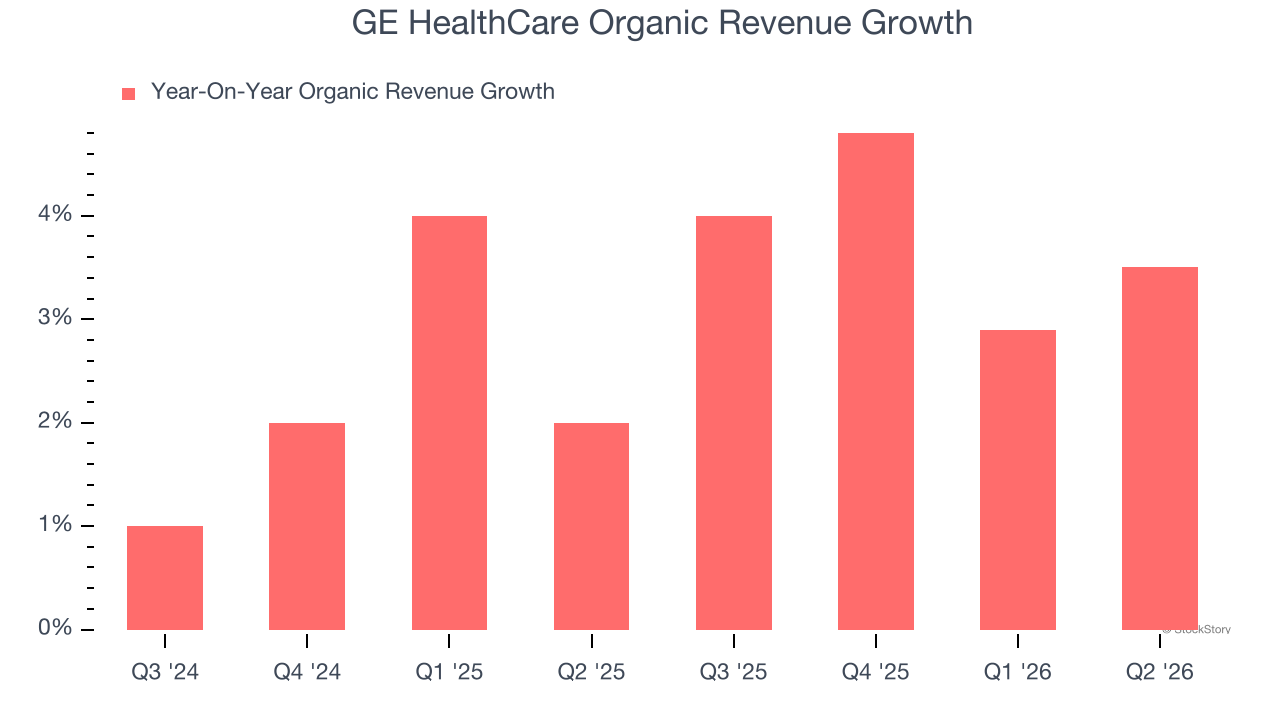
This quarter, GE HealthCare reported year-on-year revenue growth of 5.8%, and its $5.30 billion of revenue exceeded Wall Street’s estimates by 0.5%.
Looking ahead, sell-side analysts expect revenue to grow 4.7% over the next 12 months, similar to its two-year rate. This projection doesn’t excite us and indicates its newer products and services will not accelerate its top-line performance yet.
ONE MORE THING: 3 Hidden Platforms Growing 3X Faster than Amazon, Google, and PayPal. Amazon, Google, and Meta all followed the same playbook: Dominate an ignored market. Build an unbeatable moat. Scale until you’re unstoppable.
These three platforms are running that exact playbook right now. The early investors in Amazon made fortunes. The early investors in these could do the same. Get All 3 Stocks Here for FREE.
Adjusted Operating Margin
Adjusted operating margin is one of the best measures of profitability because it tells us how much money a company takes home after subtracting all core expenses, like marketing and R&D. It also removes various one-time costs to paint a better picture of normalized profits.
GE HealthCare has managed its cost base well over the last five years. It demonstrated solid profitability for a healthcare business, producing an average adjusted operating margin of 15%.
Analyzing the trend in its profitability, GE HealthCare’s adjusted operating margin rose by 1.8 percentage points over the last five years, as its sales growth gave it operating leverage.
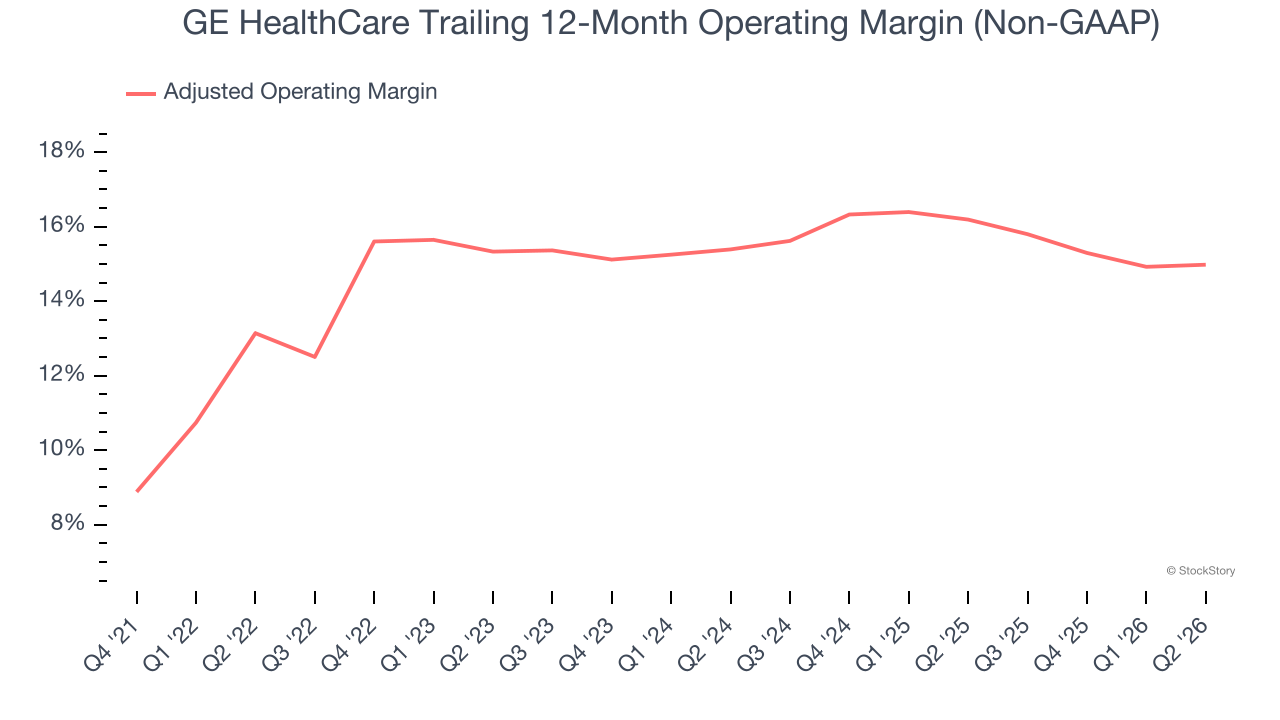
In Q2, GE HealthCare generated an adjusted operating margin profit margin of 14.8%, in line with the same quarter last year. This indicates the company’s overall cost structure has been relatively stable.
Cash Is King
If you’ve followed StockStory for a while, you know we emphasize free cash flow. Why, you ask? We believe that in the end, cash is king, and you can’t use accounting profits to pay the bills.
GE HealthCare has shown decent cash profitability, giving it some flexibility to reinvest or return capital to investors. The company’s free cash flow margin averaged 7.7% over the last five years, slightly better than the broader healthcare sector.
Taking a step back, we can see that GE HealthCare’s margin expanded by 1.4 percentage points during that time. This is encouraging because it gives the company more optionality.
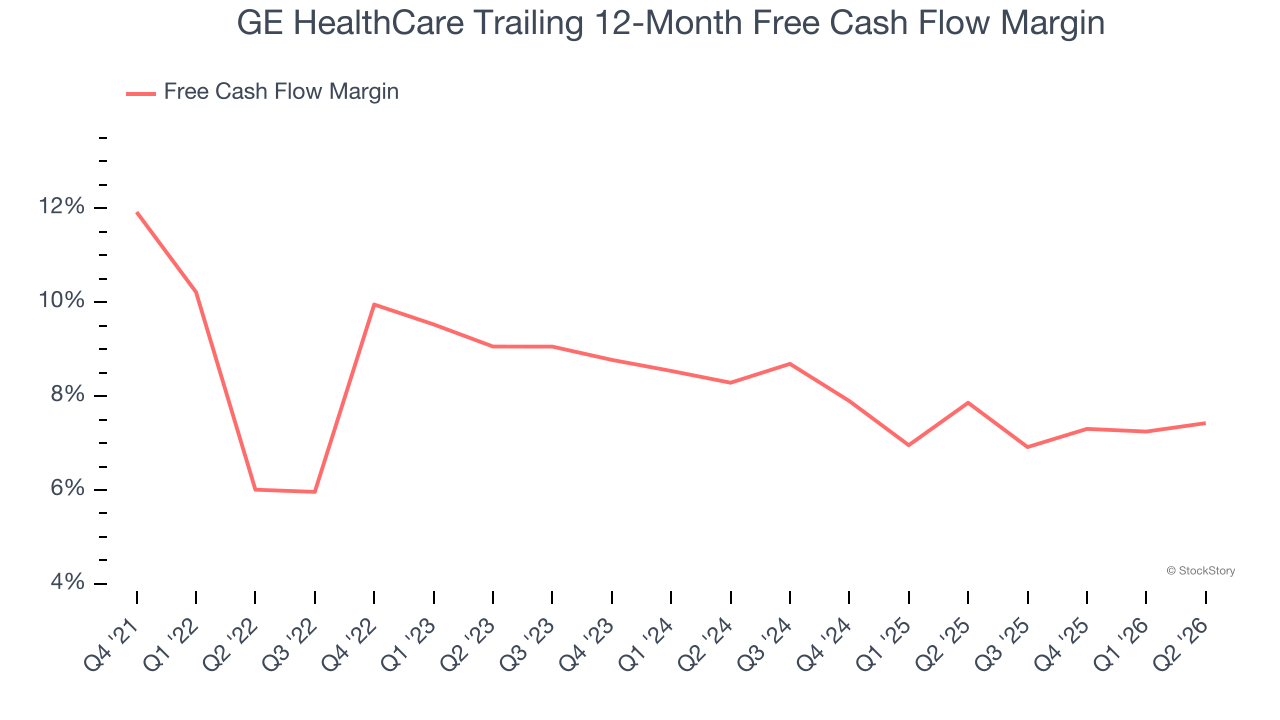
GE HealthCare’s free cash flow clocked in at $68 million in Q2, equivalent to a 1.3% margin. This result was good as its margin was 1.1 percentage points higher than in the same quarter last year, building on its favorable historical trend.
Key Takeaways from GE HealthCare’s Q2 Results
It was good to see GE HealthCare beat analysts’ EPS expectations this quarter. We were also happy its full-year EPS guidance narrowly outperformed Wall Street’s estimates. Overall, this print had some key positives. The stock traded up 8.8% to $69.76 immediately following the results.
Is GE HealthCare an attractive investment opportunity at the current price? What happened in the latest quarter matters, but not as much as longer-term business quality and valuation, when deciding whether to invest in this stock. We cover that in our actionable full research report which you can read here (it’s free).