
- PRICING
- LIVE QUOTES
- LEARN
- HELP


EN
GGII: In the first half of 2025-2026, more than 50 lithium battery and energy storage companies launched parallel IPOs A+H
The Zhitong Finance App learned that according to incomplete statistics from the Advanced Industrial Research Institute (GGII), in the first half of 2025-2026, more than 50 companies related to A-shares and Hong Kong stocks began the listing process. Among them, GEM became the main battleground for A-shares, with Hong Kong stocks running parallel A+H; leading the three tracks of energy storage systems, lithium battery materials, and manufacturing equipment; capacity expansion, R&D investment, and global layout form the three main lines of fund-raising.
A-share market: GEM is the main player, with outstanding hard technology attributes
Of the 20 A-share reporting companies, 13 chose GEM, accounting for 65%, making it the preferred location for lithium battery and energy storage companies to go public. There are 2 science and technology innovation boards, 3 on the Beijing Stock Exchange, and 1 on the main board of the Shanghai Stock Exchange. In addition, Qingdao Haier New Energy is still in the counseling phase and has yet to be determined.
2025-2026 H1 Lithium Battery and Energy Storage IPO Enterprise Segment Distribution (A Shares)
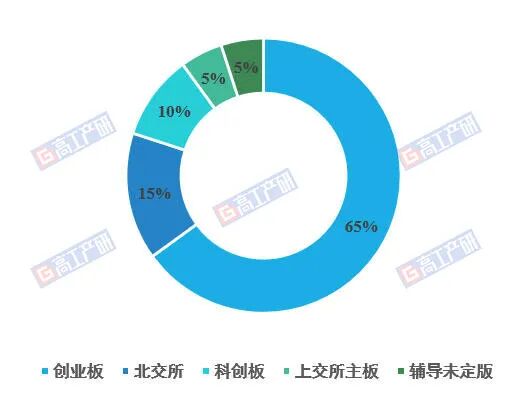
Judging from the review progress, 7 companies have successfully entered the capital market, including Shang Shui Intelligence, Goode Electric Materials, Gardley, and Gaote Electronics. The remaining 10 companies are in the process of being inquired, accepted, or registered, and 3 are still consulting and filing.
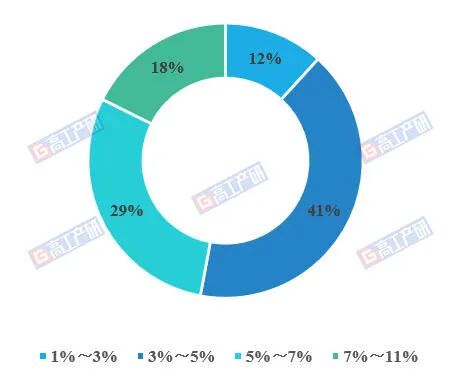
Behind the sector selection is the differentiation of racetrack attributes: companies with “three innovations and four new” attributes, such as lithium battery equipment, battery materials, and BMS, are building up GEM; companies with higher technical barriers and greater investment in R&D, such as copper foil equipment and aerospace power supplies, choose science and technology innovation boards; and small-scale but stable profitable materials and equipment companies have landed on the Beijing Stock Exchange. Overall, the hard technology attributes of A-share lithium battery and energy storage IPOs are clear, and the share of R&D investment is generally higher than that of traditional manufacturing.
Distribution of R&D investment share of lithium battery and energy storage IPO companies in 2025 (A shares)
Hong Kong stock market: A+H parallel, global financing is the core demand
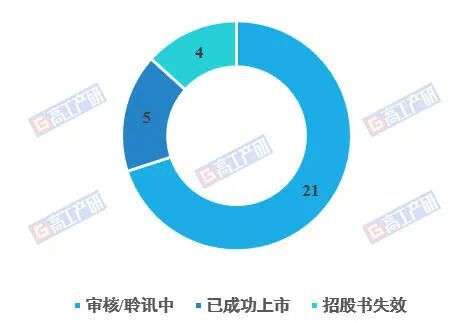
The Hong Kong stock market presents a dual parallel pattern of “A+H secondary listing” and “pure H share initial offering”. Of the 30 Hong Kong stock IPOs, 12 were A-share leading companies that went to Hong Kong for the second time, and 18 were pure H shares for the first time.
The A+H faction brought together first-line leaders such as Sunwoda (300207.SZ), Penghui Energy (300438.SZ), Deye (605117.SH), Xinzhoubang (300037.SZ), Tianhua Xinneng, Putailai, Xingyuan Materials, and Pilot Intelligence. Among them, Xingyuan Materials and Pilot Intelligence have completed the Hong Kong stock listing. This group of enterprises generally has a revenue scale of 10 billion dollars. The core appeal of going to Hong Kong is to build an international financing platform to support the expansion of overseas production capacity and the implementation of a global strategy.
The pure H share starter team is mainly the hidden champion of the segmented racetrack, covering cutting-edge fields such as energy storage systems, liquid flow battery materials, lithium battery recycling, and solid state batteries. Shuangdeng Group, Sega New Energy, and Guoxia Technology have been successfully listed. Delan Minghai, Qingtao Energy, and Jinsheng New Energy are in the hearing or review stage.
It is worth noting that this is the third time that Gurivat has hit the Hong Kong Stock Exchange, reflecting the Hong Kong stock market's strict screening of the profit quality and sustainability of energy storage companies.
2025-2026 H1 Lithium Battery and Energy Storage IPO Types and Audit Progress (HK Stock)
Track map: energy storage systems lead the way, and the whole industry chain is blossoming
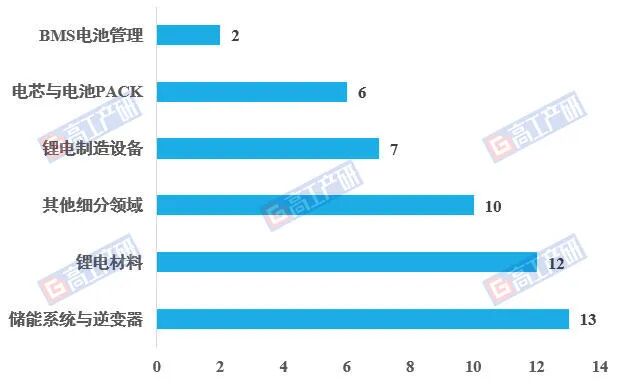
Judging from the distribution of segmented tracks, the number of energy storage system and inverter companies is the largest, reaching 13, accounting for about 26%. This is directly related to the explosive growth of the global energy storage market — demand for multiple scenarios such as household storage, industrial and commercial storage, large storage, and data center power backup has been released simultaneously, spawning a large number of system integrators and inverter manufacturers with independent listing capacity.
Lithium battery materials followed by 12 companies, accounting for 24%, covering various segments such as cathode materials, diaphragms, electrolyte additives, insulation auxiliary materials, and proton exchange membranes. There are 7 companies in the equipment field, covering all processes such as pre-coating, post-stage chemical composition, material automation, and copper foil equipment. There are 6 cell and PACK companies, and 2 BMS companies.
One notable sign is that cutting-edge technology companies such as solid-state batteries, long-term energy storage flow batteries, and sodium batteries are beginning to enter the IPO queue in batches. Beijing Weilan and Qingtao Energy focus on semi-solid/all-solid-state batteries. Kerun's new materials focus on proton exchange membranes for liquid flow batteries, and Ligao Xinneng lays out sodium-electric BMS. This means that the capital market has begun to price the next generation of battery technology, and the commercialization of cutting-edge technology is accelerating.
2025-2026 H1 lithium battery and energy storage IPO segment distribution (A share+Hong Kong stock)
Fund-raising destination: capacity expansion, R&D and offshore two-wheel drive
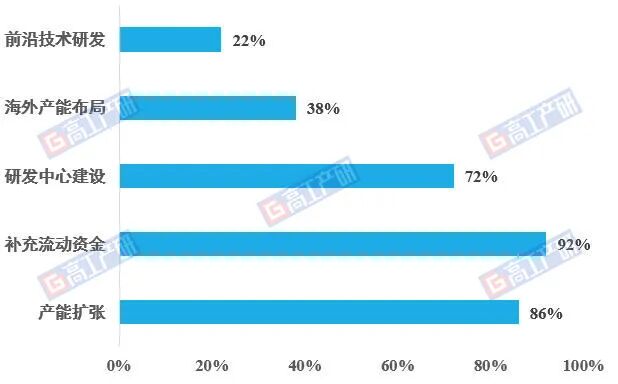
Sorting out the fund-raising plans of 50 companies, presenting four common directions:
First, 86% of enterprises use capacity expansion as the main direction of use to raise capital. From Maitian Energy's “annual output of 1 million smart energy storage products” to Jinchuan Ruixiang's “300,000 tons of phosphoric acid cathode materials”, from GWh-class battery cell bases to intelligent manufacturing parks for high-end equipment, capacity expansion is still the main direction for IPO companies to use capital raised.
Second, 72% of companies have arranged to build R&D centers. In addition to conventional product iterative research and development, AI computing power centers have become new research and development hotspots in cutting-edge directions such as backup batteries, solid electrolytes, and dry electrodes. Anshi New Energy also clearly lists UPS batteries and HVDC BBU for AI computing power centers as key research directions.
Third, about 38% of companies clearly mentioned overseas production capacity and the direction of global layout. This ratio is higher among A+H companies — Sunwoda's North American power battery factory, Everweft Lithium Hungary base, Xingyuan Material's Malaysia/US diaphragm base, and Deye Co., Ltd.'s overseas household storage plant. The global layout has been upgraded from channel output to production capacity implementation.
Fourth, more than 90% of enterprises use supplementary working capital as a standard for fund-raising, reflecting the asset-heavy, high-turnover, and capital-intensive characteristics of the lithium battery energy storage industry. Sufficient operating capital reserves sufficient momentum for the promotion of companies' follow-up strategies and coping with market cycle fluctuations.
Distribution of lithium battery and energy storage IPOs fund-raising purposes in 2025-2026 (A share+Hong Kong stock)
Trend outlook: from barbaric growth to intensive farming
Overall, this round of lithium battery and energy storage companies' IPO boom shows three clear trends:
First, the listing sector is clearly divided. A-shares continue to take on segmented racetrack specialties and small to medium growth companies, and Hong Kong stocks will become the main battleground for global leaders to finance overseas in 2026. The two markets complement each other and jointly support the multi-level capital needs of the industry.
Second, the racetrack spread from being dominated by batteries to the entire industrial chain of materials, equipment, BMS, and system integration. In the past, the main protagonists of IPOs were power battery cells, major materials and equipment companies. Now, invisible champions are emerging in batches. Markets such as BMS, copper foil equipment, and liquid flow battery materials have all run out of independent listed companies, and the division of labor in the industry is becoming more and more refined.
Third, the use of fund-raising was upgraded from a single expansion of production to production capacity+R&D+globalization. The story of simply expanding production is becoming more and more difficult to understand, and companies with technical barriers, overseas channels, and differentiated scenarios are more likely to be recognized by auditors. Leading companies in cutting-edge technology have begun to enter the listing window, and next-generation technology-leading companies, such as solid-state, sodium electricity, and long-term energy storage, are accelerating their way into the capital market.
Distribution of overseas revenue share of lithium battery and energy storage IPOs in 2025 (A share+Hong Kong stock)
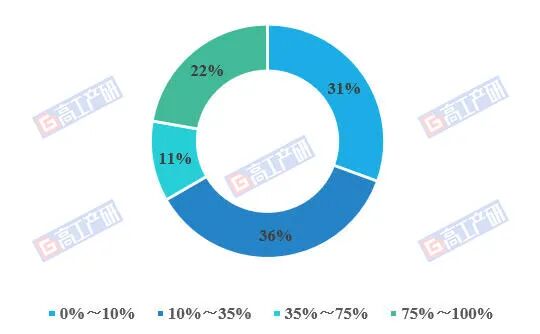
Investors should be wary of the risk of homogenized competition in the context of overcapacity, and focus on high-quality enterprises with technical barriers, overseas channels, and differentiated scenarios. For companies to be listed, profit quality, growth, and compliance are still the keys to breaking through customs. The lithium battery and energy storage industry has gone from barbaric growth to a stage of intensive cultivation, and capital market screening will also be more stringent.