
- PRICING
- LIVE QUOTES
- LEARN
- HELP


EN
Texas Instruments vs. Qualcomm: One Pays Out 94% of Earnings. The Better Dividend Chip Stock Is Clear.
If I ask anyone to name their favorite semiconductor stock, chances are, they’ll default to the big names like NVIDIA, AMD, or Broadcom. And I clearly see why. These companies have dominated the artificial intelligence landscape and have returned hundreds, if not thousands, of percent to shareholders.
But some investors are looking for something different. Growth is always nice, but you can’t go wrong with reliable dividends on the side. After all, you can’t spend capital appreciation until you sell your shares.
Thankfully, there are a handful of AI semiconductor companies that offer both growth potential and consistent dividends - some more consistent than others.
So, today, let’s take a look at Texas Instruments and Qualcomm to see which dividend chip stock is the better buy today.
Texas Instruments (TXN)
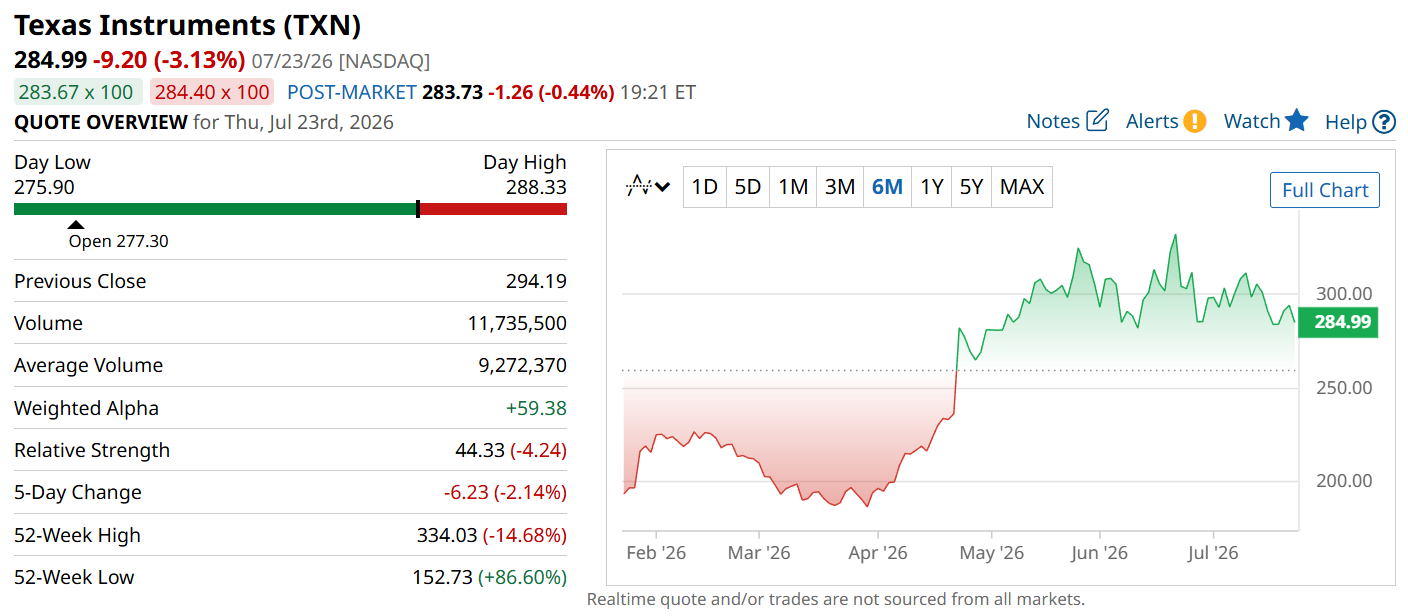
Texas Instruments, better known as TI, is one of the world’s largest analog and embedded semiconductor companies. When I say analog here, I don’t mean those massive CRT TVs from the late 90s.
Analog semiconductors are used for detecting continuous signals like voltage, current, temperature, sound, light, pressure, etc. Before AI, these chips were used for factory automation, medical devices, renewable energy systems, and other industrial facilities.
However, with the arrival of the artificial intelligence boom, TI is now expanding its core products to meet demand for analog and power management chips. Basically, the company has created its own niche within the broader AI semiconductor industry instead of directly competing with traditional AI chip companies like Broadcom, Marvell, and NVIDIA.
Qualcomm Inc (QCOM)
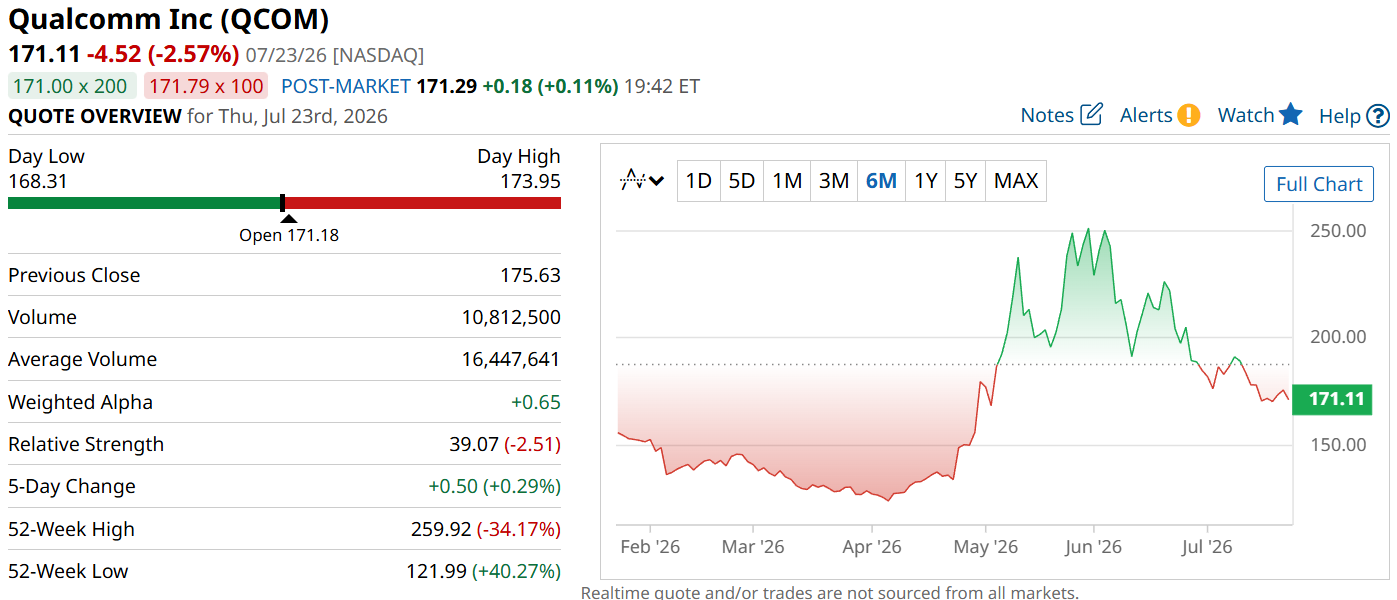
On the other hand, Qualcomm is stepping into the ring with those very same AI chip companies. While the company is better known for its Snapdragon processors for smartphones, it’s now expanding into AI data centers, among other things.
Its recent Qualcomm Dragonfly portfolio was released alongside a multi-generation agreement to supply data-center processors to Meta. That kind of high-profile partnership is just what Qualcomm needed to step away from “that one smartphone CPU maker” identity.
Similar industry, different playbooks
I’ve already laid out a few differences between the two companies. But there are some more, especially with how they make their money.
Texas Instruments is almost entirely a semiconductor company. It generates the vast majority of its revenue by selling analog and embedded chips. Specifically, its Analog segment generated about 79% of its full-year 2025 revenue.
Its expansion into AI positions the company as an infrastructure enabler. Its analog and power management chips are often used all throughout AI data centers. It’s even very likely that TI’s chips also run the grids and electricity generators powering said data center. The company also has microcontroller families used solely in Edge AI.
Now, Qualcomm is similar to TI due to its Snapdragon chip line. However, it also generates money through licensing its wireless technology to device manufacturers.
More recently, the company is developing AI computing platforms for smartphones, PCs, automated vehicles, and, of course, data centers. Its Snapdragon processors and AI Engine already power on-device AI experiences, while its recent Dragonfly portfolio marks its push into AI infrastructure.
If I were to distill their differences at the most basic level, Qualcomm is building AI computing platforms while Texas Instruments takes more of an AI infrastructure enabler role. Also, both are fabless semiconductor companies, which means they outsource the actual chip manufacturing to companies like TSMC.
So with the fundamental differences between Texas Instruments and Qualcomm settled, let’s talk about company fundamentals and how they translate into their stock prices.
Valuation comparison: Which company is “cheaper”?
Right off the bat, Qualcomm is trading at an attractive 22x price-to-earnings (P/E) ratio. That means investors are paying $22 for every dollar the company earns. Honestly, it might even sound like a bargain, given that its sector’s median is around 32x. Remember, lower is better. It also has a price-to-sales (P/S) ratio of just around 4x, just a tiny bit below the sector median.
However, its price-to-earnings-to-growth (PEG) ratio of 5x tells a different story. For those unaware, PEG measures the company's valuation relative to its expected earnings growth. The baseline is the number 1, and the lower the number, the better.
This tells us that, despite Qualcomm's seemingly attractive valuation, the market isn't expecting its earnings to grow fast enough to fully justify that multiple.
Now, to be fair, Texas Instruments isn’t really any better. P/E is at 38x, while P/S is 15x. That’s an expensive stock based on traditional valuations.
However, its PEG ratio is 1.49. So although Texas Instruments appears expensive based on traditional valuation metrics like P/E and P/S, its expected earnings growth makes that premium easier to justify.
Overall, though, Qualcomm looks like the better buy at current prices.
A dividend showdown between Aristocrats-to-be
Now, let’s get to the exciting part.
Both companies pay relatively decent dividends and are actually in line to join the ranks of Dividend Aristocrats. The most basic eligibility criteria (among other things like being S&P 500 listed) for aristocracy here is 25 years of consecutive dividend increases.
Texas Instruments has paid dividends for 64 straight years, but it’s only increased its payouts for the last 22. The company pays $5.68 per year, translating to around a 1.95% yield. However, it does have a worryingly high dividend payout ratio of 94%.
That means the company distributes 94% of its earnings to shareholders. Good news for the shareholders, but bad news for reinvesting money back into its business- not to mention future increases.
Coincidentally, Qualcomm has also increased dividends for 22 years straight. It pays $3.68, which translates to a 2.12% yield. But, the payout ratio is very reasonable at around 37%, which means the company should have more than enough to fund its future expansions- and the dividend.
What does Wall Street think?
Now, let’s see how the experts see these two contenders.
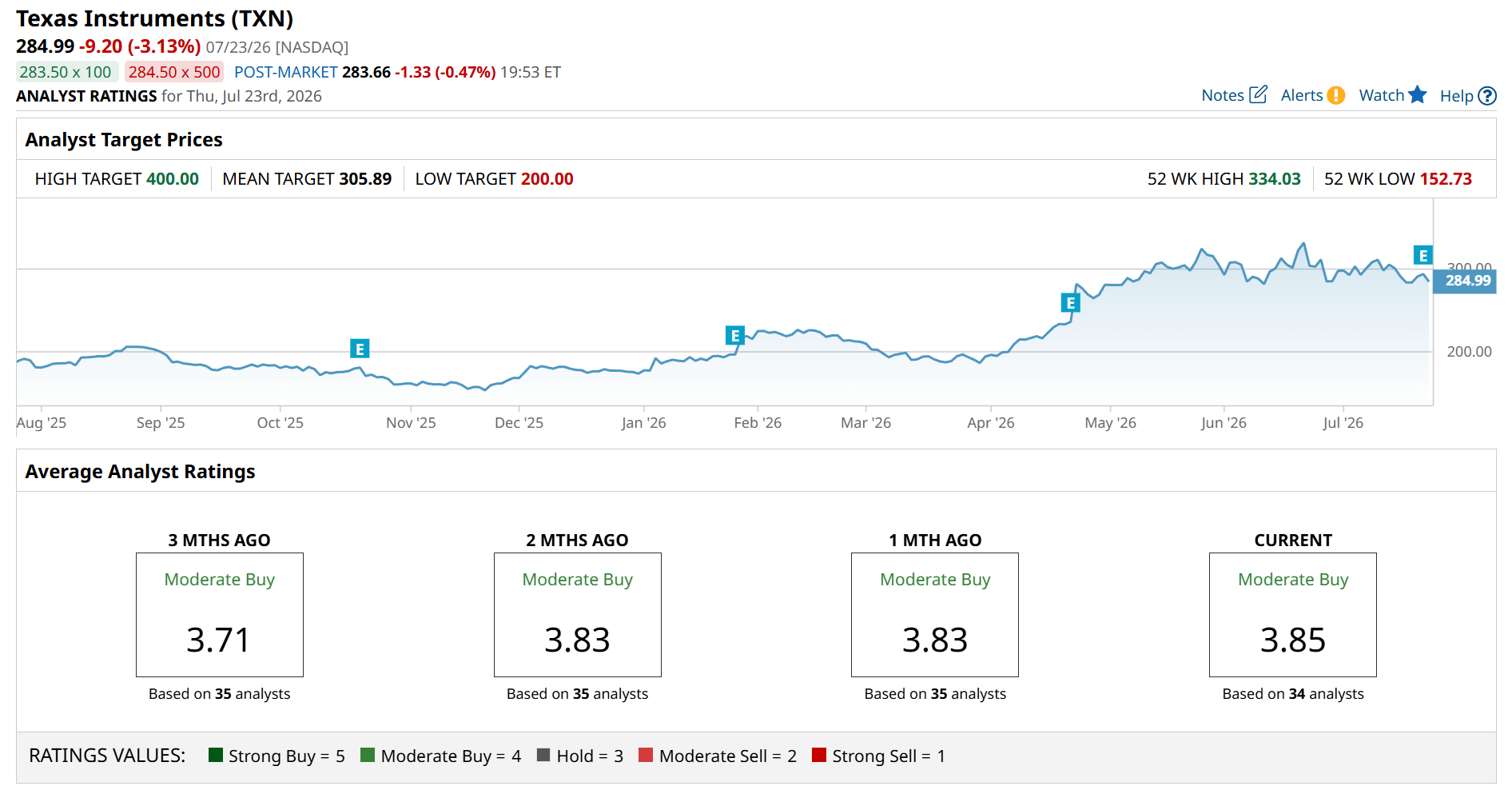
A consensus among 34 analysts rates TXN stock a “Moderate Buy,” with the high target price suggesting as much as 40% potential upside in the next 12 months.
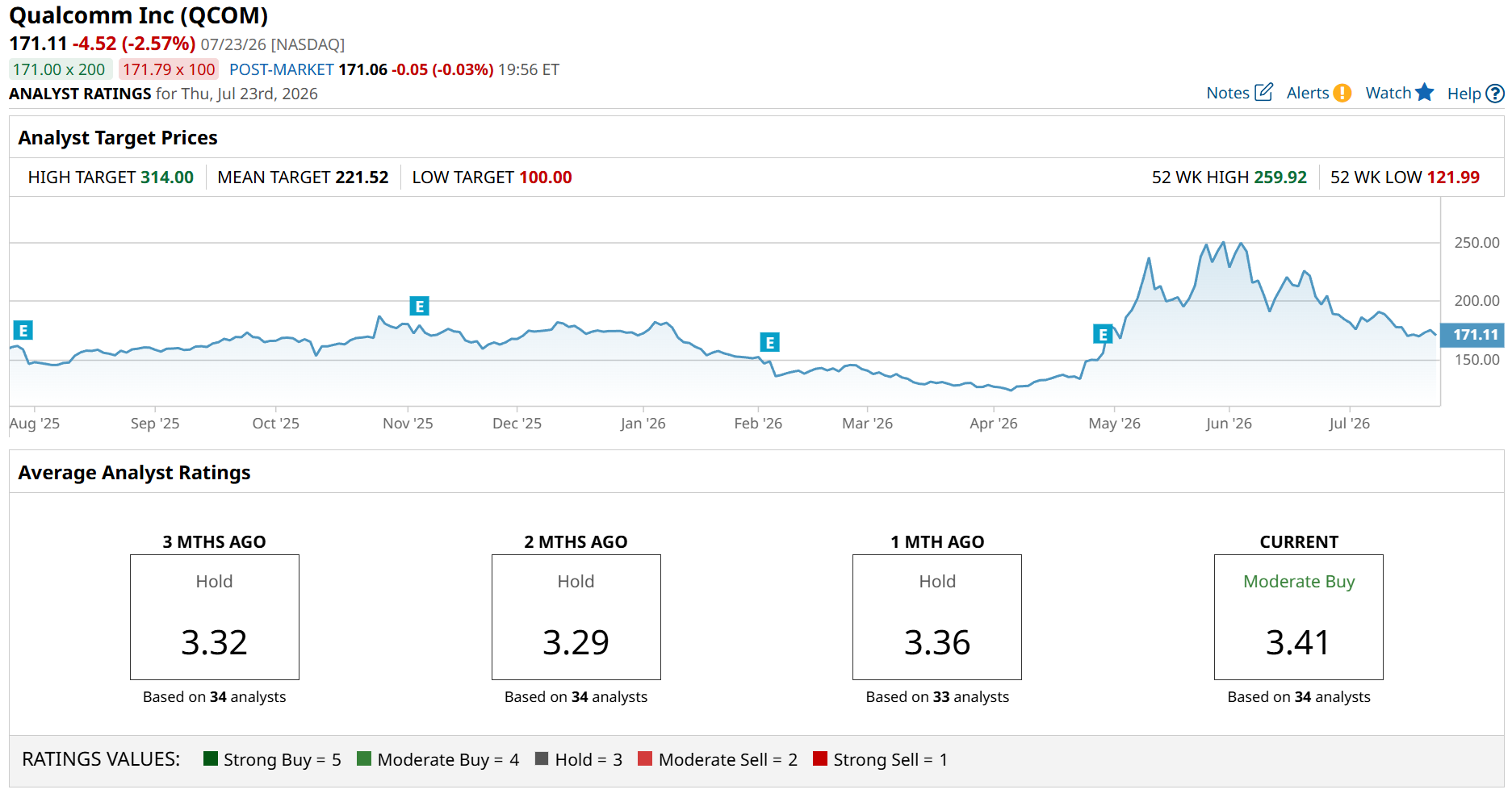
As for Qualcomm, a similar number of analysts rate it a “Moderate Buy.” The high target prices imply up to 83% potential upside.
Verdict
Despite mixed signals from certain metrics, Qualcomm offers the better combination of growth potential, valuation, and dividend sustainability. That’s not to say Texas Instruments is down and out. I think it still has room to grow. I don’t particularly like the fact that it uses almost all of its earnings to pay dividends. If profitability doesn’t improve, TI may one day face the hard choice of pausing increases or, worse yet, the dividend itself.
On the date of publication, Rick Orford did not have (either directly or indirectly) positions in any of the securities mentioned in this article. All information and data in this article is solely for informational purposes. For more information please view the Barchart Disclosure Policy here.