
- PRICING
- LIVE QUOTES
- LEARN
- HELP


EN
American Tower (AMT) Stock Looks Reasonable Even With A 40% Value Gap
American Tower stock has fallen 31.9% over the past five years, yet both its intrinsic value estimate based on a Discounted Cash Flow (DCF) approach and its earnings multiples currently point to an undervalued setup compared with the market price.
- Over the last five years, American Tower has declined 31.9%, which puts recent pricing against a weak return backdrop for long term holders.
- Goldman Sachs initiating coverage with a Buy rating and a US$215 target highlights confidence in American Tower's tower and data center growth prospects. However, any disappointment in adjusted funds from operations (AFFO) growth or execution on CoreSite could weigh on how much value investors are willing to ascribe.
- American Tower screens as undervalued on all of Simply Wall St's checks. The broader valuation work suggests the stock looks cheap on cash flow and multiples, as captured by its 6 out of 6 valuation score.
The issue now is whether the current discount to intrinsic value is wide enough, and reliable enough, to compensate investors for the risks in American Tower's cash flow story.
Find out why American Tower's -25.1% return over the last year is lagging behind its peers.
Is American Tower a Bargain on Cash Flow?
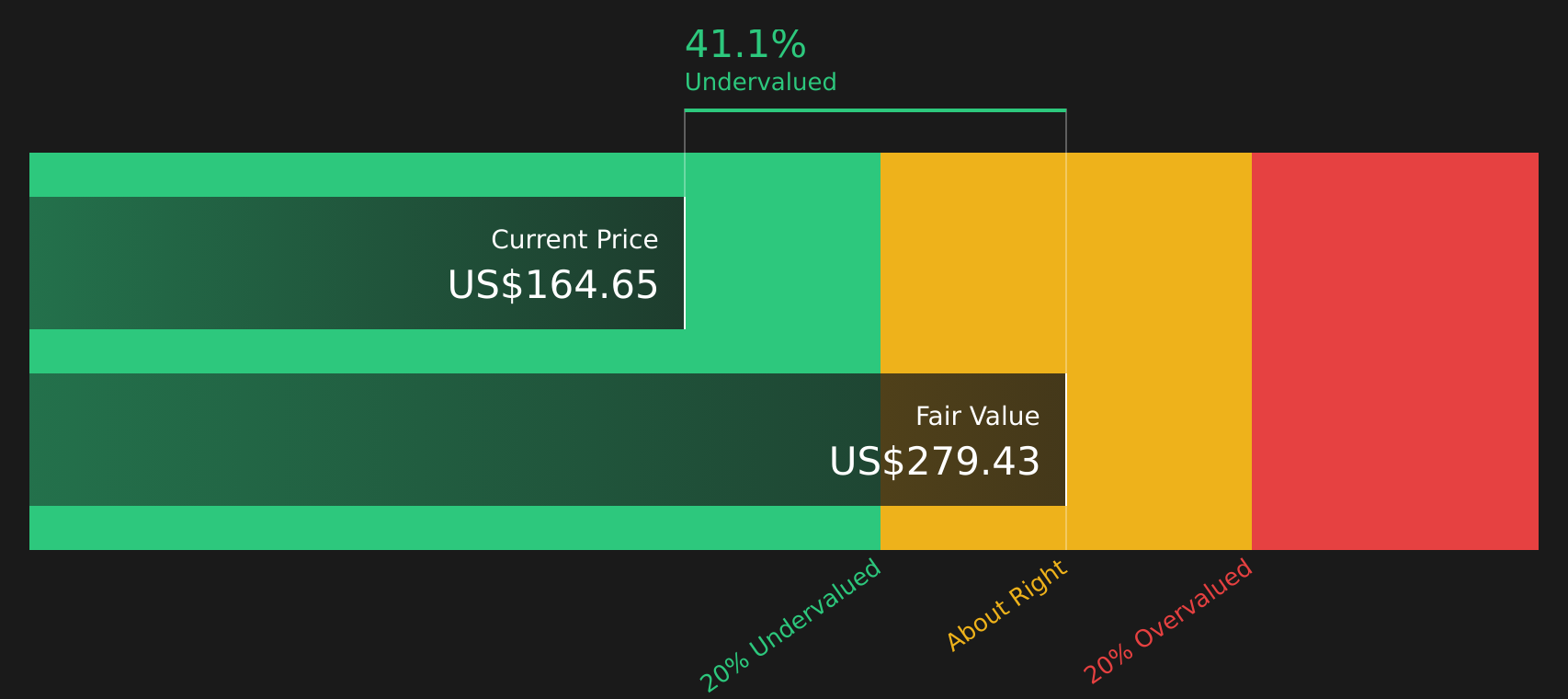
The Discounted Cash Flow (DCF) model here is built on American Tower’s adjusted funds from operations, projecting how much cash could be available to equity holders over time. On the latest twelve-month numbers, American Tower generated about $5.0b of free cash flow, with the model assuming that this cash flow continues growing rather than shrinking.
On that basis, the DCF points to an estimated intrinsic value of about $279 per share, which implies the stock trades at a 40.4% discount and therefore screens as undervalued relative to its cash flows. Goldman Sachs initiating coverage with a Buy rating and a $215 target helps explain renewed interest; however, the current share price still sits well below what this cash flow model indicates.
Overall, the DCF work suggests American Tower stock looks undervalued versus the cash it is expected to generate.
Our Discounted Cash Flow (DCF) analysis suggests American Tower is undervalued by 40.4%. Track this in your watchlist or portfolio, or discover 47 more high quality undervalued stocks.
Does American Tower Look Undervalued on Earnings?
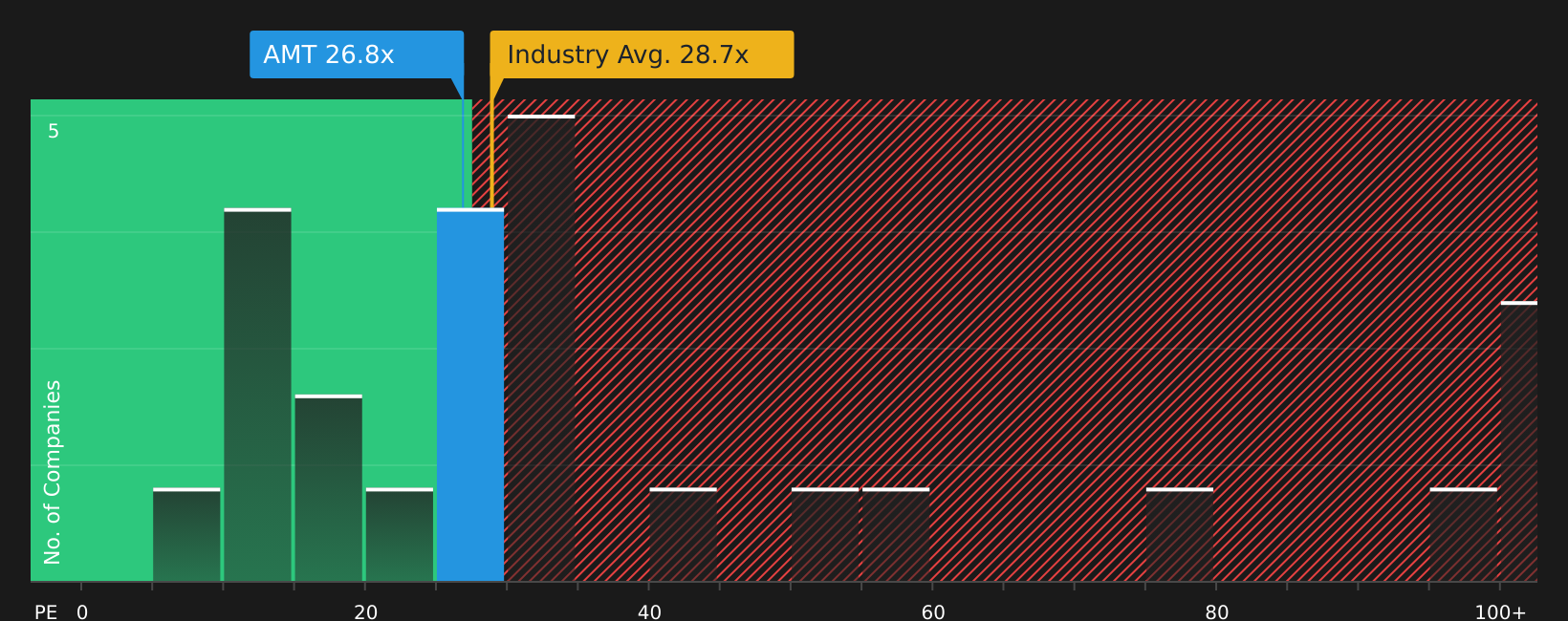
The P/E ratio is a useful way to look at American Tower because earnings are a key reference point for many investors in real estate investment trusts that focus on recurring cash flows.
American Tower currently trades at about 26.7x earnings, which sits above the Specialized REITs industry average of 16.1x but below the peer group average of 33.1x. The valuation model suggests a fair P/E ratio of around 35.2x for American Tower, indicating what investors might be prepared to pay given its profile.
On that basis, the current P/E sits well under this fair ratio. This points to a discount even though the stock already carries a premium to the broader industry.
Taken together, the P/E work indicates that American Tower stock appears undervalued on earnings compared with what the fair multiple suggests.
See what the numbers say about this price — find out in our valuation breakdown.
The American Tower Narrative: What Would Justify Today's Price?
Simply Wall St Narratives pick up where the American Tower valuation puzzle leaves off by spelling out which future paths for growth, margins, and earnings would need to hold for the stock to be worth materially more or less than today’s price. Each one is framed as a thesis about American Tower's business that can be revisited over time, rather than a static snapshot, and they sit on Simply Wall St's Community page.
Now is a good moment to add your voice to the Simply Wall St community by setting out a clear, number driven narrative on American Tower and how you see Goldman Sachs' new Buy rating and US$215 target playing out over time. Share a thesis that ties American Tower's tower and data center economics to future results and see how your view holds up as new data comes through.
Do you think there's more to the story for American Tower? Head over to our Community to see what others are saying!
The Bottom Line
For American Tower, both the Discounted Cash Flow (DCF) intrinsic value estimate and the earnings multiple work indicate an undervalued stock, which is a rare alignment between cash flow and market-based views. The key question is whether the assumed cash flow path and fair P/E multiple prove realistic as future results and funding needs develop. From here, the real dividing line between bulls and bears is whether American Tower can execute on its tower and data center strategy strongly enough for that valuation gap to close rather than remain a prolonged value trap.
This article by Simply Wall St is general in nature. We provide commentary based on historical data and analyst forecasts only using an unbiased methodology and our articles are not intended to be financial advice. It does not constitute a recommendation to buy or sell any stock, and does not take account of your objectives, or your financial situation. We aim to bring you long-term focused analysis driven by fundamental data. Note that our analysis may not factor in the latest price-sensitive company announcements or qualitative material. Simply Wall St has no position in any stocks mentioned.
Have feedback on this article? Concerned about the content? Get in touch with us directly. Alternatively, email editorial-team@simplywallst.com