
- PRICING
- LIVE QUOTES
- LEARN
- HELP


EN
From water services to housing, “smart money” uses political changes to frantically “search for alpha” in British stocks
The Zhitong Finance App learned that severe shocks in British politics are setting off an unprecedented “long and empty feast” in global capital markets. As new Prime Minister Andy Burnham (Andy Burnham) officially joined 10 Downing Street this week and promised to create a “cost of living government” and launch a ten-year “reindustrialization” plan for the country, hedge funds' short bets on UK listed stocks surged fivefold in the first half of the year. This wave of asset revaluation, triggered by a policy “blitzkrieg,” is spawning a large number of long and short trading opportunities in major industries in the UK — from utilities to housing and construction, from energy to transportation, the line between winners and losers is being rapidly reshaped.
Policy “blitzkrieg” spawns winners and losers
New Prime Minister Andy Burnham officially took office this week. In his inaugural address, he promised to create a “people's livelihood government” focusing on the cost of living crisis and to develop a ten-year national reindustrialization plan for Britain. The cost of housing and the affordability of utilities became early core pillars of its governance agenda.
Alyx Wood, Chief Investment Officer at Kernow Asset Management, said: “The current market divides a large number of winners and losers, which is good for us. Currently, multiple factors are intertwined, creating a market environment with great transaction value, and the situation is evolving very fast.”
Patrick Sarch, head of UK public mergers and acquisitions at White & Case, pointed out that the Burnham administration's policy agenda is creating “continued uncertainty and volatility” in key industries such as energy, utilities, transportation, and housing construction, creating additional opportunities for shorting.
Explosive growth in short positions: “hunting” escalation from 5 to 27
Recent research from legal services firm White & Case reveals the alarming scale of this trend. As of July 6, 2026, at least 27 UK listed companies disclosed short positions accounting for more than 5% of their total share capital, up 35% from 20 companies at the end of the first quarter, and surged more than fivefold from 5 companies in the first half of 2025.
The scope of shorted companies has expanded from small to medium market capitalization stocks to large blue-chip companies. The market capitalization ranges from about 150 million pounds to nearly 10 billion pounds, with an average market capitalization of about 2 billion pounds. In terms of industry distribution, consumer goods companies accounted for 56% of severely shorted stocks, followed by industry (22%) and technology (11%).
Sarch pointed out that changes in the UK's leadership are “creating continued uncertainty and volatility” in key sectors such as energy, utilities, transportation, and housing construction. As the new government policy gradually takes shape, “the market will respond and will go through a process of adjustment and prioritization to determine what is workable and within what time frame”, and Sarch anticipates “a relatively long period of heightened uncertainty in price discovery, creating additional opportunities for shorting”.
Utilities: From “safe haven” to “number one bullseye”
In Burnham's “new economic model,” utilities became one of the sectors hardest hit by policy fluctuations. Although utilities are traditionally viewed as safe haven assets during turbulent times, they are now the number one shorting target for hedge funds.
Burnham announced the day after taking office that VAT on household electricity bills will be abolished from October 1. It is estimated that each household will save about £45 per year and cost £850 million in the 2026-2027 fiscal year. However, this policy has not allayed market concerns about deteriorating fundamentals in the utility sector. The funding came from the cancellation of the previous government's digital identification project — but there is still a gap between the project's planned three-year investment of £1.8 billion and the £850 million annualized cost. Former cabinet member Darren Jones even publicly criticized the policy as “unfunded.”
Wood said bluntly that the company is most pessimistic about UK utilities. Wood pointed out that the UK's water and power infrastructure is extremely old, and companies are facing tremendous regulatory pressure, operating license risks, and high leverage pressure. Generally, utilities are a safety bet during dangerous times. But utilities are probably our most bearish sector right now,” Wood told the media, stressing in particular that the UK's water infrastructure is substandard, consumer expectations are not being met, and the regulatory uncertainty of political scrutiny has increased.
Housing construction: Burnham's “public housing ambition” spawns extreme sector differentiation, a “perfect testing ground” for long and short matchmaking transactions
Burnham promised to launch “the largest government public housing construction program since World War II” and vowed to put an end to the phenomenon of sleeping on the streets of England. This housing policy is causing extreme polarization in the construction sector.
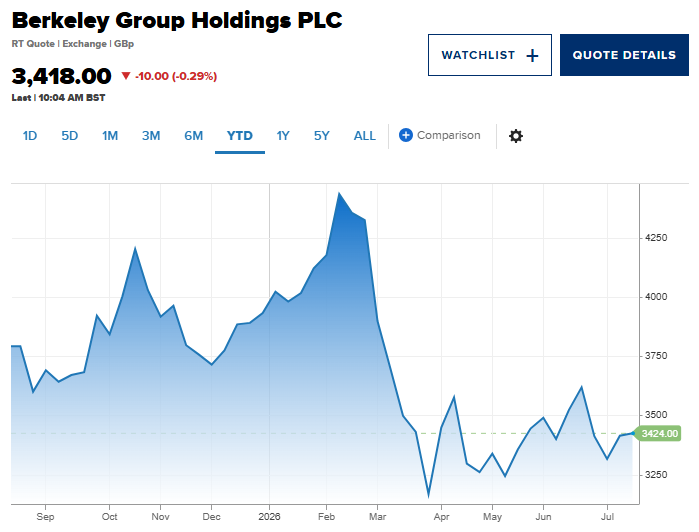
According to White & Case data, home builder Vistry Group and building materials group Ibstock were the British companies with the highest concentration of bears in the first half of the year, with short positions accounting for 16% and 13% of their total share capital, respectively. Wood said Kernow is shorting Vistry on the grounds that the company's debt continues to accumulate; at the same time, it said that Berkeley Group will be the policy winner with a stronger balance sheet and better ability to manage planning applications.
Edgar Allen, founder of High Ground Investment Management, pointed out that the stock prices of most British homebuilders have “ridiculous discounts” compared to economic reality, and “short-term profits often easily exceed their market value”. Some industries such as homebuilders and banks may face further tax increases, but he added that this outlook is already reflected in the undervaluation of these industries.
The bond market and the foreign exchange market: the market votes with its feet
Despite the active placement of hedge funds at the individual stock level, the initial reaction of the macro market to the Burnham administration was not calm. On the day he took office, Burnham said he would “use any flexibility” within the fiscal rules. This statement immediately triggered a violent reaction in the bond market. The 10-year UK Treasury yield rose 8 basis points to 5.049% on the same day, hitting a two-month high since May 20. The UK's borrowing costs are already among the highest in the G7.
On the British side, Burnham climbed to $1.347 in the early days of his tenure, but then continued to pull back due to market concerns about the fiscal outlook. EUR/GBP continued to rise for four consecutive trading days, and market concerns about the expansion of the UK's finances continued to weigh on the pound.
However, Burnham's unexpected appointment of former Secretary of Defense John Healey (John Healey) as Secretary of the Treasury calmed the market to a certain extent. Healy is widely regarded as a “safe and reliable candidate.”
The bigger picture: the “valuation depression” of UK assets and the wave of mergers and acquisitions
Despite policy uncertainty, some investors saw structural opportunities in the UK market. Behind this round of long and short games, an even bigger story is unfolding. Allen of High Ground pointed out that despite facing huge debt and deficit challenges, the UK economy is also showing signs of increased productivity. The current valuation discounts on British stocks have reached “ridiculous” levels — the market capitalization of many companies is even lower than their short-term profits.
Allen said: “We expect to see further mergers and acquisitions as foreign companies pay record premiums for UK stocks while still being able to pick up bargains.” Analysts expect that as the outline of the policy gradually becomes clear, the UK market will usher in a new wave of mergers and acquisitions — overseas giants are preparing to “dig for gold” in this uncertain market with extremely high premiums.
White & Case's Sarch also anticipates a significant increase in portfolio-based long and short strategies as the policy framework gradually becomes clear.
The Burnham Era's “Long and Empty New Order”
In his first week in office, Burnham has completely rewritten the rules of the game in the UK capital market. From utilities to housing construction, from energy to transportation — his “cost of living government” and “reindustrialization” blueprint is creating winners and losers in every industry.
Kernow's Wood uses an “explosive cocktail” to describe the current market environment. White & Case's Sarch foresaw “a relatively long period of heightened uncertainty in price discovery.” For hedge funds, this means unprecedented operating space; for listed companies that have been shorted, this means unprecedented pressure; for the entire UK capital market, this means the collapse of an old order and the rebuilding of a new order is underway.
As Wood said, “The current market divides a large number of winners and losers, which is good for us. Currently, multiple factors are intertwined, creating a market environment with great transaction value, and the situation is evolving very fast.”