
- PRICING
- LIVE QUOTES
- LEARN
- HELP


EN
Nike (NKE) Stock Looks Fair On Cash Flow While Earnings Suggest Value
Nike stock has fallen sharply over the past five years, yet its current valuation picture is more nuanced, with the Discounted Cash Flow (DCF) intrinsic value estimate pointing to a price that is close to fair while earnings based multiples still screen the shares as undervalued.
- Nike has declined about 72% over the last 5 years, which puts recent valuation signals under a lot more scrutiny than in a typical pullback.
- The planned reset of Nike's distribution in China and the shift in younger consumers' interest toward sports collectibles can both influence how much investors are willing to pay for future cash flows.
- Nike scores 3 out of 6 on the valuation checks, which points to a mixed picture rather than a clear bargain or clear overvaluation.
The issue now is whether Nike's current share price already reflects this mixed valuation profile, or if the multiples signal suggests there is still a margin of safety despite the DCF reading as roughly fair.
Find out why NIKE's -43.5% return over the last year is lagging behind its peers.
Where Does NIKE Sit on Cash Flow?
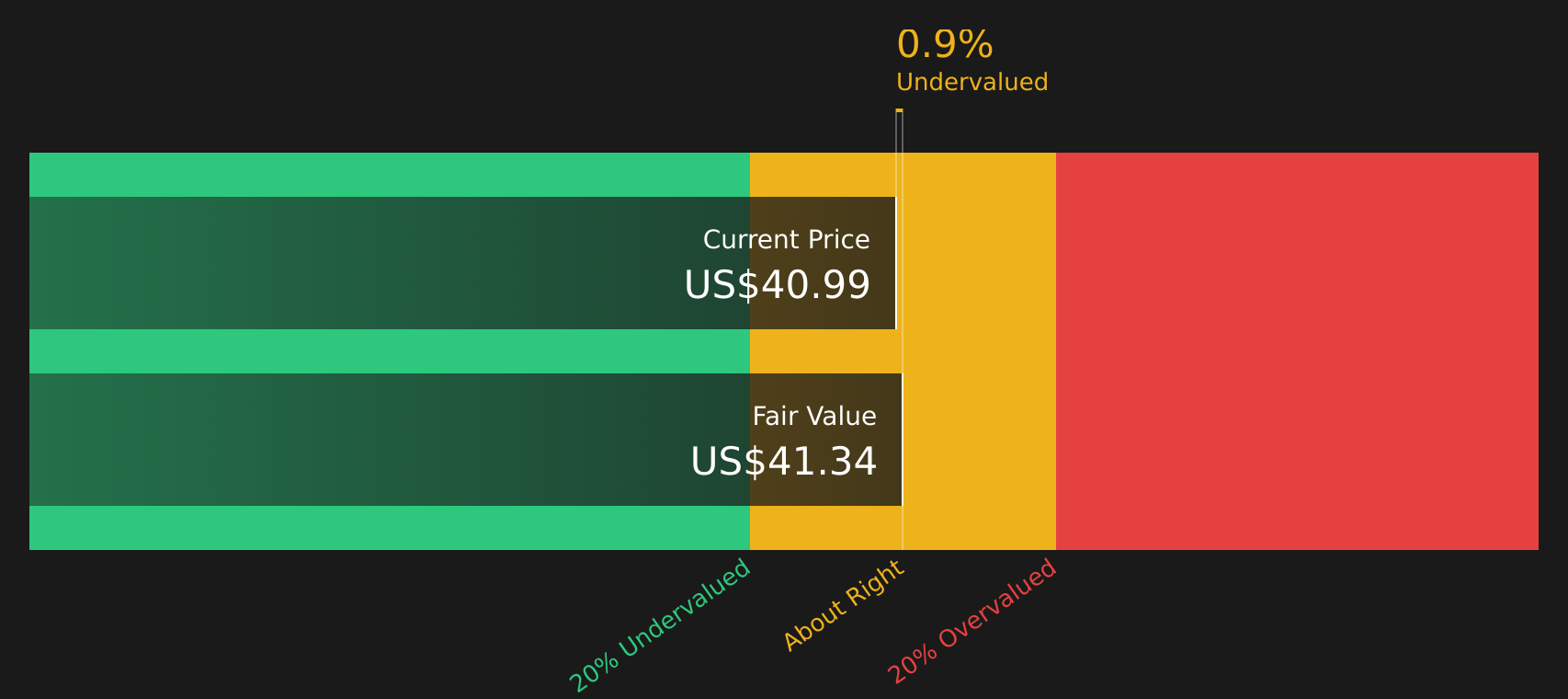
The Discounted Cash Flow (DCF) model values NIKE by projecting its future cash flows and discounting them back to today. For NIKE, the latest twelve month free cash flow sits at about $2.2b, and the model assumes these cash flows continue growing over time rather than shrinking or swinging deeply negative.
On those inputs, the DCF points to an estimated intrinsic value of about $41 per share, only slightly below the current market price. This implies the stock screens roughly 1.9% overvalued on this method. News that NIKE plans to consolidate its online distribution in China into official channels helps explain why investors may already be pricing in a cleaner, more controlled cash flow profile over the long run.
Overall, the DCF output suggests NIKE stock currently looks about fairly valued rather than offering a clear discount or premium.
NIKE is fairly valued according to our Discounted Cash Flow (DCF), but this can change at a moment's notice. Track the value in your watchlist or portfolio and be alerted on when to act.
Is NIKE Still Cheap on Earnings?
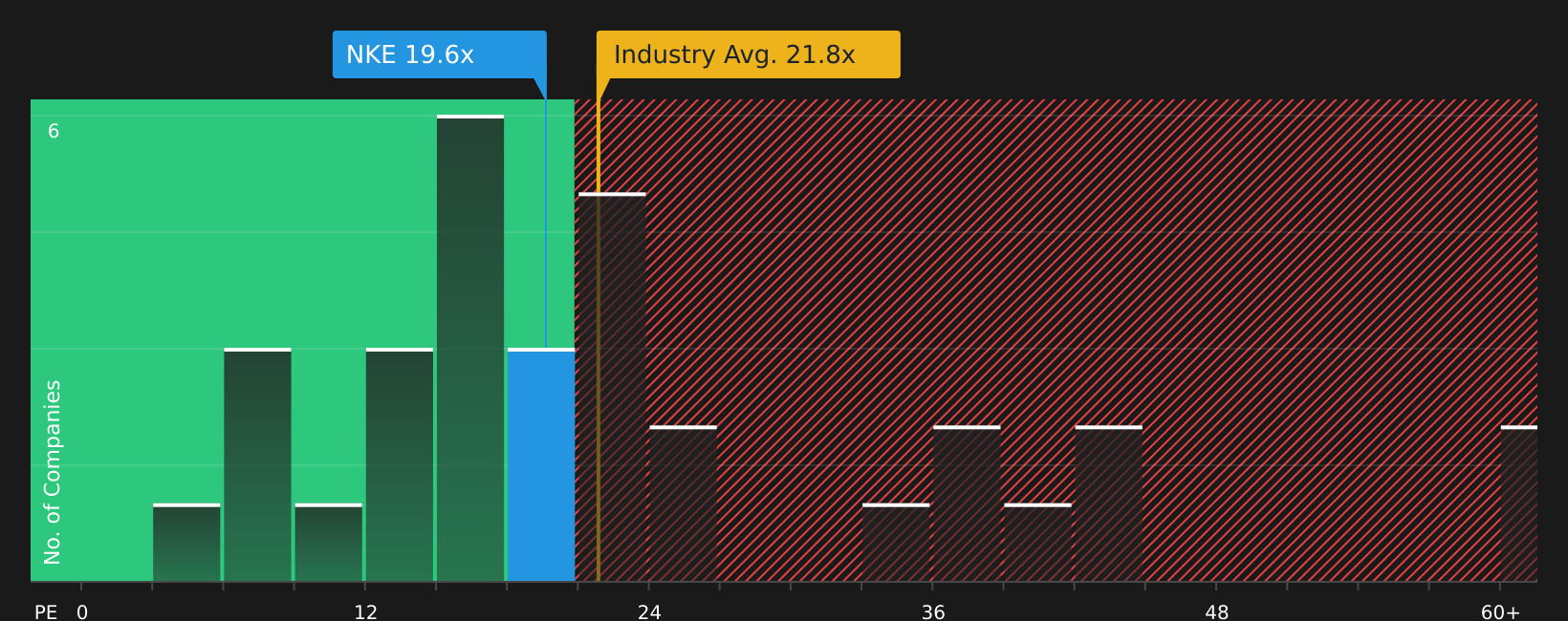
P/E is a useful way to look at NIKE because earnings are a core focus for most investors in large, established consumer brands. On this measure, NIKE trades on a P/E of about 20.1x, compared with an average of roughly 21.7x for the wider luxury industry and about 28.7x for its peer group.
The tailored fair P/E for NIKE is estimated at about 26.8x, which is higher than where the stock currently trades. That gap suggests the market is pricing NIKE below what this framework implies, even though the company sits in a relatively premium industry and carries a well known global brand.
On the P/E multiple, NIKE stock currently screens as undervalued relative to both its customised fair ratio and peer benchmarks.
See what the numbers say about this price — find out in our valuation breakdown.
The NIKE Narrative: What Would Justify Today's Price?
Simply Wall St Narratives for NIKE act as the bridge between this valuation puzzle and NIKE's possible futures by explaining which paths for revenue, margins and earnings would need to hold for the stock to be worth meaningfully more or less than it is today on the market, and they sit on Simply Wall St's Community page. Rather than relying on a single multiple or model, each one sets out the assumptions behind its fair value so you can compare them with NIKE's reported results over time.
Community opinions on Nike are split, with one camp seeing a reset that could reward patience while the other argues current pricing already bakes in a lot.
Bull case: 17% undervalued
"Nike is accelerating the transition of its product portfolio, aiming for sport performance dimensions to drive growth, decrease reliance on classic footwear franchises that are currently declining..."
Read the full Bull Case to see why NIKE could be undervalued
Bear case: 15% overvalued
"As you can see from the above Nike seems to be overvalued given that its current price of 40 dollars is well above P90..."
Read the full Bear Case to see why NIKE could be overvalued
Do you think there's more to the story for NIKE? Head over to our Community to see what others are saying!
The Bottom Line
For Nike, the Discounted Cash Flow (DCF) estimate points to intrinsic value that sits close to the current share price, while earnings based multiples still suggest the stock screens as undervalued. That split reflects a market that is cautious on cash flow timing, yet less willing to assign a rich P/E despite Nike's brand and industry position.
With broader valuation checks sitting in mixed territory, the key question is whether current concerns around distribution changes and consumer demand are already fully reflected in the multiple. The crux from here is whether Nike can sustain the earnings profile that would justify a re rating without eroding the cash flow assumptions underpinning the intrinsic value estimate.
This article by Simply Wall St is general in nature. We provide commentary based on historical data and analyst forecasts only using an unbiased methodology and our articles are not intended to be financial advice. It does not constitute a recommendation to buy or sell any stock, and does not take account of your objectives, or your financial situation. We aim to bring you long-term focused analysis driven by fundamental data. Note that our analysis may not factor in the latest price-sensitive company announcements or qualitative material. Simply Wall St has no position in any stocks mentioned.
Have feedback on this article? Concerned about the content? Get in touch with us directly. Alternatively, email editorial-team@simplywallst.com