
- PRICING
- LIVE QUOTES
- LEARN
- HELP


EN
Oil Prices Are Rising and These Energy Stocks Deserve A Closer Look
Energy sector stocks, especially oil and gas exploration and production companies, are back in focus as supply risks in the Middle East and Black Sea collide with already tight refined product markets. For investors watching how rising oil prices, higher input costs and renewed interest in real assets could ripple across portfolios, this screener offers a targeted way to identify potential opportunities and areas of caution. This article explains how the latest geopolitical and commodity shocks affect large, established producers and highlights 3 stocks from the screener that appear positively exposed to the current news flow.
Obsidian Energy (TSX:OBE)
Overview: Obsidian Energy is a Calgary based oil and gas producer focused on exploring, developing, and operating light oil, heavy oil, and natural gas assets across Western Canada.
Operations: Obsidian Energy generates all of its CA$491.9 million in revenue from oil and gas exploration and production in Canada.
Market Cap: CA$885.5 million
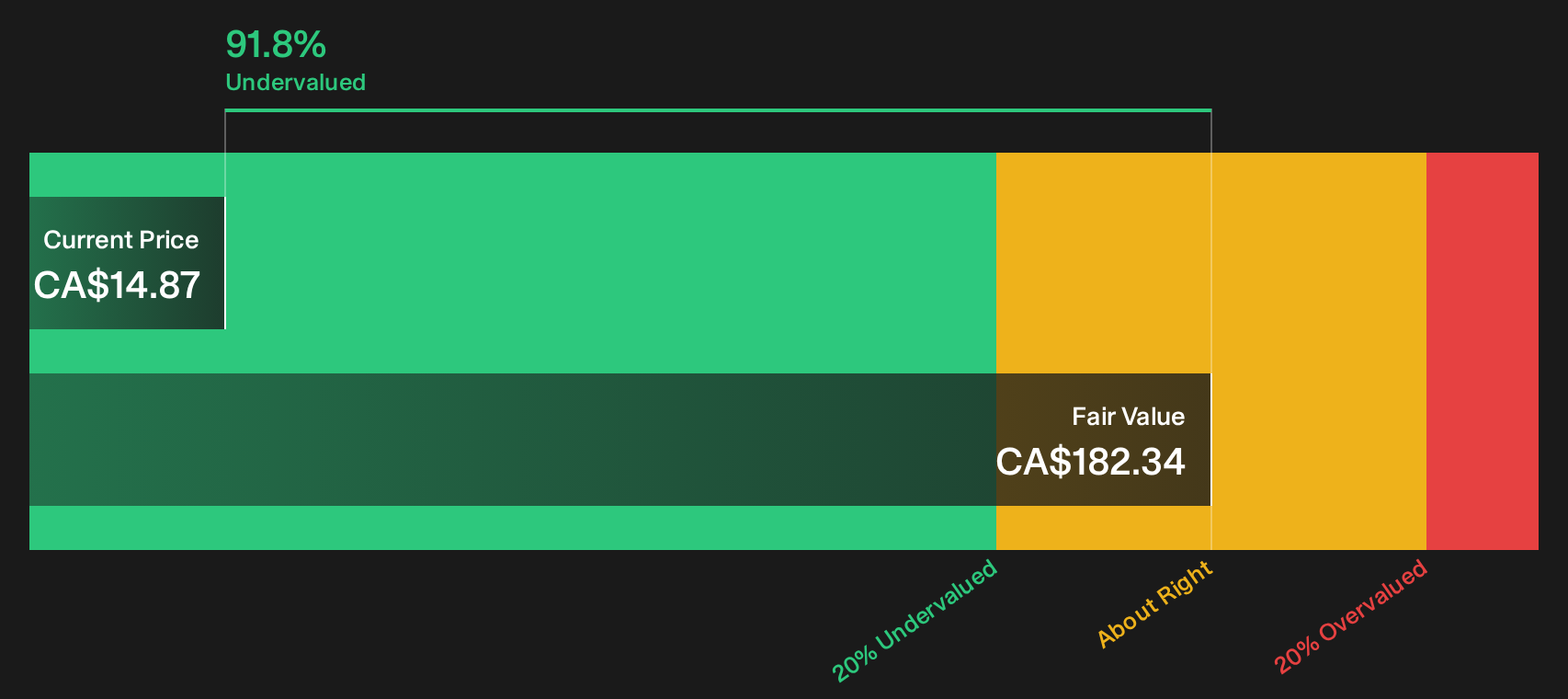
Obsidian Energy operates in the part of the energy sector that tends to feel rising oil prices first, with upstream exposure and all of its production tied to Western Canadian barrels, which may become more valuable as global supply risks change. The stock is currently priced in a way that may appear attractive relative to some estimates of fair value and certain sector peers. However, the business only recently moved back into profitability and still reports low return on equity, so investors need to weigh any perceived potential upside against execution risk. Recent moves to refinance and expand credit facilities increase liquidity for acquisitions and capital spending, but they also increase reliance on debt in a sector that can be volatile when prices swing.
Obsidian Energy’s move back into profitability and its current pricing could be masking a far more interesting trade off between upside and balance sheet risk, so it is worth reading the 5 key rewards and 1 important warning sign
Golar LNG (GLNG)
Overview: Golar LNG owns and operates floating liquefied natural gas vessels that turn natural gas into LNG at sea, as well as ships that store, regasify, and transport LNG for energy companies around the world.
Operations: Golar LNG generates around US$442.9 million of its revenue from its first floating liquefaction natural gas segment and about US$25.7 million from corporate and other activities.
Market Cap: US$5.1b
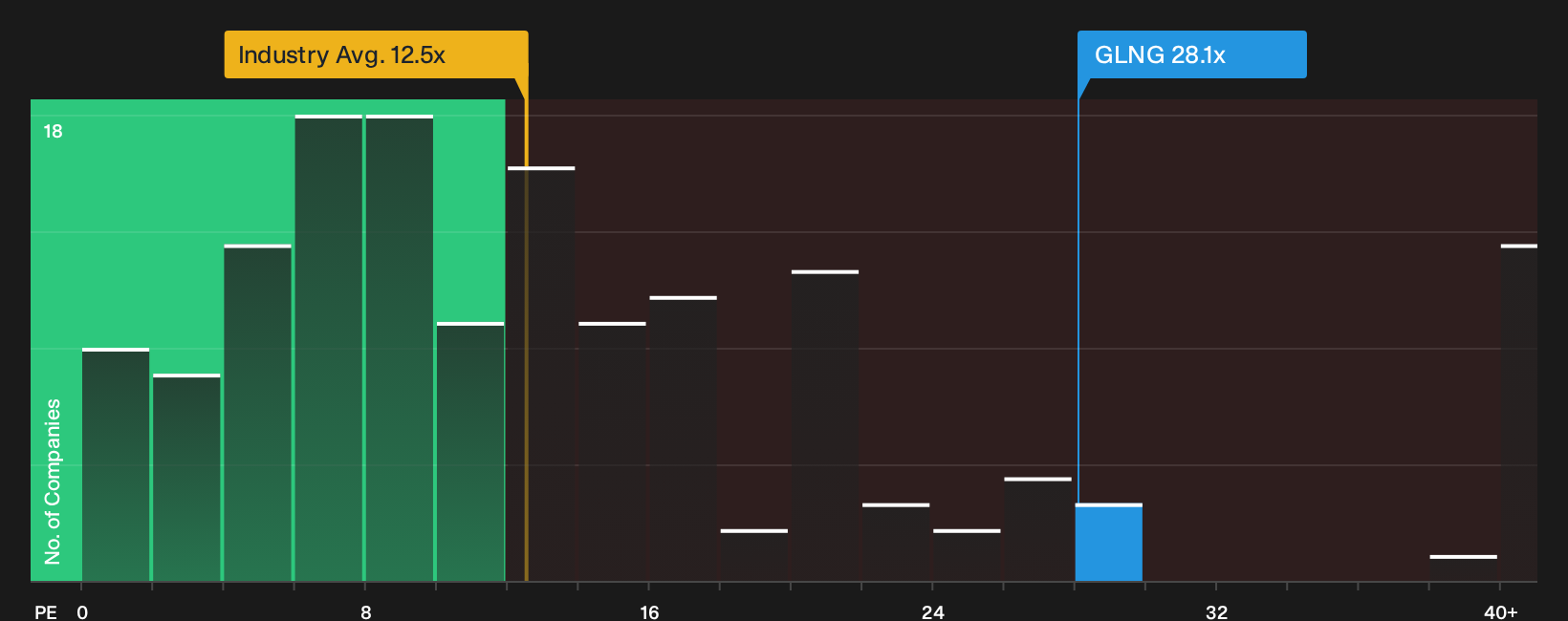
Golar LNG stands out as a pure play on the global LNG trade at a time when Middle East tensions and Black Sea disruptions are keeping energy security in the spotlight and supporting LNG demand. Long term FLNG contracts and a large earnings backlog give the business multi year revenue visibility. Recent results show strong profitability and revenue growth, alongside index inclusion that can broaden its investor base. On the other side of the ledger, a relatively high P/E, heavy use of external borrowing and dividends that are not well covered by free cash flow mean you are paying for growth while accepting balance sheet and cash flow risk that could matter if LNG markets cool or projects are delayed.
Golar LNG’s earnings backlog, long term FLNG contracts and index inclusion hint at a story that may extend beyond the headline P/E, but the real twist sits inside the 4 key rewards and 2 important warning signs (1 is major!)
Surge Energy (TSX:SGY)
Overview: Surge Energy is a Calgary based oil and gas producer focused on exploring, developing and producing crude oil and natural gas across Western Canada, with positions in Sparky Alberta, Southeast Saskatchewan, Greater Sawn, Nevis and Manitoba.
Operations: Surge Energy generates all of its CA$479.1 million in revenue from oil and gas exploration and production in Canada.
Market Cap: CA$950.8 million
Surge Energy is closely linked to crude markets. The combination of higher oil prices, an 87% light and medium oil production mix and Western Canadian exposure means the company can be highly sensitive to extended supply constraints. Forecasts for strong earnings and revenue growth, along with recent production guidance and dividend affirmations, are among the factors that explain why some investors focus on the potential upside if higher prices persist. At the same time, a very high P/E, a dividend that is not fully covered by earnings, reliance on external funding and recent insider selling indicate that this is not a straightforward value story. The interest for some market participants lies in how those strengths and pressure points align with the current macro backdrop and Surge’s future cash generation.
Surge Energy’s mix of higher oil exposure, rich P/E and uncovered dividend hints at a story where upside and strain might be decoupling. The full tension only shows up inside the 4 key rewards and 2 important warning signs

The three stocks in this article are only a starting point. The full Energy Sector Stocks (Oil & Gas Exploration and Production) screener surfaces 19 more oil and gas producers that carry equally compelling narratives around scale, balance sheets and exposure to current supply risks. Use Simply Wall St to identify, filter and analyze the specific catalysts and storylines that matter to you so you can focus on the highest conviction ideas within this group.
Take Control of Your Investment Journey
If Surge Energy or any of these companies sound like a great opportunity, register for FREE with Simply Wall St and add your companies to a Watchlist to monitor the share price against the fair value the ideal entry point. Once you've made your move, manage your holdings with our Portfolio Command Center that filters out the noise to deliver only the most critical, actionable updates. Throughout your journey, our Community allows you to filter the best ideas from thousands of investor perspectives. By uncovering hidden catalysts and risks early, you'll accelerate your decision-making and stay one step ahead of the market.
Seeking Alternatives Before The Crowd?
Fresh stock ideas can start breaking out while everyone is still focused on yesterday’s winners. Do not get caught watching momentum move without you; act now.
- Tap into income resilience with a curated set of rock solid payers using the 6 dividend fortresses before yields change and the crowd starts chasing them.
- Catch early AI momentum where cash flows already matter by scanning the 62 profitable AI stocks that aren't just burning cash while these operators are still under the radar.
- Position ahead of potential grid upgrade activity by checking the 35 power grid technology and infrastructure stocks and identify infrastructure stocks that may be moving before that story is fully reflected in prices.
This article by Simply Wall St is general in nature. We provide commentary based on historical data and analyst forecasts only using an unbiased methodology and our articles are not intended to be financial advice. It does not constitute a recommendation to buy or sell any stock, and does not take account of your objectives, or your financial situation. We aim to bring you long-term focused analysis driven by fundamental data. Note that our analysis may not factor in the latest price-sensitive company announcements or qualitative material. Simply Wall St has no position in any stocks mentioned.
Have feedback on this article? Concerned about the content? Get in touch with us directly. Alternatively, email editorial-team@simplywallst.com