
- PRICING
- LIVE QUOTES
- LEARN
- HELP


EN
IPO outlook | Aodong New Energy: “3rd place in power exchange” with three-year revenue falling 35% and a loss of 1,382 billion yuan
On July 19, 2026, the official website of the Hong Kong Stock Exchange showed that Aodong Renewable Energy Co., Ltd. submitted another listing application, and the sole sponsor was CMB International. This was the second shock after the first submission expired for 6 months in December 2025. If successfully listed, Aodong New Energy will become the “first electricity exchange share” for Hong Kong stocks.
The company was co-founded in 2016 by Cai Dongqing, the “father of the Happy Goat”, and Zhang Jianping, an expert in power exchange technology. In 1986, Cai Dongqing used 800 yuan from her mother to buy an old-fashioned injection molding machine to produce plastic trumpets. Since then, she pioneered the “anime+toy” business model, creating phenomenal IPs such as “The Sheep and the Grey Wolf”, and led Aofei Entertainment to the Shenzhen Stock Exchange in 2009.
From anime toys to electric power exchange tracks, Cai Dongqing's crossing of borders is astonishing. From the failure of the first submission to breaking through customs for the second time, Aodong New Energy's path to listing is also full of variables.
However, although the title of “the first power exchange share” for Hong Kong stocks is attractive, before wearing it, the market first needs to see how heavy this crown really is.
The loss was 1,382 billion yuan, and the narrowing of losses could not keep up with the decline in revenue
According to Zhitong Finance, Aodong New Energy is a mature participant in China's electricity exchange industry and is committed to building a comprehensive product and service portfolio covering the power exchange ecosystem. Through the self-developed smart energy service platform, the company can efficiently manage power exchange equipment, vehicles and batteries, thereby better meeting user needs.
According to Insight Consulting, in 2025, Aodong New Energy ranked third in China in terms of revenue generated from power exchange station operation services. As of April 30, 2026, Aodong New Energy's smart energy service platform has connected 531 power exchange stations, covering 214 own power exchange stations and 317 third-party sites, registered more than 130,000 electric vehicles, and managed more than 160,000 batteries.
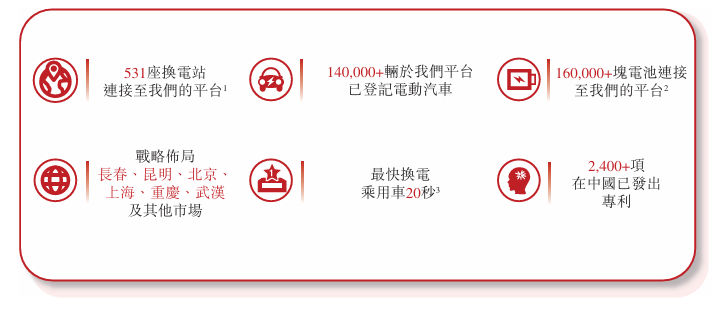
(Picture source: Aodong New Energy's prospectus)
Judging from business performance, marginal improvements in Aodong New Energy are gradually showing, but there are still structural flaws in fundamentals.
According to the prospectus, Aodong New Energy achieved revenue of 1,155 billion yuan, 926 million yuan and 677 million yuan in 2023, 2024 and 2025 respectively. The year-on-year decline was 19.8% in 2024, and another 26.9% in 2025, with a cumulative decline of 35.2% over three years. Revenue for the first four months of 2026 was 235 million yuan, a slight increase of 1.9% over the previous year, showing signs of business stabilization, but the growth rate was far below the industry average.
The direct reason for the contraction in revenue is a drastic change in the business structure—the company is undergoing a strategic transformation from a “seller of power exchange equipment” to a “power exchange service provider”. Equipment sales were once a core source of revenue for the company. In 2022, the business revenue was 731 million yuan, accounting for 66.9% of revenue. As the pain points of the “standard divide” in the power exchange industry become more prominent, battery pack specifications of different car companies are not uniform, cross-platform compatibility is poor, and customization costs are high, and the equipment sales business continues to shrink.
From 2023 to 2025, equipment sales revenue was 519 million yuan, 268 million yuan and 150 million yuan respectively, and equipment sales revenue declined year by year. It has been replaced by the rise of the electricity exchange service business at its own power exchange stations. From 2023 to 2025, the business revenue was $529 million, $547 million, and $440 million respectively, making it a new revenue pillar.
Despite the continued decline in revenue, Aodong New Energy's losses are narrowing. From 2023 to 2025, the company's net losses were 655 million yuan, 419 million yuan and 307 million yuan respectively. Net loss in 2025 narrowed by more than 53% compared to 2023. The three-year cumulative loss still reached 1,382 billion yuan. In the first four months of 2026, the company lost 91.43 million yuan during the period, compared to 103 million yuan in the same period last year. The loss amount decreased by about 11.5% year-on-year.
Along with the narrowing of losses, Aodong New Energy also ushered in gross loss to a critical point of gross profit correction: from 2023 to 2025, the company's gross losses were 39.85 million yuan, 34.1 million yuan, and 33.89 million yuan respectively; gross loss rates were 3.4%, 3.7%, and 5.0%, respectively.
However, there was a key breakthrough in the first four months of 2026 — the company achieved gross profit of 4.12 million yuan and a gross profit margin of 1.8%, changing from negative to positive for the first time. Operating cash flow for the same period changed from a net outflow of 55.2 million yuan in the same period in 2025 to a net inflow of 10.9 million yuan.
However, the company's structural contradictions are still prominent, and its own power exchange station is still a “bleeding point.” In 2025, the gross margin of electricity exchange services at own stations was -21.4%, which means that for every 1 yuan of electricity exchange services provided, a loss of 0.21 yuan will be required. In contrast, the gross margin of power exchange operation services (including equipment sales and operation services) for third party customers has always been positive. In 2025, the gross margin of the equipment sales business reached 12.9%, and the gross margin of operation services reached 61.4%.
Although the gross margin of 1.8% is meager, it is struggling from the quagmire of -21.4% of its own website — this correction is more like a sign of stopping bleeding than a declaration of profit. At the same time, the rate at which losses have narrowed cannot keep up with the rate of decline in revenue. This is also the harshest footnote to Aodong New Energy's financial data.
The industry is “running wild”, and companies are still “losing blood”
From the perspective of the industry, the power exchange circuit where Aodong New Energy is located is unquestionably a major “Chaoyang Circuit”.
According to the prospectus, which cites data from the Insight Consulting Industry, the market size of the domestic power exchange industry soared from 1.5 billion yuan in 2020 to 18.5 billion yuan in 2025, with a five-year compound growth rate of 64.5%; the overall scale of the industry is expected to exceed 76.5 billion yuan in 2030, and the CAGR will maintain a high level of 32.9% growth from 2025 to 2030, with clear room for growth.
The demand-side structural dividend is concentrated on operating vehicles: taxis, online car-hailing, urban logistics, and heavy trucks have a high daily mileage, which seriously reduces operating efficiency for too long with quick charging. Fast energy exchange for 20-40 minutes has an irreplaceable advantage. According to the prospectus data, electric exchange models will account for only 4.8% of total domestic NEV sales in 2025; the penetration rate is expected to rise to 6.6% by 2030. Among them, the penetration rate of operating electric exchange vehicles will soar to 19.7%. The B-side is the core growth base for the power exchange industry.
At the policy level, the national NEV industry's medium- and long-term plans, special support plans for heavy truck power exchange, and county charging and switching subsidy policies have been implemented one after another, clearly encouraging the large-scale implementation of multi-technology route power exchange models, providing policy support for the continuous expansion of the industry.
In this high-growth power exchange circuit, Aodong New Energy is one of the leading companies in the industry, and opportunities and challenges coexist.
According to Insight Consulting data, Aodong New Energy ranked third in China based on revenue generated from power exchange plant operation services in 2025. The company is in a leading position among independent third party power exchange solution providers.
However, the competitive landscape shows a trend of “one supremacy, many powers to catch up”. According to data from the China Business Industry Research Institute, as of October 2025, the number of power exchange stations nationwide was 5036, with NIO taking the absolute lead with 3,572 seats. Aodong New Energy ranked second and third with 785 seats and EasyConnect 389 seats, with CR3 exceeding 90%. Meanwhile, the Ningde Era relied on “chocolate power exchange block” technology to promote battery standardization. At the end of 2025, Chocolate Power Exchange and Qiji Electric Power Exchange built 1,020 and 305 power exchange stations respectively, exceeding the annual target.
On the power exchange circuit, Aodong New Energy is in third place — ahead are car companies with their own traffic and giants that control the lifeblood of batteries, and in the back are eagerly chasing soldiers. Third place is both a location and a dilemma.
In addition to this, it should be noted that the core pain points in the power exchange industry have also put some pressure on Aodong New Energy's growth path.
On the one hand, unified national power exchange and battery standards have not yet been implemented. The technical routes of different enterprises are not compatible with each other, and there is a risk of large-scale elimination and impairment of stock equipment; on the other hand, power exchange is a heavy asset industry. Investment in single station construction and battery procurement is high, and the average daily power exchange utilization rate of the site directly determines profit and loss, and the entire industry generally has long-term losses; in addition, the iteration of high-power overcharging technology accelerates, and continues to divert the power exchange needs of medium- and short-haul vehicles.
However, under the influence of common pain points in the industry, Aodong New Energy has always had “profit difficulties” and capital liquidity pressure. As of the end of April 2026, the company held 298 million yuan in cash and cash equivalents, and also had net current liabilities of 88.1 million yuan. The pressure on capital liquidity should not be underestimated.
As can be seen from the above, although the power exchange circuit has broad prospects, Aodong New Energy has yet to break out of the “industry makes money, enterprises don't make money” dilemma.
Summary
In summary, it is easy to see that although Aodong New Energy has accurately stepped on the long-term expansion of the power exchange industry in China, it has secured a leading position among third parties on the operating vehicle segment with its exclusive power exchange technology and the differentiated positioning of all brands. However, the industry pattern of shrinking revenue for three consecutive years, cumulative losses of over 1.3 billion dollars, and double squeezing of vehicle and battery giants all together determined that the company's listing in Hong Kong only has long-term game value, and that the realization of stable profits in the short term will still take a long time to verify.