
- PRICING
- LIVE QUOTES
- LEARN
- HELP


EN
Cui Dongshu released the characteristics of domestic insurance for commercial vehicles nationwide: the penetration rate of new energy for heavy trucks was 45% in June
The Zhitong Finance App learned that on July 20, Cui Dongshu, Secretary General of the Passenger Transport Association, announced the characteristics of domestic insurance for commercial vehicles nationwide. In June 2026, the penetration rate of new energy for commercial vehicles was 43.9%, an increase of 15 points over the same period, which is stronger than the growth of passenger cars. Among them, the new energy penetration rate for buses was 76%, and the new energy penetration rate for large buses rebounded to 55% in June, the new energy penetration rate for passenger cars rebounded to 55%, medium passenger cars rebounded to 69%, and light passenger cars rose to 78%. The contrast between new energy for buses was huge. In June 2026, the new energy penetration rate of trucks was 36%, and trucks increased by 14 percentage points over the same period; among them, heavy trucks reached 45% (up 18 percentage points over the same period), light trucks reached 34% (up 6 percentage points over the same period), and logistics models with high fuel consumption and high taxes increased significantly, while medium trucks and pickups were slightly lower.
According to the National Finance Administration's Jiaotong Insurance data, there was a strong increase in commercial vehicles in 2025 in domestic commercial vehicle traffic insurance data. Due to the strong growth of new energy vehicles and the scrapping and renewal policy to promote vehicle renewal, the overall situation of new energy commercial vehicles is rapidly rising in 2026. The average monthly sales volume of commercial vehicles was stable from January to March 2026, with a slight decrease of 7%. The commercial vehicle market bucked the trend and increased 10% in April-June. Sales of 280,000 commercial vehicles achieved positive year-on-year growth of 8% in June. The strong characteristics of a 10% increase in April-June were highlighted, in stark contrast to the recent weakening of the passenger car market. Judging from the cumulative data, the cumulative sales volume from January to June was 1.54 million units, an increase of 2% over the previous year. The trend was the strongest in the past 5 years, far superior to the trend of consumer passenger cars.
High fuel prices have had a huge impact on passenger cars, but the impact on commercial vehicles is minimal. New energy commercial vehicles skyrocketed to 120,000 units in June 2026, up 63% year on year and 13% month on month; from January to June 2026, the total number of new energy commercial vehicles was 520,000, with a cumulative growth rate of 45%. The penetration rate of new energy sources reached 33.6% from January to June 2026, an increase of 10 percentage points compared to 23.3% in January-June last year, and the performance was relatively good.
1. Analysis of traffic insurance data in the national commercial vehicle market
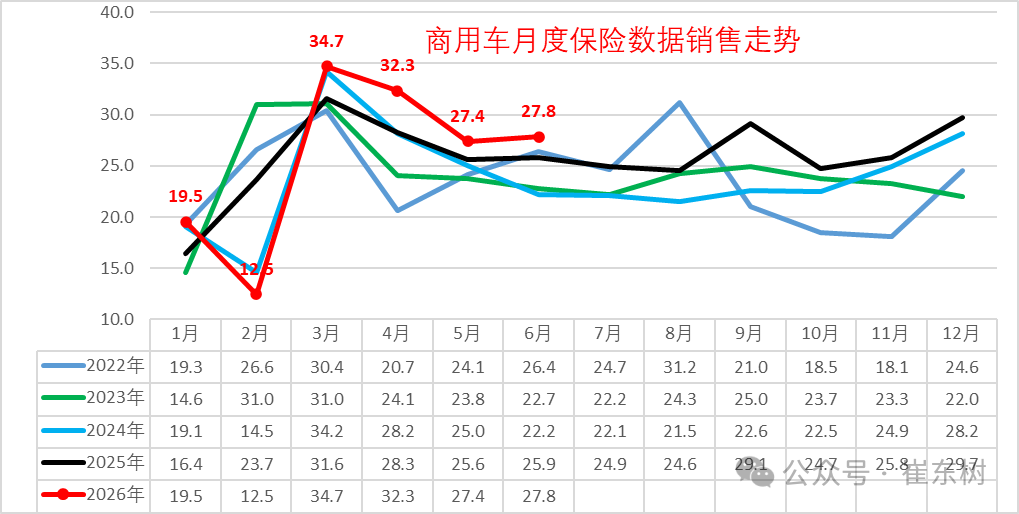
In 2026, the commercial vehicle market showed obvious phased fluctuations, and the trend was clearly stronger than that of passenger cars. Affected by the Spring Festival peak, sales in January hit a new high of nearly four years, overdrawing some market demand, leading to a sharp drop in sales in February, and the overall sales volume of the industry declined significantly year-on-year in January-February. The market picked up rapidly in March, and sales remained high in March-June. The April-June trend was significantly superior to seasonal levels in the same period of the previous year, breaking out of the strong independent market.
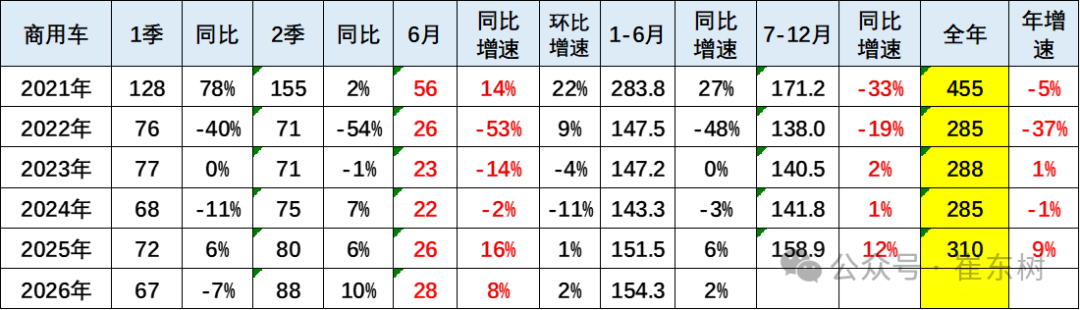
The average monthly sales volume of commercial vehicles was stable from January to March 2026, with a slight decrease of 7%. The commercial vehicle market bucked the trend and increased 10% in April-June. Sales of 280,000 commercial vehicles achieved positive year-on-year growth of 8% in June. The strong characteristics of a 10% increase in April-June were highlighted, in stark contrast to the recent weakening of the passenger car market. Judging from the cumulative data, the cumulative sales volume from January to June was 1.54 million units, an increase of 2% over the previous year, making it the strongest in the past 5 years, far superior to the consumer passenger car trend.
2. Analysis of the sales volume of the national new energy commercial vehicle market
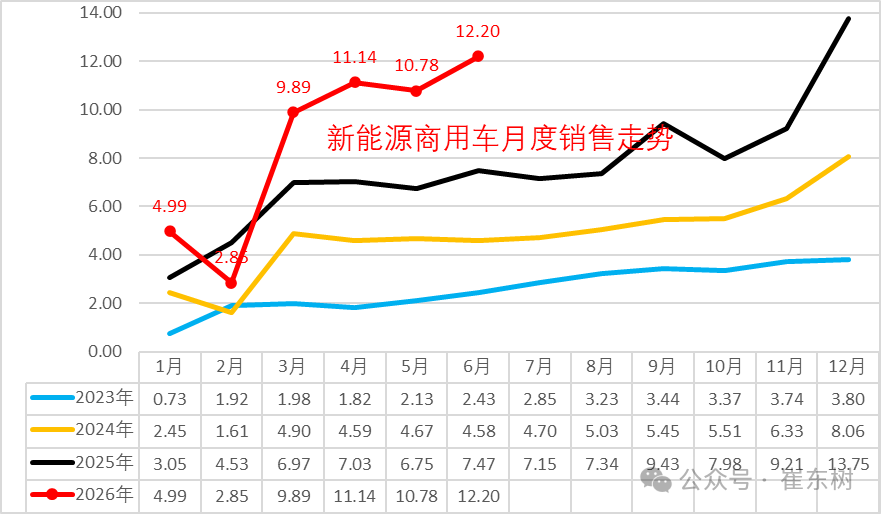
In 2026, new energy commercial vehicles continued to fluctuate upward. In January, sales rose to 50,000 units due to the boom in procurement at the beginning of the year, reaching a phased high; sales declined markedly in February due to seasonal factors such as the Spring Festival holiday and terminal shutdowns; the market ushered in explosive growth in March-June, and sales remained 100,000 units in a single month, forming an unusually strong trend. Against the backdrop of a slight decline in the overall commercial vehicle market, new energy racing tracks bucked the trend and became the only growth sector in the industry.
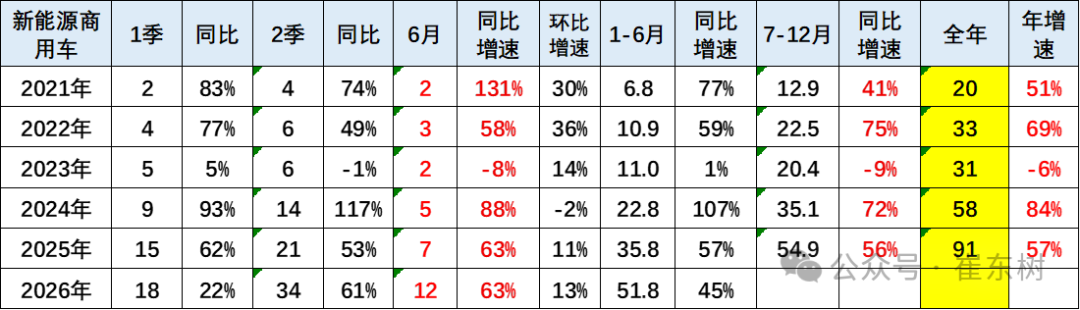
New energy commercial vehicles began to explode in 2024. In 2024, sales of new energy commercial vehicles were 579,000 units, an increase of 84% year on year; in 2025, the total number of new energy commercial vehicles reached 910,000 units, an increase of 57% year on year.
New energy commercial vehicles skyrocketed to 120,000 units in June 2026, up 63% year on year and 13% month on month; from January to June 2026, the total number of new energy commercial vehicles was 520,000, with a cumulative growth rate of 45%.
3. New energy commercial vehicle penetration rate
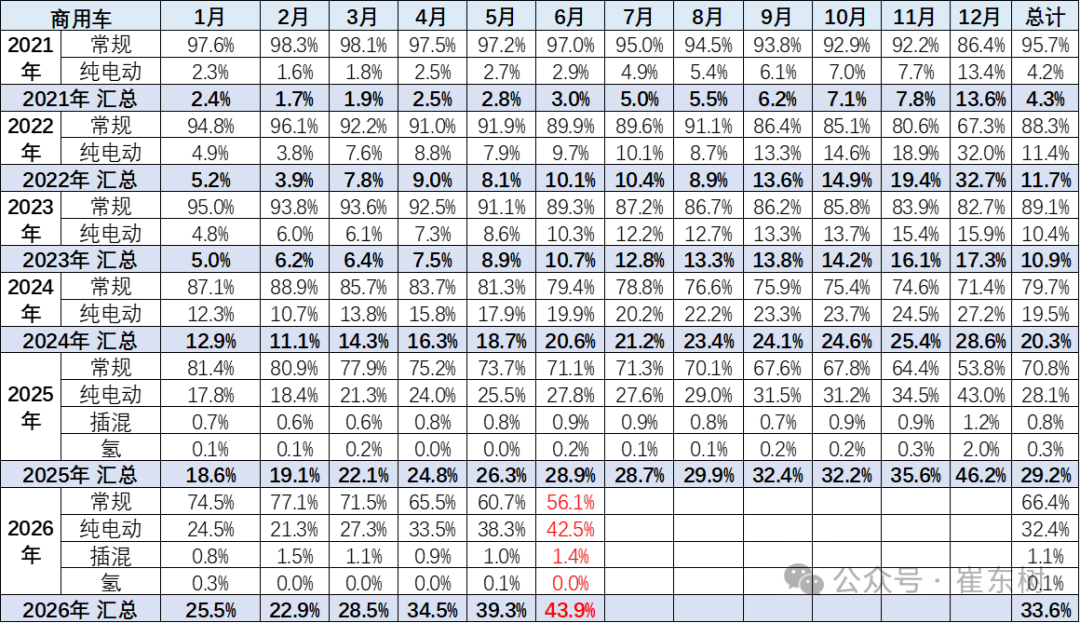
The penetration rate of new energy commercial vehicles reached 29% in 2025, which is a good increase compared to 2024. The penetration rate of new energy sources reached 33.6% from January to June 2026, an increase of 10 percentage points compared to 23.3% in January-June last year, and the performance was relatively good.
In June 2026, the penetration rate of new energy for commercial vehicles was 43.9%, an increase of 15 points over the same period, which is stronger than the growth of passenger cars. In 2026, pure electric growth will still be strong. The performance of mixing and growth has improved greatly. Product technology for hydrogen fuel vehicles has stagnated, and subsidies are still unable to drive growth.
4. Analysis of changes in the commercial vehicle market
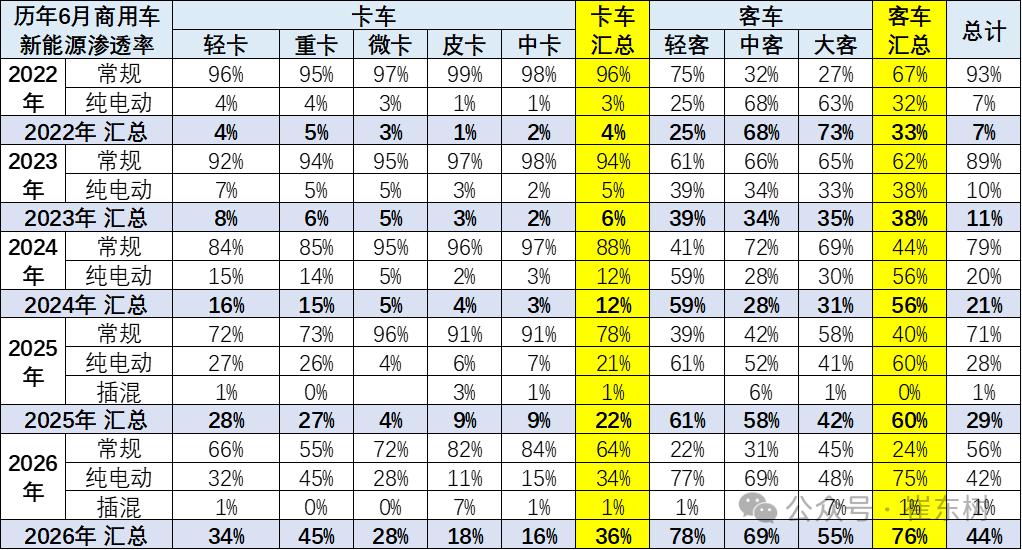
Commercial vehicles have relatively stable truck and bus structures. Heavy trucks and light trucks among trucks performed well. The driving effect of the oil to electricity cost reduction and scrapping renewal policies was strongly reflected. The trend of medium and heavy trucks improved in the past two years, driven by subsidies, and the trend showed strong performance in June 2026.
In June 2026, the penetration rate of new energy for commercial vehicles was 44%, an increase of 15 points over the same period, and the increase in new energy sources was relatively rapid. Among them, the new energy penetration rate for buses was 76%, and the new energy penetration rate for large buses rebounded to 55% in June, the new energy penetration rate for passenger cars rebounded to 55%, medium passenger cars rebounded to 69%, and light passenger cars rose to 78%. The contrast between new energy for buses was huge. In June 2026, the new energy penetration rate of trucks was 36%, and trucks increased by 14 percentage points over the same period; among them, heavy trucks reached 45% (up 18 percentage points over the same period), light trucks reached 34% (up 6 percentage points over the same period), logistics models with high fuel consumption and high taxes increased significantly, while medium trucks and pickups were slightly lower.
Light buses are trending strongly, and electrification has brought light buses to replace WeChat as the main force in the market. The performance of large and medium-sized buses was weak in early 2026, the trend of fuel-fueled large and medium-sized buses was stable, and the performance of new energy large and medium-sized buses was average.
5. Analysis of changes in the competitive structure of commercial vehicles
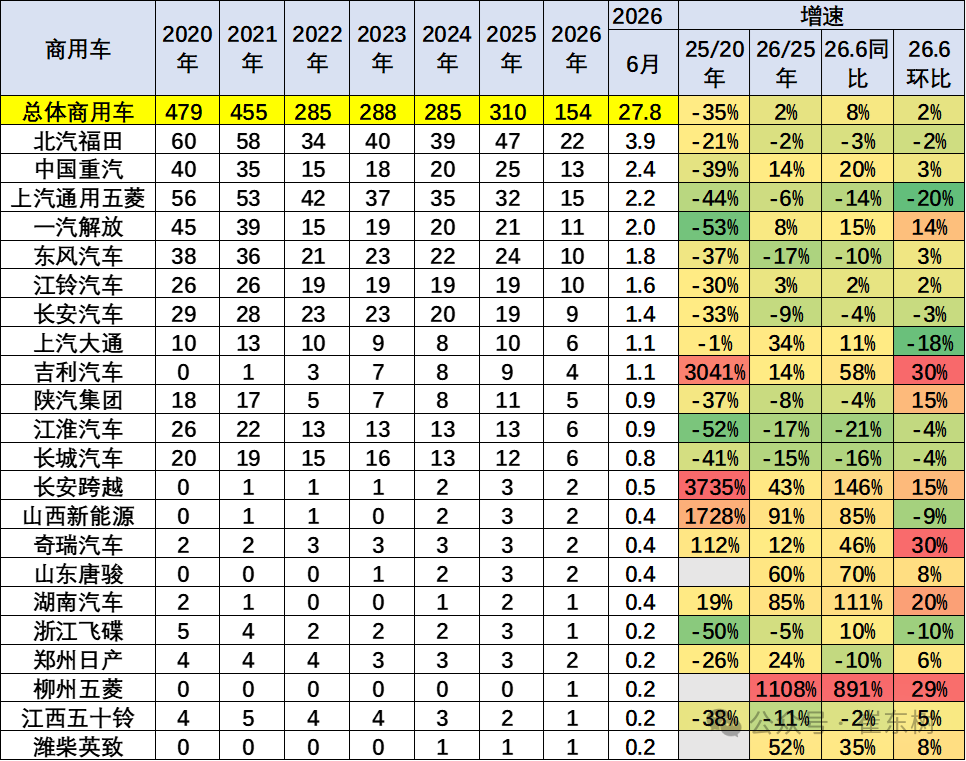
Currently, the sales core of the domestic commercial vehicle market is supported by two major segments: light trucks and heavy trucks. The pattern of leading enterprises in the industry is stable. At the same time, emerging brands are rapidly breaking through, and market competition shows the characteristics of a “stable head and the rise of new players”. Among traditional major companies, Foton Motor is deeply involved in the light truck market, Wuling relies on small and micro trucks and light truck products to seize the mass market, and Sinotruk leads the heavy truck circuit. The three major companies are steadily in the first tier of the industry, with remarkable sales advantages in their respective core segments.
In 2026, there were new changes in the market competition pattern, and some second-tier brands showed significant strength. Companies such as Changan Lakeover and SAIC Maxus achieved outstanding market performance with accurate product positioning and high-quality new energy product layouts. The sales growth rate was superior to the industry average, gradually seizing market share in the market segment. Overall, traditional and established car companies use channels, word of mouth, and supply chain advantages to stabilize their basic market. Emerging and second-tier car companies rely on differentiated breakthroughs in new energy products. Industry competition is gradually shifting from large-scale competition for traditional fuel vehicles to comprehensive competition for new energy products, technology, and services.
6. Regional market structure for medium and heavy trucks
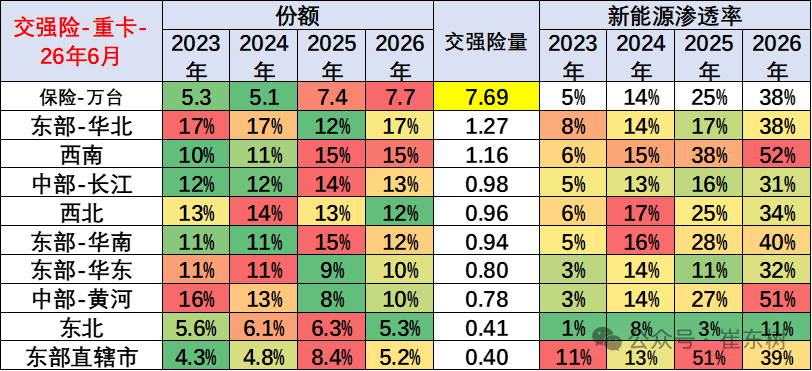
Judging from the regional distribution, the traditional core market for domestic medium and heavy trucks is concentrated in North China and Southwest China. Demand for industry, infrastructure, and resource transportation in these regions is strong, providing stable support for the heavy truck market. In the past two years, with the expansion of infrastructure and the upgrading of the logistics industry in the southern region, demand in the heavy truck market in South China and Southwest China has continued to be released, market share has steadily increased, and the regional pattern has gradually developed from “strong in the north and weak in the south” to balanced development between north and south.
The regional differentiation of new energy heavy trucks is more obvious. In 2026, the penetration rate of new energy heavy trucks in the central Yellow River and southwest regions ranked among the highest in the country. Among them, the southwest region relied on a complete new energy industry chain, intensive logistics and transportation scenarios, and relaxed local support policies, and the penetration rate increased the fastest in the country; the northern region is still in the steady replacement stage, and the growth rate in Northeast China is relatively moderate.
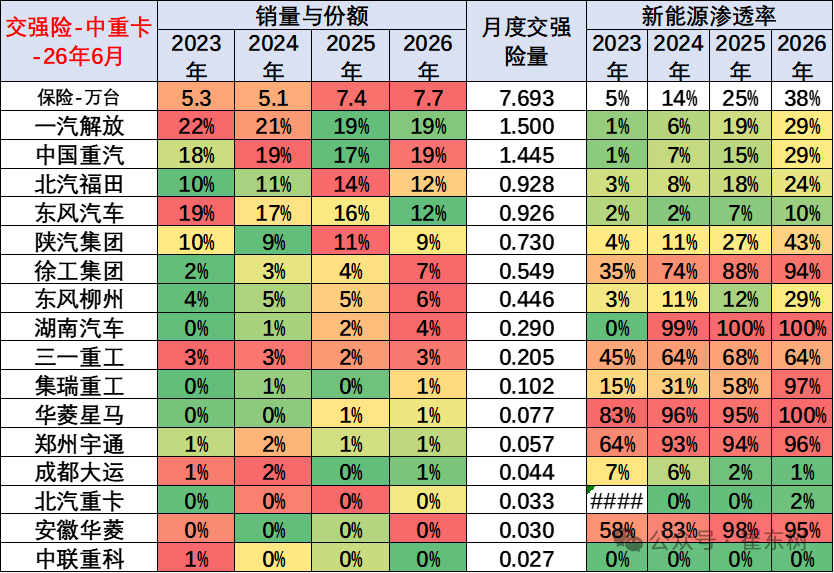
At the level of enterprise competition, the heavy truck market is highly concentrated. The four traditional giants, FAW Jiefang, Sinotruk, Foton Motor, and Dongfeng Motor, are in the first tier of the industry. With mature product systems and perfect after-sales networks, they dominate the domestic medium and heavy truck market. Driven by strong policy subsidies, the electrification transformation of traditional heavy truck companies has accelerated, and the penetration rate of new energy heavy trucks continues to rise. At the same time, second-line construction machinery heavy truck companies such as Xugong and Sany Heavy Industries rely on the advantages of scenario-based products, and the penetration rate of new energy models is rapidly increasing, and the trend of overtaking in curves is obvious. In terms of export and domestic sales structure, domestic heavy truck companies will focus on export growth in 2025, with strong overseas market performance; in 2026, the company's focus will shift to the domestic new energy market layout, and the share of domestic fuel heavy truck sales will decline relatively, and new energy replacement will become the core main line of the domestic demand market.
7. Regional market structure for light trucks
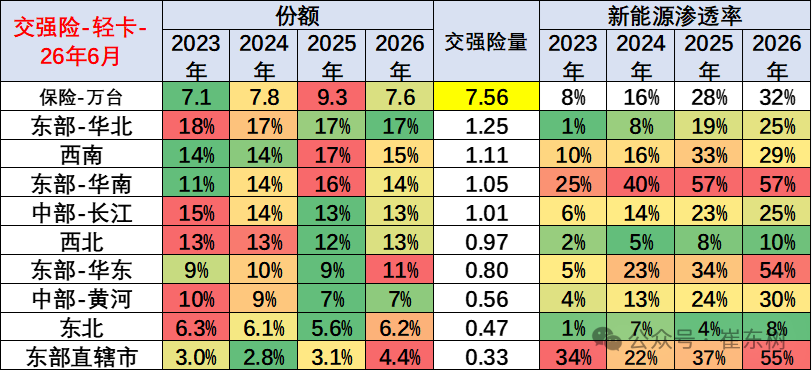
Domestic light truck market demand is highly tied to regional logistics activity. The traditional dominant regions are concentrated in North China, South China, and Southwest China. Demand for urban and rural logistics, short-distance transportation, and supermarket distribution in these regions is strong, supporting stable light truck sales. In 2026, there were new changes in the regional pattern. The logistics industry in Northeast China gradually recovered, demand for short-haul freight and urban and rural distribution picked up, sales in the light truck market grew steadily, and the regional market share continued to rise.
The NEV light truck market shows obvious economic regional agglomeration characteristics. The South China and East China regions along the eastern coast are the core main markets. E-commerce logistics, same-city distribution, and cold chain transportation scenarios are concentrated within the region, compounded by local road rights and subsidy policies, and the penetration rate and holding volume of NEVs are far ahead. However, in first-tier cities such as Beijing, Tianjin, and Shanghai, due to factors such as market saturation and strict policy control, the NEV light truck market growth pace slowed in 2026, and the growth rate was lower than the national average.
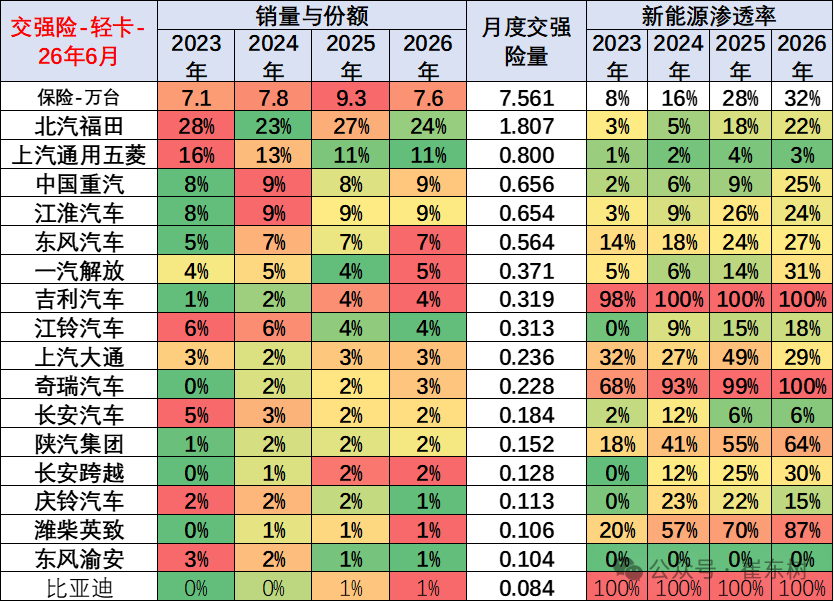
In terms of corporate structure, the traditional fuel light truck market is dominated by established companies such as BAIC Foton, SAIC-GM-Wuling, Sinotruk, JAC, and Dongfeng Motor, with a stable market share. Among them, SAIC-GM-Wuling relies on the advantages of small micro card products and continues to penetrate the small and light truck market segment upward. The product has strong adaptability, excellent final reputation, and outstanding market performance. On the NEV light truck circuit, Geely Automobile, SAIC Chase, and JAC are looking ahead. They have continued to deepen NEV technology research and development and scenario-based product iteration for the past two years. The product has obvious advantages in battery life, load capacity, and energy consumption, and has become the core main enterprise in the NEV light truck market.
8. Regional market structure for light buses
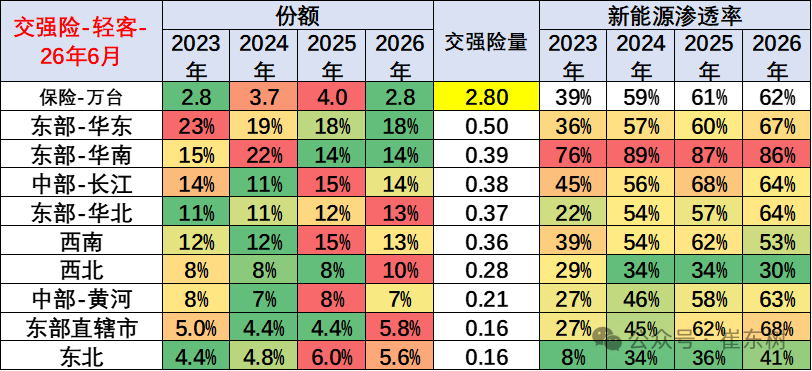
Light buses are mainly suitable for scenarios such as urban commuting, same-city delivery, and business travel, and demand is highly concentrated in economically developed regions. The traditional core sales areas for domestic light buses are East China and South China. In 2026, the northwest region relied on urban development and rapid growth in light passenger market demand, and the regional market share increased dramatically.
Demand for NEVs is also concentrated in economically developed regions. With an active private economy, intensive urban distribution scenarios, and perfect new energy packages, the NEV light passenger market is leading the country in size and penetration rate. At the same time, first-tier cities such as Beijing, Tianjin, and Shanghai have implemented strict fuel vehicle traffic rights control and restriction policies, which directly led to a contraction in fuel light passenger usage scenarios and continued contraction in sales, forcing the market to transform to new energy light passenger vehicles. The effect of policy-driven substitution is remarkable.
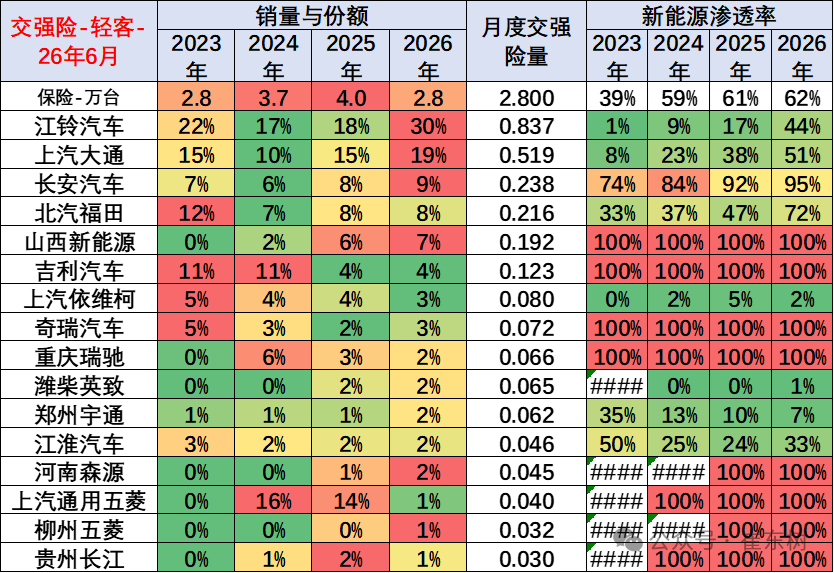
In terms of enterprise competition, the main companies in the domestic light passenger market include Jiangling Motors, SAIC Chase, Changan Automobile, Geely Commercial Vehicles, and SAIC-GM-Wuling. Traditional car companies are deeply involved in the fuel and light passenger market, and their ownership advantage is obvious.
Among the emerging forces, Geely Commercial Vehicles focuses on new energy light trucks and light passenger tracks. The competitiveness of new energy products is outstanding, and the market share continues to increase. In 2026, Changan Automobile launched a variety of cost-effective electric light passenger products to meet the needs of multi-scene urban use. Product competitiveness has greatly improved, and it has become a new force in the NEV light passenger market.
9. Regional market structure for large and medium-sized buses
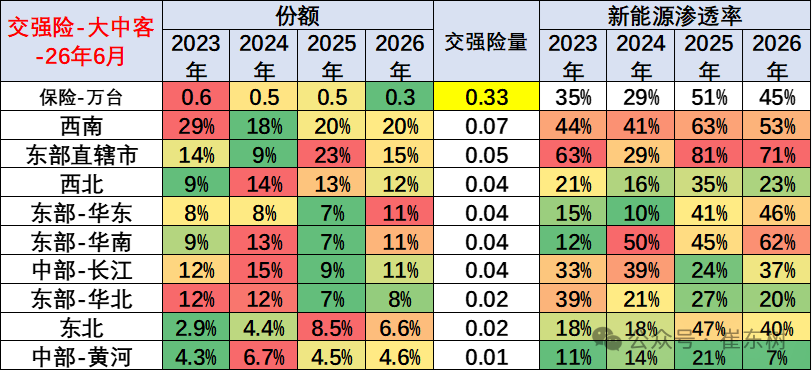
In 2026, the overall performance of the large and medium-sized bus industry was weak, market demand fluctuated greatly, and the characteristics of regional differentiation and power type differentiation were remarkable. The industry presents a differentiated development pattern of “policy drives new energy, market supports fuel vehicles”: large and medium-sized new energy buses are mainly driven by local bus updates and government procurement policies, and market-based demand is weak; large and medium-sized fuel buses rely on immediate market-based demand for long-distance passenger transport, group commuting, travel, etc., and the sales trend is relatively steady.
In terms of regional distribution, the overall penetration rate of large and medium-sized new energy buses in the southern region is higher than in the northern region. Southern cities are being updated and iterated faster, and green travel policies are more thoroughly implemented, supporting the demand for large and medium sized new energy passengers. Demand in the north and some central regions is highly dependent on local special subsidy policies, and the pace of policy implementation directly affects regional sales. In 2026, the South China region stepped up its public transport electrification efforts, and the procurement volume of new energy buses in the region increased dramatically, driving a significant recovery in the NEV market share for large and medium-sized customers.
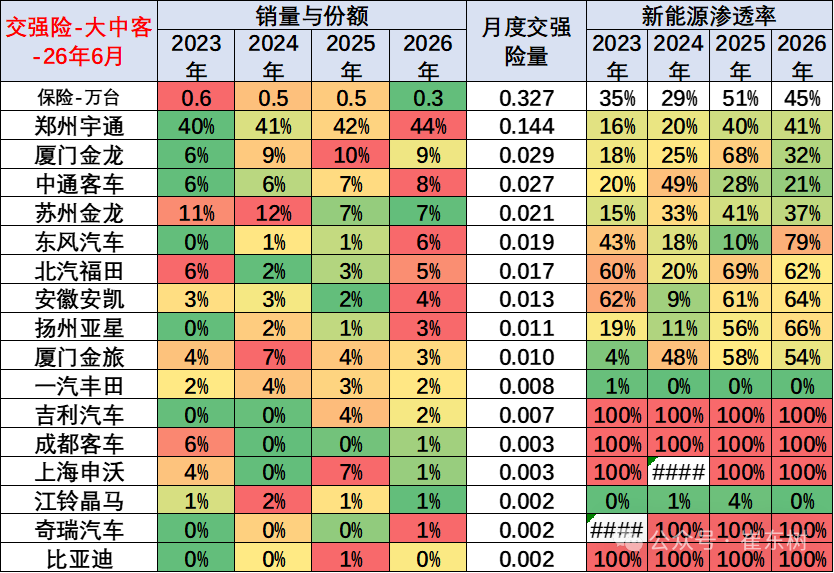
In terms of corporate structure, leading traditional companies such as Yutong Bus, Zhongtong Bus, and Suzhou Jinlong continue to dominate the large and medium-sized bus market, with remarkable advantages in brand power, product strength, and after-sales system. Among them, Yutong Bus's traditional fuel large and medium-sized bus market has a stable foundation, and terminal sales performance is strong; in June 2026, sales of large and medium-sized bus products of Zhongtong Co., Ltd. bucked the trend, and the market performance was impressive. At the level of new energy transformation, the industry is clearly divided. Second-tier bus companies focus on new energy tracks, and the penetration rate of new energy customers is relatively high; while leading companies such as Yutong insist on parallel fuel and new energy, the basic fuel vehicle market is stable, the new energy business is steadily expanding, and the overall development is more balanced.