
- PRICING
- LIVE QUOTES
- LEARN
- HELP


EN
NRG Energy Earnings Preview: What to Expect
With a market cap of $27.2 billion, NRG Energy, Inc. (NRG) provides retail electricity, energy management, smart home solutions, and carbon management services across the United States and Canada. Through multiple segments, it serves residential, commercial, and industrial customers while operating a diversified portfolio of fossil fuel and renewable energy generation assets and engaging in energy trading and related financial products.
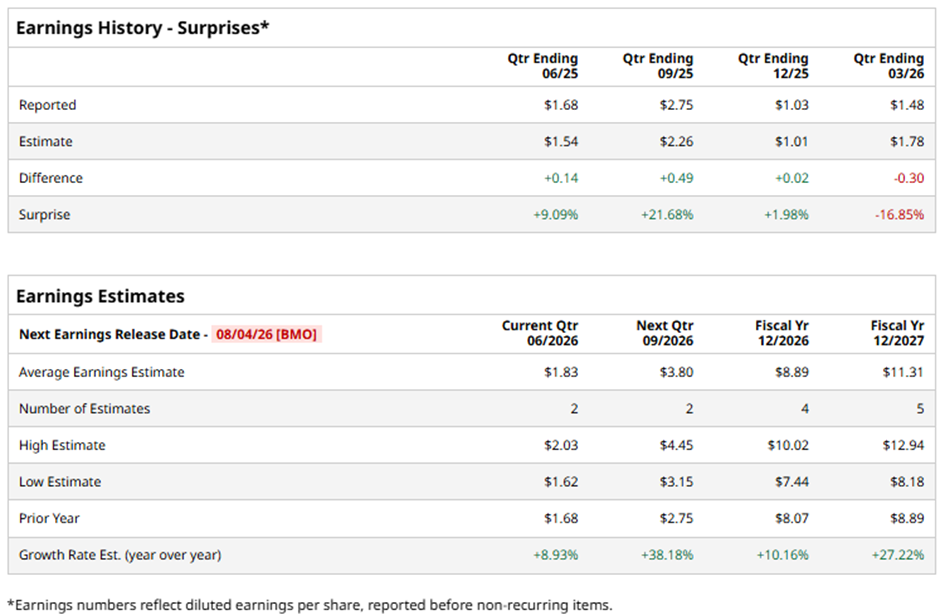
The Houston, Texas-based company is expected to unveil its fiscal Q2 2026 results before the market opens on Tuesday, Aug. 4. Ahead of the event, analysts anticipate NRG to report an EPS of $1.83, a rise of 8.9% from $1.68 in the year-ago quarter. It has exceeded Wall Street's bottom-line estimates in three of the past four quarters while missing on another occasion.
For fiscal 2026, analysts predict the power producer to report EPS of $8.89, a growth of 10.2% from $8.07 in fiscal 2025. Moreover, EPS is projected to increase 27.2% year-over-year to $11.31 in fiscal 2027.
NRG stock has fallen 12.4% over the past 52 weeks, lagging behind the S&P 500 Index's ($SPX) 18.4% gain and the State Street Utilities Select Sector SPDR ETF's (XLU) 9.7% return over the same period.
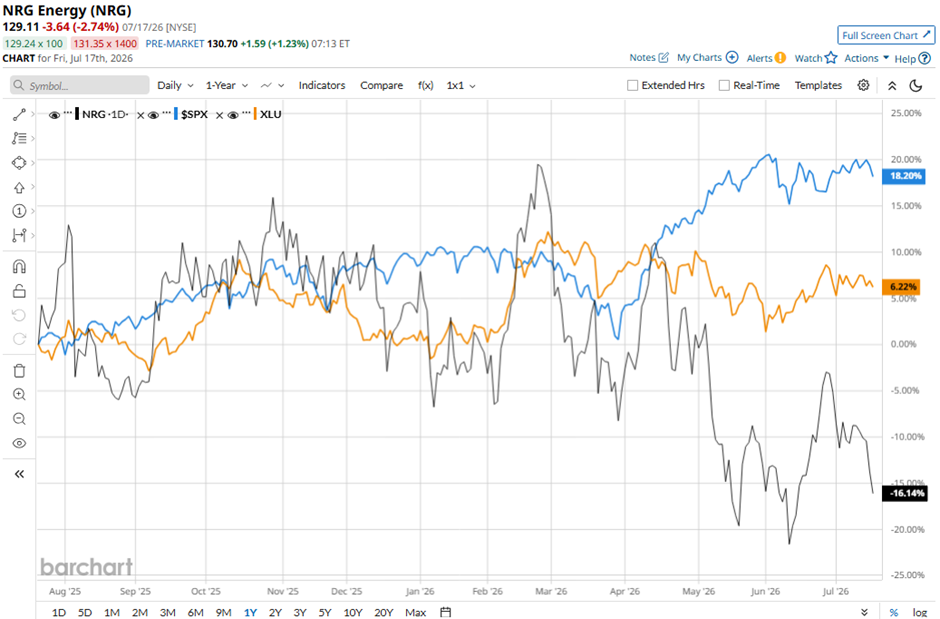
NRG Energy's shares fell 4.3% on May 6 after the company reported Q1 2026 adjusted EPS of $1.49, missing analysts' estimate. The earnings miss was driven by mild winter weather in Texas, where heating degree days declined nearly 30%, causing Texas adjusted EBITDA to fall 27.8% to $216 million, along with higher operating costs that rose 33.4% to $9.93 billion. Investor sentiment was further pressured by interest expenses increasing to $285 million from $163 million a year earlier, primarily due to financing costs related to the $12 billion LS Power acquisition.
Analysts' consensus rating on NRG stock is bullish, with an overall "Strong Buy" rating. Out of 16 analysts covering the stock, opinions include 13 "Strong Buys" and three "Holds." The average analyst price target is $203.94, indicating a potential upside of nearly 58% from the current levels.
On the date of publication, Sohini Mondal did not have (either directly or indirectly) positions in any of the securities mentioned in this article. All information and data in this article is solely for informational purposes. For more information please view the Barchart Disclosure Policy here.