
- PRICING
- LIVE QUOTES
- LEARN
- HELP


EN
Beishui Trends | Beishui Trading's net sale of 1,457 billion Hong Kong stock ETFs regained positions, and AI software and hardware were sold off
The Zhitong Finance App learned that in the Hong Kong stock market on July 17, Beishui traded net sales of HK$1,457 billion. Among them, Hong Kong Stock Connect (Shanghai) had net purchases of HK$1.91 billion and Hong Kong Stock Connect (Shenzhen) had net sales of HK$3.367 billion.
The individual stocks that Beishui Net bought the most were Yingfu Fund (02800), Southern Hang Seng Technology (03033), and Xiaomi Group-W (01810). The individual stocks sold the most by Beishui Net were Alibaba-W (09988), Huahong Hongli (01347), and Jiantao Laminate (01888).
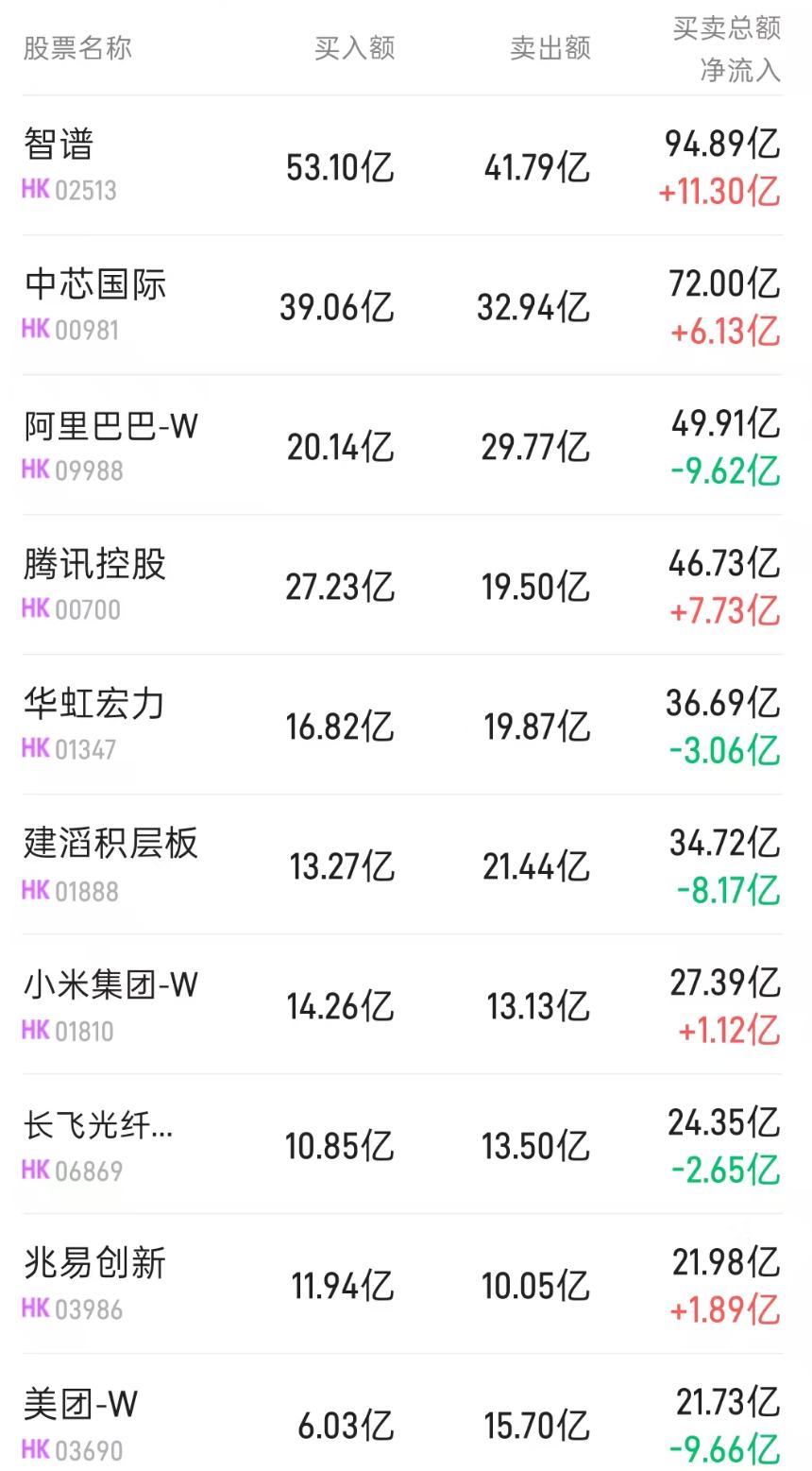

Hong Kong Stock Connect (Shanghai) active trading stocks
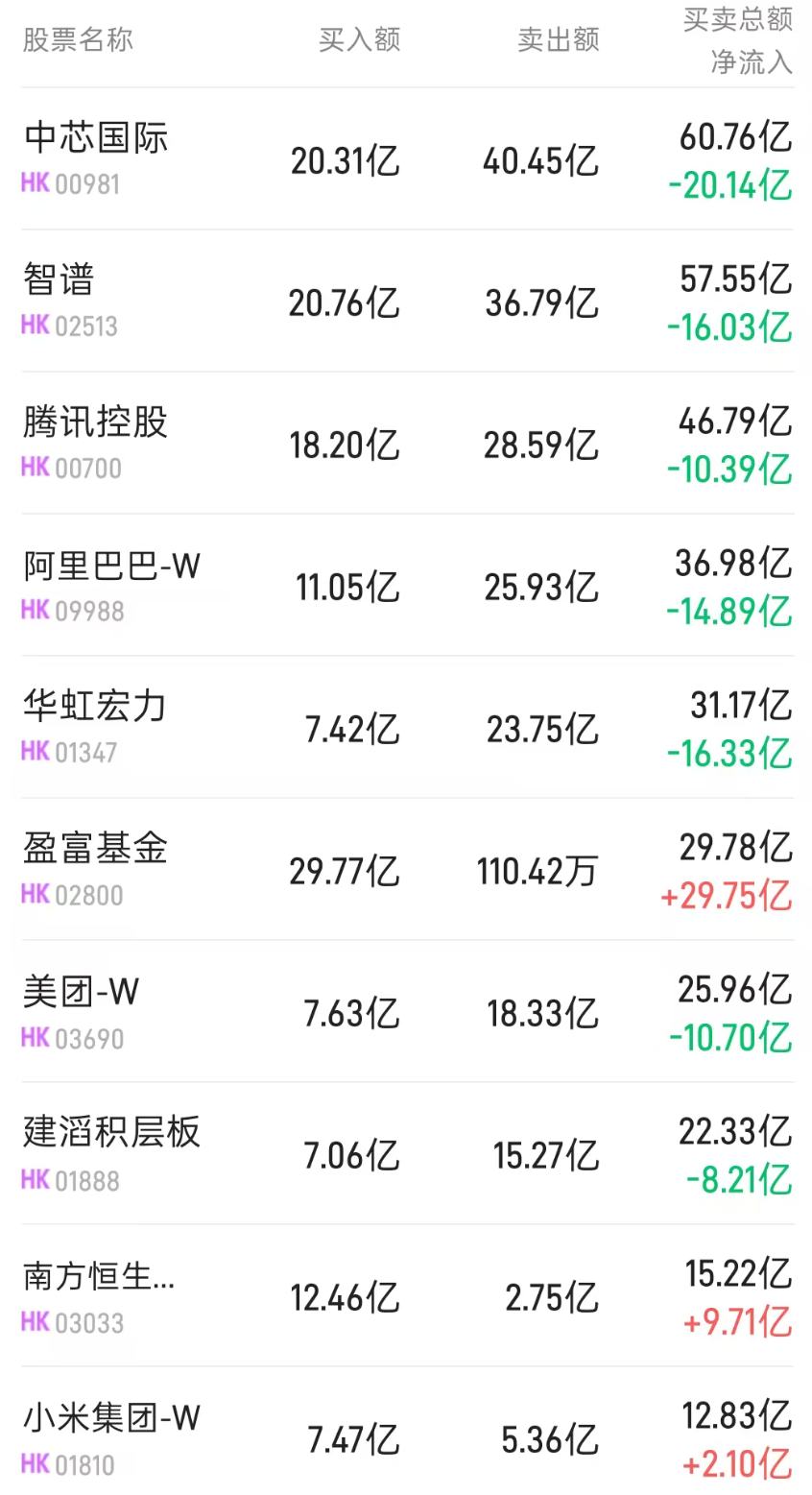
Hong Kong Stock Connect (Shenzhen) active trading stocks
Yingfu Fund (02800) and Southern Hang Seng Technology (03033) received net purchases of HK$2,975 million and HK$971 million respectively. Shen Wan Hongyuan pointed out that after experiencing a sharp rise last year, the Hong Kong stock market has not performed well at the index level since this year. Currently, the Hong Kong stock market is already in the “triple bottom” zone. Moreover, in terms of the market transaction structure, a large number of short positions accumulated in the previous period may become a driving force to make up for the upward trend when the market reverses. Looking at potential catalysts, whether it is top-down macroeconomic factors or bottom-up industry narratives that have recently changed, these are all expected to form a driving force for the market to bottom up.
Xiaomi Group-W (01810) received a net purchase of HK$322 million. Xiaomi Auto launched the SkyNomad Xiaomi Pengcheng. Unlike the SU7 and YU7 series, it is positioned as an “intelligent variable large space SUV” to meet the needs of multiple vehicle interior scenarios. In addition, the Redmi Note 17 series was released on July 14. Facing the sharp rise in storage costs, it insists on protecting the core experience for mid-range consumers to improve the configuration and maintain its cost-effective position, which is conducive to further seizing mid-tier share and enhancing upstream bargaining power.
GigaYi Innovation (03986) received a net purchase of HK$188 million. BOC International pointed out that major overseas manufacturers such as Samsung, SK Hynix, Micron, and Kioxia continued to withdraw from niche DRAM and SLC NAND Flash production capacity, and the supply gap began to be significantly released in 2025, opening up a capacity replacement window for GigaYi Innovation. The company is expected to use its share expansion experience in the NOR Flash field to achieve rapid share and profit growth in this round of share redistribution. The company's deep cooperation with Changxin is the core support for the company's DRAM business.
Changfei Optical Fiber Cable (06869), SMIC (00981), Jiantao Laminate (01888), and Huahong Hongli (01347) were net sold at HK$264 million, $1,401 million, $1,638 million, and HK$1,938 billion respectively. The Guolian Security Fund said earlier that this round of overseas market sell-off stemmed from the loosening of traffic congestion on the AI hardware circuit. The market was worried that the AI hype in the early stages was too intense, and the funds collectively began to take risks and reduce positions. According to Wall Street giants such as Bank of America and Nomura, and top market research institutes such as SemiAnalysis, this round of global memory chip and even AI computing power infrastructure investment-themed stocks generally plummeted closer to extreme expectations, extremely leveraged positions, and centralized liquidation of overcrowded bullish positions, rather than a sudden collapse in industrial demand.
Tencent (00700) and Alibaba-W (09988) had net sales of HK$265 million and HK$2,451 billion respectively. Guangfa Securities believes that the opportunities for Hong Kong stocks in the second half of the year may be mainly due to the phased market due to the excessive decline and rebound. Considering that Hengke currently has many losses, once it shrinks and rebounds into the pressure zone, it is very easy to push higher and fall. The market may come and go fast. The rebound window and magnitude may be similar to the first half of this year, making it more difficult to grasp.