- PRICING
- LIVE QUOTES
- LEARN
- HELP


EN
China Automobile Dealers Association: Passenger car terminal sales are expected to reach 1.55 million units in July
The Zhitong Finance App learned that the China Automobile Dealers Association published an article stating that July is in the low season for traditional car sales. Due to a combination of factors such as high temperatures, extreme weather, overdraft demand, and lack of large-scale drainage nodes, passenger flow, orders, and sales overall weakened in the first half of the month, inventory structure rose slightly, and overall market activity declined markedly. However, continued increases in industry policies, local car purchase subsidies, trade-ins, and the immediate demand for summer car purchases have formed a certain bottom support, which can mitigate the decline in the off-season. In the medium to long term, the implementation of support policies related to automobile circulation and the automobile aftermarket will continue to optimize the car purchase environment and save energy for subsequent market recovery. Taken together, passenger car terminal sales for the month of July are expected to reach 1.55 million units.
The passenger car market entered the traditional low season in July, and market activity in the first half of the month was significantly weaker than in the same period in June. Due to a combination of factors such as impulse overdraft demand in the first half of June, continued high temperatures across the country, extreme weather disasters in some regions, and no holiday promotion drainage, dealer-side passenger flow, orders, and sales declined simultaneously in the first half of July. In addition, extreme weather such as typhoons, floods, and continuous high temperatures had a significant impact on offline store arrivals and test driving activities, and logistics and terminal delivery processes were also affected to a certain extent.
Based on the dealer's feedback on customer attraction, sales volume, and inventory biweekly report data, it can be seen that:
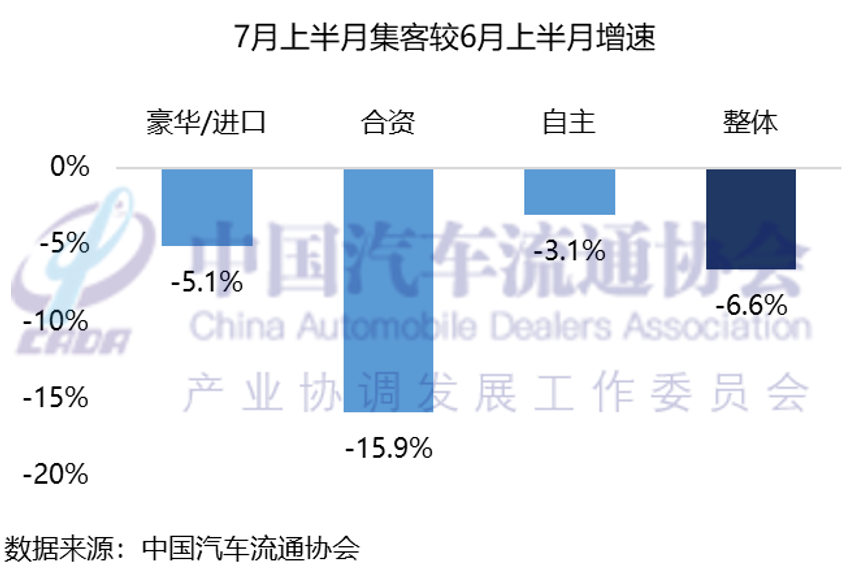
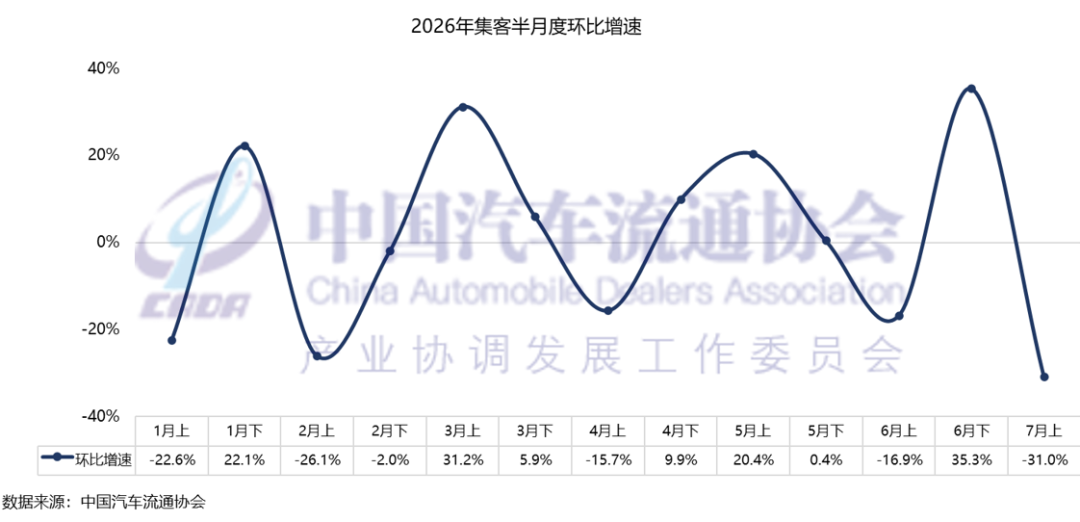
The number of visitors attracted in the first half of July decreased by 6.6% compared to the same period in June, and decreased by 31.0% from the second half of June. On the one hand, high temperatures continued across the country in July, and heavy rainfall occurred in some regions. In particular, typhoon “Bawe” had a serious impact on the eastern coast and many provinces and cities in East China, North China, Northeast China, etc., which greatly curtailed consumers' willingness to visit stores and test drive offline, making it difficult to carry out offline marketing activities normally; on the other hand, the June half of June concentrated on releasing some potential customer sources, overdrawing demand for car purchases in early July. In July, there were no holiday factors driving traffic, and the lack of centralized marketing nodes drove store arrivals. Combined with early price cuts, promotions, and new car launches, the consumer wait-and-see cycle continued to lengthen. Short-term passenger traffic is unlikely to pick up significantly. It is expected that the second half of July may rely on summer family car watching and graduates' demand to buy cars to slightly cushion the decline in passenger flow.
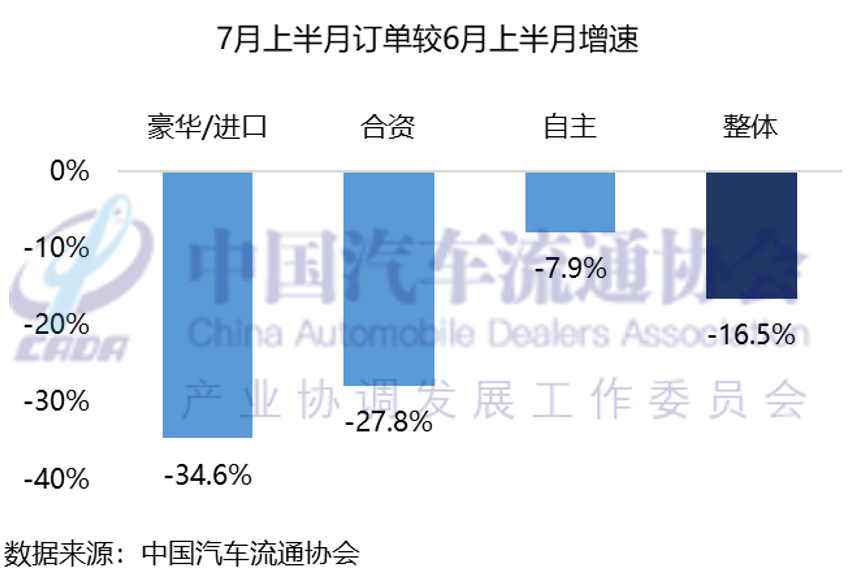
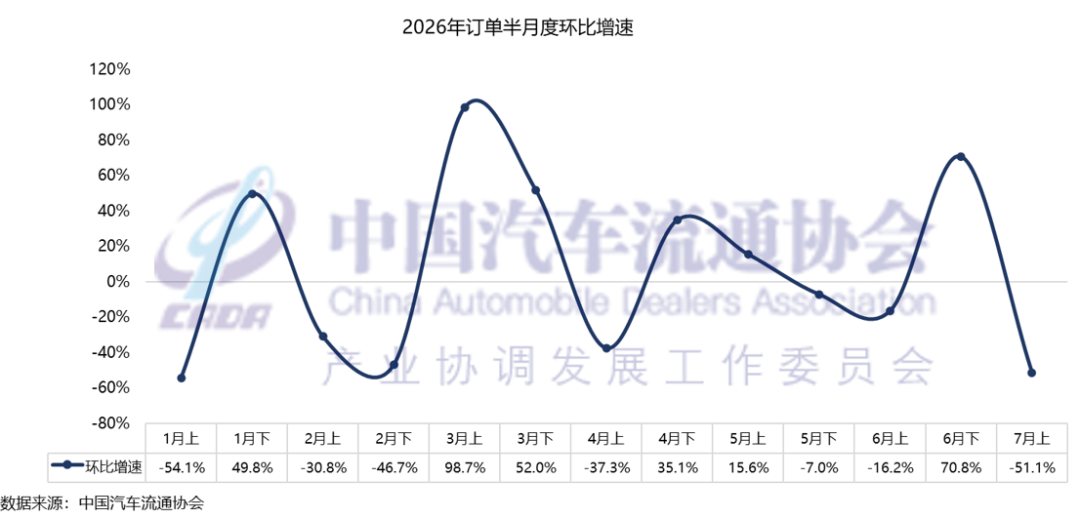
Orders for the first half of July decreased by 16.5% compared to the same period in June and by 51.1% compared to the second half of June. In the first half of July, new intended orders weakened at the same time. During the June half-year rush period, a large number of interested customers concentrated on transactions, releasing potential market demand ahead of schedule; extreme high temperatures continued to affect the transformation of offline car viewing; terminals lacked holiday auto shows and major promotions to stimulate new orders. Currently, consumer wait-and-see sentiment is once again rising, and the pace of car purchase decisions is slowing down. At the same time, demand for car purchases and trade-in replacements for summer trips has been steadily released, compounded by the continuous implementation of car purchase subsidies in various regions, which can stabilize the basic order scale and avoid a continuous sharp decline in orders.
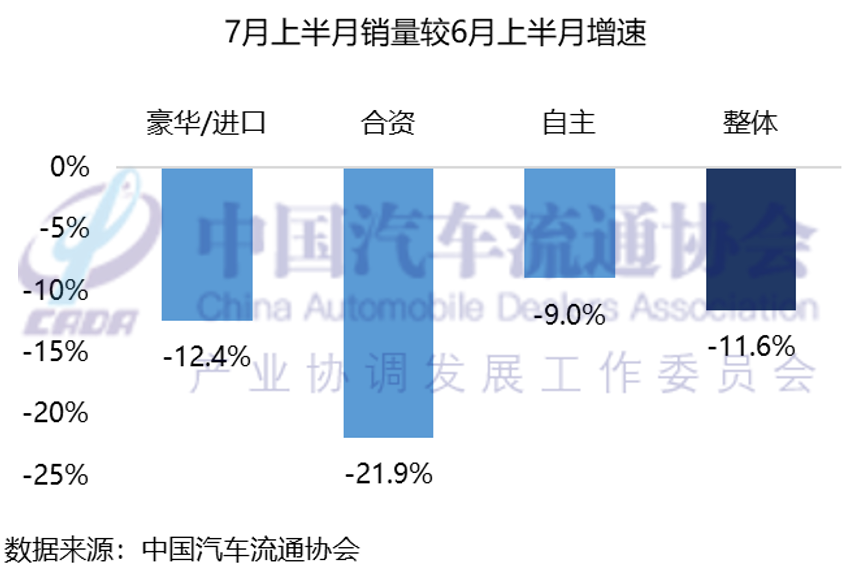
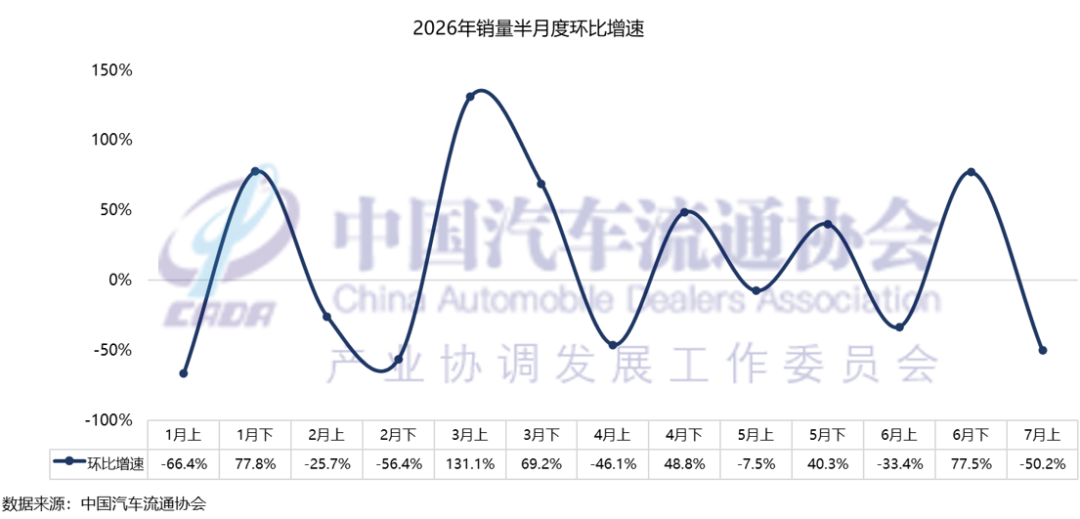
Sales in the first half of July decreased by 11.6% compared to the same period in June and by 50.2% compared to the second half of June. Terminal transactions came under phased pressure in the first half of July. Compared to June, dealer terminal promotions narrowed in early July, and customer flow and new orders declined simultaneously, so retail sales declined in the first half of the month. At the same time, extreme weather affected the pace of vehicle logistics and delivery of new vehicles, further limiting the scale of terminal transactions. Overall market demand weakened in July, and sales are expected to decline in the second half of the month compared to the same period in June, showing an overall downward trend.
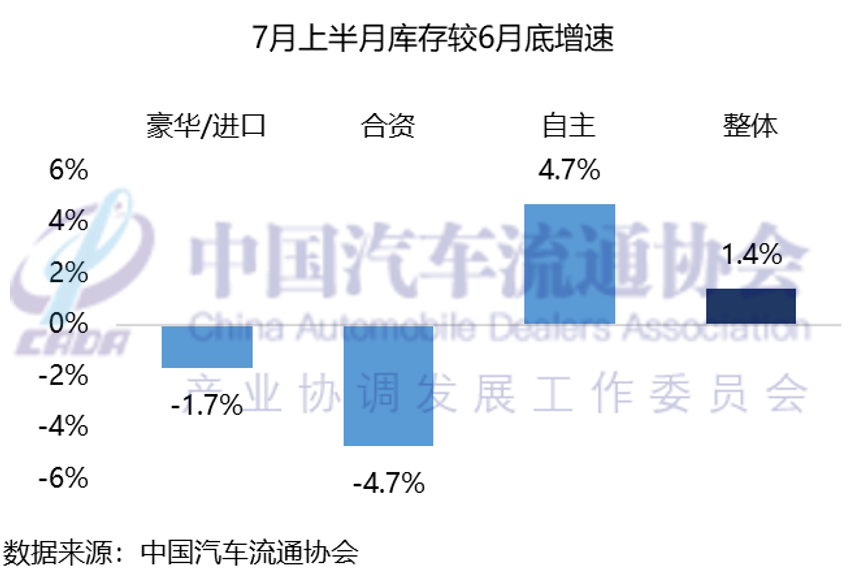
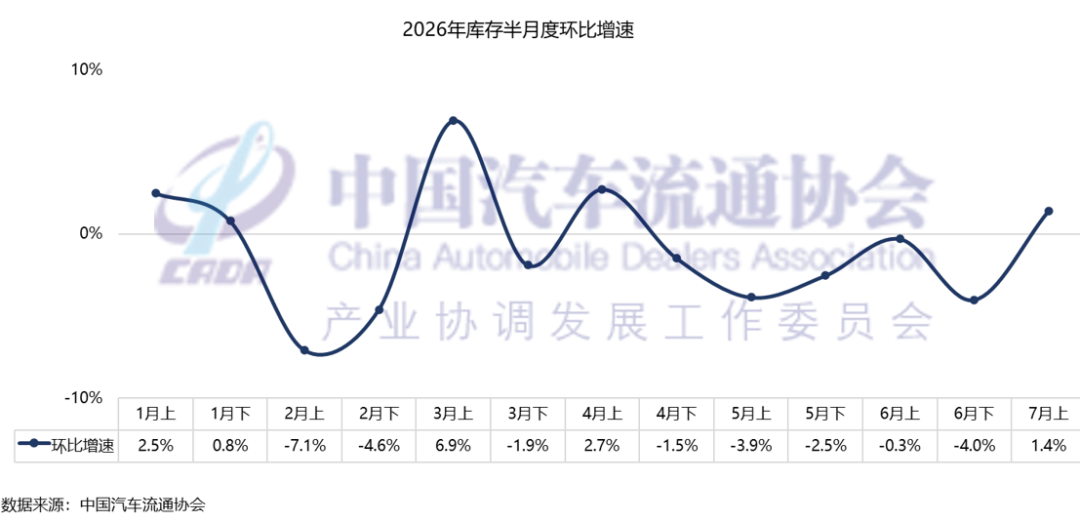
Inventory volume in the first half of July increased by 1.4% compared to the end of June. Dealers concentrated their momentum at the end of June, and inventory volume dropped significantly compared to mid-June. In the first half of July, inventory of luxury brands and joint venture brands continued to decline, while inventories of independent brands rose slightly. The reason was that production capacity for many newly launched models gradually climbed in the early stages, and the supply of new vehicle sources increased through the channel, which led to a slight increase in overall channel inventory.