
- PRICING
- LIVE QUOTES
- LEARN
- HELP


EN
Zhida Technology (02650) Strategy upgrade: AI+energy+robot integration to restructure energy supplementation growth logic
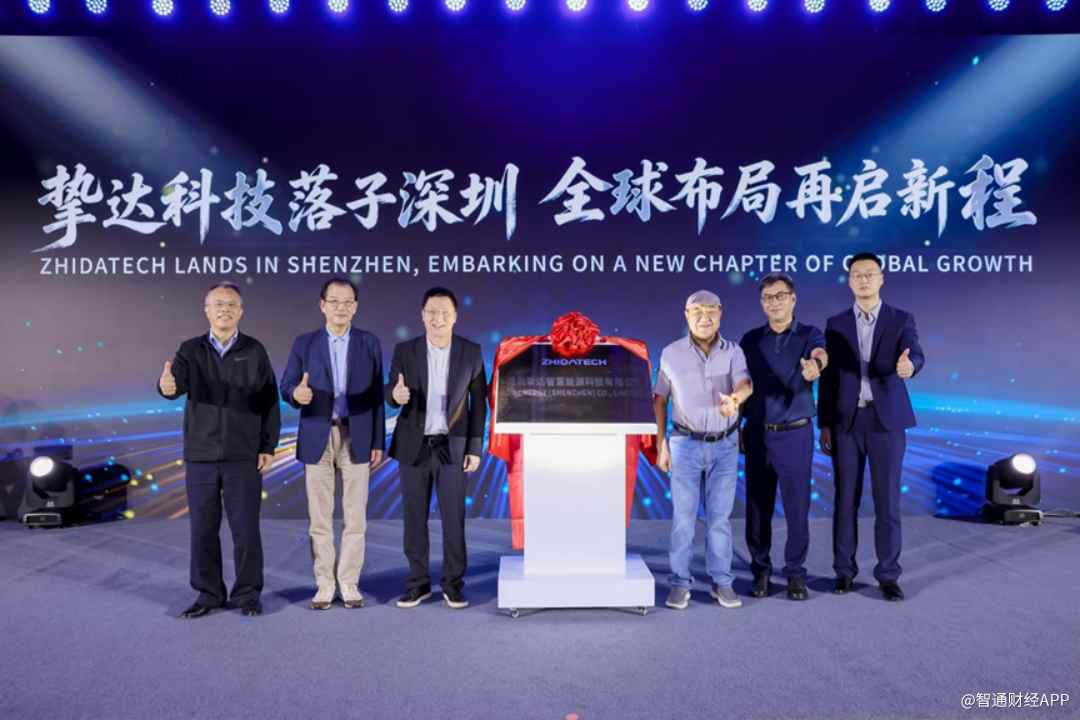
On July 16, Zhida Technology (02650) released the “Global Market+Smart Energy+Energy Service Robot” 2.0 strategy in the Guangdong-Hong Kong-Macao Greater Bay Area, simultaneously completing the unveiling of the Shenzhen subsidiary, the launch of a full-scenario solution, and the signing of an ecological partner. The implementation of this strategy marks the company's transition from a single hardware supplier to a platform-based and ecological scenario solution provider, reshaping the growth logic of the new energy energy supply circuit.
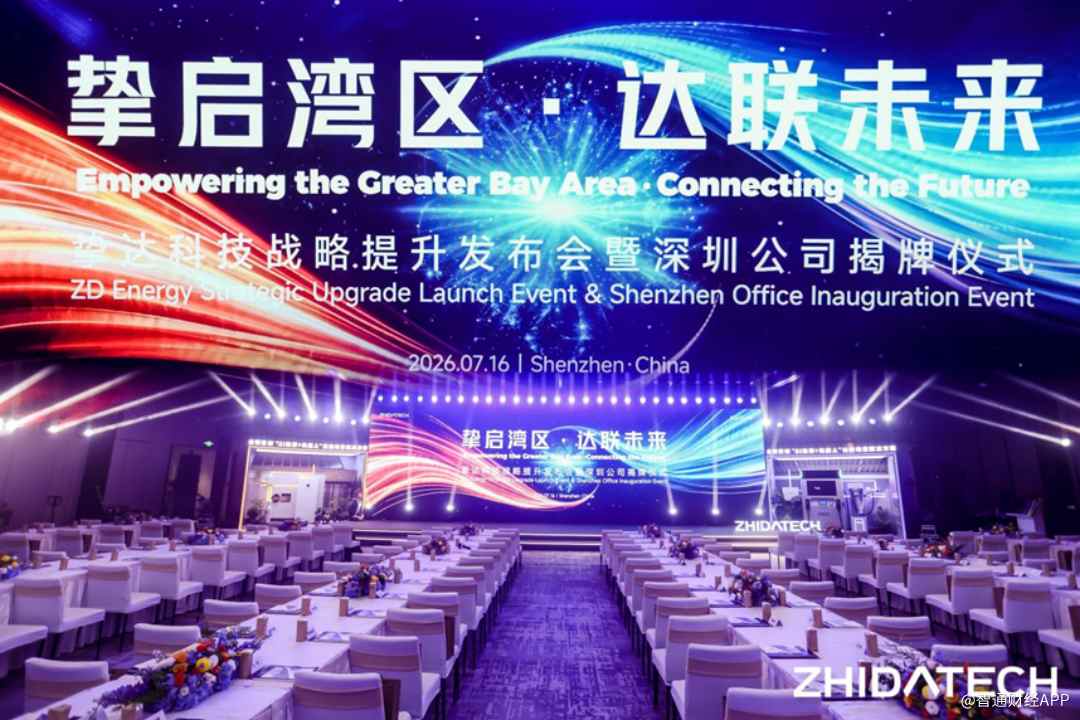
The Zhitong Finance App learned that in the early days of the popularity of new energy vehicles, the growth in the energy supplementation industry mainly came from an increase in the penetration rate of charging piles, and companies relied on product iteration, cost control, and channel expansion to gain market share. As the industry enters a mature period, bottlenecks in the growth of the pure hardware development model are evident: on the one hand, product homogenization and price competition reduce profit margins; on the other hand, the demand of end users is shifting from basic energy supplementation in the past to global energy management with low cost, high efficiency, and intelligent scheduling. Home users expect the integrated operation of only storage and charging; operators such as online car-hailing, robotaxi, and logistics fleets urgently need unmanned, high-turnover, and intelligently dispatched energy refueling stations.
Hardware sold scattered in the market requires users to independently complete the system adaptation of various types of equipment. The commissioning cost is high, the operation is cumbersome, and it is impossible to achieve intelligent global energy scheduling. For companies that are deeply involved in hardware manufacturing, such as Zhida Technology, actively transforming into a platform-based and ecological solution service provider and extending a single hardware sales model to a long-term operation and service model is a choice to break through the growth ceiling.
In order to complete the transformation of the business model, Zhida Technology uses an AI digital base as the center to open up the two major business segments of smart energy and charging robots, and build a “product+platform+service” closed-loop system for the entire industry chain. On the energy side, the company developed its own EMS energy management system, which can be adapted to various application scenarios such as household photovoltaics, V2G (vehicle to power grid), industrial and commercial energy storage, etc., and is an important carrier for achieving detailed dynamic energy scheduling in homes and parks; on the robot side, the company overcame the core technology of rope-driven flexible arms and completed the product matrix layout for a full range of domestic and commercial charging robots. With the successful commissioning of the 10,000-class exclusive production line in Ningbo, Zhida Technology became the first domestic manufacturer to achieve a closed loop of 10,000-class production capacity for charging robots.
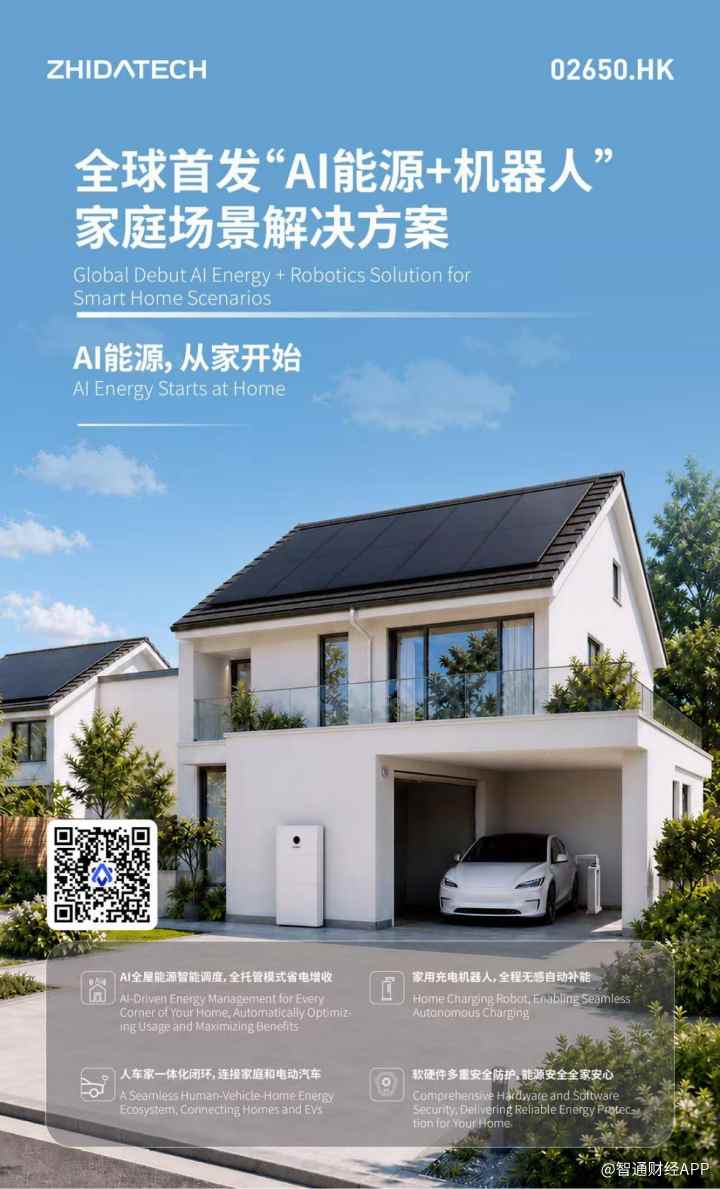
 At the press conference, Zhida Technology launched two standardized full-scenario solutions for home and public operations. Among them, the world's first “AI Energy+Robot” home scenario solution integrates a 12kW all-in-one optical storage machine, a household charging robot, a photovoltaic module and an AI scheduling platform, and can be deployed right out of the box. The system combines photovoltaic power generation and peak and valley electricity prices to dynamically adjust energy storage and charging to achieve a closed loop of household energy for spontaneous use and storage of surplus electricity. The integrated solution can avoid equipment compatibility issues, reduce adaptation costs, and improve energy efficiency.
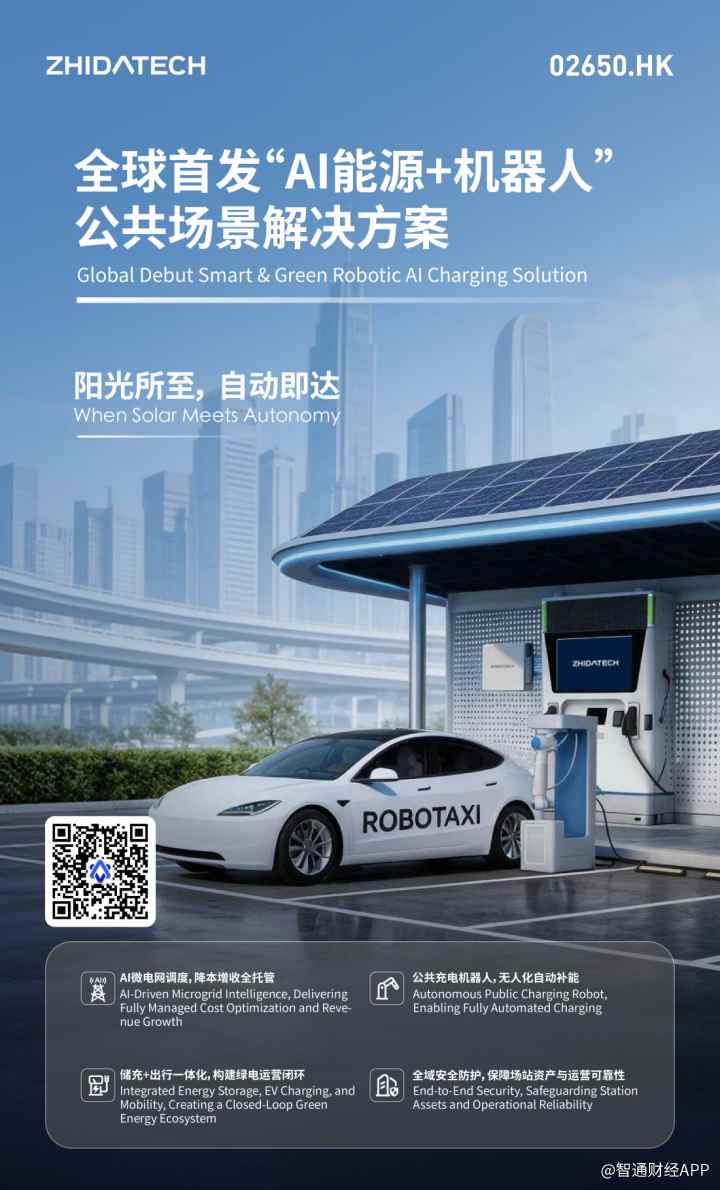
The world's first “AI Energy+Robotics” public scenario solution is aimed at robotaxi, online car-hailing, and logistics fleet operation scenarios, focusing on cost reduction and efficiency at stations. The solution is centered on an integrated storage and charging pile, a Lingxiang charging robot, and an EMS platform. Equipped with photovoltaic equipment, it relies on energy storage to cut peaks and fill valleys to reduce electricity costs. AI scheduling enables fully automatic unmanned charging and reduces labor costs. The plan will promote the expansion of the company's profit model from hardware sales to a diversified combination of hardware, systems, and operation services.
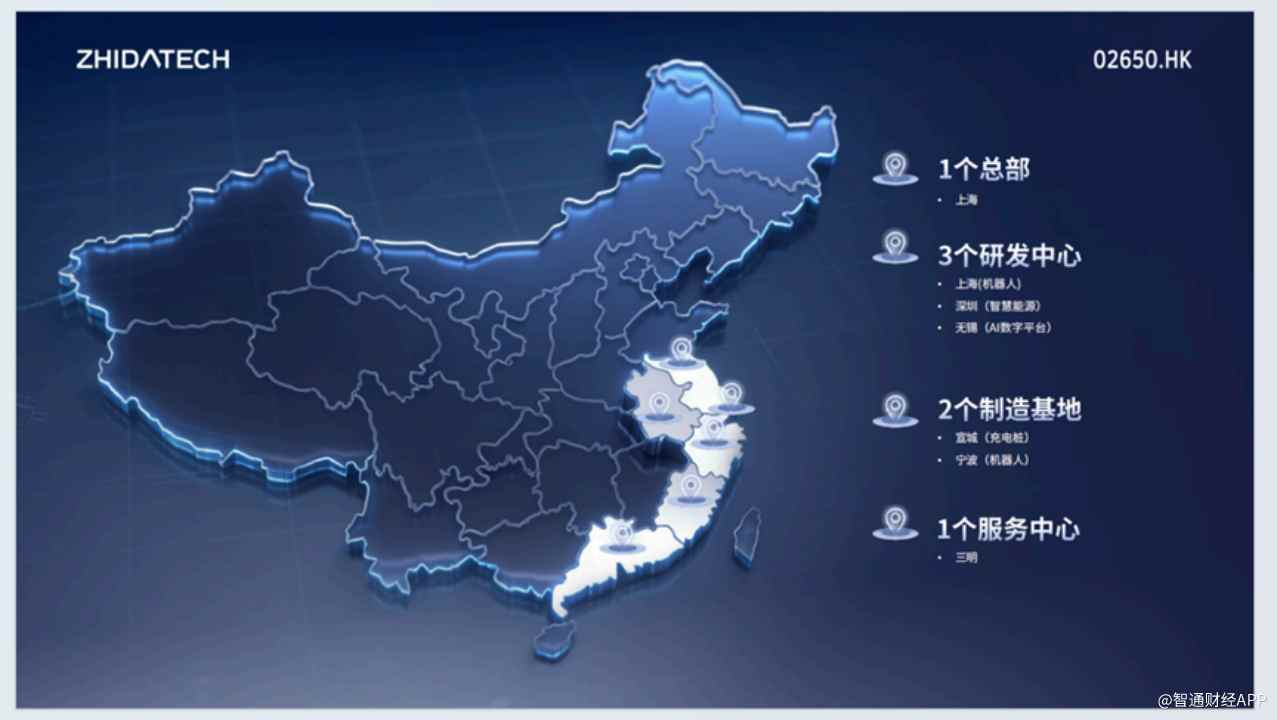
In order to ensure the large-scale implementation of the two major standardization plans, the newly inaugurated Shenzhen subsidiary undertakes three core functions. It is positioned as a product and solution center, an intelligent hardware R&D and integration center, and an overseas business center. It has become a hub for Zhida Technology to connect with high-quality industrial resources in the Greater Bay Area, accelerate product iteration, coordinate global business, and launch overseas expansion.
In addition, Zhida Technology completed the signing of five ecological partners at the press conference. The four domestic partners of Tencent Cloud, Shougang Langze, EVI, and Zhangjiang Leasing provide support from the four dimensions of AI computing power base, zero-carbon park implementation, hardware supply chain support, and science and innovation finance support; Malaysian distributor KINETA is deeply involved in the Southeast Asian market to establish stable sales channels for overseas business.
Relying on industrial and ecological collaboration, Zhida Technology's overseas business is growing rapidly. Its products and services cover 28 countries, and the five major overseas bases in China and Thailand have already been put into operation. In 2025, the overseas sales volume was 100,000 units, an increase of 79.6% over the previous year. From January to April 2026, the sales volume of the company's charging stations in the Thai market increased by 71.3% year-on-year; in March 2026, a single batch of 9,400 units were delivered in Brazil, and orders in hand throughout the year covered the fourth quarter. The company is also cooperating with Chery Green Energy and the China Power Investment Corporation Qiyuanxin Power to expand overseas new energy infrastructure.
For Zhida Technology, the global layout not only increased revenue, but also upgraded the growth logic. The mature integrated scenario solution superimposes autonomous and controllable production capacity to form a differentiated advantage and complete the transformation from hardware export to energy solution output. At the same time, the differentiated market demand in different regions around the world drives technology iteration in reverse, effectively disperses the risk of fluctuations in a single regional market, and forms a virtuous circle where R&D and overseas operations are mutually empowered.
From leading household charging stations that are deeply involved in segmented racing tracks to a full-scenario smart energy service provider driven by AI technology, Zhida Technology's 2.0 strategy upgrade has embarked on a clear path of differentiated transformation. At the stage where the energy supplementation industry is shifting from hardware parameter competition to systematic capability competition, the company has built a global development system for AI energy+intelligent robots, reshaped the medium- to long-term growth logic, and completed a closed loop of value from product-driven to solution-driven.