
- PRICING
- LIVE QUOTES
- LEARN
- HELP


EN
Can a 21-fold increase in performance support the “robot story” of Eston (02715) with a market capitalization of 20 billion dollars?
On July 14, domestic industrial robot leader Eston (02715) released a performance forecast for the first half of 2026. The estimated net profit range is 150 million to 180 million yuan, surging 2144.74% to 2593.68% year on year; after deducting non-net profit, it will reach 60 million to 75 million yuan, successfully turning a loss into a profit over the same period last year.
21 times! Such strong financial growth apparently also elicited strong reactions in the secondary market — after opening the next day, Eston's stock price rose by more than 5%, then sharply increased its increase by more than 9%. After noon trading, its stock price fell rapidly. By the close, the stock price had risen by 2.93% to HK$21.1.
However, it is worth noting that in addition to exploding performance growth spurring market attention, market differences also followed: was the sharp rise in Eston's net profit a one-time pulse brought about by asset disposal, or is it a real sign of the company's business cycle reversal and profit model restructuring?
Stable leading position, sharp rise in performance mixed with one-time gains
Zhitong Finance observes that Eston is a leading intelligent manufacturing enterprise in China, covering the two core sectors of automation components and motion control systems, industrial robots, and intelligent manufacturing systems. The company provides full-chain products such as servos, inverters, and machine vision. It has 96 robots with a load of 3 kg to 1200 kg. It can provide more than 20 industry-leading intelligent workstation solutions such as bending and welding, lay out new energy in depth, and empower smart factories through AI digital platforms.
According to MIR Rui Industrial Data, in 2025, Eston's shipments will rank first in the Chinese industrial robot market (including all domestic and foreign brands), leading the way in sheet metal bending and stamping applications.
Judging from the latest performance forecast, Eston's net profit to mother soared sharply in the first half of the year. It mainly consists of two parts, as follows:
The first is an increase in non-recurring profit and loss. The source is the restructuring of the participating company Nanjing Process Asset. The company's shares were replaced with listed shares in Nanjing Chemical Fiber. The fair value of the shares greatly increased profits. This is an unsustainable one-time asset return, which only brings about a short-term performance pulse.
The second is the most valuable main business improvement: the company announcement clarifies the three major endogenous improvement paths: one is to actively optimize the product structure, reduce low-margin orders, and focus resources on arranging high-value-added products and high-quality customer orders; the second is to reduce costs and increase efficiency in all directions through supply chain optimization, R&D design iteration, and lean manufacturing management; the third is to strengthen internal fine control to strictly control budget and expenditure. The cost rate declined year-on-year during the period, further amplifying profit elasticity.
Generally speaking, deducting non-net profit officially reverses losses, which is the hardest inflection point signal at the management level. However, looking back at continuous financial reports, it was found that the restoration of Eston's operating quality was not a short-term accident.
Looking at the extended cycle, the performance recovery forecast for the current half-year period is a continuation of the implementation of Eston's business strategy since 2025. For the full year of 2025, the company achieved revenue of 4.888 billion yuan, a year-on-year increase of 21.93%, and net profit to mother doubled year-on-year of 0.45 million yuan. The most impressive thing was that operating cash flow reached 507 million yuan, surging 788.37% year on year. Cash flow was the first to complete a bottoming out and reversal.
Among them, the continuous optimization of the company's cost control is also remarkable. The cost rate for the 2025 period was 29.29%, down 9.44 percentage points from the previous year. Sales/management/finance/R&D expenses were 9.19%/8.39%/3.14%/8.57%, respectively, all of which declined significantly. While the company continued to increase investment in international market development, the cost rate continued to decline year-on-year through refined management and budget control.
Entering the first quarter of 2026, the focus of Eston's strategy completely shifted from scale expansion to profit priority. Against the backdrop of a slight decrease of 2.22% in revenue, net profit to mother surged 674.64%, and the results of increased gross margin and cost control were fully demonstrated. From cash flow first, full-year profit recovery, to quarterly profit explosion and half-year deduction without reversing losses, a complete business reversal path is clearly visible.
From the above, it can be seen that as the company's deductions and losses confirm the inflection point of operation, continuous optimization of gross margin and expense control, and the establishment of cash flow first, Eston, a leading domestic robot company, has completed a strategic shift from scale expansion to profit priority, and achieved high-quality growth.
Short-term themes catalyze the market, and long-term profit determines valuation
There is no doubt that judging from market trends, the industrial robot market where Eston is located is a high beta growth track.
According to Wanlian Securities, the long-term driving force of the humanoid robot industry is clear, and the market space is broad. On the one hand, the global aging trend is intensifying, and the supply and demand pattern in the global labor market will become increasingly tight in the future, spawning demand for human-robot collaboration; on the other hand, the aging population has opened up market space for robots for elderly care services, and “robot+pension” has become one of the possible ways to solve the problem of old-age care. According to the forecast of the Advanced Robotics Industry Research Institute, the global humanoid robot market is expected to reach 20 billion US dollars in 2030, and the CAGR will reach 78% in 2026-2030. The future market space is quite broad.
Looking more closely, in 2026, global humanoid robots will move from laboratories to mass production, and the pace of mass production between overseas leaders and Chinese manufacturers will converge, showing a consensus that industrial scenarios will be prioritized and production capacity will rise from tens of thousands to 10,000 units. In 2025, Yushu shipped more than 5,500 units and Zhiyuan more than 4,000 units, accounting for 32.4% and 23.5% of shipments, respectively, accounting for half of the world's humanoid robot shipments.
Currently, humanoid robots have not solved general labor problems, but the industry has reached the stage of “mass production first, then refining intelligence”. The application of humanoid robots follows the progress of industrial manufacturing training - B-side scenario expansion - and the popularization of home services, and there is plenty of room for growth.
However, the broad outlook did not create a sector premium in the secondary market.
From the beginning of 2026 to July 10, 2026, the humanoid robot sector index fell 3.55%, the Shanghai Composite Index rose 0.69%, and the Shanghai and Shenzhen 300 Index rose 3.26%, far outperforming the market. In terms of valuation, as of July 10, 2026, the humanoid robot index PE (TTM) was 31.67 times. The last 5 years have shown a clear downward trend, and the valuation has remained relatively stable since 2026.
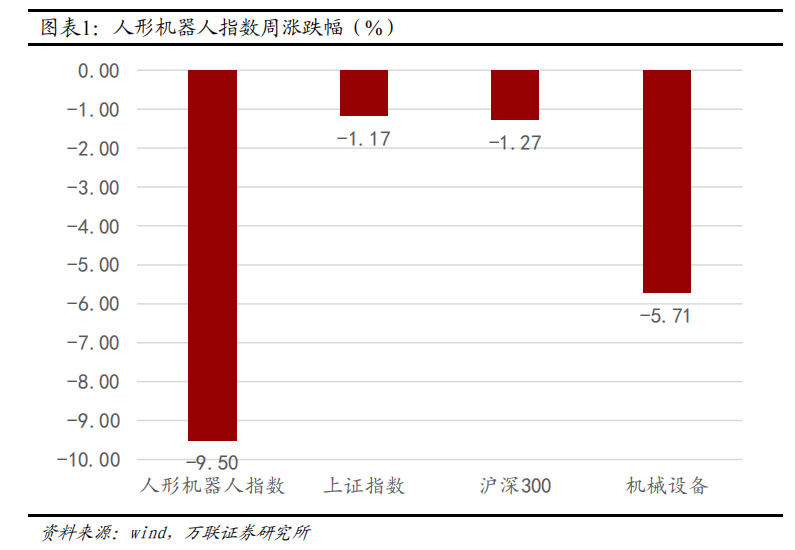
The valuation of the entire sector is not expensive. But Eston is an exception.
As of July 15, Eston's total market value was about HK$20.421 billion, static PE was 449 times higher, and TTM PE was about 143 times higher. This valuation has been in the top position among individual stocks over the past five years.
On the one hand, there is the historical bottom of the sector's overall valuation, and on the other hand, the absolute high level of individual stock valuation—the market seems to have priced all four “domestic replacement champion+humanoid robot+physical intelligence” cards ahead of schedule.
So, with the performance explosion in the first half of 2026, can Eston support high valuations with its high growth potential?
In fact, looking specifically, there are still structural flaws in Eston's half-year performance explosion. The core of the sharp increase in net profit comes from the fair value appreciation of equity brought about by the restructuring of Nanjing process assets. It is a one-time non-recurring income and is not sustainable. Although the loss was reversed after deducting non-net profit, the scale was only 60 million to 75 million yuan, and the profit volume of the main business was too small. Although the company achieved gross margin restoration through product structure optimization, supply chain cost reduction, and cost control. The cost ratio fell sharply year on year during 2025, and the quality of operations continued to improve, the profit base is still weak, making it difficult to match hundreds of times the valuation.
From a short-term perspective, performance forecasts that exceed expectations will lead to emotional speculation, and circuit imagination supports phased valuation premiums; however, in the long run, the capital market will only pay for continued and stable profits in the main business. If non-net profit deducted thereafter cannot continue to increase, and the humanoid robot business's share of revenue is sluggish for a long time, the current hundreds of times valuation lacks fundamental support, and a return in valuation is an inevitable trend. Only by continuously upgrading the product structure, large-scale profits in the humanoid business, and a steady increase in operating cash flow can Eston probably reap the double hit of “performance+valuation” Davis.