
- PRICING
- LIVE QUOTES
- LEARN
- HELP


EN
Japanese bonds ushered in a “stable market buying”? Societe Generale says GPIF can buy up to 76 billion US dollars, Deutsche Bank estimates an inflow of 90 billion dollars
The Zhitong Finance App learned that Japan's long-term treasury bonds are experiencing the fiercest sell-off in 30 years, and Japan's largest pension fund may become the “stabilizer” that the market has been waiting for a long time. According to the latest estimates by Société Générale, the Japanese Government Pension Investment Fund (GPIF) can purchase up to an additional 12.3 trillion yen (about 76 billion US dollars) of Japanese treasury bonds without changing the benchmark asset allocation framework. This potential buying comes at a historic moment when the yield on Japan's 10-year treasury bonds is approaching 3%, and the yield on 30-year treasury bonds has broken 4% for the first time.
Societe Generale estimates: from 26.9% to 31%, $76 billion in “space within the system”
Stephen Spratt, strategist at Société Générale, pointed out in the report that this estimate is based on a simple assumption: GPIF will gradually increase domestic bond holdings from 26.9% in March to the upper limit of 31% permitted by the current system.
According to GPIF's current allocation rules, the benchmark weight for domestic bonds, domestic stocks, foreign bonds, and foreign stocks is 25%; most asset classes can deviate from the benchmark by 6 percentage points, and the maximum deviation for foreign bonds is 5 percentage points. This means that the upper allocation limit for domestic bonds within the current framework is exactly 31%.
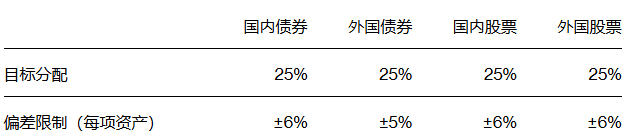
By the end of March 2026, GPIF's assets under management reached 293.6 trillion yen (about 1.81 trillion US dollars), and the actual domestic bond allocation ratio was 26.9%. Stephen Spratt, strategist at Société Générale, estimates in the latest report that if GPIF gradually increases domestic bond holdings to 31% of the current range limit without changing the benchmark asset allocation framework, the Japanese treasury bond market can obtain additional potential purchases of up to 12.3 trillion yen (about 76 billion US dollars).
Société Générale further pointed out that the private sector will need to absorb about 60 trillion yen of additional bond investment this fiscal year, and domestic demand sources are doubtful — some Japanese life insurance companies have recently announced a shift in debt purchase strategies from the long term. In this context, GPIF's potential purchases are particularly significant in supporting the bond market as marginal support.
Societe Generale believes that the impact on the bond and foreign exchange markets will ultimately depend on the scale and speed of portfolio adjustments. Theoretically, adjustments can begin at any time within the current limits. Even if the strategic asset allocation is not modified, there is considerable room for increasing holdings even if the strategic asset allocation is only operated within an existing framework.
Microscopic conduction: mechanical effects of configuration adjustments per 1 percentage point
Mitsubishi UFJ Securities strategists have further dismantled the microtransmission mechanism for GPIF allocation adjustments. They estimate that every 1 percentage point increase in GPIF's allocation ratio to domestic bonds will “mechanically” lead to purchases of 7 to 11 year Japanese treasury bonds of about 660 billion yen, and purchases of Japanese treasury bonds with a term of 11 years or more of about 800 billion yen. This means that the increase from the current 26.9% to 27.9% alone will release about 1.46 trillion yen in buying demand.
The strategist added, “This mechanical capital flow risk cannot be ignored.” In the current context where the Bank of Japan is gradually reducing the scale of debt purchases and the market is increasingly concerned about “who will undertake the government's expanding bond issuance”, any incremental demand from GPIF may have a significant impact on market expectations.
Deutsche Bank estimates: US$440 billion “cap” and triple capital return
Deutsche Bank's estimates are more aggressive. Strategist Tim Baker estimates that if GPIF and other public pension funds raise the allocation ratio of domestic bonds and stocks to the upper limit of the allowable range, the new demand could exceed $90 billion and $160 billion, respectively.
Baker further pointed out that if life insurance companies and potential purchases from Japanese retail investors are added, the total amount of domestic asset reallocation could reach US$440 billion, or about 10% of Japan's gross domestic product. However, he emphasized that this is “the upper limit for the next few years.”
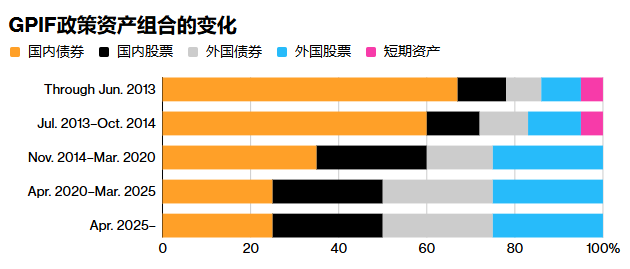
As the Bank of Japan gradually reduces the scale of bond purchases, investors are increasingly concerned about one question: Who will absorb the government's growing debt? The prospects for stronger domestic demand are therefore particularly important. Recently, Japan's long-term treasury bonds have continued to be under pressure due to market concerns about Prime Minister Takaichi Sanae's expansionary fiscal policy and the expectation that the Bank of Japan will only gradually normalize monetary policy.
Policy game: from “rumor” to “refutation” to “correction”
Expectations for GPIF configuration adjustments have fluctuated sharply over the past week.
Phase 1: Katayama's statement sparked a market boom (July 10). Japan's Finance Minister Katayama Satsuki said that the government will introduce supporting measures to push GPIF and other pension institutions to “significantly increase” investment in local Japanese financial assets. The market reacted quickly, and investors are betting that billions of dollars of capital may flow to the Japanese market through GPIF, driving up the price of yen and Japanese treasury bonds.
Stage 2: People familiar with the matter “refute rumors” (July 13). According to a Reuters report, two Japanese government sources said that the government currently has no plans to immediately adjust GPIF's target asset allocation, but is considering promoting more capital investment into domestic assets within the existing allowable range. The first source admits: “The market reaction far exceeded our expectations.”
Stage 3: Katayama reinforces its position again (July 14). Katayama further stated on Tuesday that GPIF's portfolio will be adjusted if necessary, and emphasized that “we will eventually move in the direction of a growth strategy aimed at increasing the value of Japan.” Minister of Health, Labor and Welfare Kenichiro Ueno also pointed out that GPIF, in principle, pursues long-term returns based on an established basic investment portfolio, and adjustments are made only when necessary.
A number of cabinet officials made statements on Tuesday to downplay market speculation that GPIF might sell overseas assets on a large scale, while retaining policy space to increase the allocation of Japanese treasury bonds in the future.
Macro background: 30-year high yield on Japanese bonds and 162 yen
The reason why GPIF allocation discussions have attracted such strong market attention is directly related to the current stressful environment in the Japanese bond market and foreign exchange market.
On the Japanese bond market, on July 14, the yield on 10-year Japanese treasury bonds rose 1.5 basis points to 2.800%, once hitting the highest level in nearly 30 years of 2.900% in the intraday period. On the one hand, the market is concerned about Prime Minister Takaichi Sanae's expansionary fiscal policy, and on the other hand, it also expects the Bank of Japan's monetary policy normalization process to be relatively slow. These two factors combined to suppress long-term debt performance.
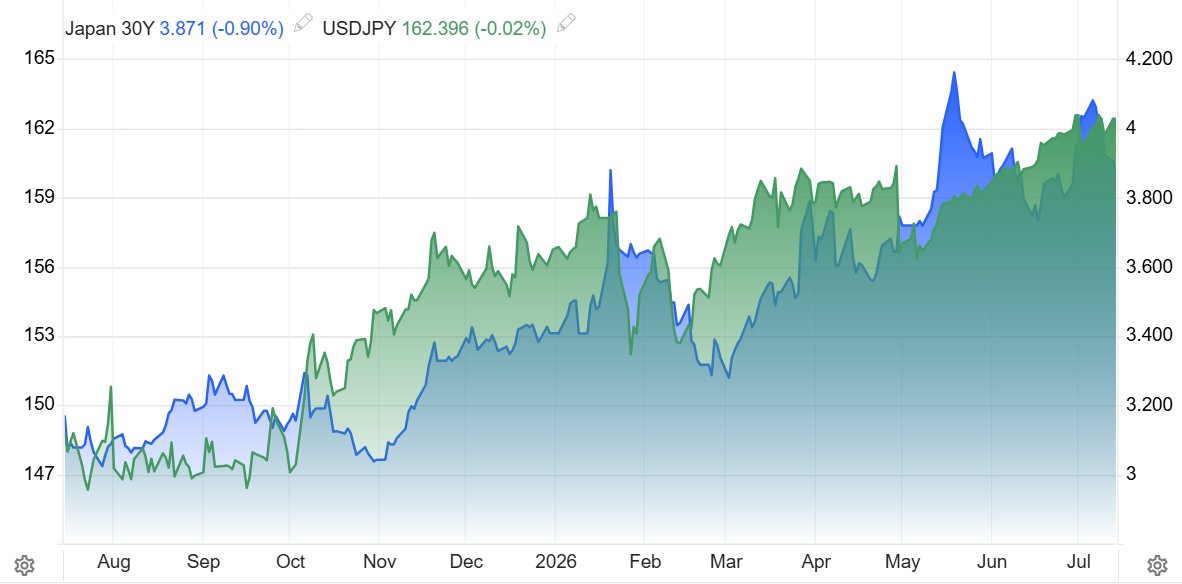
In terms of the yen exchange rate, the yen remained above 162 against the US dollar, close to its lowest level in 40 years. Despite the Japanese authorities' foreign exchange intervention of a record amount of 11.73 trillion yen (about 72.3 billion US dollars) when the yen first fell below 160 years earlier this year, the yen was still hovering around 162. Geopolitical risks, fiscal concerns, and huge interest spreads continue to put pressure on the yen.
In terms of Bank of Japan policy, the market generally expects the Bank of Japan to keep the policy interest rate unchanged at 1% at the July 31 meeting, but most analysts still expect another rate hike to 1.25% before the end of the year.
“Slow variables” under institutional constraints
Taken together, GPIF's potential domestic asset allocation is a “slow variable” subject to strict regulations:
In the short term, GPIF's strategic asset allocation framework is unlikely to fundamentally change until the next periodic review in 2030. Any allocation adjustments must be made within ± 6 percentage points of the current 25% benchmark, and must be based on maximizing return on investment rather than policy goals.
In the medium term, GPIF could release potential purchases of 76 billion to 90 billion US dollars, even if domestic bond allocations were only gradually increased within the existing allowable limits. But as Societe Generale warned, the fundamental problem with Japanese treasury bonds is an imbalance between supply and demand — “Stable bid supply and accelerated quantitative contraction have increased bond supply, while domestic investor demand has weakened, and global term premiums have risen.”
In the long run, Japan is experiencing a profound “major reset” of global interest rates — the implied long-term forward interest rate on Japanese treasury bonds is about 5%, and the US is about 6%. Under this structural trend, GPIF's potential buying may provide marginal support, but it is difficult to reverse the fundamental direction of rising interest rates.
As the BlackRock Research Institute points out in its latest report, “the increasingly crowded short positions in the yen deserve close attention.” At a time when GPIF's “trillion-dollar giant whale” allocation signal is still unclear, the real test of the Japanese bond market and foreign exchange market is probably just beginning.