
- PRICING
- LIVE QUOTES
- LEARN
- HELP


EN
Trump Made 327 Stock Trades in Apple, Nvidia, and Other Tech Giants Before His Tariff Pause
Key Points
Trump bought between $100,000 and $250,000 in five major tech stocks before rolling back some tariffs.
The White House maintains that Trump's accounts are managed by professionals who are not in regular communication with the president.
President Donald Trump is in the news for what may be an unexpected reason. A CNBC analysis of the president's most recent financial disclosures shows that Trump made 327 stock purchases on April 8, 2025.
If that date doesn't ring a bell, here's a refresher -- the very next day, Trump posted on his Truth Social account that it was a "GREAT TIME TO BUY!!!" and then announced a partial rollback in his "Liberation Day" tariffs that caused the market to jump 9.5% in a day.
Missed Nvidia in 2009? This Rare Signal Is Flashing Again. In 2009, a "Double Down" signal flashed for a little-known chipmaker called Nvidia. For the first time in years, that same "Total Conviction" signal is flashing for a company 1/100th the size of Nvidia. Continue »
There's a lot of discussion among experts about the ethics of Trump's trades, and the White House maintains that the president's investment accounts are managed by professionals who are not in regular communication with Trump. I'm not going to try to parse the legalities that are being debated on public airwaves and in Washington. However, I do think it's worthwhile to look at five megacap tech stocks that were central to Trump's April 2025 buying spree -- Apple (NASDAQ: AAPL), Amazon (NASDAQ: AMZN), Alphabet (NASDAQ: GOOG) (NASDAQ: GOOGL) Microsoft (NASDAQ: MSFT), and Nvidia (NASDAQ: NVDA) -- and see how they've performed since that date.
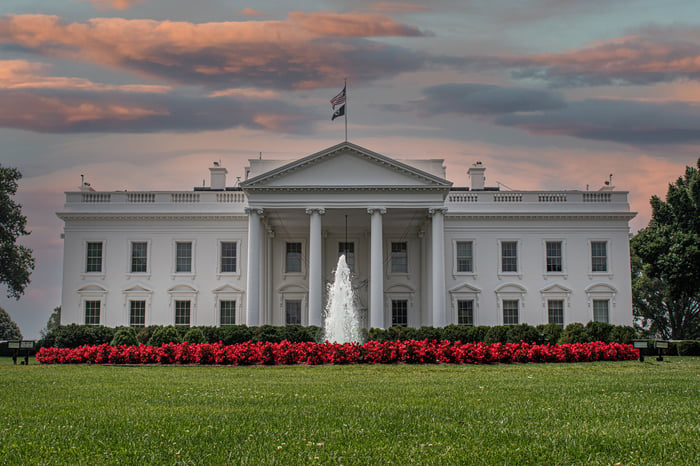
Image source: Getty Images.
What do these stocks have in common?
Apple, Amazon, Alphabet, Microsoft, and Nvidia are all part of the "Magnificent Seven" group of stocks that have been primary drivers in the market for the last several years. The five companies have been closely followed as the appetite for artificial intelligence and AI-powered platforms remakes the market.

Nvidia, which makes the most popular semiconductor chips used in AI training and inference, has had the most success in the last three years, gaining more than 360% over that period. Nvidia now has a market cap of more than $4.5 trillion, making it the biggest company in the world by market capitalization.
Amazon, Microsoft, and Alphabet are hyperscalers, meaning they operate large cloud computing operations that offer cloud, networking, and storage services. Cloud operators have become even more necessary in the age of AI because it's extremely expensive for companies to build their own AI-capable networking and storage systems in-house. Amazon has the largest share in the global market, at 28%, while Microsoft is No. 2 at 21%, and Alphabet's Google Cloud is third with 14% share.
Apple is more of an outlier -- it doesn't make chips, and it hasn't shown any interest in being a hyperscaler. Instead, it focuses on incorporating AI technology -- which it calls Apple Intelligence -- directly into its products. It recently announced a revamped version of its Siri personal assistant, Siri AI, which is being rolled out this year. Siri AI will be able to answer questions about content on users' screens, conduct searches, and get real-time information from websites.
How are these stocks performing?
While we don't know how much Trump bought in Apple, Amazon, Alphabet, Microsoft, and Nvidia stocks, we do know all the purchases were between $100,000 and $250,000. So let's split the difference for the sake of comparison and say he spent $175,000 on each stock on April 8, 2025, and held his positions through today.

Alphabet, which has seen a resurgence over the last year, is the biggest winner, turning a hypothetical $175,000 investment into $438,410. But all five investments come out in the black -- even Microsoft stock, which gained only 8% in the last 15 months.
In all, Trump's hypothetical $875,000 investment would have turned into $1.58 million, a gain of 76% on those five trades.
Patrick Sanders has positions in Nvidia. The Motley Fool has positions in and recommends Alphabet, Amazon, Apple, Microsoft, and Nvidia. The Motley Fool has a disclosure policy.