
- PRICING
- LIVE QUOTES
- LEARN
- HELP


EN
Corning Stock And 2 AI Infrastructure Picks for Lower Rate Growth
With U.S. stocks softer to start Q3, interest rate questions back in focus after comments from the Federal Reserve, and fresh labor and oil data swirling around, rate sensitive growth stocks are again in the spotlight. These are companies whose valuations can shift quickly as expectations for inflation, jobs, and yields move. This article looks at how that mix of weaker semiconductor trading, cautious central bank messaging, and softer jobs data may matter for growth focused portfolios, and reveals 3 stocks from the Rate-Sensitive Growth Stocks screener that appear positively exposed to the latest news.
Corning (GLW)
Overview: Corning is a materials technology company that supplies glass, ceramics, optical fiber and related components used in telecom networks, TVs and monitors, smartphones and tablets, autos, life sciences labs, and pharmaceutical packaging across major global markets.
Operations: Corning generates about US$6.8b in Optical Communications revenue and US$1.8b in Automotive, alongside a large segment adjustment of US$8.5b and a US$753m negative currency impact.
Market Cap: US$169.4b
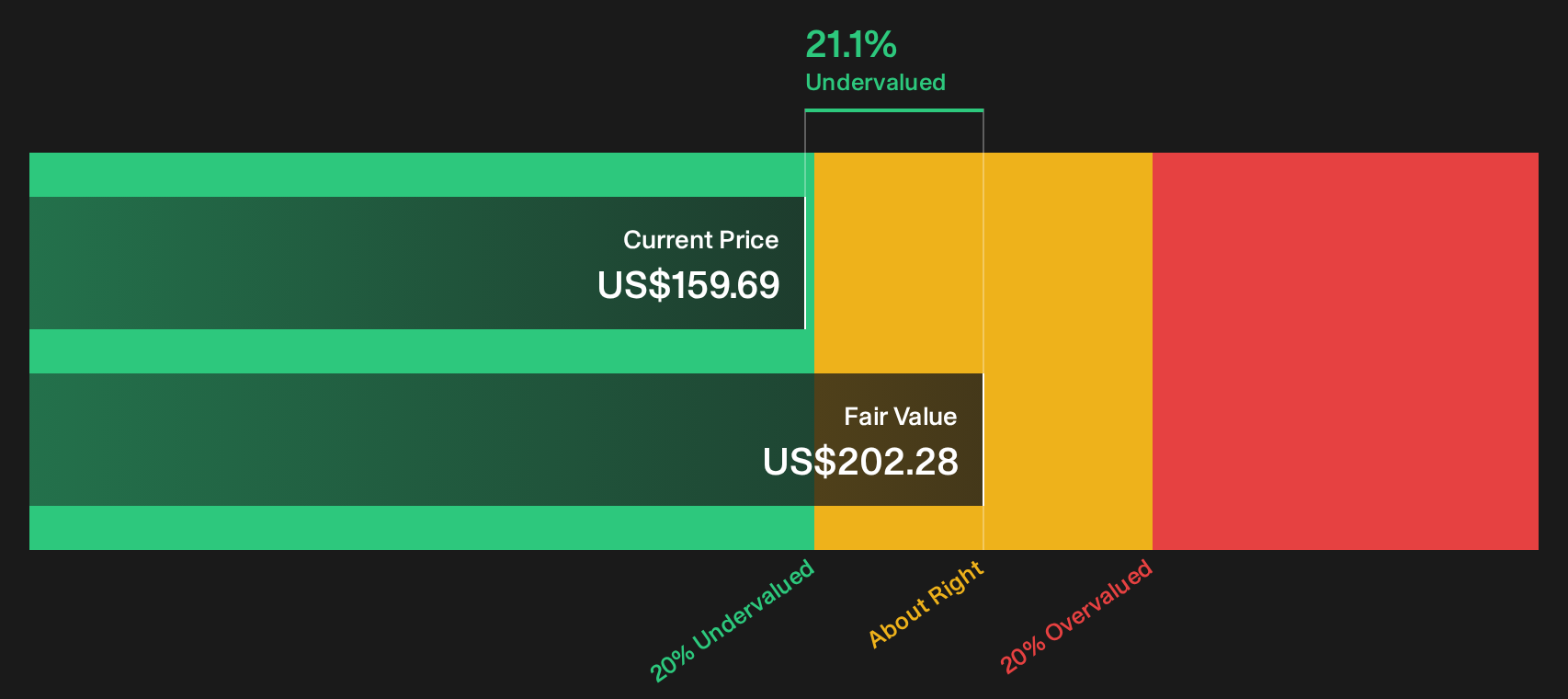
Corning sits at the crossroads of AI data centers, fiber networks, and advanced glass. This helps explain why investors are watching it closely as rates, semiconductors, and growth expectations shift. Recent multiyear fiber deals with big cloud providers, strong earnings momentum, and double digit revenue and earnings growth forecasts position Corning as a potential beneficiary if lower rates continue to support high growth, rate sensitive stocks. At the same time, a very high P/E ratio, heavy use of debt, and recent insider selling raise questions about how much optimism is already reflected in the price. For investors, the core trade-off is between Corning’s AI fiber and solar opportunity on one side and the valuation and balance sheet risks on the other.
Corning’s AI fiber and solar story is gaining attention, but the bigger question is whether the price already bakes in the upside or still leaves room for surprise. The DCF valuation analysis for Corning starts to reveal the answer.
Q2 Holdings (QTWO)
Overview: Q2 Holdings provides digital banking software that helps U.S. banks, credit unions, and fintechs run their online and mobile channels, manage lending and deposits, and tackle fraud and compliance, all on a cloud-based platform.
Operations: Q2 Holdings generates about US$821.6m from the sale, implementation, and support of its solutions, with all reported revenue coming from the United States.
Market Cap: US$3.3b
Q2 Holdings stands out in this rate sensitive group because it sits where digital banking demand, AI tools, and potential shifts in borrowing costs meet, with its Q2 Innovation Studio and Helix platforms giving smaller institutions access to technology they might struggle to build alone. The company has only recently turned profitable, carries a relatively high P/E, and relies on external funding rather than deposits. Investors therefore need to weigh valuation and balance sheet risk against subscription growth, long contracts, and record bookings. With fresh AI features, index inclusion, and active buybacks in the mix, the key consideration is how much of Q2’s digital banking and AI potential is already reflected in the price and how much opportunity may remain.
Q2 Holdings’ accelerating bookings, fresh AI tools, and recent turn to profitability paint a bigger picture than the share price alone suggests, and the analyst forecasts for Q2 Holdings could show whether that momentum is quietly masking one crucial pressure point

Amphenol (APH)
Overview: Amphenol designs and manufactures electrical, electronic, and fiber optic connectors, cables, sensors, and antenna systems that sit inside everything from AI data centers and 5G networks to cars, planes, industrial equipment, and defense systems.
Operations: Amphenol generates about US$14.3b from Communications Solutions, US$6.4b from Harsh Environment Solutions, and US$5.5b from Interconnect and Sensor Systems, with a small intersegment adjustment of US$311.1m.
Market Cap: US$202.5b
Amphenol is attracting fresh interest because it supplies the high speed interconnects and sensors that AI data centers and advanced vehicles cannot run without, while also selling into industrial, defense, and aerospace customers that can help smooth out tech cycles. Earnings growth has recently been strong and margins are healthy, but the stock trades on an elevated P/E and depends heavily on capital spending in fast moving tech end markets and ongoing acquisitions to keep the story going. For growth focused investors, the question is whether Amphenol’s AI and connectivity exposure justifies paying up for this mix of resilience, leverage to rate sensitive sectors, and higher funding and valuation risk.
Amphenol’s AI and connectivity exposure is accelerating, but the real story may be how its mix of customers and acquisitions shapes future growth and risk. The analyst forecasts for Amphenol highlights one factor the market might be underestimating

The three stocks covered here are only a sample of what is possible. The full Rate-Sensitive Growth Stocks screener surfaces 40 more companies with equally compelling rate sensitive growth stories and risk profiles. Use Simply Wall St to identify and analyze the specific catalysts, interest rate exposure, and business narratives that matter to you so you can focus on the highest conviction ideas for your portfolio.
Take Control of Your Investment Journey
If Amphenol or any of these companies sound like a great opportunity, register for FREE with Simply Wall St and add your companies to a Watchlist to monitor the share price against the fair value the ideal entry point. Once you've made your move, manage your holdings with our Portfolio Command Center that filters out the noise to deliver only the most critical, actionable updates. Throughout your journey, our Community allows you to filter the best ideas from thousands of investor perspectives. By uncovering hidden catalysts and risks early, you'll accelerate your decision-making and stay one step ahead of the market.
Seeking Fresh Alternatives For Tomorrow’s Winners?
Fresh stock ideas do not stay under the radar for long, and early momentum often flies once the crowd catches on. Consider acting before information decays and others respond.
- Spot companies building steady compounding potential through strong finances by running the list of solid balance sheet and fundamentals (47 results) while market attention is still elsewhere and pricing has not fully caught up.
- Explore the AI infrastructure build out by scanning 52 AI infrastructure stocks for businesses supplying the picks and shovels behind data centers and processing power before interest changes.
- Look into the automation wave by using the curated 29 robotics and automation stocks to surface companies that may be involved with robots, sensors, and factory upgrades while they are still under the radar for now.
This article by Simply Wall St is general in nature. We provide commentary based on historical data and analyst forecasts only using an unbiased methodology and our articles are not intended to be financial advice. It does not constitute a recommendation to buy or sell any stock, and does not take account of your objectives, or your financial situation. We aim to bring you long-term focused analysis driven by fundamental data. Note that our analysis may not factor in the latest price-sensitive company announcements or qualitative material. Simply Wall St has no position in any stocks mentioned.
Have feedback on this article? Concerned about the content? Get in touch with us directly. Alternatively, email editorial-team@simplywallst.com