
- PRICING
- LIVE QUOTES
- LEARN
- HELP


EN
Lattice Semiconductor (LSCC) Is Up 6.3% After New $1.15B Credit Lines And Index Removal
- In late June 2026, Lattice Semiconductor entered into a Second Amended and Restated Credit Agreement, securing a US$200 million revolving facility and a US$950 million delayed draw term loan, primarily to help finance its planned AMI acquisition and general corporate needs.
- Around the same time, the company was removed from multiple Russell value benchmarks, highlighting a shift in how index providers classify Lattice’s style exposure within the broader market.
- We’ll now examine how Lattice’s fresh US$1.15 billion in committed credit capacity and simultaneous Russell value index removals affect its investment narrative.
Rare earth metals are the new gold rush. Find out which 30 stocks are leading the charge.
Lattice Semiconductor Investment Narrative Recap
To own Lattice Semiconductor, you have to believe its low power FPGA focus and edge AI design wins can translate into durable revenue and margin improvement. The new US$1.15 billion credit capacity supports the planned AMI acquisition but, by itself, does not materially change the near term catalyst around demand recovery across industrial and automotive, nor the key risk of intensifying FPGA competition and potential margin pressure.
The fresh credit agreement is the clearest link to today’s story, because it frames how Lattice may fund AMI while managing balance sheet flexibility. That sits alongside existing catalysts like product mix shift toward Avant and Nexus parts and partnerships with players such as NVIDIA, Texas Instruments, and ASPEED, which many investors already watch closely as potential drivers of higher value, AI oriented design wins.
Yet this new debt capacity also amplifies something investors should be aware of if competitive or end market conditions turn against Lattice...
Read the full narrative on Lattice Semiconductor (it's free!)
Lattice Semiconductor's narrative projects $1.2 billion revenue and $329.9 million earnings by 2029.
Uncover how Lattice Semiconductor's forecasts yield a $146.92 fair value, a 4% downside to its current price.
Exploring Other Perspectives
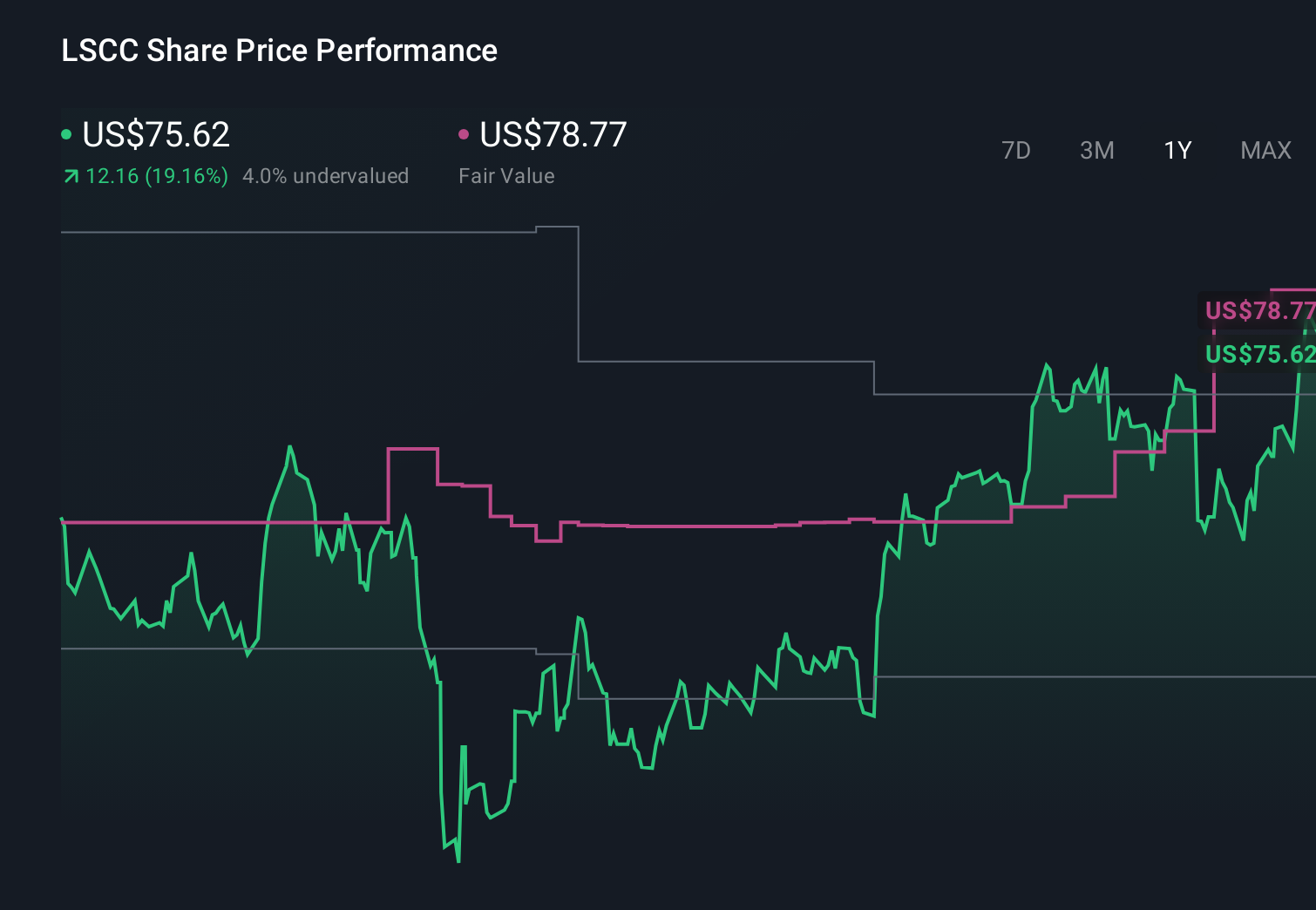
While consensus focuses on Lattice’s cautious balance between growth and risk, the most optimistic analysts assume revenue could reach about US$1.5 billion and earnings about US$408 million, so you should recognize how far expectations can stretch and consider how fresh debt and AMI integration might alter both stories.
Explore 4 other fair value estimates on Lattice Semiconductor - why the stock might be worth less than half the current price!
The Verdict Is Yours
Disagree with existing narratives? Extraordinary investment returns rarely come from following the herd, so go with your instincts.
- A great starting point for your Lattice Semiconductor research is our analysis highlighting 1 key reward and 2 important warning signs that could impact your investment decision.
- Our free Lattice Semiconductor research report provides a comprehensive fundamental analysis summarized in a single visual - the Snowflake - making it easy to evaluate Lattice Semiconductor's overall financial health at a glance.
Curious About Other Options?
Markets shift fast. These stocks won't stay hidden for long. Get the list while it matters:
- We've uncovered the 10 dividend fortresses yielding 5%+ that don't just survive market storms, but thrive in them.
- AI is about to change healthcare. These 40 stocks are working on everything from early diagnostics to drug discovery. The best part - they are all under $10b in market cap - there's still time to get in early.
- The best AI stocks today may lie beyond giants like Nvidia and Microsoft. Find the next big opportunity with these 15 smaller AI-focused companies with strong growth potential through early-stage innovation in machine learning, automation, and data intelligence that could fund your retirement.
This article by Simply Wall St is general in nature. We provide commentary based on historical data and analyst forecasts only using an unbiased methodology and our articles are not intended to be financial advice. It does not constitute a recommendation to buy or sell any stock, and does not take account of your objectives, or your financial situation. We aim to bring you long-term focused analysis driven by fundamental data. Note that our analysis may not factor in the latest price-sensitive company announcements or qualitative material. Simply Wall St has no position in any stocks mentioned.
Have feedback on this article? Concerned about the content? Get in touch with us directly. Alternatively, email editorial-team@simplywallst.com