
- LIVE QUOTES
- LEARN
- HELP
 Nasdaq
 Wall Street Journal
EN
Chevron Is Negotiating for a Stake in a Massive Oilfield in Iraq. 2 Key Takeaways for Investors.
Key Points
Chevron has entered exclusive talks to operate the West Qurna 2 oilfield in Iraq.
It has one year to reach an agreement on a new operating contract.
A potential deal comes with increased risks.
Chevron (NYSE: CVX) has entered exclusive talks with the government of Iraq to take control of the massive West Qurna 2 oilfield. The Middle Eastern country nationalized the oilfield last month after the U.S. imposed sanctions on Lukoil to put more pressure on Russia to end its war with Ukraine. The talks could lead to Chevron getting a new contract to operate the oilfield.
Here are two key takeaways for oil stock investors.
Will AI create the world's first trillionaire? Our team just released a report on the one little-known company, called an "Indispensable Monopoly" providing the critical technology Nvidia and Intel both need. Continue »
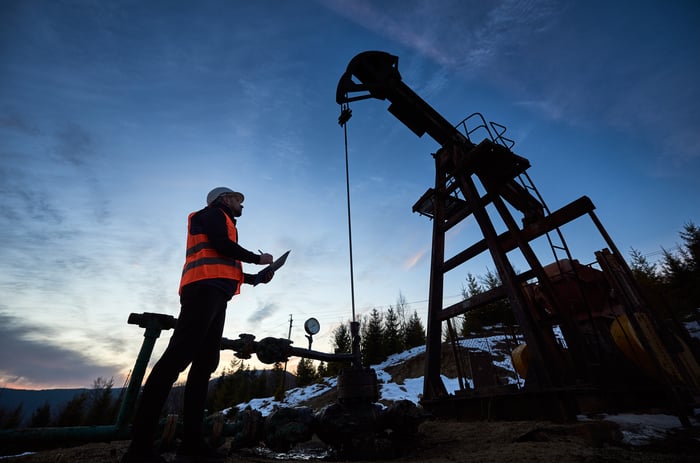
Image source: Getty Images.
Not a done deal
Chevron has been granted exclusive negotiating rights for the West Qurna 2 oil field for one year. West Qurna 2 currently produces 480,000 barrels per day. It's part of the massive West Qurna field, which is one of the largest in the world, accounting for 10% of Iraq's production and 0.5% of global supplies. As part of the deal, Lukoil is temporarily transferring its contract to operate the field to Basra Oil Company (BOC). That company will subsequently assign the contract to Chevron after the U.S. oil and gas giant agrees to a new contract with Iraq.
While Chevron would like to operate West Qurna 2, it wants to secure more competitive economic returns to do so. Any new terms would require the approval of Iraq's cabinet. As such, a new deal must balance the needs of Chevron investors and the Iraqi people. Chevron would also need other approvals for any new deal, including from the U.S. Office of Foreign Assets Control.
A deal isn't without risk
Adding West Qurna 2 would further Chevron's recent expansion into Iraq. Last August, Chevron signed an agreement for the Nassiriya project, which consists of four exploration blocks and the development of other producing oil fields. This project could produce up to 600,000 barrels per day within seven years of starting development.
While Chevron's expansion into Iraq could add significant future production, it's not without risk. Many U.S. energy companies have avoided investing in Iraq due to security issues and geopolitical risk. In addition to the dangers of operating in Iraq, there are potential issues getting oil out of the country due to the current turmoil between the U.S. and Iran. If tensions boil over into an armed conflict, Iran could seek to disrupt the flow of oil out of the Persian Gulf.
However, Chevron has considerable experience operating in riskier regions. It has operated in Venezuela for over a century, navigating that country's political and economic turmoil. The company also operates a large gas field offshore Israel, which it has had to shut down in the past due to regional violence.
An interesting development to watch
Chevron has entered exclusive negotiations to take over Iraq's West Qurna 2 oilfield. It has a year to work out a new contract. A deal would enable Chevron to further expand its presence in Iraq, which could be a major future growth driver for the company. However, it would also increase the company's risk profile, though it has extensive experience operating in high-risk regions. Given the size of this field, investors should keep an eye on these negotiations.
Matt DiLallo has positions in Chevron. The Motley Fool has positions in and recommends Chevron. The Motley Fool has a disclosure policy.