
- LIVE QUOTES
- LEARN
- HELP
 Nasdaq
 Wall Street Journal
EN
AbbVie Seeks Rinvoq Vitiligo Approval And Extends Immunology Growth Story
- AbbVie has submitted regulatory applications to the FDA and EMA for Rinvoq as a potential systemic treatment for non segmental vitiligo.
- The filings target a condition where there are currently no approved systemic therapies, highlighting a major unmet medical need.
- The move could broaden the use of one of AbbVie's key immunology assets beyond its existing indications.
For investors following AbbVie, NYSE:ABBV, this update comes with the stock recently closing at $223.43. The company has logged a 21.2% return over the past year, 63.8% over three years, and 159.0% over five years, which frames how the market has treated its longer term story around immunology and other franchises.
The Rinvoq vitiligo submissions add another potential use case to an already important asset, which could help diversify AbbVie's revenue mix if approvals eventually follow. With competition and pricing pressure present in other areas, many investors will be watching how this indication progresses through regulators and future clinical and commercial steps.
Stay updated on the most important news stories for AbbVie by adding it to your watchlist or portfolio. Alternatively, explore our Community to discover new perspectives on AbbVie.
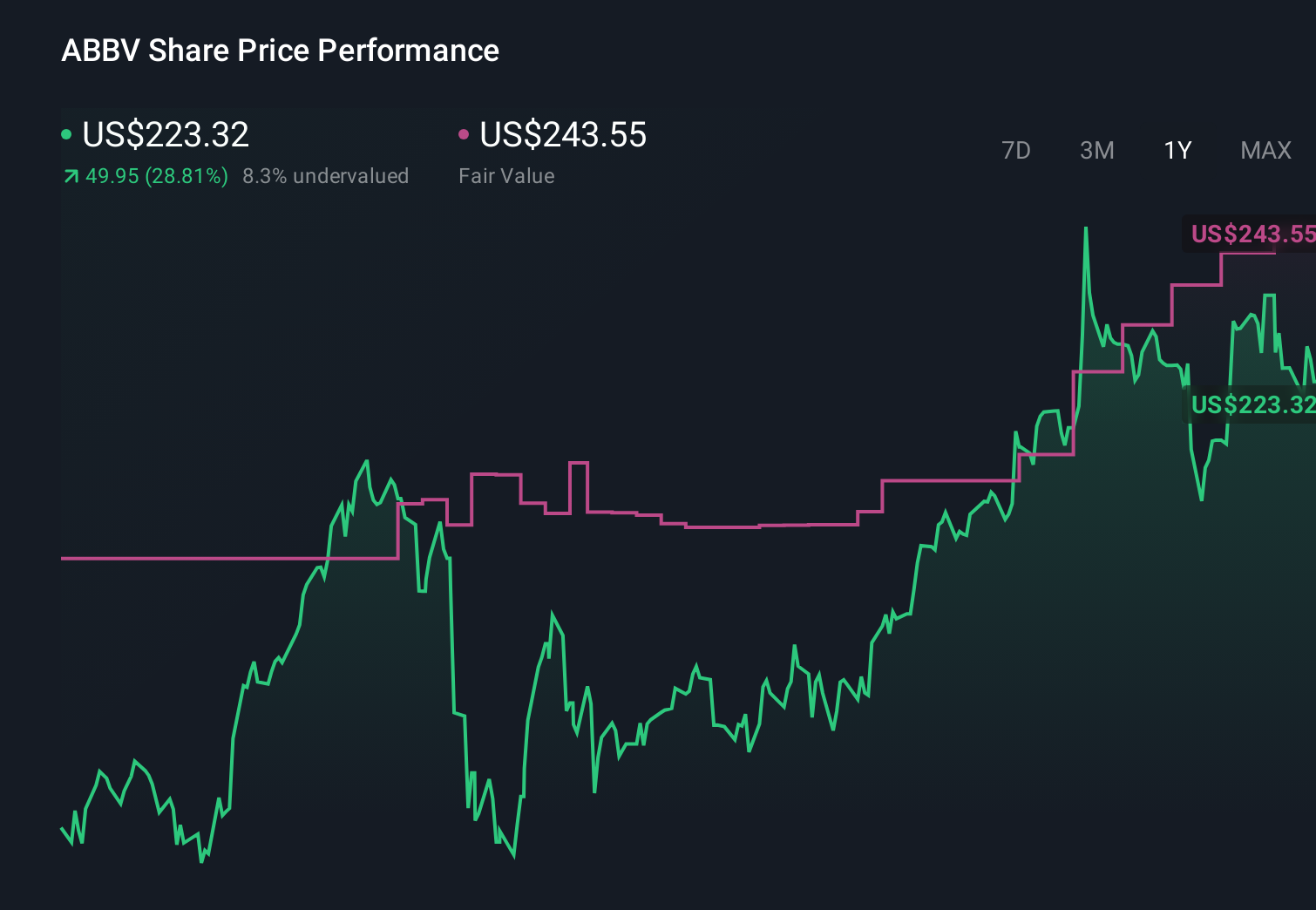
Why AbbVie could be great value
For you as an investor, AbbVie’s push to add Rinvoq in non segmental vitiligo looks like an attempt to deepen its immunology reach at a time when that segment is already a key earnings driver. Against the backdrop of record 2025 net sales of US$61.16b and recent quarters where immunology helped offset pressure in oncology and aesthetics, another high-need indication could support longer-term demand for one of AbbVie’s core products if regulators eventually approve it.
How this fits the AbbVie narrative you have been following
This filing lines up with the longer-term narrative that future returns are closely tied to clarity around the immunology pipeline and execution on new uses for drugs like Rinvoq and Skyrizi. With management already leaning on expanded indications and business development to replace Humira and support earnings guidance, progress in vitiligo sits squarely in the story analysts are watching around concentration risk, R&D productivity and how AbbVie compares with large peers such as Johnson & Johnson and Bristol Myers Squibb.
Risks and rewards investors are weighing
- Rinvoq in vitiligo, if approved, could broaden the product’s role across autoimmune conditions and support revenue diversity within immunology.
- The move supports AbbVie’s effort to build on recent earnings beats and guidance that leans on immunology growth rather than older products like Humira.
- Analysts have flagged over-reliance on a handful of drugs, so any setback in this new indication or competing launches from rivals could weigh on sentiment.
- Higher R&D and acquisition spending around the pipeline, including additional Rinvoq studies, may pressure margins if new uses do not meet expectations.
What to watch next
From here, you may want to track regulatory milestones for the vitiligo filing, Rinvoq prescription trends versus expectations, and how management talks about immunology concentration on future calls, especially as competitors like Eli Lilly and Novartis push their own autoimmune portfolios. If you want to see how other investors are thinking about these moving parts, have a look at the community narratives for AbbVie and how they connect this news to the longer-term story.
This article by Simply Wall St is general in nature. We provide commentary based on historical data and analyst forecasts only using an unbiased methodology and our articles are not intended to be financial advice. It does not constitute a recommendation to buy or sell any stock, and does not take account of your objectives, or your financial situation. We aim to bring you long-term focused analysis driven by fundamental data. Note that our analysis may not factor in the latest price-sensitive company announcements or qualitative material. Simply Wall St has no position in any stocks mentioned.
Have feedback on this article? Concerned about the content? Get in touch with us directly. Alternatively, email editorial-team@simplywallst.com