
- LIVE QUOTES
- LEARN
- HELP
 Nasdaq
 Wall Street Journal
EN
Go Global's strategy breaks through again, Yuanda Pharmaceuticals (00512) self-developed and innovated FAP target nuclear drug was approved for clinical use in the US to leverage more than 100 billion dollars in market space
The Zhitong Finance App learned that recently, China's pharmaceutical innovation field ushered in a landmark development — GPN01530, a globally innovative radionuclide conjugate drug (RDC) independently developed by Yuanda Pharmaceutical (00512), was officially approved by the FDA to conduct phase I/II clinical studies to diagnose solid tumors in the US.
This move not only means that Yuanda Pharmaceuticals' layout on the star target of fibroblast activating protein (FAP) has received international recognition, but also reflects the company's comprehensive strength in international clinical development and registration. It will also become an important milestone in the company's subsequent promotion of the global layout of other innovative drugs. If GPN01530 is successfully developed in the future, this product is expected to become an important breakthrough in solving the difficult problem of solid tumor diagnosis and treatment, reshaping the solid tumor diagnosis and treatment pattern with significant product advantages, seizing the world's leading market position, and bringing new hope to patients around the world.
Laying out billion-dollar targets, BIC benefits more than 10 million patients worldwide
Yuanda Pharmaceutical's GPN01530 is not another innovative nuclear drug in the ordinary sense of the word. Its specificity stems from the pan-solid tumor application prospects behind the product target, the technical bottlenecks it has broken through, and the “integrated diagnosis and treatment” vision. This also makes this product a core gripper for the company's differentiated competition in the nuclear drug field, and is also expected to become a benchmark example for China's innovative nuclear drugs going overseas.
According to the announcement, GPN01530 optimizes the structure of FAP ligands, increases their uptake in tumor tissue, and reduces their uptake in normal tissues. Preclinical study results showed that compared with other FAP ligands, GPN01530 showed rapid tumor targeting, higher tumor uptake, and better pharmacokinetic properties. Furthermore, it has been shown in IIT human studies that have been carried out that GPN01530 is safe, has rapid background clearance and strong and long-lasting lesion uptake. Compared with 18F-FDG, it shows better clinical image contrast and accurate detection rate of positive lesions, significantly improving the diagnostic efficacy compared to other FAP target RDC drugs.
This superior performance compared to similar products and alternative products represents that GPN01530 has excellent best-in-class potential. It can not only replace 18F-FDG in the market, but is also expected to refresh the current market's evaluation standards for FAP targeted drugs.
According to reports, fibroblast-activating protein (FAP) is an important marker of tumor-related fibroblasts (CAFs). It participates in processes such as extracellular matrix remodeling, tumor cell proliferation regulation, and tumor immunosuppression to promote tumor growth and invasion, and is a novel specific target for cancer diagnosis and treatment. Studies have shown that FAP is not expressed or underexpressed in normal tissues, but is highly expressed in 90% of epithelial tumor tissues and CAFs in various tumor microenvironments. This makes FAP a promising pan-cancer target in the field of nuclear drug diagnosis and treatment, and can be widely used for various cancer types such as lung cancer, stomach cancer, and colorectal cancer.
In addition to pan-solid tumor applications, high sensitivity also adds more certainty to the commercial potential of FAP targets. Compared with the PET/CT imaging agent fluorine [18F] -fluoride deoxyglucose (18F-FDG), currently commonly used clinically, FAP target imaging agents have higher sensitivity. Some studies have shown that FAPI PET/CT shows better performance than 18F-FDG PET/CT in detecting gastrointestinal tumors. Its sensitivity is basically stable at about 90%, far higher than the sensitivity of 18F-FDG 40% to 68%, and the results are not affected by blood sugar levels, and there is no need for patients to fast and wait a long time, which will also greatly improve patient compliance.
Based on the broad applicability and high sensitivity of the FAP target, the target has been regarded by the international academic community as the “billion-dollar” cutting-edge target with the most potential in the nuclear medicine field after PSMA and SSR, and has been heavily positioned by international nuclear drug leaders such as Novartis.
According to the World Health Organization, the number of cancer cases worldwide will increase from 19.3 million in 2020 to 24.6 million in 2030. The size of the pharmaceutical market has also continued to expand. Frost & Sullivan predicts that in the US alone, the pharmaceutical market is expected to be close to 141.5 billion US dollars in 2025, and will exceed 200 billion US dollars in 2030. The global market size is expected to exceed 480 billion US dollars during the same period.
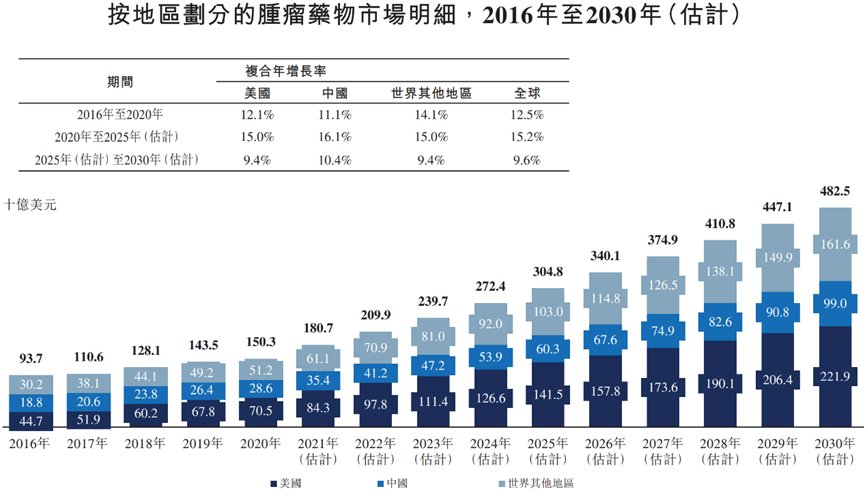
If GPN01530 is successfully marketed and widely used clinically in the future, it is expected to benefit more than 10 million patients worldwide, which is of immeasurably positive significance in improving the global level of solid tumor diagnosis and treatment. More importantly, as the core diagnostic product of Yuanda Pharmaceutical's FAP platform, GPN01530 is also expected to link with therapeutic nuclide drugs to truly unleash the huge clinical value of “integration of diagnosis and treatment” and provide cancer patients with new solutions from accurate detection to precise attack.
The entire industry chain layout consolidates global nuclear drug competitiveness, and independent clinical trials provide new samples overseas
GPN01530 was successfully approved for clinical use in the US, reflecting Yuanda Pharmaceutical's strategic choice and capacity accumulation as a leading Chinese nuclear drug company, as well as the new trend of China's nuclear drug industry rising in the global value chain.
In fact, at present, Yuanda Pharmaceutical has achieved the global layout of the nuclear drug industry chain, which runs through various links such as R&D, production, distribution, and sales. The company has established R&D bases with Boston and Chengdu as the core, production bases in Boston, Frankfurt, Singapore and Chengdu, and has built a sales network covering more than 50 countries and regions around the world.
From the product side, Yuanda Pharmaceutical is already one of the innovative pharmaceutical companies with the richest product pipeline and integrated diagnosis and treatment layout in the field of nuclear drugs against cancer. It is also the company with the largest total reserves of innovative diagnostic and therapeutic RDC drugs in phase III clinical research in China. The company currently has 16 innovative products in the R&D registration stage, covering 5 types of medical radionuclides and covering 7 major cancer types. Of these, 5 innovative RDCs have been approved to carry out registered clinical studies, and 4 have entered the critical phase III clinical stage. In addition, the company reserves more than 10 products in the early R&D stage, mainly RDC drugs. In terms of product types, it covers the diagnosis and treatment of two types of nuclide drugs, providing patients with a world-leading anti-tumor solution with multiple treatment options, multiple methods, and integrated diagnosis and treatment.
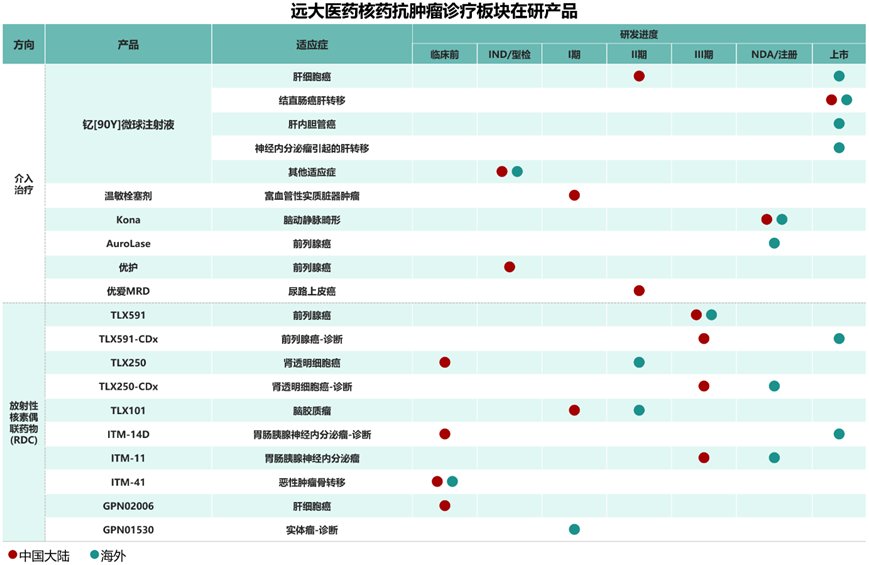
In recent years, Yuanda Pharmaceutical's nuclear drug products have flourished around the world, and overseas clinical developments have been repeatedly updated. As a mature nuclear drug that has been successfully marketed, yttrium [90Y] microsphere injection has been approved for new indications in the US and Europe this year to achieve strategic expansion of market space; ITM-11 US NDA for treating gastrointestinal and pancreatic neuroendocrine tumors (GEP-NETs) has also been accepted by the FDA; in addition, GPN02006, the company's liver cancer diagnostic drug GPN02006 received an oral report at the 2025 SNMMI annual meeting. It is expected to become the world's first GPC-3 target hepatocellular carcinoma diagnostic RDC.
In the industrial chain, Yuanda Pharmaceutical's layout is also becoming more and more perfect. This year, the company's Yuanda Pharmaceutical radiopharmaceuticals global R&D and production base in Wenjiang, Chengdu was officially put into operation at the end of June. It is currently one of the smart factories with the most complete range of nuclides and the highest degree of automation in the world. It has 14 high-standard GMP production lines, which can fully meet the Group's multi-variety and large-scale preparation needs for therapeutic and diagnostic nuclear drugs. Based on this, the company built the world's first closed-loop platform for the entire nuclear drug industry chain, and built a closed-loop system covering the entire “R&D, production and sales” industry chain. It not only opened up the key links in the global layout of nuclear drugs, but also realized complete autonomy and control of the entire R&D, production and sales industry chain of innovative nuclear drug products, and achieved a strategic leap from laboratory R&D to industrial mass production.
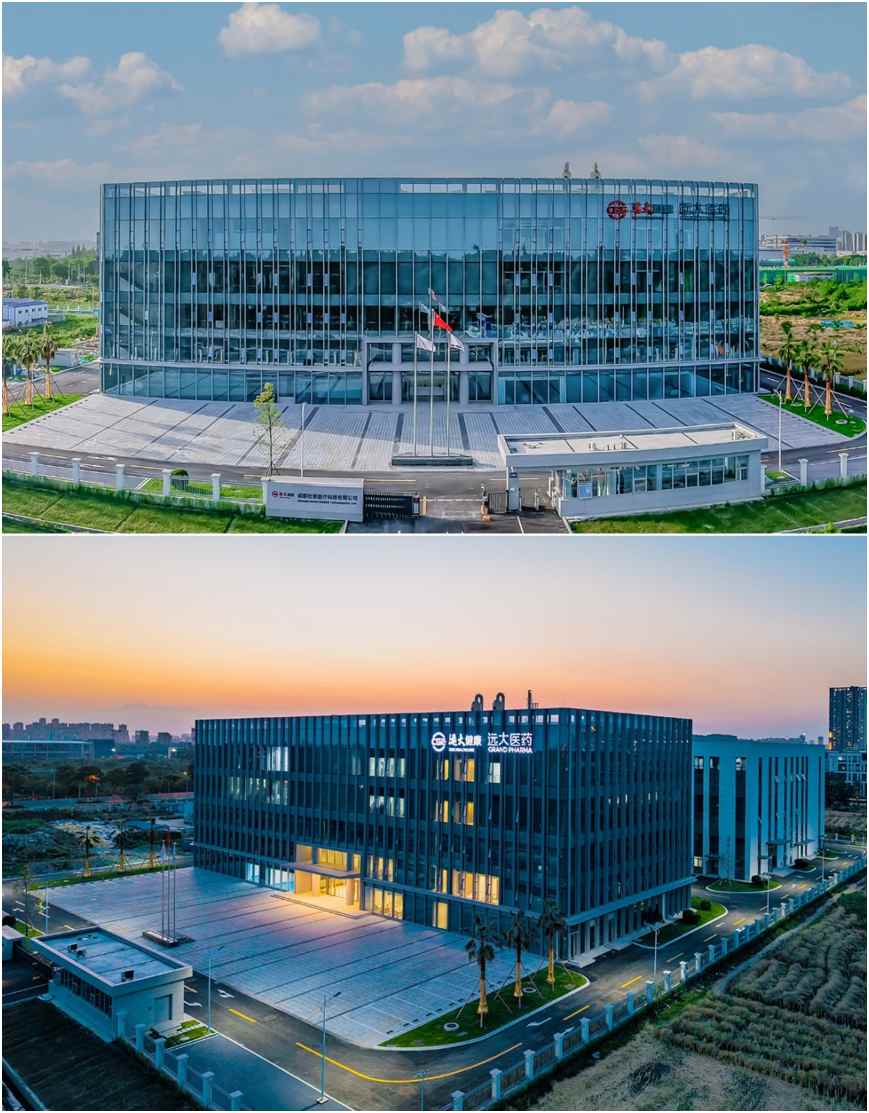
It is particularly worth mentioning that based on the base's radiographic labeling platform and animal molecular imaging platform, Yuanda Pharmaceutical completely independently carried out early research on the GPN01530 project, completed labeling process development and animal imaging research work in one stop, and relied on the GMP production line to achieve production, inspection and release of registered batches. This is also the first self-developed product to enter the FDA clinical phase since the Chengdu Nuclear Drug Base was put into operation in June this year, demonstrating the excellent pre-clinical development and international registration capabilities of this technology platform.
In addition, using GPN01530 as an example, Yuanda Pharmaceutical has also provided a new model for Chinese innovative drugs to go overseas, that is, to participate deeply in overseas clinical trials of innovative drugs and promote the simultaneous advancement of clinical research at home and abroad. This overseas model, which is different from simple product exports or licensing of rights, is a type of deeper and more collaborative overseas travel. It can not only enhance the company's overseas clinical registration and industrial layout capabilities through the control of overseas clinical trials, but can also graft clinical trial experience from more mature markets to the domestic market to further promote the product listing process at home and abroad.
The company said that in the future, it will continue to promote the global R&D and registration of GPN01530 by relying on the international registration path of the “China and US Double Newspaper”, and use this as a basis to further deepen the sector's global development strategy and actively promote international clinical research and registration of more self-developed innovative nuclear drug products. Relying on this product, Yuanda Pharmaceutical is also expected to benefit more cancer patients from China's innovative nuclear drugs, continue to implement the “Go Global” development strategy, lead the rise of China's nuclear drug industry in the global value chain, and contribute China's solutions and strength to global anti-tumor treatment.