
- LIVE QUOTES
- LEARN
- HELP
 Nasdaq
 Wall Street Journal
EN
League of Nations People's Livelihood: What could cause the dollar to unexpectedly appreciate next year in 2026? Focus on the possibility of a phased reversal in the economic pace in the third and fourth quarters
The Zhitong Finance App learned that the US dollar is still expected to be in a weak cycle next year, but it may not be as bad as expected: what we need to be wary of at the beginning of the year is that the new Federal Reserve Chairman nominated by Trump is “cautious in wording” in terms of easing, while in the second half of next year, we should be wary of the phased changes in the economic performance of the US and non-US economies. Meanwhile, during this period, we need to pay attention to the independence of the Bank of Japan and the phased fiscal concerns of highly indebted European countries such as France.
The main views of the League of Nations on people's livelihood are as follows:
In recent years, it's easy to make mistakes when looking at the dollar trend next year at the end of the year. Taking the end of last year as an example, after Trump unexpectedly swept away and returned to the White House, market sentiment was high. Under the guidance of economic overheating and rising inflation expectations, most people thought that the US dollar would continue to be strong. As a result, the US dollar peaked in January this year, falling by more than 10% at most. If judged at the end of this year, a weak dollar may be the basic situation next year.
If there is a possibility that the US dollar will break expectations again next year, what could cause the dollar to unexpectedly appreciate next year?
Why does the market think the dollar will weaken next year? Without the aura of American exceptionalism, the market would look more objectively at the relationship between the US and Africa:
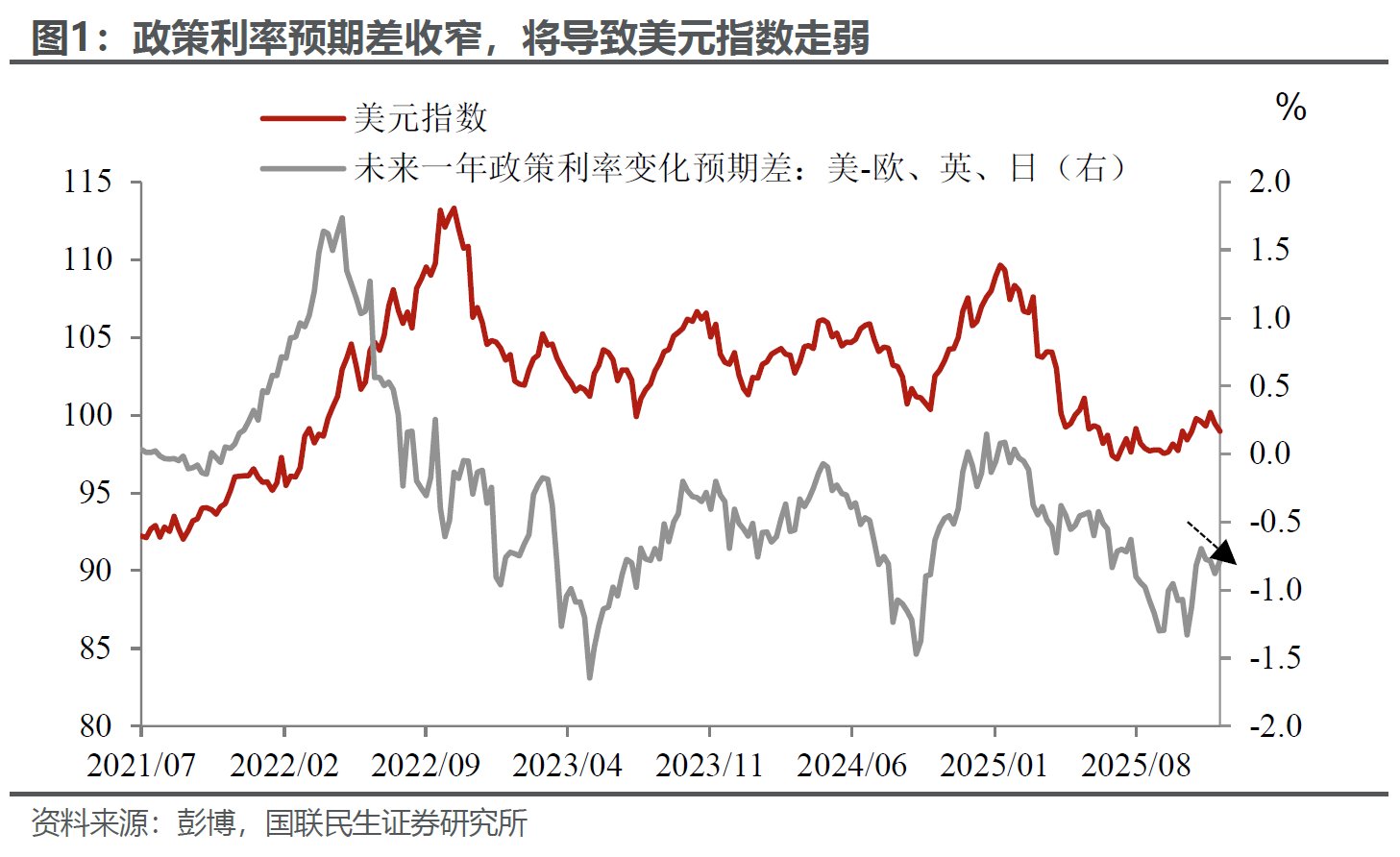
First, the US monetary policy is likely to be more relaxed, which in turn will cause interest spreads between the US and major non-US developed countries to narrow, causing the dollar to depreciate. This does not seem to be “out of nowhere”. Among them, the Japanese Prime Minister has “clearly branded” fiscal easing. In order to deal with the risk of inflation, Bank of Japan Governor Ueda Kazuo made “hawkish” remarks. The market expects a sharp rise in the probability of the Bank of Japan's interest rate hike in December; the ECB is also cautious about cutting interest rates in the context of possible fiscal expansion.
On the other hand, looking at the US, next year's big easing seems to be the most likely. Trump continues to guide expectations of interest rate cuts; White House National Economic Council Director Hassett, who is currently leading the race for Chairman of the Federal Reserve, is also a “believer” in low interest rates.
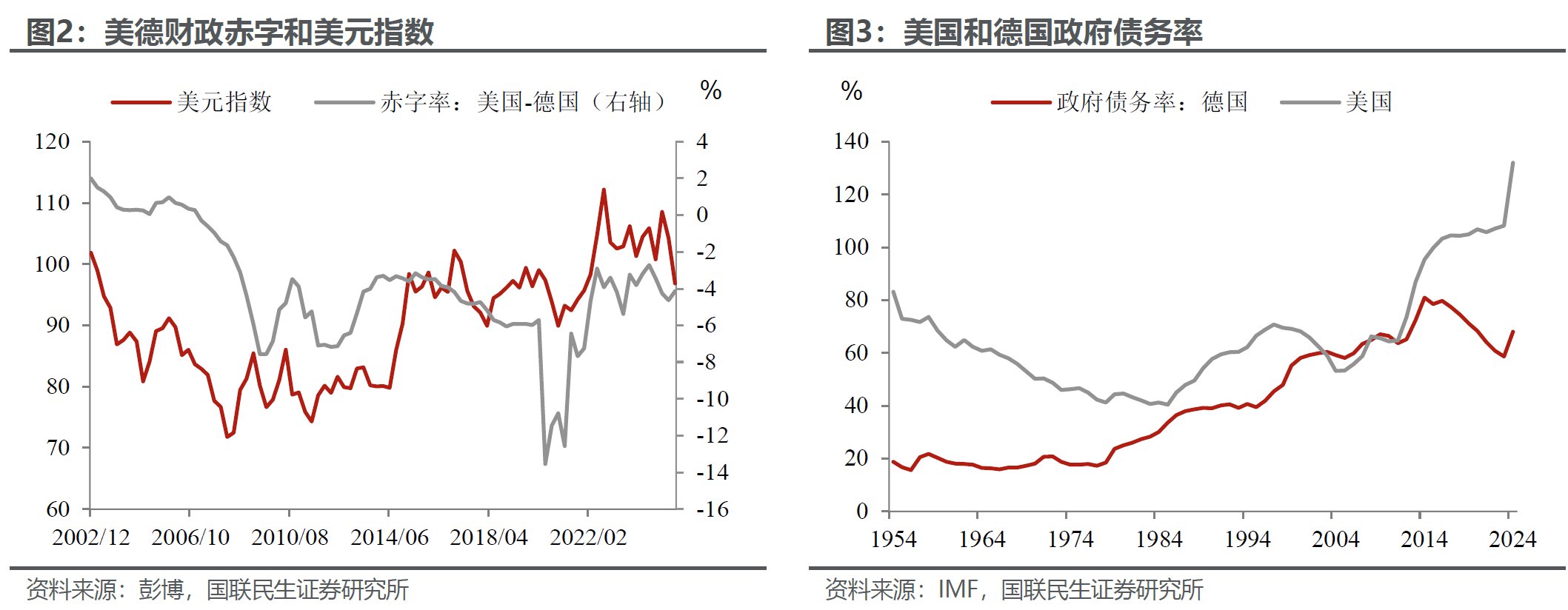
The second is the strengthening of the euro due to strong fiscal strength in Europe, and Germany in particular. Although the US fiscal year may also be relatively positive next year, the foreign exchange market pricing logic often focuses more on “differences in the strength and weakness of marginal changes in policy”: on the one hand, Germany's fiscal policy adjustments have a stronger landmark shift; on the other hand, the US government's debt burden is significantly higher than that of Germany, if the size of the subsequent fiscal deficit continues to expand, or it may adversely affect its monetary and credit expectations to a certain extent.
The third is the elasticity of African and American economies. Looking at the economic cycle, the US dollar's main rival economies, such as Germany and Japan, are all in the stage where the economy continues to recover; on the contrary, the US is still in the implementation period of previous policy austerity, and the room for economic growth continues to narrow.
In addition to this, due to domestic inflationary pressure, the White House may further adjust the tariff level downward. On the one hand, it will ease the pressure on non-US economies, and on the other hand, it will lead to a further deterioration in US finances.
What kind of “loopholes” are there in the above macro logic?
First, there is the question of the pace of monetary policy. US easing may not necessarily come as fast, and the strength of austerity from the US, and Japan in particular, is not that strong.
Poor expectations in the US: Alleviate inflation concerns first. The bank discussed in its previous report that the core of America's economic policy next year will still revolve around voting to ease voters' pain points — the issue of the repayment crisis. This involves the two dimensions of burden and income. Therefore, one of the top tasks of Trump's policy is to reduce inflation and reduce the burden on residents. This means that even if Hassett is likely to become the new chairman of the Federal Reserve, he will be more cautious in his remarks on easing to prevent inflation from rising rapidly.
The Bank of Japan's independence is being tested. As a follower of Abenomics, Japanese Prime Minister Sanae Takaichi should not forget the story of his predecessor, Shinzo Abe, who threatened to amend the Bank of Japan Act due to monetary easing when he first came to power, and Shirakawa Masaaki, who was the governor of the Bank of Japan at the time, stepped down. And in order to cope with external pressure, she also needs domestic public opinion and policy support. Therefore, Takaichi Sanae, who advocates a loose monetary policy, may interfere with the independence of the Bank of Japan to prevent excessive austerity.
As for the ECB, the current market is probably expecting the best situation: for example, it is expected that European fiscal strength will be smooth next year, the Russian-Ukrainian situation will ease, and the ECB's monetary policy will remain on hold. Second, there is still no getting around the financial issue. Europe is not just Germany; other large countries, such as France and Italy, are between government debt as a share of GDP and the US. Therefore, the bank expects that among the Eurozone countries, only Germany may have significant fiscal expansion, but high-debt countries such as France and Italy will continue to pursue neutral or even tight fiscal policies.

But what if European countries other than Germany can't keep “pressing”? A typical example is France, where fiscal consolidation is facing challenges: on the one hand, the current ruling party has “lost power” in the National Assembly; on the other hand, the prime minister will be changed four times within two years due to deficit reduction issues; on the other hand, early 2027 will be the French general election, and next year will also be a critical year for all parties to play. And if the fiscal consolidation of highly indebted countries represented by France is unfavorable, the resulting widening of interest spreads with German treasury bonds will be an important trigger for the weakening of the euro and the rebound of the US dollar.

There is also the issue of economic resilience in African and American economies. Also, this is a relative issue. There is no doubt that Japan and Europe are currently in an advantageous position in the economic cycle, but this does not mean that they will lead the whole of next year; at the same time, the pace of the Chinese economy is also very important. The bank believes that if both China and Europe can increase cyclically next year, then the path of depreciation of the US dollar may be relatively smooth; otherwise, there will be twists and turns.
The bank believes that it should pay particular attention to the third and fourth quarters of next year, as the economic rhythm may reverse in stages
The US economy is likely to rebound. In order to cope with the mid-term elections in the fourth quarter of next year, the bank believes that the second or third quarter of next year may be a critical time window for the White House to save or consolidate public opinion. The bank expects greater fiscal subsidies and interest rate cuts, which means that the performance of the US economy in the second half of the year may be better than in the first half of the year.
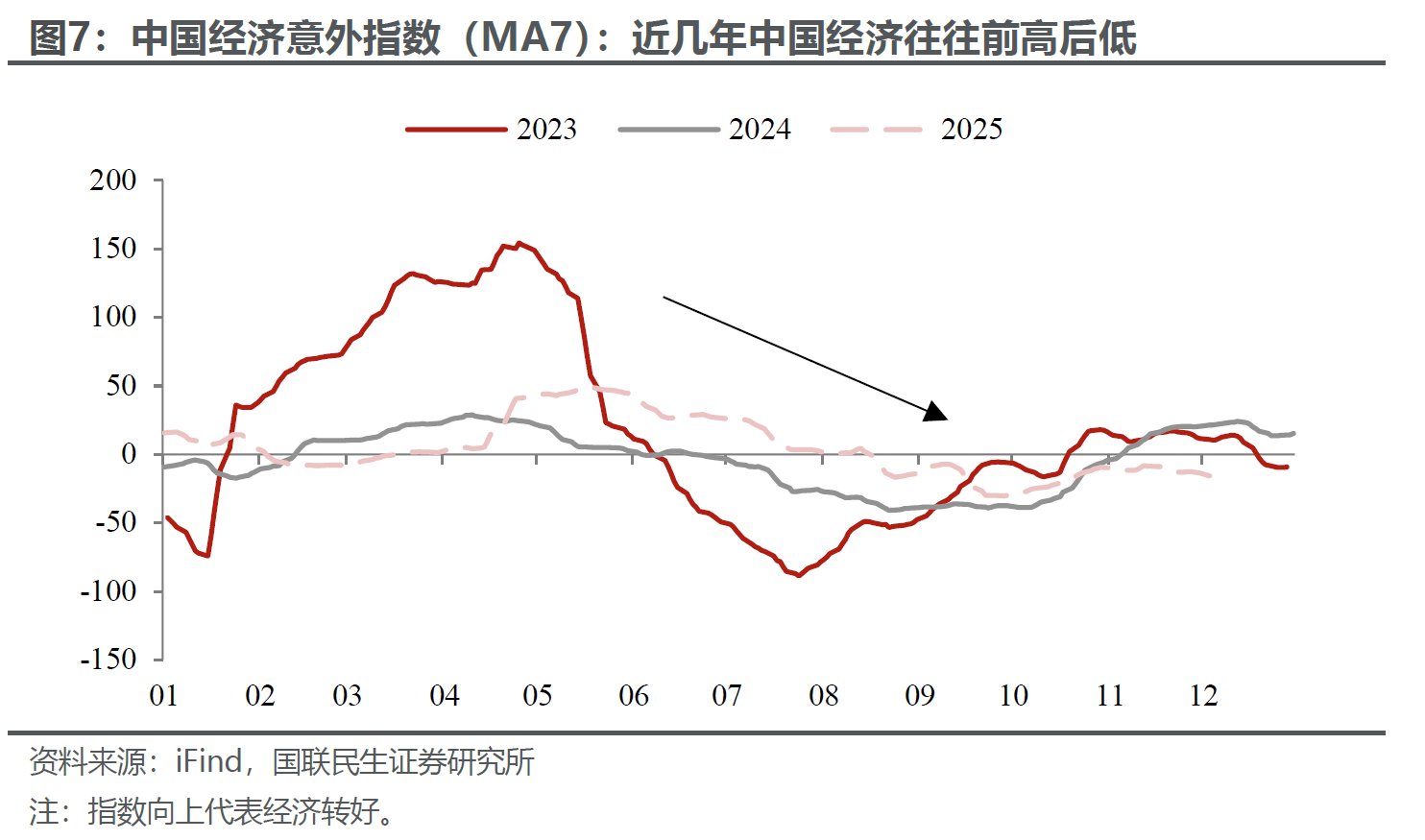
Non-US economies are likely to see the opposite pace. For example, under the “cross-cycle” trend, the pace of China's economy next year may be similar to the “high after low” of the past few years; although Europe has financial support, it will also be affected by the Chinese economy and the appreciation of the exchange rate in the previous period.
Risk warning: the risk of the Russian-Ukrainian conflict escalating; the European economy is declining beyond expectations; the risk of US debt is increasing.