
- LIVE QUOTES
- LEARN
- HELP


EN
“National Snacks” leverages 100 billion market Weilong (09985) superfood konjac soup press conference held in Xishuangbanna
The Zhitong Finance App learned that on December 10, a press conference on “New Ideas for Healthy Snacks: Super Ingredient Konjac Soft” was held in Xishuangbanna, Yunnan. The event brought together nutrition experts, industry association representatives, industry chain enterprise representative Wei Long (09985), and media representatives to decode the transformation path and future opportunities of the konjac industry. At the conference, the “Development and Research of China's Konjac Food Industry” report prepared by the Konjac Research Center of Southwest University, the Food and Drug Industry Development and Regulation Research Center of the Chinese Academy of Social Sciences, Xinhuanet and the konjac branch of the Chinese Horticultural Society was officially released, marking that China's konjac industry has entered a new stage of standardization and value development.
As the world's largest producer and consumer of konjac, China accounts for more than 60% of the world's konjac cultivation area and production, and the four core production regions of Yunnan, Sichuan, Hubei and Shaanxi have built a complete industrial chain. The press conference was held in Xishuangbanna to highlight the region's rich konjac cultivation resources and intangible heritage cultural heritage. Through various forms such as keynote speeches, industry dialogues, and an intangible heritage catwalk, the event showcased the gorgeous transformation of this “earthen bump” from deep-mountain ingredients to national snacks.
Policy enabling+industrial upgrading to build a 100 billion development ecosystem
In February of this year, the Ministry of Agriculture and Rural Affairs and three other ministries jointly issued the “China Food and Nutrition Development Outline (2025-2030)”, which clearly proposed “increasing the supply of specialty foods rich in dietary fiber, such as konjac, and promoting standardized production of products throughout the entire industry chain”, injecting strong impetus into the development of the industry.
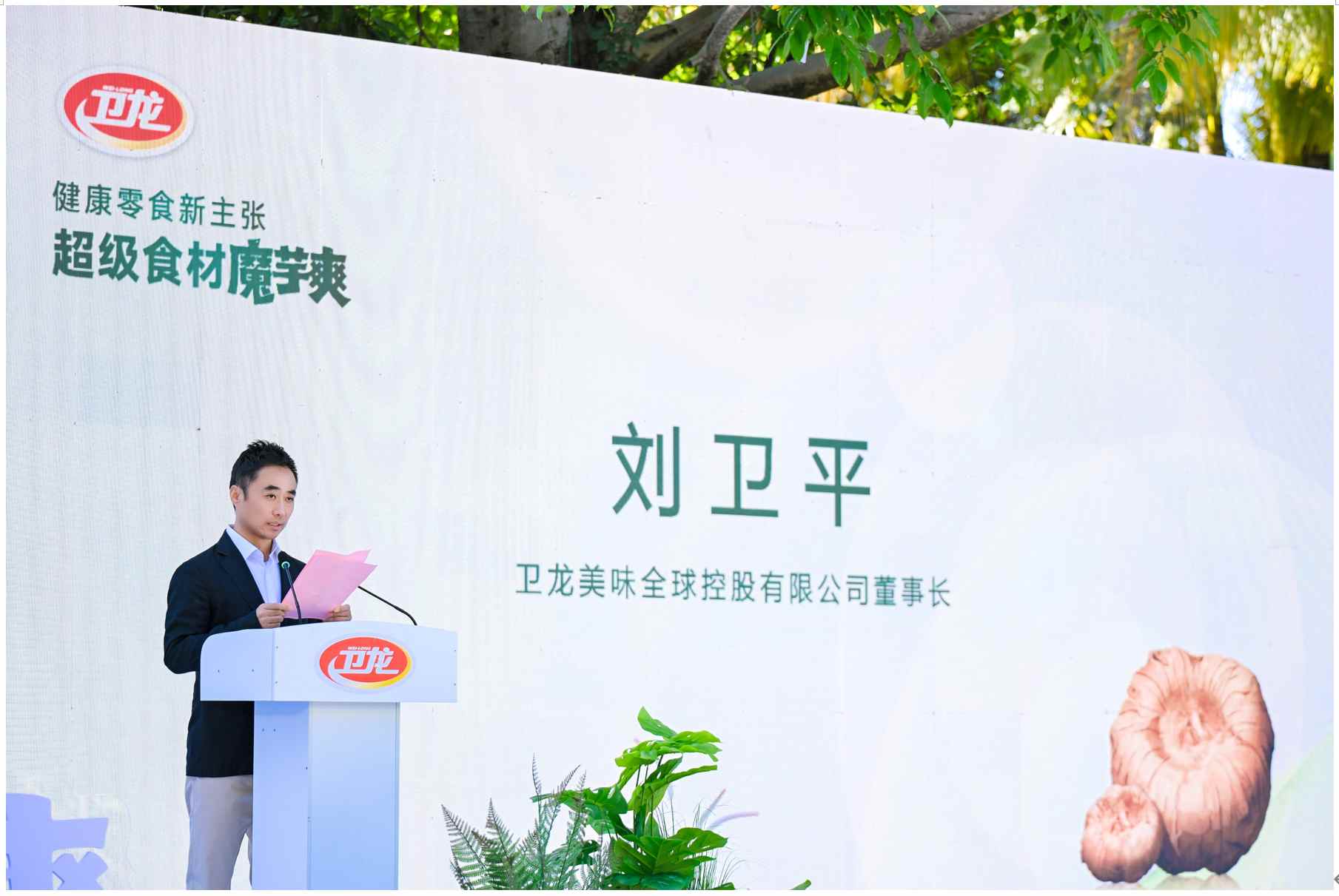
Liu Weiping, chairman of Weilong Delicious Global Holdings Co., Ltd., said in his speech that as consumers' health needs escalate, ancient konjac ingredients are entering a critical period of value reshaping. Since pioneering konjac soup in 2014, Weilong has achieved a market share of 61% in this category, ranked first in the industry for many years, and has taken the lead in formulating the first “Konjac Instant Food” group standard, laying the foundation for standardized development of the industry. Currently, China's konjac industry is in a critical period of high-quality transformation. Weilong Delicious will actively promote category innovation, industrial chain upgrade, and continue to strengthen quality management and product research and development to help improve the quality of China's konjac industry with better supply and more sincere responsibility.

Zhang Shenglin, honorary president of the Konjac Branch of the Chinese Horticultural Society and director of the Konjac Research Center at Southwest University, pointed out in his keynote speech that China's konjac industry has formed a development pattern of “leading market demand - driven by enterprise innovation - increasing brand value”. It has expanded from traditional konjac tofu to a multi-category matrix such as snack food, meal replacement products, and bionic vegetarian food, and the scale of the entire industry chain has exceeded 100 billion yuan.
“The world's konjac looks at China, and Chinese konjac looks at the southwest.” Zhang Shenglin said that China accounts for more than 60% of the world's annual production of konjac powder, and demand for low-fat, high-fiber konjac products in markets such as Japan, Europe and the US is growing at an average annual rate of 15%. Relying on the “company+base+farmer” industrialization model, the konjac industry has become an important engine for rural revitalization in the central and western mountainous regions. In the main production areas of Yunnan, konjac cultivation income accounts for more than 60% of farmers' household income, achieving a win-win situation between ecological and economic benefits.
In particular, he emphasized that under the guidance of the “healthy China” strategy and the “big food concept,” the unique functional properties of konjac glucomannan (KGM) have opened up unlimited room for imagination for its application in cutting-edge fields such as specialty food, biomedicine, and green packaging. The development of the konjac industry requires scientific and technological innovation and a more complete standard system. It also requires enterprises to continue to invest in R&D, lead the upgrading of the industry, and jointly build China's konjac industry into an industry with more international competitiveness and better able to serve national health and rural revitalization strategies
Health values highlight the trend of “three modernizations” in the consumer market

“Konjac is a low-energy, high-fiber, and low-glycemic index food. It is rich in high-quality water-soluble dietary fiber, glucomannan (KGM), which absorbs water and expands in the stomach to form a gel, which not only significantly increases satiety, but also envelops food and delays the absorption of sugar and fat.” Referring to the nutritional value of konjac, Wang Zhihong, deputy director of the Institute of Nutrition and Health at the Chinese Center for Disease Prevention and Control, explained that the “Dietary Guidelines for Chinese Residents” recommend that adults consume 20 to 35 grams of dietary fiber per day, while the dietary fiber intake of Chinese residents is clearly insufficient (10-15 g), and the diet structure is not entirely reasonable. Adequate dietary fiber intake is beneficial to health.
Wang Zhihong said that the healthy development of the konjac industry is particularly important under the challenge of rising obesity and related chronic diseases among Chinese residents. Focus points include accurately evaluating the nutritional health status of citizens, adhering to technology-driven innovation and development, and leading the industry to do five “details”. Segment the consumer population, distinguish age, physiological conditions, critical metabolic indicators, abnormal, high-risk groups and various slow patient groups, and guide the selection of konjac products in daily consumption; refine the konjac series, make full use of the nutritional value of konjac to create a series of nutritious health foods; refine consumption scenarios, consume konjac products before and between meals, and reduce the amount of meals eaten at meals through continuous satiety; Refine new konjac product formulations, and improve processes to achieve healthy refinement of new konjac products; Connotation, using the natural and healthy extract glucomannan, To improve functionality, prebiotics or nutrients can also be scientifically added to increase the health added value of konjac products.
At the press conference, the report “Development and Research of China's Konjac Food Industry” was officially released. The report points out that konjac food consumption in China has moved from a “single scene, a small group” to a “diverse scenario and a wide range of people,” showing the characteristics of “health, youth, and convenience.” Spicy flavors, konjac belly categories, and the Weilong brand have become the top three hot topics of media and consumer attention. Weilong's media attention reaches 51 times a month, 4 times the industry average.

Guo Liang, deputy editor of the Xinhuanet Food Business Center, pointed out in interpreting the report that the research report covers various aspects such as konjac cultivation history, modern nutritional value, konjac food and traditional health, konjac food industry development stage, konjac food brand, consumer perception and preferences. He hopes to analyze the synergy of policy empowerment, technological progress, enterprise innovation and consumption upgrading to build high-quality development of China's entire konjac industry chain and government decisions, scientific research and innovation, enterprise development strategies and marketing to help China's konjac industry achieve value from scale expansion to value Strategic transformation of creation.
Enterprise innovation leads the layout of the entire industry chain to open a new chapter in the future

As the pioneer of the konjac snack circuit, Weilong has been using technological innovation to drive product upgrades since launching the first konjac cake in 2014. Ye Kun, deputy general manager of Weilong Delicious Market Center, explained that the company has set up two major application research and development centers in Luohe, Henan and Shanghai to continuously optimize the taste and taste of products. In ten years, Weilong's konjac sugar production line has gone through seven generations, achieving a major breakthrough of doubling production capacity and increasing efficiency by 80%. The variety of konjac continues to be rich. Since 2024, innovative flavors with diverse regional characteristics, such as spicy crayfish flavor, stir-fried meat flavor with chili peppers, old Beijing sesame sauce flavor, and dai flavor chicken feet, have been launched, creating a diversified product matrix covering casual snacks and meal replacement foods. “Through the integration of intangible heritage culture and modern trends, we have made konjac soup not only a food, but also a social currency for young people.” Ye Kun said.
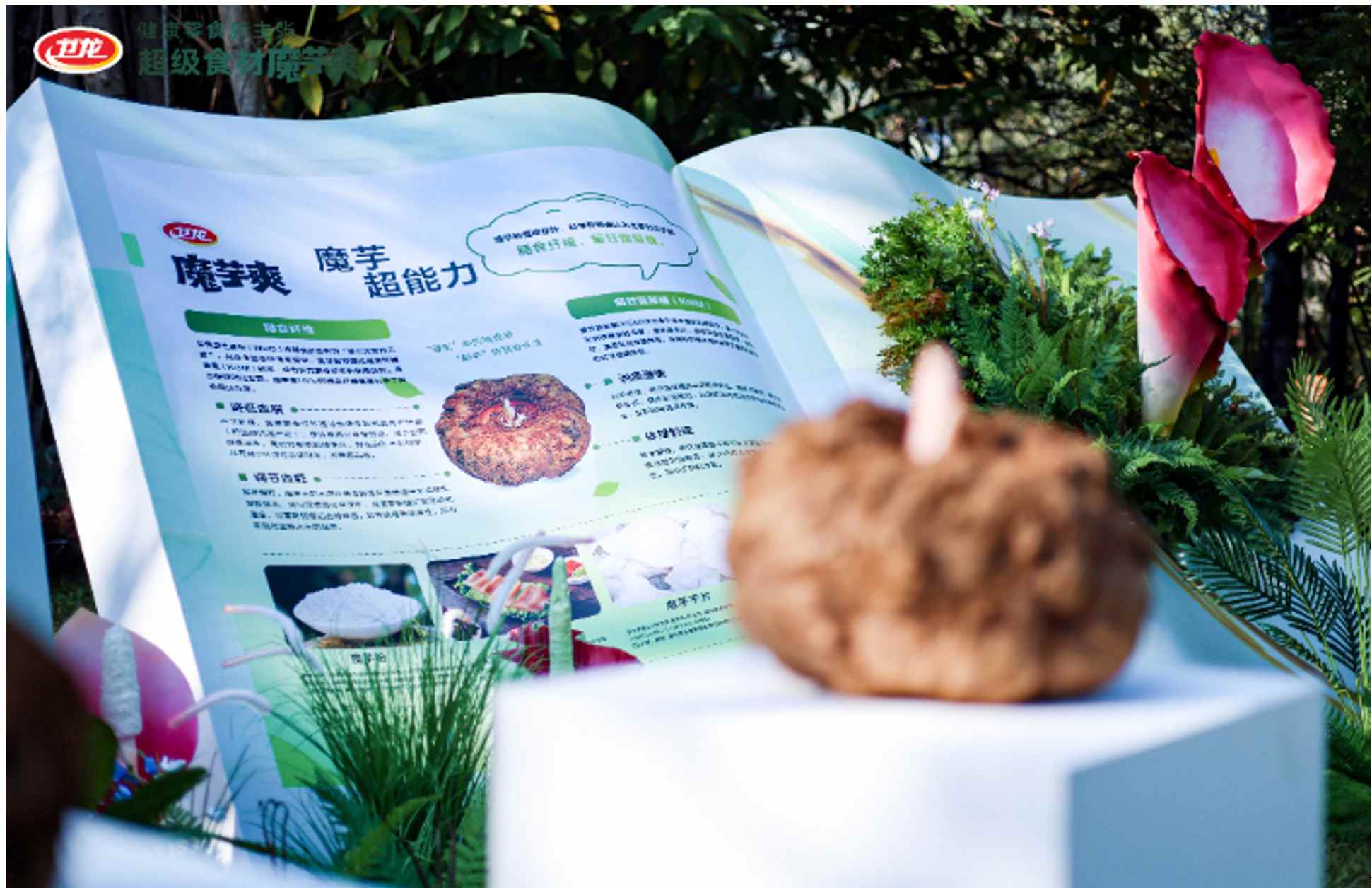

In terms of industrial chain layout, Weilong uses the “standardized planting base+deep processing+omni-channel sales” model. On the one hand, it guarantees stable income for growers in Yunnan, Sichuan and other places through technical guidance and guaranteed acquisitions; on the other hand, it allows konjac products to reach tens of millions of households through online and offline omni-channel penetration.
According to reports, a themed catwalk incorporating intangible heritage elements such as Su embroidery and Miao embroidery, as well as costumes from Yunnan ethnic groups such as the Dai, Yi, and Hani people, was also held during the event. The “From Seeds to Snacks” creative show vividly showed the entire konjac industry chain process, allowing the participants to experience the diverse charm of konjac ingredients up close.
With the deepening of the “Healthy China” strategy, the application scenarios of konjac are expanding from the food field to fields such as pharmaceutical carriers, daily chemical raw materials, and green packaging. Experts said that in the future, the industry needs to break through technical bottlenecks such as variety selection and deep processing, and improve the standard system for the entire industry chain. The holding of this seminar and the release of the industry report provided important guidelines for the high-quality development of China's konjac industry, and also provided practical samples that can be learned from for value remodeling and brand upgrading of specialty agricultural products.