
- LIVE QUOTES
- LEARN
- HELP
 Nasdaq
 Wall Street Journal
EN
Outsmarting the High Cost of Household Maintenance in Retirement
Key Points
Multiply the square footage of your home by one and you'll know about how much you should plan to spend on home maintenance annually.
Now that you're retired, focus on maintaining your appliances and other components of your home.
If you're retired and own a home, maintenance will always be part of life. It's suggested that the average homeowners budget between 1% and 4% of their home's purchase price for annual preventive maintenance and repairs.
If your home is newer or has been extensively renovated, your yearly bill may be closer to 1%. If you live in an older home, it could be closer to 4%. For example, if you purchased the home for $200,000, you would want to budget between $2,000 and $8,000 to keep things shipshape.
Where to invest $1,000 right now? Our analyst team just revealed what they believe are the 10 best stocks to buy right now. Continue »
One of the trickiest parts of living on a fixed income -- including Social Security, a pension, or retirement annuity -- is being ready when larger-than-usual expenses occur. And they will occur. The goal is to absorb those expenses by planning for them. That doesn't mean you'll enjoy spending the extra money, but you'll be ready when it's needed.
If home prices in your area have gone through the roof since 2020 (and whose haven't?), a better plan may be to use the square-footage rule. For instance, if you have a 2,500-square-foot house, you'll want to put $2,500 away for annual repairs and maintenance.
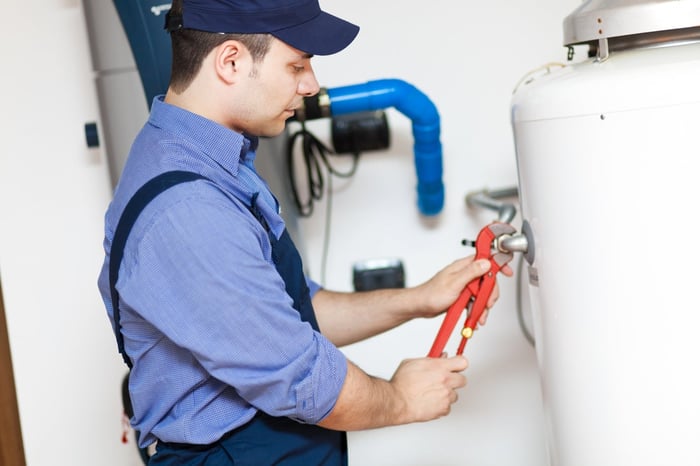
Image source: Getty Images.
Cover your bases
Now that you're retired or nearing it, here's a simple plan to prepare for the (expected) unexpected.
- Audit your home: Take a walk through and around your home, listing all the items you'll eventually have to replace. As you create your list, do your best to note how old each component is. For example, if you had a new dishwasher installed five years ago, mark the number "5" next to it.
- Include the average lifespan: Next to each item, note how long it's expected to last on average.
- Note the average replacement cost: The table below shows average replacement costs as of 2025. Saving for replacements beats taking money out of a retirement account that's benefiting from compound interest.
Here's what your audit may look like:
Component |
Average Lifespan |
Average Replacement Cost |
|---|---|---|
Furnace |
15 to 20 years |
$2,000 to $5,400 |
Central air-conditioning |
10 to 20 years |
$3,900 to over $8,000 |
Water heater (tank type) |
8 to12 years |
$800 to over $1,800 |
Windows (wood) |
20 years |
$230 to $1,230 per window |
Garage door opener |
10 to 15 years |
$200 to over $500 |
Washing machine |
10 to 11 years |
$700 to $1,300 |
Clothes dryer |
13 years |
$800 to $1,200 |
Refrigerator |
14 years |
$600 to $2,300 |
Freezer |
10 to 20 years |
$450 to $1,300 |
Range |
14 years |
$400 to $1,300 |
Dishwasher |
9 to 10 years |
$800 to $1,200 |
Water softener |
10 to 15 years |
$600 to $2,000 |
Whole-house humidifier |
8 to 15 years |
$500 to $2,000+ |
Underground irrigation system |
20 years |
$4,500 to $8,500 for a 5,000-square-foot yard |
Roof (asphalt shingles) |
20 to 30 years |
$5,800 to over $13,000 |
Deck (wood/composite) |
25+ years |
$25 to $50 per square foot |
Sources: State Farm, Culligan, HVAC.com, Tristate Waterworks, Envision Outdoor Living, Mr. Appliance, HomeGuide.com, Carrier
Keep in mind that these are just averages. You may want lower- or higher-end products, and it's possible you'll catch a fantastic deal. The point is to have a price in mind so you can tuck money into a savings or money market account for it.
Extending the time before replacement is necessary
Whether you're looking out for the home you live in or maintaining the value of real estate investments, it pays to stay on top of maintenance issues. You can't control everything, but you can give appliances and other home components a fighting chance to last longer. The following tips can help:
Refrigerator maintenance
- Clean the condenser coils at least once every six months. Without clean condenser coils, it's difficult for a refrigerator to maintain cooling efficiency.
- Avoid overfilling your refrigerator, as it can block air circulation.
- Check door seals to ensure they're not loose or cracked. If they are, replace them.
Dishwasher maintenance
- Clean the filter at least once a week to remove food debris.
- Check the spray arms regularly, looking for clogs. Water can't flow properly when there's a clog.
- Run a monthly cleaning cycle using vinegar or dishwasher cleaner.
Oven and stove maintenance
- Check stovetop burners for blockages.
- Wipe spills promptly to prevent buildup.
- Don't use harsh chemicals on self-cleaning ovens.
Washing machine maintenance
- At least once a month, run an empty hot-water cycle with vinegar to prevent odors.
- Inspect hoses for leaks and replace them every three to five years.
- Avoid overloading. While your laundry may get done faster, overloading strains the motor and drum.
Dryer maintenance
- Remember to clean the lint trap after every load (even small loads).
- Regularly inspect and clean the dryer vent to help prevent fire.
- As with your washing machine, avoid overloading to ensure proper airflow.
Maintaining your home and being prepared for big-ticket purchases is a win/win. You get to live in a space that's up-to-date and comfortable while the overall value of your home increases. If, at some point, you decide to downsize or move to an exotic locale, you'll have more money to take with you.
The Motley Fool has a disclosure policy.