


Is Earnings Strength Altering The Investment Case For Moody's (MCO)?
- Moody's reported third quarter 2026 results with sales of US$2,023 million and net income of US$734 million, alongside higher basic and diluted EPS from continuing operations compared with the same period a year earlier.
- Across the first nine months of 2026, Moody's recorded US$6,287 million in sales and US$2,273 million in net income, which reinforces the role of its data, ratings and risk solutions in supporting earnings power.
- We will now look at how Moody's investment narrative is affected by this earnings strength, particularly the step up in net income.
Moody's Investment Narrative Recap
To own Moody's, you need to be comfortable with a story built on credit markets activity, expanding risk analytics and disciplined cost control. The latest quarter delivered higher sales and net income versus a year earlier, which supports that earnings power. The key near term swing factor still looks like deal and issuance activity, because a pause there can filter quickly into fee based revenue.
The biggest risk remains that issuance was pulled forward and volumes cool, while high margin analytics growth or AI efficiency gains do not offset that air pocket. Recent results do not materially change that risk reward balance, but they show the current cost base and product mix can support earnings if volumes hold steady.
The fresh data point that ties most directly to this story is the step up in basic and diluted EPS from continuing operations in both the quarter and the first nine months. Higher earnings per share, off relatively modest sales changes, underline how much of the Moody's thesis hinges on margins, automation and mix, not just raw top line expansion.
For catalysts, that EPS progression interacts with prior commentary about AI integrations, private credit related work and cost savings targets. Stronger earnings give management a bit more room to keep investing in those growth channels while still funding dividends such as the affirmed US$1.03 quarterly payout. However, any pressure on free cash flow or leverage would quickly bring that capital return profile back into focus.
Moody's narrative projects US$9.8b revenue and US$3.5b earnings by 2029. This aligns with analysts incorporating 6.4% yearly revenue growth and an earnings increase of about US$0.7b from US$2.8b today.
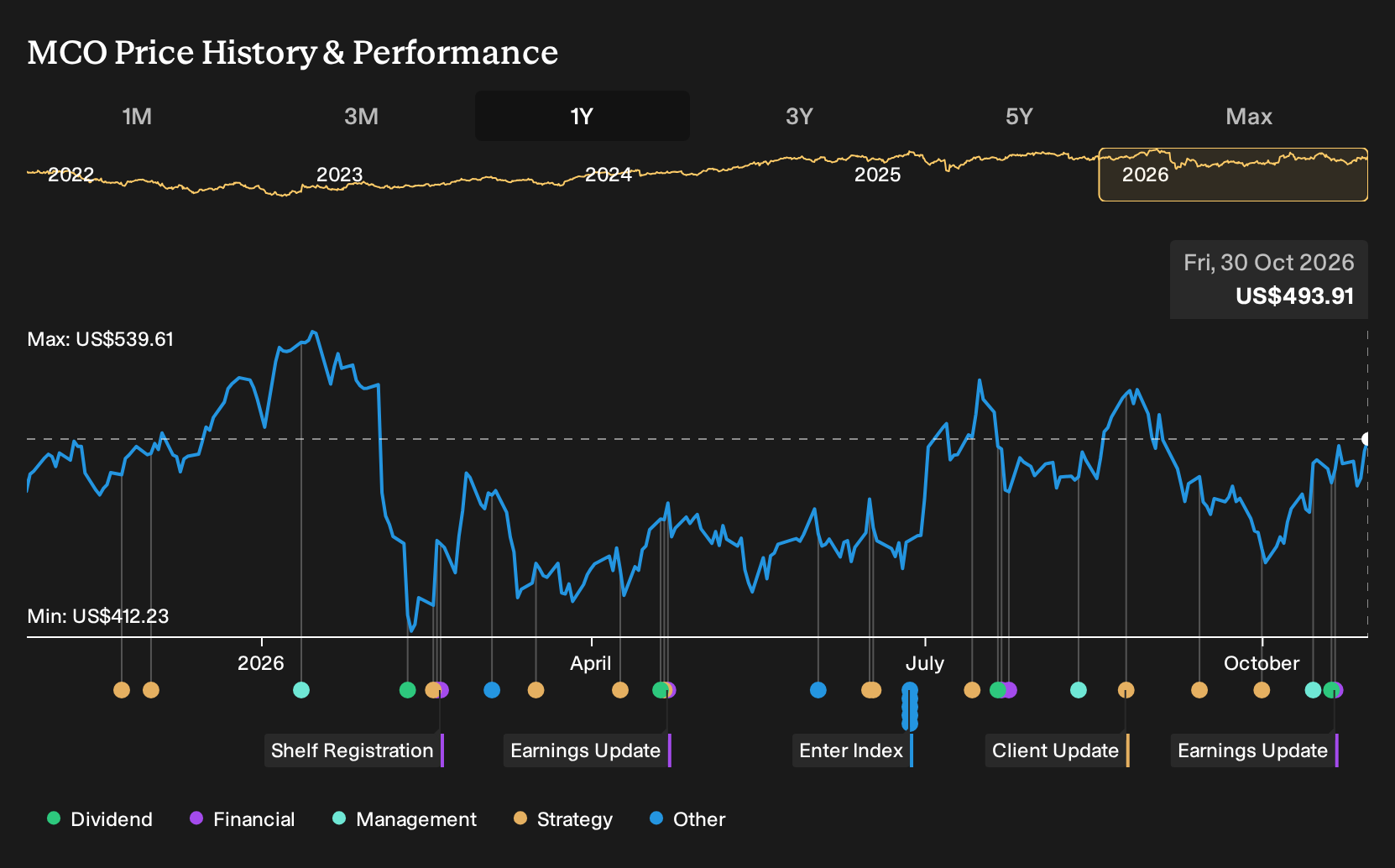
Discover why Moody's fair value suggests a 14% potential upside to its current price, which could materialize more quickly than many investors anticipate.
Exploring Other Perspectives
Eight fair value estimates from the Simply Wall St Community span roughly US$436 to US$562, so private investors are clearly split on where Moody's should trade. You see that uncertainty most around future issuance trends and AI driven efficiencies, which could reshape earnings resilience and keep debate lively on Moody's long run performance.
Explore 7 other Moody's fair value estimates, including one that suggests as much as 12% downside from the current price.
Decide For Yourself
Don't just follow the ticker; dig into the data and build a conviction that's truly your own.
- A great starting point for your Moody's research is our analysis highlighting 3 key rewards and 1 important warning sign that could impact your investment decision.
- See our latest analysis for Moody's. The report includes a comprehensive fundamental analysis summarized in a single visual, the Snowflake, making it easy to evaluate Moody's overall financial health at a glance.
Looking for more investment ideas beyond Moody's?
Once you have a view on Moody's, it often helps to compare that thesis with other businesses that share similar qualities or offer a different risk profile. The Simply Wall St Screener can help you quickly surface candidates that fit the kind of portfolio you want to build.
- If capital preservation sits high on your list, scan a group of resilient candidates through the 29 resilient stocks with low risk scores that may better align with a cautious approach.
- For investors who care most about balance sheet strength and earnings quality, filter for companies in the list of solid balance sheet and fundamentals (24 results) to see which ones match your preferred fundamentals.
- If you are hunting for mispriced opportunities with room for sentiment to shift, run a search across the 19 high quality undiscovered gems that could warrant a closer look alongside Moody's.
Have feedback on this article? Concerned about the content? Get in touch with us directly. Alternatively, email editorial-team@simplywallst.com