


Does Record Q4 Revenue Outlook Change The Bull Case For United Airlines (UAL)?
- United Airlines Holdings reported third quarter 2026 revenue of US$17,875 million and net income of US$1,029 million, then issued fourth quarter guidance calling for total operating revenue growth above 20% year over year and earnings per share between US$0.50 and US$1.50, assuming an all in fuel price of about US$4.80 per gallon.
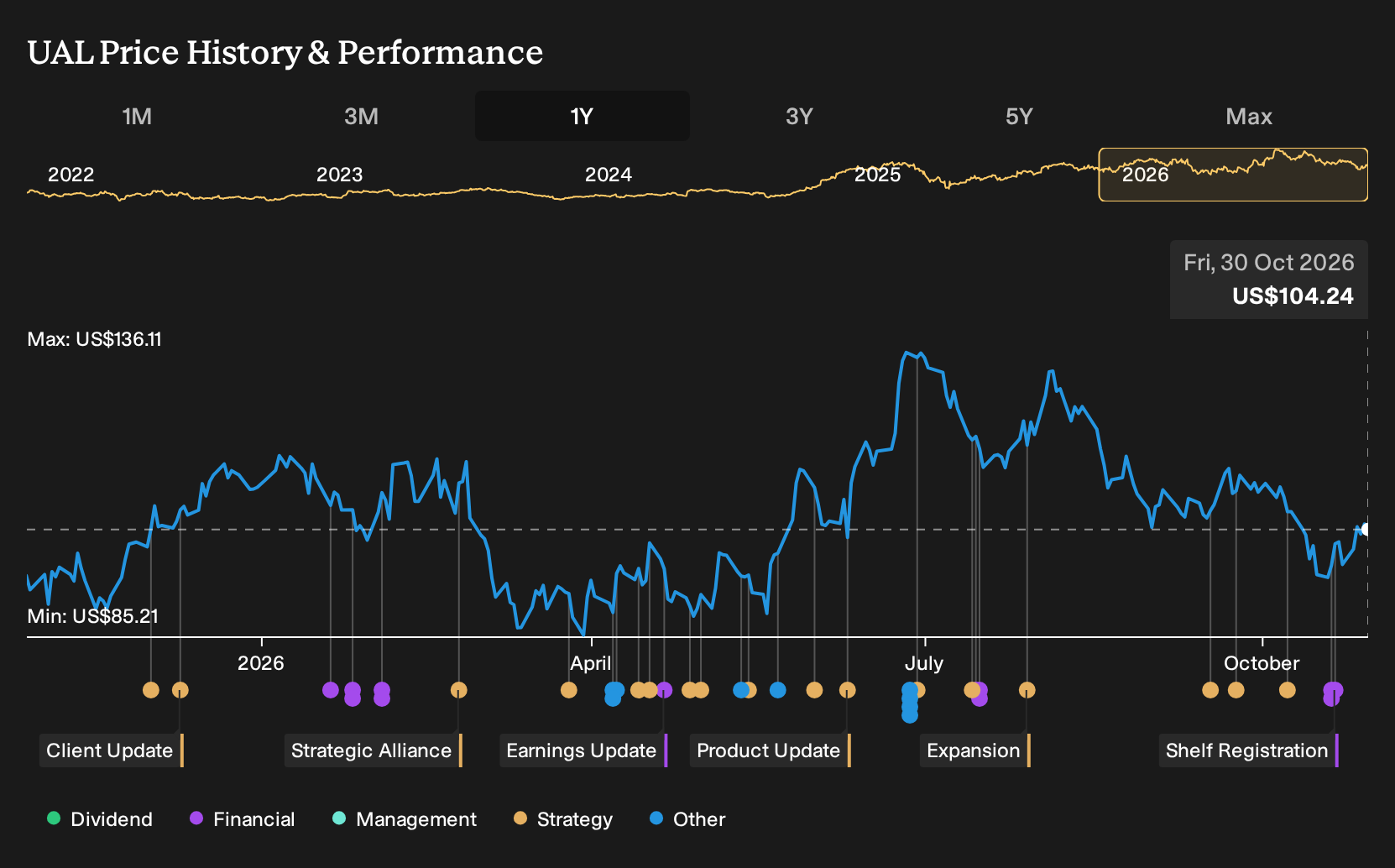
- The broad omnibus shelf registration for common and preferred stock, multiple debt securities, warrants and subscription rights gives United Airlines Holdings flexible access to capital markets that could support fleet, technology or balance sheet plans if management chooses to issue new securities.
- We will now look at how United Airlines Holdings recent record revenue outlook could influence the longer term investment narrative.
United Airlines Holdings Investment Narrative Recap
To own United Airlines Holdings, you need to believe the business can turn its premium product push, loyalty growth and United Next fleet plan into steadier margins and healthier free cash flow despite fuel and debt headwinds. The recent guidance for over 20% Q4 revenue growth and US$0.50 to US$1.50 EPS points to an active demand backdrop as of late October 2026.
For the near term, that Q4 outlook keeps the main catalyst squarely on execution. Can United Airlines Holdings turn strong revenue guidance into cleaner profitability while fuel costs sit around the assumed US$4.80 per gallon level? The biggest risk remains fuel price volatility and its knock on effect on already thin margins and leverage.
The most relevant update for that debate is the fresh Q4 2026 guidance. Management is calling for total operating revenue growth above 20% year over year, with earnings per share between US$0.50 and US$1.50, assuming an all in fuel price near US$4.80 per gallon. Those numbers frame expectations around both demand and cost pressure in the coming quarter.
For investors tracking catalysts, this outlook tests whether United Airlines Holdings operational improvements in hubs, premium cabins and loyalty can offset fuel swings and high debt and start to show through in reported margins. If Q4 lands within that guidance range, it would provide more real world data on how resilient the business model is to elevated fuel and tighter balance sheet flexibility.
What The United Airlines Holdings Forecasts Assume
United Airlines Holdings' narrative projects US$75.2b revenue and US$4.2b earnings by 2029, which implies 6.2% yearly revenue growth and an earnings increase of about US$0.7b from US$3.5b today.
Uncover how United Airlines Holdings' fair value indicates a 47% potential upside to its current price before the market closes the gap.
Exploring Other Perspectives
Fuel cost risk is the big swing factor in the alternate view on United Airlines Holdings. The most bearish analysts were assuming only 2.3% yearly revenue growth and earnings of about US$3.4b by 2029, versus US$3.6b at the time. Those forecasts came before this new guidance and shelf registration, so opinions may shift.
Explore 3 other United Airlines Holdings fair value estimates, including one that suggests it could be worth just $139.53!
Decide For Yourself
Disagree with existing narratives? Extraordinary investment returns rarely come from following the herd, so trust your own analysis.
- A great starting point for your United Airlines Holdings research is our analysis highlighting 5 key rewards and 2 important warning signs that could impact your investment decision.
- See our latest analysis for United Airlines Holdings. The report includes a comprehensive fundamental analysis summarized in a single visual, the Snowflake, making it easy to evaluate United Airlines Holdings' overall financial health at a glance.
Looking For More Investment Ideas Beyond United Airlines Holdings?
Once you have a view on United Airlines Holdings, it helps to widen the lens and compare it with other businesses that share similar quality markers or risk profiles. The Simply Wall St Screener can help you quickly surface candidates that match the type of opportunities you want to research next.
- If you want potential mispricing with quality to back it up, scan through our 33 high quality undervalued stocks that already clear a basic strength and balance sheet hurdle.
- If capital preservation is your first filter, narrow the field using our 29 resilient stocks with low risk scores so you focus on companies with more resilient risk profiles.
- If you care most about financial sturdiness, start with our list of solid balance sheet and fundamentals (24 results) and look for businesses whose fundamentals you are comfortable holding through a full cycle.
Have feedback on this article? Concerned about the content? Get in touch with us directly. Alternatively, email editorial-team@simplywallst.com