


Learn Why The Bull Case For Metro (TSX:MRU) Could Change Following Quebec Store Upgrades
- Metro Inc. recently completed a $30 million program in Quebec that included modernizing its Metro Place Valois supermarket in Montreal and opening new Super C and Jean Coutu locations in East Angus with expanded food service, digital ordering, and pharmacy capabilities.
- The upgrades highlight how Metro is using store design, local product focus, and pharmacy service expansion to respond to changing Canadian household spending patterns and competitive pressure on both food and drug retail formats.
- We will now look at how Metro's $30 million Quebec store investment could shape the existing investment narrative around modernization.
Scan how Metro's modernization push compares with other retailers repositioning for tighter household budgets by reviewing our curated list of 4 high quality undervalued stocks.
Metro Investment Narrative Recap
To own Metro, you need to be comfortable with a slow and steady grocer that leans on store upgrades, discount formats and pharmacy growth, while cost pressures and cautious households keep a lid on how fast things can improve. The short term swing factor remains how same store food and drug demand, plus mix toward discount, affect margins as more modern sites come online.
Labour costs, particularly from the 22% wage increase baked into the Laval distribution centre agreement, sit at the front of the risk list. The recent Quebec investments are relatively modest next to a CAD 500 to 550 million annual capex plan, so they look more like proof points on execution than a material new catalyst.
The clearest operationally relevant move right now is Metro’s ongoing shift toward modernized stores and expanded discount formats, which the $30 million Quebec program feeds into. Fresh food counters, local assortment and stronger digital ordering all tie directly into the existing catalyst that store productivity and network optimization can support earnings power.
Those same projects sit against rising competition from other discount grocers in Quebec and higher structural wages in the supply chain. Your read on Metro likely hinges on whether these refreshed locations, together with pharmacy services like at Jean Coutu, drive enough sales density and higher margin prescription volume to offset cost inflation and any pressure on pricing.
What The Metro Consensus Is Pricing In
Metro's narrative projects CA$25.1 billion revenue and CA$1.2 billion earnings by 2029. This lines up with analysts building in 3.7% yearly revenue growth and an earnings increase of about CA$300.9 million from CA$899.1 million today.
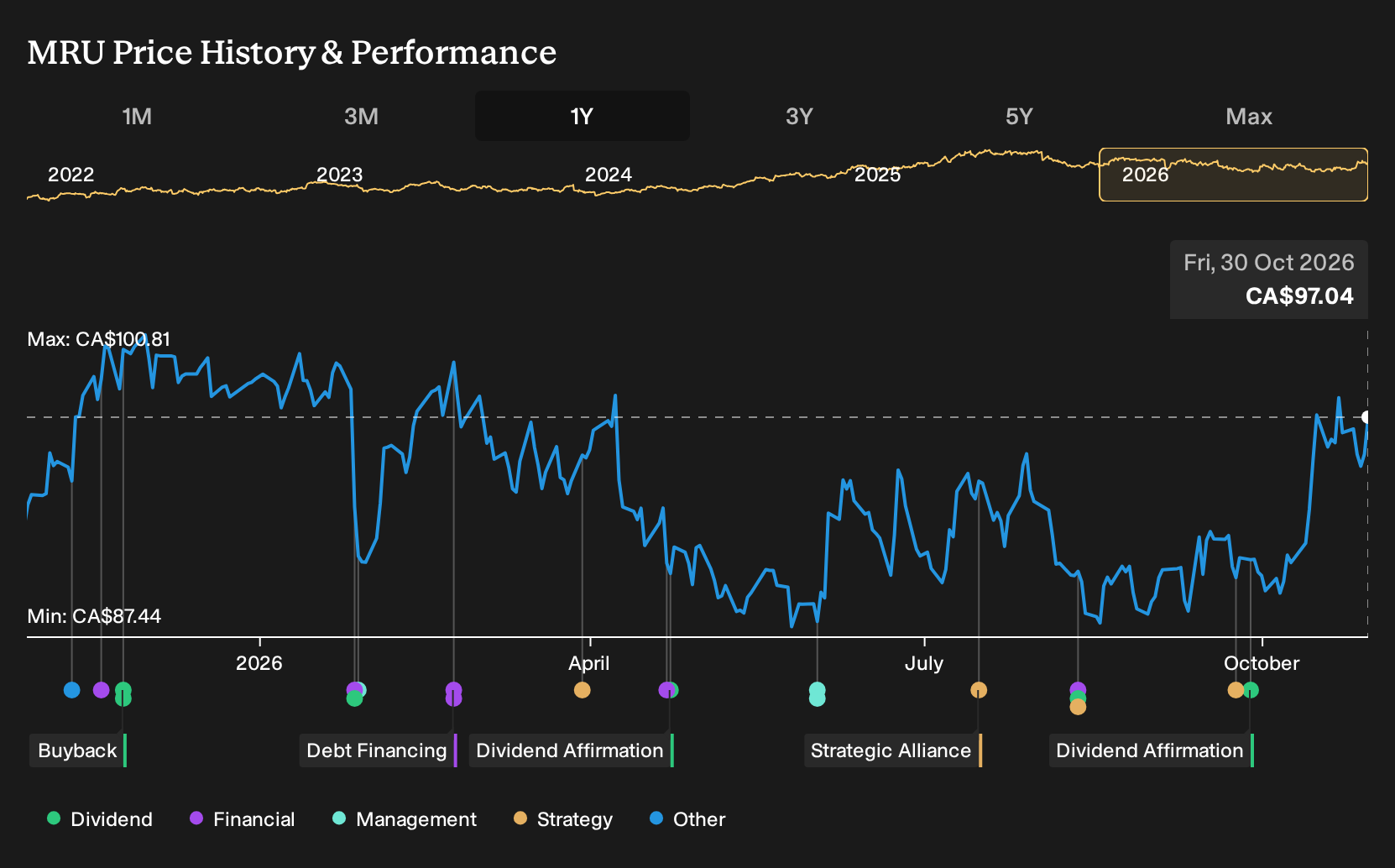
Uncover why Metro's fair value suggests Metro is approximately in line with its current price.
Exploring Other Perspectives
The two fair value estimates from the Simply Wall St Community span roughly CA$98.9 to CA$134.9 per share, so private investors are clearly not aligned on Metro’s worth. Set that against rising discount competition, higher embedded wages and the modernization program, and you get very different stories about where Metro’s earnings power could settle. Use those contrasts to test your own view against multiple community perspectives.
Explore another Metro fair value estimate, including one that suggests it could be worth just CA$98.90.
The Verdict Is Yours
Disagree with existing narratives? Extraordinary investment returns rarely come from following the herd, so trust your own analysis and judgment.
- A great starting point for your Metro research is our analysis highlighting 3 key rewards and 1 important warning sign that could impact your investment decision.
- See our latest analysis for Metro. The report includes a comprehensive fundamental analysis summarized in a single visual, the Snowflake, making it easy to evaluate Metro's overall financial health at a glance.
Looking For More Ideas Beyond Metro?
Once you have formed a view on Metro, it often helps to widen the lens and compare it with other opportunities that fit different priorities, from potential upside to income resilience.
- If you want to hunt for potential mispricing, start with a focused set of companies flagged as having strong quality signals and room for upside by reviewing our curated 4 high quality undervalued stocks.
- If capital preservation and steadier profiles matter more to you right now, concentrate on companies with stronger financial footing by screening through a list of solid balance sheet and fundamentals (6 results).
- For investors who prefer underfollowed situations with solid fundamentals, expand your watchlist using a targeted group of 8 high quality undiscovered gems.
Have feedback on this article? Concerned about the content? Get in touch with us directly. Alternatively, email editorial-team@simplywallst.com