


Honda Motor (TSE:7267) Could Be 19% Undervalued As Production Falls 12%
Honda Motor (TSE:7267) is back under the microscope after reporting that global vehicle production declined 12% in September 2026. This development comes on top of earlier warnings about potential U.S. tariffs on Canadian-made autos.
Recent trading suggests investors are weighing those production and tariff headlines against a stronger track record. Honda Motor’s share price return is up 14.7% year to date, while its 1-year total shareholder return of 20% and 5-year total shareholder return of about 93% point to momentum that has built over time rather than faded on the latest setback.
Spot emerging auto opportunities under similar production and policy pressure by scanning our hand-picked 15 high quality undervalued stocks, which may appeal to investors comparing Honda Motor with other potential ideas.Honda Motor has already delivered strong multi year gains and a solid run in 2026. The real puzzle now is whether most of the upside is already in the rearview mirror or still ahead based on valuation.
Most Popular Narrative: 0% Overvalued
Honda Motor closed at ¥1,786.5, which essentially matches the most followed fair value estimate of ¥1,785. The current tariff and production worries are being weighed against a valuation that already prices in a balanced mix of risks and opportunities under an 11.08% discount rate.
Persistent investment in mobility services and partnerships in advanced technologies (including collaborations with GM, Sony, and exploration of ADAS/OTA solutions) is setting the stage for Honda to access new high-margin revenue streams beyond traditional car sales, fostering long-run earnings growth and margin enhancement as the mobility industry evolves.
See why 18 investors see Honda Motor as 0% overvalued.
Result: Fair Value of ¥1,785 (ABOUT RIGHT)
Still, the narrative can break if EV related losses remain heavy or if tariff shifts and price competition continue to squeeze Honda Motor’s auto profitability.
Find out about the key risks to this Honda Motor narrative.
Another View: Cash Flows Point To A Different Honda Motor Story
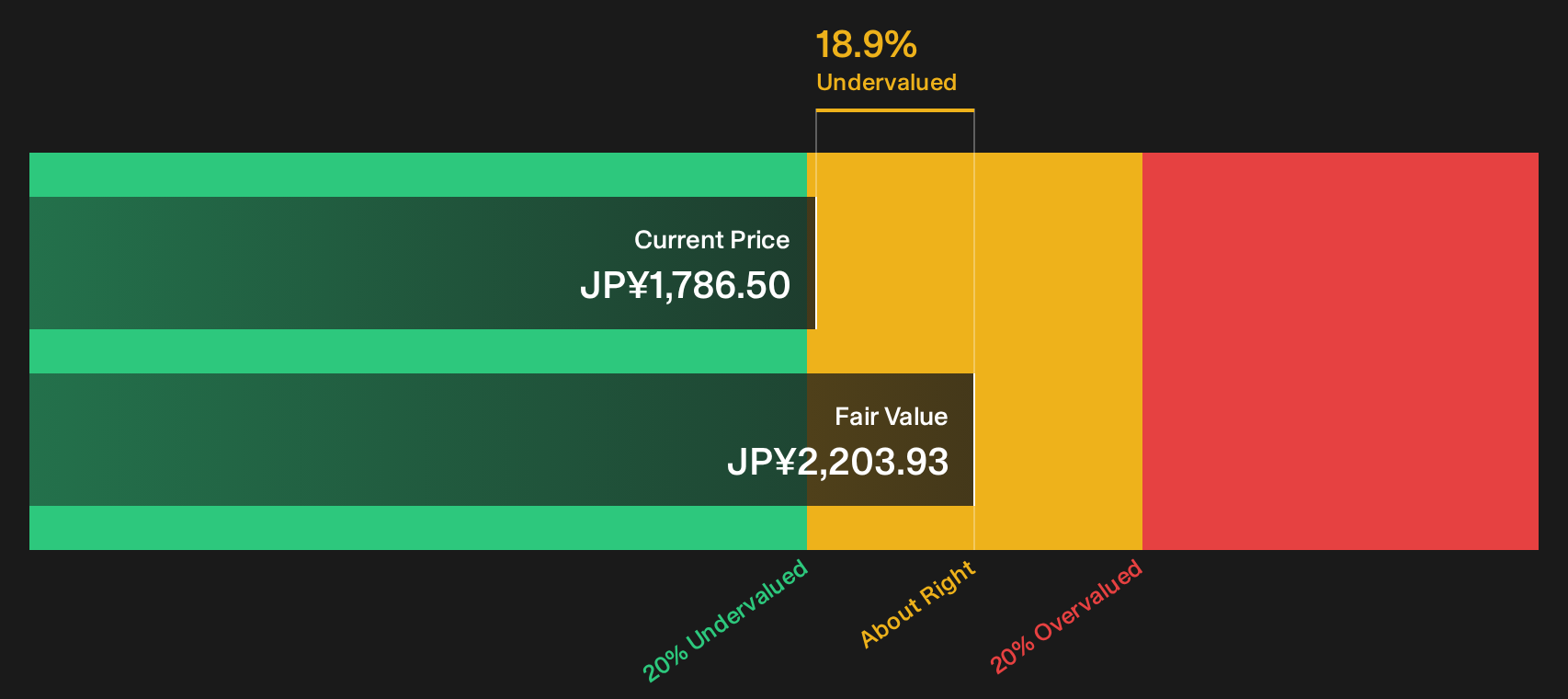
While the crowd narrative pegs Honda Motor as roughly fairly priced around ¥1,785, the Simply Wall St DCF model paints a different picture. On that framework, the shares trade about 18.9% below an estimated future cash flow value of roughly ¥2,204. Which lens do you trust more for a long term call?
Look into how the SWS DCF model arrives at its fair value.
Next Steps
Mixed messages in the Honda Motor story so far. Act while the data is fresh and evaluate the details for yourself with 3 key rewards and 2 important warning signs
Looking for more Honda Motor investment ideas?
If you stop with Honda Motor, you only see one angle. Use the Simply Wall St Screener to widen your opportunity set and sharpen your next move.
- Target steadier compounding by reviewing a curated 24 resilient stocks with low risk scores that may suit investors who prioritize resilience over excitement.
- Hunt for mispriced potential with the 71 high quality undiscovered gems, where strong fundamentals meet lower market attention.
- Strengthen your defensive side by scanning a list of solid balance sheet and fundamentals (22 results) that can complement more cyclical holdings.
Have feedback on this article? Concerned about the content? Get in touch with us directly. Alternatively, email editorial-team@simplywallst.com