


Missed New York Times' Rally? Here's What Holders Saw
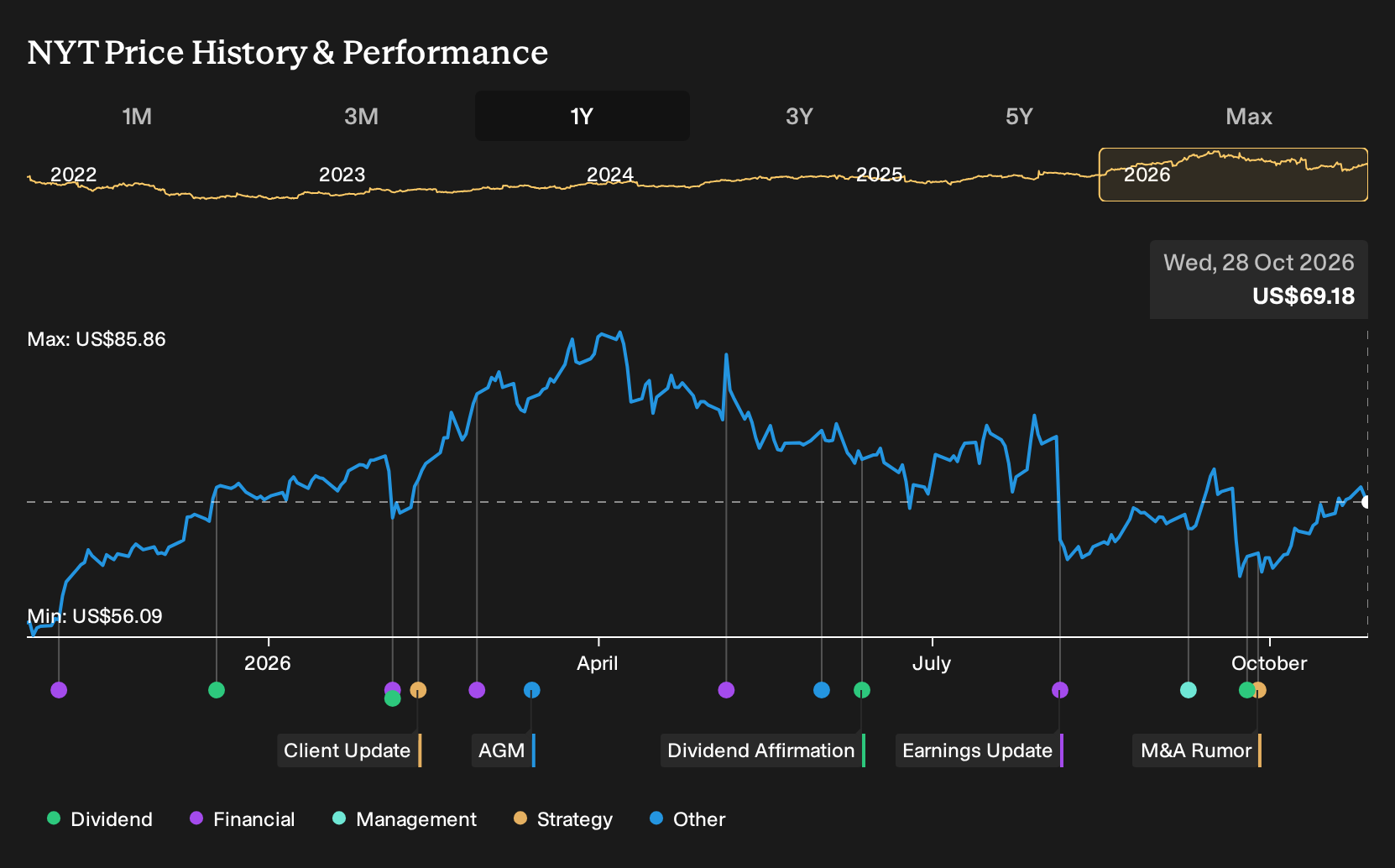
One concrete move lit up New York Times headlines during this stretch: its motion in court to quash Trump-era subpoenas for reporter phone records and subscriber data, a very public bet on press freedom as part of the product. For New York Times shareholders, the return over the past year was 24.8%, including dividends. If you were weighing a position back in October 2025, what exactly did you need to believe about paid digital news and legal risk to back that outcome?
The useful thing about a Narrative is that the reasoning is checkable: the assumptions sit beside the argument, and together they imply an estimated Fair Value you can disagree with.
New York Times has already moved. See which of 26 high quality undervalued stocks still trade below our estimates.
The Two Stories Investors Were Arguing About On New York Times
The shares cost US$57.42 at the start of the period, and anyone buying New York Times then had to pick between two very different stories about paid news and distribution power.
The bullish narrative put Fair Value at US$62.25 and focused on digital bundles, from Cooking to Games to The Athletic, with an assumption of 6.7% revenue growth and a 15.1% profit margin in three years.
The bearish view pointed to a Fair Value of US$39.75 and highlighted concerns that social media, AI aggregators, and creator platforms could weaken subscription growth and squeeze pricing power.
What The Evidence Around New York Times Actually Tested
The clearest data point for New York Times was Q2 2026, when revenue reached US$755.8m and net income was US$93.4m, with net margin nudging up to 12.4%. That combination gave the optimistic digital subscription story more weight, although the modest margin change left plenty of room for the cautious view on future profitability.
The takeaway is simple. When a subscription thesis is central, keep checking whether higher sales arrive with a steadily improving margin, not just a bigger top line. Then price your expectations around that pair of figures.
What Today's New York Times Price Already Assumes
New York Times now trades at US$69.18, and this Narrative’s Fair Value sits below that level based on its own cautious framing of digital execution risk.
The focus shifts to whether subscriber growth, bundles and video can justify a premium P/E without cost growth eating into cash generation.
"The main factor that has to go right is that New York Times converts its growing base of more than 13.4 million subscribers and over 150 million registered users into higher value through bundles, video products and direct app engagement, while keeping expense growth from consistently outpacing revenue growth."
One Narrative has put a figure on that disagreement. → See the Narrative with its lower Fair Value, assumptions and all
One Step Beyond New York Times
Reading New York Times, you are buying time and attention. Somewhere else, advertisers are paying cash for that same focus.
On social feeds, a different player tries to predict what you want next. It is not just showing ads, it is placing products in front of intent.
That business spends heavily on computing power to refine those predictions. The goal is simple: turn scrolling into purchases inside its own apps.
If that model keeps deepening, the role starts to blur. Is it still media, or becoming more like a toll on digital commerce itself?
It is written up in full, assumptions and all. → Explore the Narrative that puts this company 66% above its price
Have feedback on this article? Concerned about the content? Get in touch with us directly. Alternatively, email editorial-team@simplywallst.com