


Learn Why The Bull Case For Lyft (LYFT) Could Change Following Alcove Launch
- Lyft has launched Alcove, a separate premium global chauffeur brand built on TBR Global Chauffeuring’s network and tech, targeting corporate, VIP, and complex high-profile travel, with a new booking portal planned for early 2027.
- Together with Baidu road testing RT6 robotaxis in London toward a potential 2027 public service, Lyft is pushing beyond its core rideshare app into higher service tiers and autonomous fleets that could reshape how its marketplace operates.
- We will look at how Lyft’s investment narrative is influenced by the Alcove chauffeur launch as management stretches beyond core rideshare.
Lyft Investment Narrative Recap
To own Lyft, you need to believe the core rideshare marketplace can stay relevant against deep pocketed rivals while new services add higher quality revenue, not just complexity. The near term focus still sits on keeping rider volumes healthy, managing driver supply, and protecting margins in a business where pricing power is limited and costs like insurance can move against it.
The biggest swing factor over the next year remains execution on profitable growth in the core app while avoiding another step up in regulatory or insurance expense. Alcove and robotaxis look more like optionality rather than near term drivers. If these newer bets absorb too much capital or management attention, that becomes a real operational risk.
The Alcove launch is the clearest recent move that ties directly into this story. Lyft is trying to lean into higher touch segments such as corporate travel, VIP journeys, and complex multi vehicle events, which management describes as a market worth tens of billions of dollars. That tilts the mix toward bookings that tend to be larger per trip and, if run tightly, can support stronger margins than everyday point to point rides.
For you as an investor, the key question is whether Lyft can integrate Alcove smoothly with Lyft Business accounts and TBR’s global network without eroding service quality or cost discipline. The same consideration applies to the Baidu robotaxi partnership in London, which adds another layer of operational and regulatory risk. Both efforts sit on top of a rideshare operation that still has to carry the forecast decline in earnings over the next three years.
Lyft's narrative projects US$9.1b revenue and US$463.0m earnings by 2029. This scenario assumes 10.4% yearly revenue growth and an earnings decline of about US$2.4b compared to current earnings of US$2.9b.
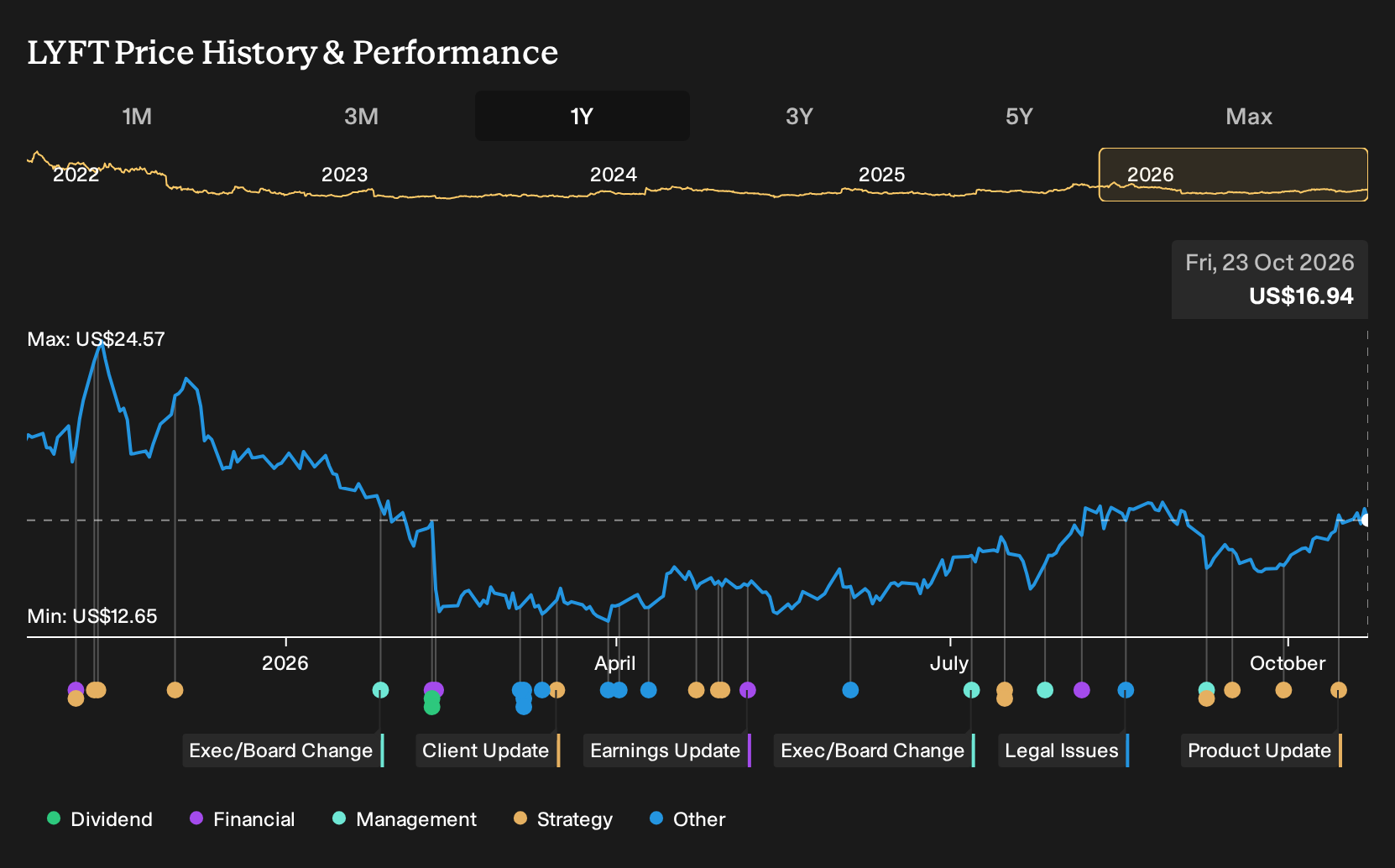
Uncover why Lyft's fair value indicates a 14% potential upside to its current price that could narrow quickly.
Exploring Other Perspectives
Some of the most optimistic analysts focus on Alcove as a premium catalyst. You can see it in their pre news forecasts. They were already pencilling in 14.3% yearly revenue growth to around US$10.1b and earnings of US$355.9m by 2029. That is far more optimistic than the consensus view, and today’s Alcove launch may lead those narratives to shift again as fresh scenarios are tested.
Explore 4 other Lyft fair value estimates, including one that suggests as much as 163% potential increase from the current price.
Decide For Yourself
Disagree with existing narratives? Extraordinary investment outcomes rarely come from following the herd, so go with your instincts.
- A great starting point for your Lyft research is our analysis highlighting 3 key rewards and 2 important warning signs that could impact your investment decision.
- See our latest analysis for Lyft. The report includes a comprehensive fundamental analysis summarized in a single visual, the Snowflake, making it easy to evaluate Lyft's overall financial health at a glance.
Looking For More Ideas Beyond Lyft?
If Lyft’s Alcove push has you thinking about where else the rideshare and mobility theme could lead, it can help to widen the lens. The Simply Wall St Screener lets you quickly scan for other businesses that match the kind of risk, balance sheet strength, or income profile you want to focus on next.
- If capital preservation is front of mind, start with companies that show resilient financial profiles by reviewing our 30 resilient stocks with low risk scores.
- Prefer quality at a sensible entry point, rather than chasing hype, and use the 21 high quality undiscovered gems to surface under-followed businesses with solid fundamentals.
- If steady income matters to your plan, focus on cash generators with meaningful yields by checking out the 5 dividend fortresses.
Have feedback on this article? Concerned about the content? Get in touch with us directly. Alternatively, email editorial-team@simplywallst.com