


What Merck (MRK)'s Melanoma Vaccine Trial Win Means For Shareholders
- Merck and Moderna reported detailed Phase 3 INTerpath-001 results showing that personalized mRNA therapy intismeran plus Keytruda cut recurrence or death risk by 42% and distant metastasis or death risk by 38% in resected stage IIB-IV melanoma, with consistent safety and publication accepted in The New England Journal of Medicine.
- The data point to a potential new adjuvant melanoma backbone for Merck, with individualized vaccine manufacturing, higher reported treatment-related events, and future regulatory engagement all shaping the operating and cost profile of this oncology franchise.
- We will examine how Merck's investment narrative is influenced by the INTerpath-001 melanoma data, especially the 42% recurrence risk reduction headline.
What Is Merck's Investment Narrative?
To own Merck, you need to believe the oncology engine can keep throwing off cash for years while the rest of the portfolio quietly does its job. The INTerpath-001 melanoma readout and fresh Keytruda combo approvals speak directly to that. They point to durable demand for high priced cancer regimens, but also higher manufacturing complexity, especially around personalized mRNA, and likely heavy capital spend to scale production.
In the short term, the key swing factors remain pricing power on Keytruda, execution on intismeran manufacturing, and the cost of pushing a broad late stage pipeline while net margin sits at 4.8%, well below last year. Earnings are also carrying large one off items and a high P/E of 113x. Add insider selling and elevated debt, and the bar for flawless execution around these new oncology launches rises.
That said, one lingering issue still hangs over the Merck story that rarely shows up in the headline numbers.
There's only one way to know the right time to buy, sell or hold Merck. Head to Simply Wall St's company report for the latest analysis of Merck's Fair Value.
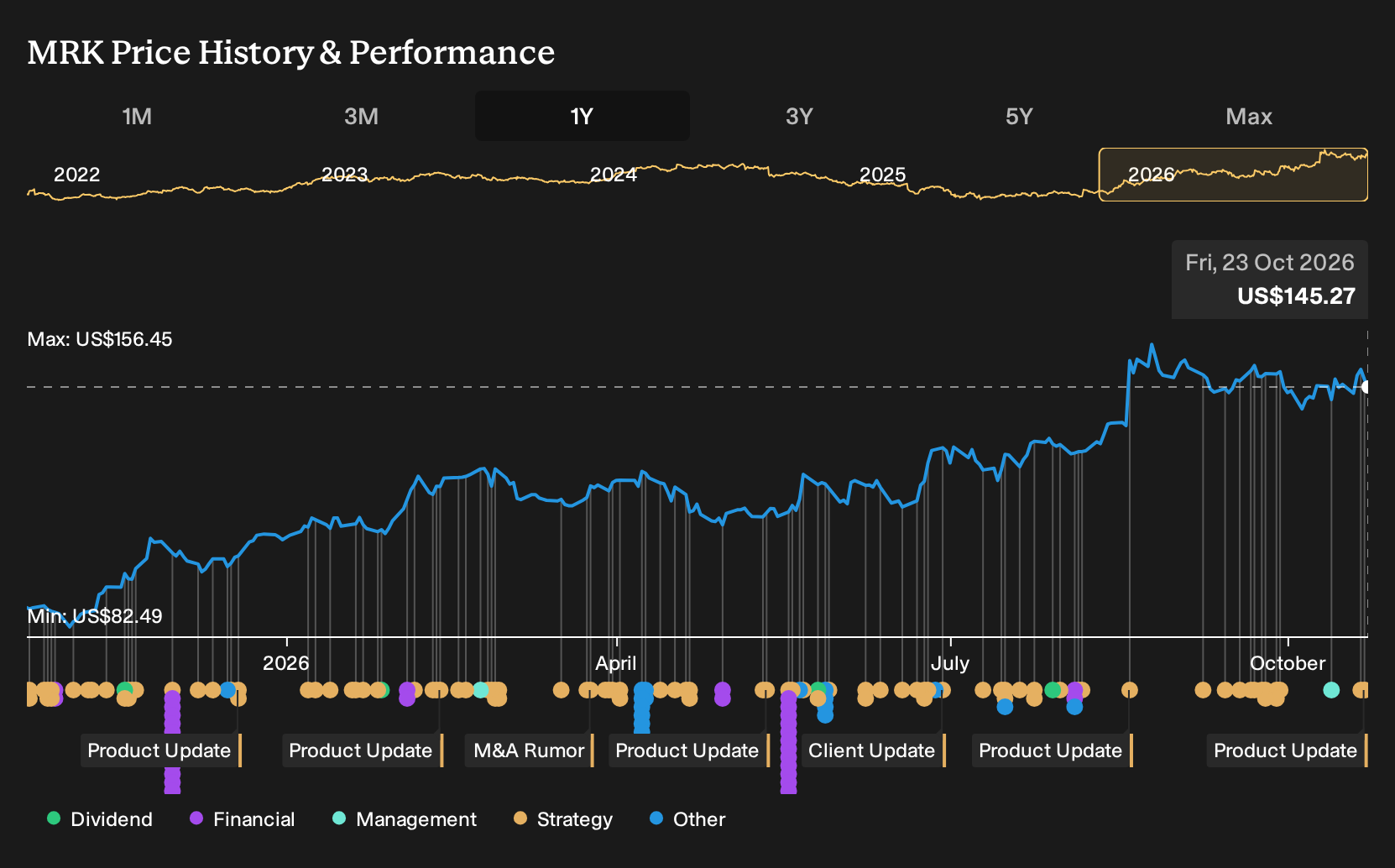
Exploring Other Perspectives
One alternate view focuses on concentration risk around KEYTRUDA. The most pessimistic analysts were pencilling in only 2.8% annual revenue growth and earnings of about US$22.0b by 2029, versus US$3.2b today, before this melanoma data. That group already saw Merck as priced for success, so this kind of news could prompt a rethink.
Explore 5 other Merck fair value estimates, including one that suggests as much as 17% downside from the current price.
The Verdict Is Yours
Don't just follow the ticker; dig into the data and build a conviction that's truly your own.
- A great starting point for your Merck research is our analysis highlighting 2 key rewards and 5 important warning signs that could impact your investment decision.
- See our latest analysis for Merck. The report includes a comprehensive fundamental analysis summarized in a single visual, the Snowflake, making it easy to evaluate Merck's overall financial health at a glance.
Looking For More Investment Ideas Beyond Merck?
Once you have a view on Merck, it can help to widen the opportunity set and compare it with other businesses that fit clear financial themes.
- If resilience matters most to you, start with a group of companies screened for robust balance sheets and fundamentals through this list of solid balance sheet and fundamentals (24 results).
- For investors focused on price versus quality, use this curated set of 29 high quality undervalued stocks to see which businesses currently combine strong financial profiles with compressed multiples.
- If you are hunting for tomorrow's potential leaders before the crowd arrives, scan this hand-picked collection of 21 high quality undiscovered gems with solid underlying metrics.
Have feedback on this article? Concerned about the content? Get in touch with us directly. Alternatively, email editorial-team@simplywallst.com